4
Muscles
3
Joints
2
Organs
2
Mental
Adho Mukha Dandasana
अधो मुख दण्डासन
Adho Mukha Dandasana, or Forearm Plank, is a foundational pose that cultivates profound whole-body integration and stability. It meticulously strengthens the entire core sling – encompassing the deep abdominal muscles, the back extensors, and the powerful glutes – while simultaneously building endurance in the shoulders and arms. This pose energetically grounds the practitioner, fostering a deep sense of inner fortitude and steady presence (sthiram). Through its precise alignment, it educates the body in maintaining a neutral spine, making it invaluable for posture correction and developing a resilient, integrated physical and mental state.
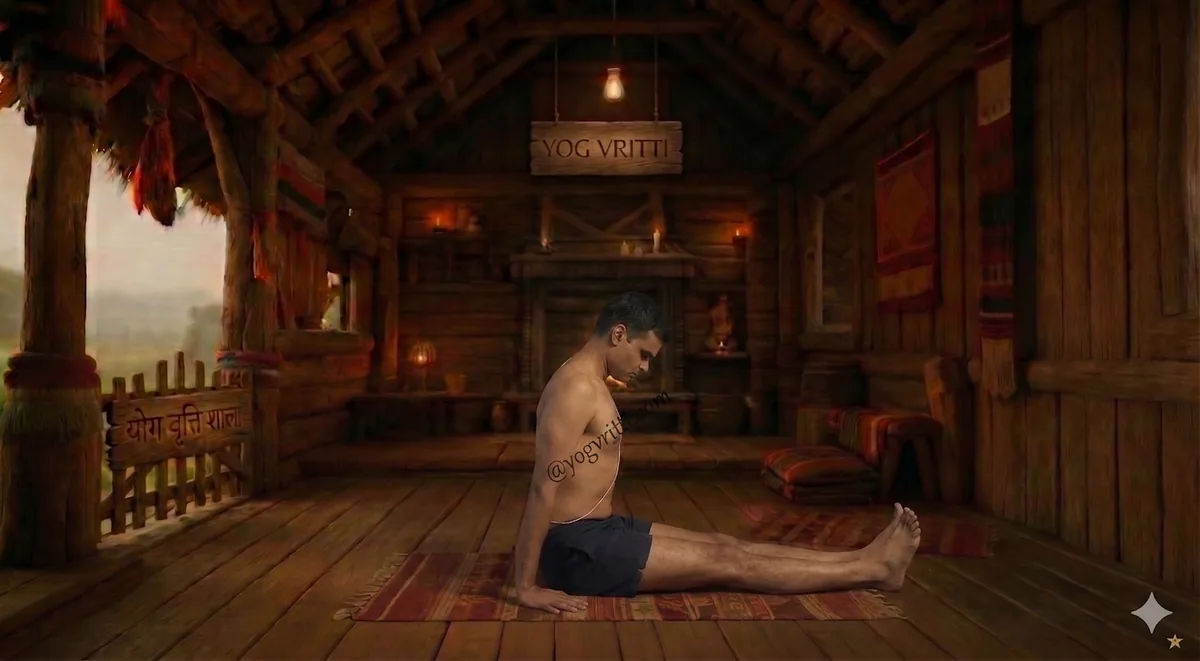
Downward Facing Staff Pose, also called Forearm Plank is a classical yoga posture. Its Sanskrit name Adho Mukha Dandasana translates word-for-word as: Adho (Downward) · Mukha (Face) · Danda (Staff) · Asana (Pose). In this posture, the body engages the posterior chain against the gentle resistance of gravity. The posture works to engage the core, open and strengthen the shoulders and strengthen the quadriceps. Shoulder stabilization. Alternative to phalakasana. It is particularly valued for building full-body strength and improving overall posture. Suitable for beginners and regular practitioners alike, it is an excellent warm-up, particularly beneficial for beginners and athletes. Practitioners with shoulder injury should approach with care or consult a qualified teacher.
Helps with
Muscles Worked
Core Muscles (Abdominals & Back Extensors)
Rectus Abdominis, Transverse Abdominis, Obliques, Erector Spinae
The deep abdominal muscles, especially the transverse abdominis, hug the internal organs inwards, creating a natural corset that protects the spine.
This engagement prevents the lower back from sagging, teaching the body to find its central axis of support.
In yogic terms, this cultivates an awakening of Manipura Chakra, the seat of inner power and discipline, translating into a felt sense of core stability and self-reliance.
Shoulder Stabilizers
Serratus Anterior, Rotator Cuff Muscles (Supraspinatus, Infraspinatus, Teres Minor, Subscapularis), Deltoids
The serratus anterior is key here, actively protracting the shoulder blades (scapulae) to prevent them from winging or collapsing towards the spine.
This engagement creates a broad, stable platform for the upper back, protecting the delicate shoulder joints.
The practitioner feels a lifting sensation between the shoulder blades, connecting the arms powerfully to the torso, which fosters a sense of grounded strength and unwavering support through the upper body.
Leg Muscles
Quadriceps Femoris, Gluteus Maximus
Engaging the front of the thighs (quadriceps) by lifting the kneecaps straightens the legs fully and creates a powerful line of energy extending from the hips to the heels.
Simultaneously, the large buttock muscles (gluteus maximus) switch on, supporting the pelvis and preventing it from dropping.
This action creates a firm foundation, ensuring the pose is not just held by the upper body, but integrates the strength of the entire lower body, grounding the practitioner and enhancing their capacity for sustained effort.
Upper Arm Muscles
Triceps Brachii
The muscles at the back of the upper arm (triceps brachii) work synergistically with the shoulders to press the forearms firmly into the ground, creating lift and stability in the upper body.
This isometric contraction strengthens the arms without putting direct pressure on the wrists, making it accessible for many.
The practitioner experiences a powerful connection from the elbows all the way up to the shoulders, channeling strength and focus, which translates into a feeling of unwavering support and steady resolve.
Joints Mobilized
Spine (Vertebral Column)
stabilizingThe primary action on the spine in Adho Mukha Dandasana is stabilization, maintaining a neutral curve from the tailbone to the crown of the head.
The engagement of the deep core muscles acts as an internal brace, preventing both excessive arching (lordosis) and rounding (kyphosis).
This cultivates spinal integrity and teaches the body to hold itself with effortless alignment, leading to reduced back pain and a feeling of centeredness in daily life.
Shoulder Girdle (Scapulothoracic & Glenohumeral Joints)
stabilizing | weight bearingThe shoulder blades (scapulae) are encouraged to broaden and slightly protract, moving away from the spine and creating stability for the upper back.
The ball-and-socket joint of the shoulder (glenohumeral joint) bears weight in a safe, aligned manner, strengthening the surrounding muscles without excessive strain.
This action prevents shoulder impingement and builds resilient shoulders, fostering a sense of openness and confidence in the chest and upper back.
Elbow Joint
stabilizing | weight bearingThe elbow joint is held in a gentle, stable flexion, distributing weight evenly through the forearms rather than directly onto the wrists.
This position protects the delicate elbow ligaments and strengthens the muscles that support the joint.
The practitioner feels a steady, unwavering support through the arms, allowing for a focused, grounded connection to the earth through the forearms, enhancing overall body awareness and stability.
Organ & System Benefits
Abdominal Organs
The gentle, sustained engagement of the core muscles in Forearm Plank provides a subtle compression and massage to the abdominal organs.
This internal pressure encourages healthy circulation within the digestive system, aiding in peristalsis and detoxification.
From a yogic perspective, this activation stimulates Samana Vayu, the balancing energy responsible for digestion and assimilation, leading to a feeling of inner warmth and metabolic efficiency.
Diaphragm and Lungs (Respiratory System)
While holding the pose, the engagement of the core naturally supports the diaphragm, promoting a deeper, more controlled diaphragmatic breath.
This encourages full use of the lung capacity, bringing fresh oxygen to the blood and expelling stale air.
The steady, rhythmic breathing cultivated here calms the nervous system and enhances prana flow, fostering a sense of inner peace and sustained energy throughout the body.
Nervous System
Holding Adho Mukha Dandasana requires sustained focus and mental stamina, which initially engages the sympathetic nervous system to meet the challenge.
However, as the breath becomes steady and the body finds its alignment, the pose transitions into a state of calm determination.
This shift cultivates a sense of inner quietude amidst effort, training the mind to remain present and unwavering, reducing mental agitation (chitta vritti).
The deep engagement of the core muscles and the grounding contact of the forearms and feet send proprioceptive feedback to the brain, enhancing body awareness and reducing nervous system 'noise'.
This increased interoception helps to quiet an overactive mind, fostering a feeling of being deeply rooted and secure.
Regular practice builds resilience against stress, teaching the nervous system to maintain equilibrium even under pressure.
Mental & Emotional
The sustained effort required in Forearm Plank builds immense mental fortitude and determination, teaching the mind to persevere through challenge with a calm, focused presence.
By consciously choosing to hold the pose and breathe steadily, practitioners cultivate willpower and self-discipline (tapas), which extends beyond the mat into daily life.
This practice strengthens the ability to concentrate (dharana) and reduces mental distractions.
Holding a strong, integrated posture directly influences mental resilience, transforming self-doubt into confidence and steadiness.
The physical act of holding the body in a unified line creates a parallel mental state of unwavering focus and inner strength.
This translates into a powerful sense of self-efficacy and an enhanced capacity to face life's obstacles with greater composure and unwavering spirit.
Because of Its Shape
balance
Adho Mukha Dandasana is a prime example of a 'balance' pose in the sense of creating equilibrium and integration throughout the entire body against gravity.
It requires the precise distribution of weight and the simultaneous engagement of opposing muscle groups to maintain a stable, horizontal line.
This cultivates a deep awareness of one's center of gravity, fostering not just physical balance but also mental and emotional equipoise.
This pose meticulously strengthens the entire anterior chain of the body, from the forearms and shoulders through the core and down to the quadriceps.
By holding the body in a unified, straight line, it counteracts the slouching postures common in modern life, directly improving overall postural alignment.
From a yogic perspective, this integration awakens the central channel (sushumna nadi), allowing for a more harmonious flow of prana and a feeling of energetic coherence.
Fascial Lines
Adho Mukha Dandasana engages and strengthens the entire superficial front line of fascia, which runs from the tops of the feet, up the front of the legs, through the abdominal muscles, and across the chest to the neck and head.
This continuous fascial line is activated to maintain the body's integrity and prevent sagging.
The pose creates a taut, yet supple, connection throughout this front body, releasing held tension patterns and fostering a sense of energetic lift and coherence.
Breathing & Respiratory
In Adho Mukha Dandasana, the strong engagement of the core muscles naturally supports and encourages diaphragmatic breathing, making the breath deeper and more sustained.
The body's need for stability in this position makes shallow chest breathing inefficient, thus promoting a more grounded, abdominal breath.
This steady, rhythmic breath (ujjayi pranayama is ideal here) helps to maintain focus and calm the nervous system, allowing for longer holds and deeper cultivation of inner strength and steadiness.
Anatomical Caution
Teachers should carefully observe students to ensure the lower back doesn't sag, which indicates insufficient core engagement and can strain the lumbar spine.
Also, watch for the head dropping or jutting forward, which can strain the neck; encourage a long, neutral neck in line with the spine.
If students experience shoulder pain, ensure the shoulder blades are broadening and lifting, not collapsing.