5
Muscles
4
Joints
3
Organs
3
Mental
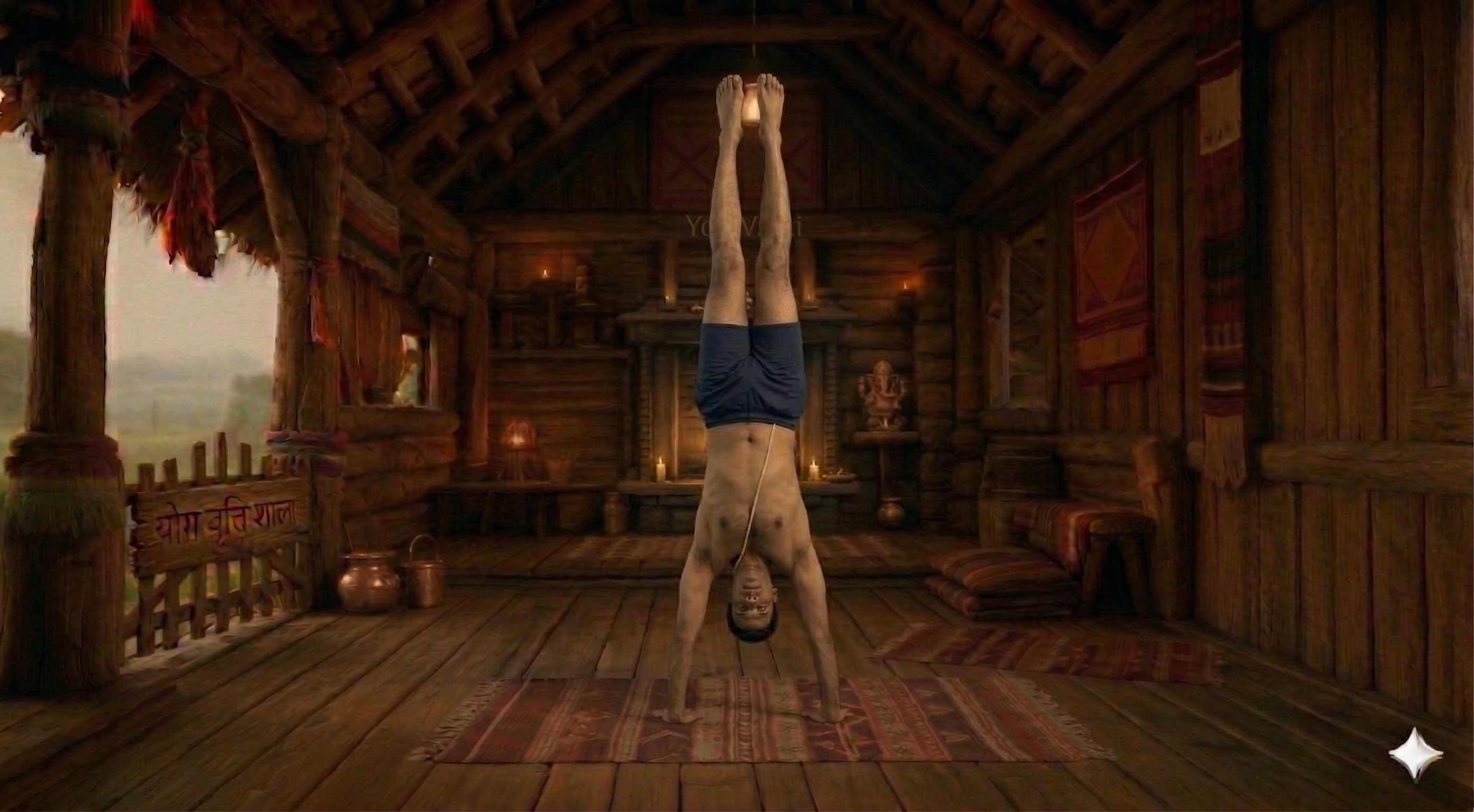
Handstand
अधो मुख वृक्षासन
Adho Mukha Vrksasana, or Handstand, is a profound inversion that demands and cultivates immense full-body integration and mental fortitude. It meticulously strengthens the entire shoulder girdle, arms, and deep core stabilizers, creating an unwavering central column of support. Energetically, it reverses the flow of prana, bringing a fresh surge of vitality to the brain and calming the nervous system, while physically decompressing the spine. This pose is a journey into self-mastery, building not just physical strength and balance, but also unshakeable confidence, clarity, and a transformative shift in perspective for any dedicated practitioner.
Handstand, also called Full Arm Balance is a classical yoga posture whose Sanskrit roots break down as: Adho (Downward) · Mukha (Face) · Vrksa (Tree) · Asana (Pose). In this posture, the body reverses the pull of gravity, bringing the hips or legs above the heart. The posture works to open and strengthen the shoulders, engage the core and tone the arms. Improves balance and coordination. Calms the brain and relieves stress. It is particularly valued for building full-body strength and quieting an anxious mind. Suitable for advanced practitioners with developed body awareness, it is a meaningful addition to any practice, particularly beneficial for athletes. A wall can be used to make the posture more accessible and support correct alignment. Practitioners with hypertension and glaucoma should approach with care or consult a qualified teacher.
Helps with
Muscles Worked
Shoulder Muscles
[Deltoids, Rotator Cuff (Supraspinatus, Infraspinatus, Teres Minor, Subscapularis)]
The large outer shoulder muscles (deltoids) and the deeper stabilizing rotator cuff muscles are powerfully engaged to lift and support the entire body's weight.
They work synergistically to create a stable, upward-pushing foundation, preventing collapse and protecting the delicate shoulder joint.
This concerted effort builds a profound sense of inner strength and a feeling of rootedness through the upper body, allowing prana to ascend with greater ease.
Back of Upper Arms
[Triceps Brachii]
The triceps, located on the back of your upper arms, are intensely active, working to fully extend and maintain a strong, straight line from your wrists to your shoulders.
This sustained isometric contraction is crucial for pushing the floor away and creating lift, preventing the elbows from buckling.
This active engagement creates a feeling of unwavering support and a direct channel of energy flowing from the earth through your arms, grounding you even as you invert.
Serratus Anterior
[Serratus Anterior]
These 'saw-like' muscles along the side of your ribs, beneath your armpits, are vital for protracting and upwardly rotating the shoulder blades, keeping them flat against your back.
This action prevents the shoulder blades from 'winging' and provides a stable platform for the arms, ensuring optimal shoulder health and powerful pushing.
Activating the serratus anterior creates a broadness across the upper back and chest, symbolizing an opening of the heart space and a sense of protective strength.
Deep Core Stabilizers
[Transversus Abdominis, Multifidus, Pelvic Floor]
The innermost abdominal muscle (transversus abdominis), along with the deep spinal muscles (multifidus) and the pelvic floor, form a powerful internal corset, stabilizing the lumbar spine and pelvis.
This deep engagement prevents excessive arching or rounding of the back, creating a strong, integrated core from the inside out.
This profound inner stability centralizes your energetic core (manipura chakra), fostering a feeling of grounded power and mental focus.
Forearm Muscles
[Flexor and Extensor Muscles of the Forearm]
The muscles in your forearms, both on the palm side (flexors) and back side (extensors), are constantly active, gripping the floor with intelligent sensitivity and distributing weight evenly through your hands and wrists.
This intricate engagement creates a stable and responsive foundation, allowing for subtle adjustments in balance.
This intelligent rooting through the hands connects you deeply to the earth, channeling its steady energy upward and cultivating a finely tuned awareness (pratyahara) in your foundation.
Joints Mobilized
Shoulder Girdle
stabilizingThe complex shoulder girdle, comprising the glenohumeral (shoulder ball-and-socket) and scapulothoracic (shoulder blade-rib cage) joints, becomes a primary weight-bearing structure.
Precise muscular engagement is required to stack the bones vertically, creating a stable column from the hands to the hips and protecting the delicate rotator cuff tendons.
This alignment cultivates a sense of unwavering support and spaciousness, allowing the energy of the heart center to expand without constriction.
Elbows
stabilizingThe elbow joints must be fully extended but not locked, maintaining a strong, straight line that acts as a pillar of support for the body.
This active extension prevents hyperextension and ensures the weight is transferred efficiently through the bones, rather than collapsing into the joint.
This unwavering stability in the elbows symbolizes a direct, clear channel of energy, preventing energetic leakage and fostering a feeling of steadfastness throughout the pose.
Wrists
weight bearingThe wrist joints bear significant weight, requiring strength and intelligent distribution of pressure through the palms and fingers.
Active engagement of the forearm muscles protects the carpal bones and ligaments, preventing compression and allowing for subtle micro-adjustments in balance.
This intelligent connection to the earth through the wrists cultivates a deep sense of grounding and sensitivity, allowing the practitioner to feel subtle shifts in weight and respond with immediate presence.
Spine
decompressingWhile core muscles work intensely to stabilize the trunk, the inverted nature of Handstand gently reverses the usual gravitational compression on the spinal discs and vertebrae.
This creates subtle traction and space along the spinal column, promoting hydration of the discs and potentially alleviating chronic back tension.
Energetically, this lengthening of the central axis (sushumna nadi) facilitates the upward flow of prana, bringing a sense of lightness and freedom to the core.
Organ & System Benefits
Brain
Inversions like Handstand significantly increase blood flow to the brain, providing a fresh supply of oxygen and nutrients while aiding venous return.
This enhanced circulation revitalizes brain cells, which can sharpen mental acuity, improve memory, and promote a sense of clarity and alertness.
From a yogic perspective, this increased cerebral blood flow awakens the higher centers of consciousness, promoting a state of sattvic (pure) awareness and quietening the fluctuations of the mind (chitta vritti).
Heart
The inverted posture reduces the heart's workload by assisting venous return from the lower extremities, as gravity now helps rather than hinders blood flow back to the heart.
This gentle decompression and reduced effort can calm the cardiovascular system, making the heart's pumping more efficient.
Energetically, this easing of the heart's physical burden can translate into a feeling of emotional lightness and inner peace, reducing the burden of anxiety and stress.
Abdominal Organs
Handstand gently repositions the abdominal organs, reversing the usual downward pull of gravity and promoting lymphatic drainage and fresh blood flow upon return to an upright position.
This 'internal massage' can stimulate sluggish digestive and reproductive organs, aiding detoxification and improving their function.
Yogically, this rebalancing of the abdominal region helps to regulate apana vayu, the downward-moving energy, creating a sense of inner cleansing and vitality in the lower body.
Nervous System
The intense focus and concentration required to balance in Handstand demand a profound quieting of external distractions and internal chatter.
This forced absorption in the present moment acts as a powerful form of pratyahara, drawing the senses inward and shifting the nervous system away from a reactive state.
The sustained effort and focused breath naturally encourage a parasympathetic response, leading to a profound sense of calm and mental clarity after the initial exertion.
By challenging the body in an unfamiliar orientation, Handstand engages the vestibular system—our internal sense of balance—and requires constant, subtle adjustments.
This heightened proprioceptive awareness, coupled with the reversal of blood flow, can reset the body's stress response mechanisms.
The courage to face and overcome the fear of inversion builds resilience, signaling to the nervous system that it is safe to be vulnerable, thereby reducing overall anxiety levels and promoting a sense of inner strength.
Mental & Emotional
Handstand is a potent builder of self-confidence and courage, as it requires overcoming primal fears of falling and being upside down.
Each successful lift, no matter how brief, reinforces a belief in one's own capabilities, translating into greater resilience and an ability to face challenges both on and off the mat.
This mastery over fear cultivates a strong, unwavering inner spirit.
The literal act of turning your world upside down offers a profound shift in perspective, challenging habitual ways of seeing and thinking.
This physical reorientation often inspires a mental one, allowing practitioners to approach problems with fresh eyes, break free from rigid thought patterns, and gain new insights.
It encourages a playful curiosity and a willingness to explore the unknown.
The precise alignment and intense focus necessary for balancing in Handstand cultivate single-pointed concentration (dharana) like few other poses.
The mind must be fully absorbed in the present moment, coordinating subtle muscular actions and breath, leaving no room for distraction or mental wandering.
This heightened state of awareness trains the mind to be steady and present, a foundational step towards deeper meditative states.
Because of Its Shape
inversion
Inversions reverse the pull of gravity on the body, aiding venous return from the lower extremities and increasing blood flow to the brain and upper body.
This fresh, oxygenated blood revitalizes cells and tissues throughout the head, neck, and upper torso.
Yogically, this redirection of prana (vital life force) stimulates the higher chakras, enhancing mental clarity, intuition, and a sense of energetic upliftment.
The inverted position gently decompresses the spine, creating subtle space between the vertebrae and relieving the constant downward compression from gravity.
This can alleviate lower back pain, improve spinal flexibility, and promote the health of intervertebral discs.
Energetically, this lengthening of the central axis (sushumna nadi) facilitates the unobstructed flow of energy, bringing a sense of lightness and freedom to the entire body.
By literally turning the world upside down, inversions offer a unique psychological shift in perspective, challenging our habitual relationship with gravity and the earth.
This physical reorientation can lead to a profound mental shift, fostering courage, confidence, and a renewed sense of possibility.
It encourages us to look at life's challenges from a different angle, promoting creative problem-solving and a sense of inner liberation.
Fascial Lines
In Handstand, the entire Superficial Back Line of fascia, which runs from the soles of the feet up the back of the legs, spine, and neck, is actively engaged and lengthened to create a unified, lifted line.
Simultaneously, the Superficial Front Line is also engaged, particularly through the core and front of the body, to prevent collapse and create anterior stability.
This integrated engagement of fascial lines creates a feeling of being 'zipped up' and unified from hands to feet, allowing for efficient force transmission.
Breathing & Respiratory
In Handstand, the inverted position shifts the diaphragm's resting place and the weight of the abdominal organs, naturally encouraging a more focused and controlled breath.
Initially, the breath may feel more constricted in the upper chest, but with practice and core stability, it can deepen into the diaphragm, providing a stable foundation for the pose.
The challenge of the posture demands conscious regulation of the breath, transforming it into a powerful tool for stability, focus, and maintaining internal heat (tapas), allowing the practitioner to sustain the posture with greater ease and presence.
Ujjayi breath is particularly beneficial here, as its gentle constriction helps to regulate energy and quiet the mind.
Anatomical Caution
Teachers must emphasize meticulous preparation and careful spotting for Handstand, especially for students with known wrist, shoulder, neck injuries, or uncontrolled high blood pressure.
Gradual progression through preparatory poses like Pincha Mayurasana and practicing near a wall are crucial to build strength and confidence safely.
Always encourage students to listen deeply to their body's signals and respect its limits, ensuring their safety and well-being above all.