3
Muscles
3
Joints
2
Organs
3
Mental
Agnistambhasana
अग्निस्तम्भासन
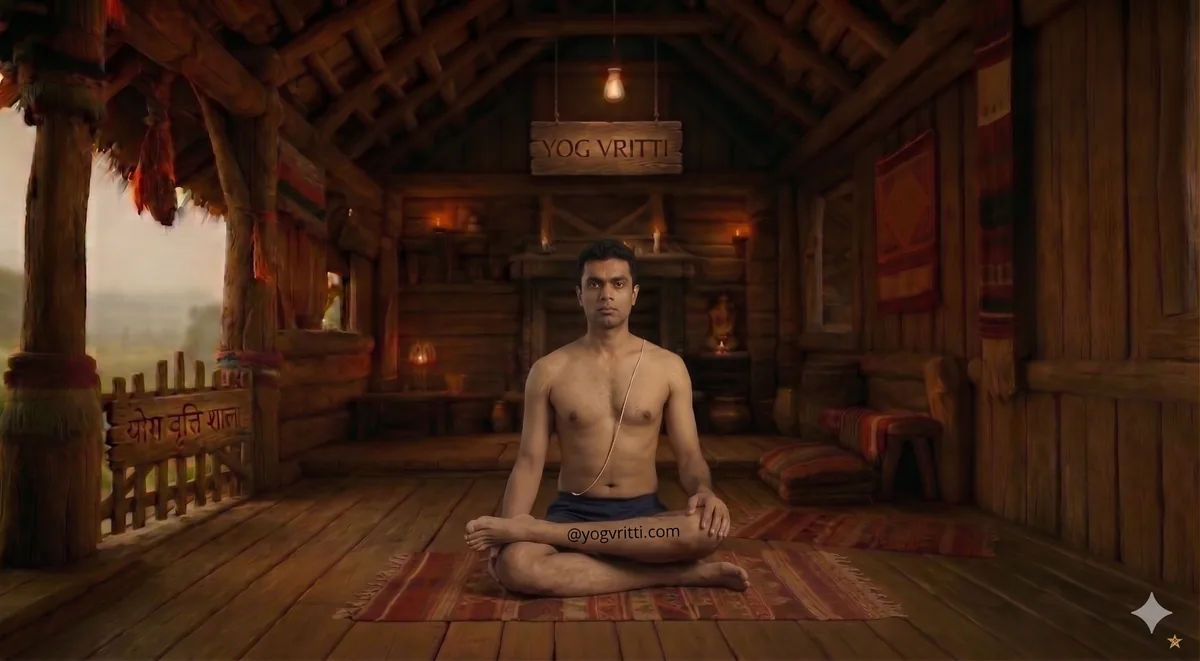
Agnistambhasana, or Fire Log Pose, is a profoundly grounding seated hip opener that systematically unwinds deep tension in the outer hips, glutes, and the often-overlooked piriformis muscle. Anatomically, it creates significant external rotation and flexion at the hip joints, mobilizing the joint capsule and lengthening key myofascial chains. Energetically, this pose is a powerful catalyst for releasing stagnant apana vayu, fostering a deep sense of rootedness and emotional freedom. For the dedicated practitioner, it offers not just physical flexibility but a pathway to inner stillness and a profound connection to the body's wisdom.
Fire Log Pose, also called Double Pigeon Pose is a classical yoga posture. Its Sanskrit name Agnistambhasana translates word-for-word as: Agni (Fire) · Stambha (Log) · Asana (Pose). In this posture, the body grounds through the sit bones while the spine rises tall. The posture works to activate the glutes. Releases tension in piriformis and glutes. Calms the mind and reduces stress. It is particularly valued for developing greater flexibility. Suitable for intermediate practitioners with foundational yoga experience, it is a calming cool-down, particularly beneficial for desk workers. A blanket and block can be used to make the posture more accessible and support correct alignment. Practitioners with knee injury and groin injury should approach with care or consult a qualified teacher.
Helps with
Muscles Worked
Piriformis
Piriformis
Deep within the buttock, connecting your sacrum (the triangular bone at the base of your spine) to the top of your thigh bone (femur), lies the piriformis.
This muscle is a primary external rotator of the hip, and in Agnistambhasana, it receives a profound, sustained lengthening, especially when tight.
This release can significantly alleviate pressure on the sciatic nerve, which often runs directly through or beneath it.
Yogically, releasing this deep muscle frees up the pelvis, allowing for a more expansive and less gripped feeling at the root of the body, enhancing the flow of prana.
Glutes (Buttock Muscles)
Gluteus Maximus, Medius, Minimus
The gluteal muscles, the large and powerful muscles forming your buttocks, are actively involved in hip movement and stability.
In this pose, the external rotators among them, particularly the posterior fibers of the gluteus medius and minimus, are deeply stretched and released.
This action creates more space within the hip socket and around the greater trochanter of the femur.
For the practitioner, this translates to a feeling of greater breadth and openness across the hips, lessening constriction and promoting a sense of ease in the lower body.
Outer Hip Connective Tissues
Tensor Fasciae Latae (TFL) and Iliotibial (IT) Band
On the outer aspect of your hip, the tensor fasciae latae (TFL) muscle connects to the thick band of connective tissue running down the side of your thigh, known as the iliotibial (IT) band.
These structures are often chronically tight from activities like walking, running, or prolonged sitting.
Agnistambhasana provides a deep stretch to this entire lateral fascial line, improving the flexibility of the hip and knee.
Releasing this tension brings a sense of relief from lateral thigh stiffness and fosters a more integrated, balanced connection between the leg and the pelvis, allowing for greater freedom in movement.
Joints Mobilized
Hip Joint
mobilizingThe hip joint (acetabulofemoral joint) is a robust ball-and-socket joint where your thigh bone meets your pelvis.
In Agnistambhasana, both hips are deeply flexed and externally rotated, pushing the boundaries of their typical range of motion.
This action gently mobilizes the joint capsule, increasing its pliability and enhancing the synovial fluid circulation within the joint.
From a yogic perspective, this increased suppleness translates to a feeling of greater freedom and less stiffness in the entire pelvic region, allowing prana to circulate more freely, and in the long term, helps maintain healthier cartilage and joint integrity.
Sacroiliac (SI) Joint
stabilizingThe sacroiliac (SI) joint is located where the sacrum (the triangular bone at the base of your spine) meets the iliac bones of your pelvis.
While not a primary mover, this pose, when practiced with awareness and a level pelvis, can encourage subtle, balanced release in the musculature surrounding the SI joint.
This can help to stabilize an unstable joint or gently mobilize a stiff one, promoting overall pelvic equilibrium.
Practitioners often report a sense of integration and foundational stability at the base of the spine, which can alleviate lower back discomfort and support the energetic grounding of Muladhara Chakra.
Knee Joint
rotatingThe knee joint (tibiofemoral joint) is primarily a hinge joint, designed for flexion and extension, with a small degree of rotation.
In Agnistambhasana, the deep hip external rotation places a rotational demand on the knee if the ankle is not properly aligned with the knee.
While this can subtly mobilize the collateral ligaments, it also requires careful attention to protect the joint.
From a yogic perspective, mindful engagement here teaches discernment, ensuring that the stretch is felt in the hip, not forced into the knee, cultivating a precise awareness of bodily limits and capabilities.
Organ & System Benefits
Digestive Organs
In the deeper variations of Agnistambhasana, particularly when folding forward, there is a gentle compression of the abdominal region, stimulating the underlying digestive organs like the intestines.
This subtle internal massage, combined with rhythmic diaphragmatic breathing, can enhance peristalsis and improve blood flow to the entire digestive tract.
This not only aids in healthy elimination but also promotes a feeling of internal cleansing and lightness, balancing samana vayu, the energy responsible for assimilation and digestion.
Reproductive Organs
The deep hip opening and sustained awareness in the pelvic bowl in Agnistambhasana can bring increased blood flow and heightened proprioception to the reproductive organs.
This enhanced circulation and nerve supply can be therapeutically beneficial, supporting overall pelvic health and vitality.
Yogically, this engagement helps to awaken and ground the energy of the Muladhara and Svadhisthana Chakras, fostering a deeper connection to one's creative and foundational life force, while promoting a sense of inner stability and well-being.
Nervous System
The sustained, deep stretching in the hips, when approached with patience and a steady breath, sends calming signals to the brain, directly engaging the parasympathetic nervous system.
This immediately down-regulates the 'fight or flight' response, allowing the body's deeply held muscular and emotional tension to begin to release.
Practitioners often feel a profound sense of surrender and ease as the nervous system shifts into a state of 'rest and digest,' promoting healing and restoration.
The inherent stability of this seated posture, with its firm connection to the earth through the sit bones, provides a powerful grounding experience for the nervous system.
This physical rootedness translates into a mental and emotional sense of security and presence.
By anchoring the body, we help to quiet the incessant fluctuations of the mind (chitta vritti), cultivating a sense of inner calm and allowing the practitioner to settle deeply into the present moment.
Hips are often considered a repository for stored stress and emotional patterns.
The intense, yet patient, opening in Agnistambhasana can trigger a release of these deeply held tensions, which may sometimes manifest as emotional sensations.
This process, while potentially intense, ultimately leads to a profound sense of lightness and emotional freedom, allowing the nervous system to discharge old, stagnant energy and reset towards a state of greater balance and equanimity.
Mental & Emotional
Agnistambhasana demands immense patience and a willingness to simply 'be' with intense sensation, rather than react to it.
This cultivates mental resilience and teaches the mind to observe discomfort without judgment or immediate retreat.
This practice of _pratyahara_ (withdrawal of the senses from external stimuli) helps to quiet the external chatter, allowing for a deeper introspection and acceptance of one's present state.
Navigating the depth of Agnistambhasana requires a heightened state of internal awareness and unwavering concentration.
By directing attention to the subtle shifts in the hips, the breath, and the body's responses, the mind is drawn away from distractions and into a focused, present state.
This focused attention strengthens _dharana_ (concentration), leading to a more centered and mindful state of being that can be carried off the mat.
As the physical body releases deep tension in the hips, which are often linked to emotional storage, the mind frequently follows suit, allowing for the surfacing and processing of old emotions or anxieties.
This can be a profound experience of catharsis and healing, fostering a sense of psychological liberation.
The pose creates a safe, contained space for emotional unwinding, promoting mental clarity and a feeling of spaciousness within the mind.
Because of Its Shape
hip opener
Hip openers like Agnistambhasana specifically target the deep muscles and connective tissues surrounding the hip joint, primarily focusing on external rotation and flexion.
Anatomically, this action systematically mobilizes the acetabulofemoral joint capsule and lengthens the tight external rotators and gluteal muscles.
Yogically, this creates significant energetic space in the pelvis, facilitating the release of stagnant apana vayu and promoting a feeling of unburdened freedom in the lower body.
The hips are widely recognized as a major storage site for stress, unexpressed emotions, and even past traumas.
The sustained, deep opening provided by Agnistambhasana can act as a catalyst for the release of these deeply held physical and energetic tensions.
This physical unwinding often correlates with a profound emotional catharsis, leading to a sense of psychological lightness and emotional freedom as practitioners connect to their inner landscape.
By systematically releasing chronic tightness in the outer hips, glutes, and deep rotators, this pose helps to rebalance the muscular forces acting upon the pelvis and sacrum.
Anatomically, this can significantly improve pelvic alignment, alleviate strain on the sacroiliac joint, and reduce lower back discomfort.
Yogically, a stable and open pelvis provides a strong, grounded foundation for all seated practices and cultivates a deep sense of rootedness and energetic stability (Muladhara Chakra).
Fascial Lines
The intricate fascial network, the three-dimensional web of connective tissue that envelops and interpenetrates every muscle, bone, and organ, receives a profound release in Agnistambhasana.
This pose specifically targets the deep gluteal fascia, the lateral fascial lines, and the connective tissues around the hip joint.
By patiently holding the stretch, we encourage the thixotropic properties of fascia to soften and release, transforming its gel-like consistency to a more fluid state.
This unwinding of the fascial matrix is critical for opening energetic channels, allowing for the unblocking of stagnant prana, and fostering a deeper sense of internal spaciousness and ease.
Breathing & Respiratory
In Agnistambhasana, the seated and often slightly forward-leaning posture, combined with the intensity of the hip stretch, naturally encourages a deeper, more abdominal breath.
The diaphragm has greater freedom to descend, facilitating a fuller inhalation and a longer, more releasing exhalation.
This deep, diaphragmatic breathing (dirgha swasam) directly calms the nervous system and helps the practitioner to 'breathe into' the areas of intense sensation, allowing for a more profound release of both muscular and emotional tightness.
It is an excellent preparation for pranayama practices that emphasize steadiness, internal awareness, and the downward flow of apana vayu.
Anatomical Caution
Teachers must always prioritize knee safety in Agnistambhasana; watch students carefully for any discomfort or pain in the knee joints.
If pain is present, guide them to modify immediately, perhaps by placing a block under the top knee or by not stacking the shins fully.
Ensure the hips are well-elevated on blankets and the feet are actively flexed to protect the knee, as the aim is a deep hip stretch, never knee strain.