5
Muscles
3
Joints
2
Organs
3
Mental
Akarna Dhanurasana
आकर्ण धनुरासन
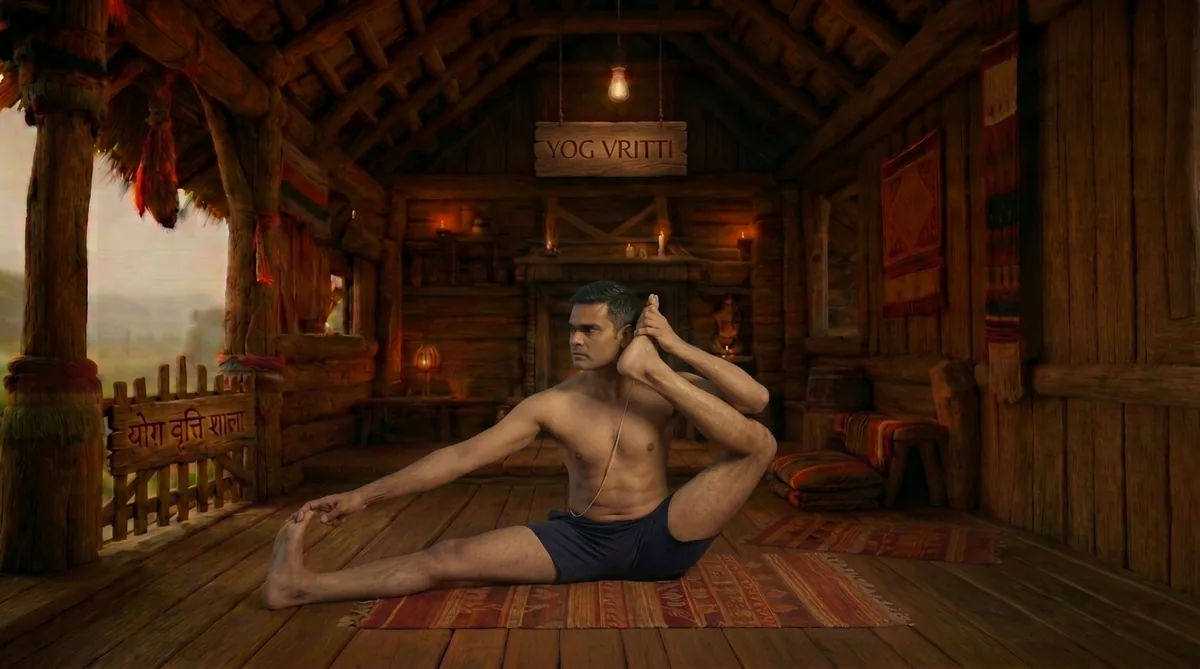
Akarna Dhanurasana, the Shooting Bow Pose, is a profound seated practice that intricately unwinds the entire posterior chain of the body, particularly targeting the hamstrings and the deep muscles surrounding the hip joint. This pose demands and cultivates immense flexibility in the hips, allowing for significant external rotation and abduction in one leg while stretching the other. Energetically, it grounds the practitioner deeply, drawing awareness inward, while simultaneously opening the vital energy channels of the pelvis and lower spine. For the dedicated student, it offers a path to release long-held physical and emotional tension, fostering both stability and freedom in the lower body, essential for deeper meditative practices.
Shooting Bow Pose, also called Archer Pose is a classical yoga posture. Its Sanskrit name Akarna Dhanurasana translates word-for-word as: Akarna (Toward the Ear) · Dhanu (Bow) · Asana (Pose). In this posture, the body grounds through the sit bones while the spine rises tall. The posture works to lengthen the hamstrings, stretch the hip flexors and strengthen the quadriceps. Improves hip flexibility. Strengthens arms and shoulders. It is particularly valued for developing greater flexibility and building full-body strength. Suitable for intermediate practitioners with foundational yoga experience, it is a meaningful addition to any practice. A strap can be used to make the posture more accessible and support correct alignment. Practitioners with hamstring injury and shoulder injury should approach with care or consult a qualified teacher.
Helps with
Muscles Worked
Hamstrings
[Biceps Femoris, Semitendinosus, Semimembranosus]
The powerful muscles at the back of your thighs (hamstrings) receive an intense, sustained stretch in Akarna Dhanurasana, particularly in the extended leg.
This lengthening is not forced but a gradual release, allowing these muscles to surrender chronic tightness often accumulated from sitting or athletic activities.
Anatomically, the hip is flexed while the knee is extended, creating maximum tensile load on these muscles.
Energetically, this release helps to free apana vayu, promoting a sense of groundedness and ease in the lower body, reducing strain on the sacrum and lumbar spine.
Hip Adductors
[Adductor Magnus, Longus, Brevis, Pectineus, Gracilis]
The inner thigh muscles (hip adductors) of the extended leg are also significantly lengthened as the leg is taken into abduction, away from the midline.
This broadens the base of the pelvis and creates space in the groin, an area often constricted by habitual posture.
From a physiological perspective, this stretch helps to improve circulation and lymphatic flow in the inner thigh region.
Yogically, opening the adductors can release stored emotional vulnerability, allowing for greater freedom and less gripping in the root chakra (Muladhara Chakra).
Gluteal Muscles
[Gluteus Maximus, Medius, Minimus, Piriformis]
In the bent leg, the outer hip and buttock muscles (gluteal muscles, including the deep external rotators like piriformis) are actively engaged in external rotation and abduction.
This action helps to release deep-seated tension in the hip socket, particularly the piriformis, which can often impinge the sciatic nerve.
As these muscles release, the hip joint gains greater range of motion and stability, fostering a sense of openness and fluidity in the pelvic girdle.
This release is crucial for freeing the energetic pathways that traverse the hips, allowing prana to flow more freely through the legs.
Quadriceps
[Rectus Femoris, Vastus Lateralis, Medialis, Intermedius]
The muscles at the front of your thigh (quadriceps) in the extended leg are actively engaged to keep the knee straight and lifted, providing stability to the knee joint.
This co-contraction works synergistically with the hamstring stretch through reciprocal inhibition, allowing the hamstrings to release more deeply.
From a yogic perspective, this intelligent engagement of the quadriceps cultivates an alertness and firmness in the extended limb, preventing collapse and promoting an upward lift of energy from the ground through the leg and spine, contributing to overall stability in the pose.
Biceps Brachii and Forearm Flexors
[Biceps Brachii, Brachialis, Brachioradialis, Flexor Carpi Radialis, Ulnaris]
The muscles in your upper arm (biceps brachii) and the front of your forearm (forearm flexors) are actively engaged to pull and hold the foot towards the ear, much like drawing a bowstring.
This requires significant isometric strength and endurance, not just in the arm but in the entire shoulder girdle.
This action builds focused strength in the upper limbs, connecting the power of the arms to the stability of the core.
Energetically, this sustained effort cultivates determination and a steady resolve, mirroring the mental focus required to hold the pose with grace and precision.
Joints Mobilized
Hip Joint
mobilizingThe hip joint (coxal joint) of the bent leg undergoes significant flexion, abduction, and external rotation, pushing the boundaries of its normal range of motion.
This deep mobilization helps to free up stiffness in the joint capsule and surrounding ligaments, improving the lubrication and health of the articular cartilage.
Regular practice helps to maintain the integrity and mobility of the hip, which is crucial for pain-free movement and longevity.
Yogically, this intense opening of the hips is believed to release deeply stored emotional and energetic blockages, fostering a sense of liberation and openness in the pelvis.
Sacroiliac (SI) Joint
stabilizingThe sacroiliac (SI) joint, where the sacrum meets the pelvis, is encouraged towards stability and symmetry in this pose, particularly when the sitting bones are evenly grounded.
While one hip is deeply mobilized, the even grounding helps to prevent excessive torque or strain on the SI joint.
This focus on balanced weight distribution across the pelvis helps to decompress the lower spine and alleviate tension in the surrounding ligaments.
From a yogic perspective, a stable and aligned SI joint is fundamental for the upward flow of prana through the central channel (sushumna nadi), supporting a strong and vital core.
Knee Joint
stabilizingThe knee joint (tibiofemoral joint) of the extended leg is held in full extension, requiring active engagement of the quadriceps to protect the joint and prevent hyperextension.
Simultaneously, the bent leg's knee is in deep flexion, with careful attention needed to ensure there is no lateral torque.
This intelligent engagement and awareness around the knees cultivate a sense of discerning action (viveka) in the lower limbs, ensuring that flexibility is built with protection.
This careful stabilization helps to strengthen the muscles that support the knee, promoting long-term joint health and preventing instability.
Organ & System Benefits
Abdominal Organs
As you lean forward in Akarna Dhanurasana, the abdominal organs receive a gentle, internal massage and compression.
This subtle pressure can help stimulate peristalsis, aiding digestion and elimination, and improving circulation to the digestive tract.
This internal action is not forceful but a gentle wringing and refreshing, promoting detoxification and revitalization of the inner body.
Yogically, this internal cleansing supports a clearer mind and a lighter, more energetic feeling within the core, directly influencing the vitality of Manipura Chakra.
Pelvic Floor
The deep hip opening in Akarna Dhanurasana encourages a release and softening of the muscles of the pelvic floor, particularly in the bent leg.
While the sitting bones remain grounded, the broad stretch through the hips allows for a spaciousness in this often-contracted region.
This release can help alleviate tension, improve circulation, and enhance proprioception in the pelvic bowl.
In yogic philosophy, a relaxed yet engaged pelvic floor is essential for the upward flow of prana and the stability of Muladhara Chakra, promoting a sense of security and connection to earth.
Nervous System
The sustained, deep stretching in Akarna Dhanurasana, combined with the focus required to maintain the pose, activates the parasympathetic nervous system, inducing a profound sense of calm.
As you breathe deeply and evenly, the vagus nerve is stimulated, lowering heart rate and promoting a 'rest and digest' response.
This shift from sympathetic 'fight or flight' to parasympathetic dominance helps to quiet the fluctuations of the mind (chitta vritti), allowing for greater introspection and a palpable reduction in overall stress and anxiety.
The intricate balance and precise alignment demanded by this pose significantly enhance proprioception – your body's awareness of its position in space – and interoception – your awareness of internal bodily sensations.
This heightened sensory feedback refines the neural pathways, improving coordination and body schema.
Through this deep embodied awareness, the practitioner develops a more intimate connection with their physical form, fostering a sense of presence and mindfulness that extends beyond the mat into daily life.
Mental & Emotional
Akarna Dhanurasana demands unwavering focus and concentration, drawing the mind away from external distractions and into the present moment.
The challenge of holding the leg towards the ear, coupled with maintaining a grounded seat, cultivates dharana (concentration) as the mind becomes absorbed in the task.
This sustained mental effort strengthens the capacity for single-pointed attention, preparing the mind for deeper meditative states and fostering mental clarity and resilience in the face of life's demands.
The deep hip opening in this pose can often bring forth a release of emotional tension, as the hips are known to be a storage site for unexpressed feelings and stress.
As the body physically opens, there is often a corresponding psychological shift towards greater emotional openness and surrender.
This process cultivates patience and a willingness to sit with discomfort, transforming it into a sense of release and emotional freedom, ultimately fostering a deeper sense of self-acceptance and emotional intelligence.
The act of pulling the foot towards the ear, akin to drawing a bow, symbolizes an internal aiming and intention.
This physical action translates into a mental discipline, encouraging the practitioner to set clear intentions and steadily work towards them with persistence and precision.
It cultivates a sense of inner strength and determination, teaching the mind to remain steady and purposeful even when faced with challenging physical sensations, reinforcing the yogic principle of tapas (discipline).
Because of Its Shape
hip opener
As a primary hip opener, Akarna Dhanurasana deeply mobilizes the complex structures of the hip joint, targeting external rotation, abduction, and flexion simultaneously.
This comprehensive action helps to increase the range of motion in the femoral head within the acetabulum, improving joint health and reducing stiffness.
Yogically, opening the hips is often associated with releasing deeply stored emotional blockages and energetic stagnation in the lower chakras, promoting a sense of freedom, creativity, and emotional fluidity.
The intense stretch across the hamstrings and inner thighs, facilitated by the hip opening, contributes significantly to overall lower body flexibility.
This lengthening of the posterior and medial fascial lines helps to alleviate tension in the lower back and improve posture.
From an energetic perspective, this expansive quality in the lower body allows for a more unhindered flow of prana, providing a stable and open foundation for the upward journey of energy through the spine.
The seated nature of Akarna Dhanurasana inherently promotes grounding and introspection.
With the pelvis firmly rooted, the practitioner can direct their awareness inward, cultivating a sense of stability and inner quietude.
This grounding allows for the energetic opening in the hips to be integrated with a sense of security, balancing the expansive quality of the pose with a deep connection to the earth, fostering both physical and mental steadiness.
Fascial Lines
Akarna Dhanurasana profoundly influences several fascial lines, most notably the Superficial Back Line (SBL) through the hamstrings and calves of the extended leg, and portions of the Lateral Line and Spiral Line around the deeply opened hip.
The sustained stretch encourages the ground substance within the connective tissue to become more hydrated and pliable, releasing adhesions and increasing elasticity.
From a yogic perspective, this fascial unwinding is akin to clearing energetic blockages (granthis) within the body's subtle channels (nadis), allowing for a smoother, more expansive flow of prana and a greater sense of bodily freedom and integration.
Breathing & Respiratory
The deep hip opening and forward lean in Akarna Dhanurasana naturally invite a slower, deeper exhalation, which is crucial for releasing tension and settling into the pose.
The compression of the abdomen subtly encourages diaphragmatic breathing, promoting a fuller engagement of the lower lungs.
This emphasis on a longer exhalation helps to calm the nervous system, making it an excellent pose to pair with Ujjayi Pranayama or a simple extended exhalation practice, which aids in releasing mental and physical resistance and deepening the stretch with each breath.
Anatomical Caution
Teachers must exercise extreme care with students presenting with pre-existing hamstring injuries, acute sacroiliac joint dysfunction, or knee instabilities.
Always ensure the sitting bones remain evenly grounded to protect the pelvis, and never force the knee or hip beyond a comfortable range.
For students with tight hamstrings, a strap is indispensable, and modifying the pose by bending the extended leg slightly can prevent undue strain on the lower back and hamstrings.