4
Muscles
3
Joints
2
Organs
2
Mental
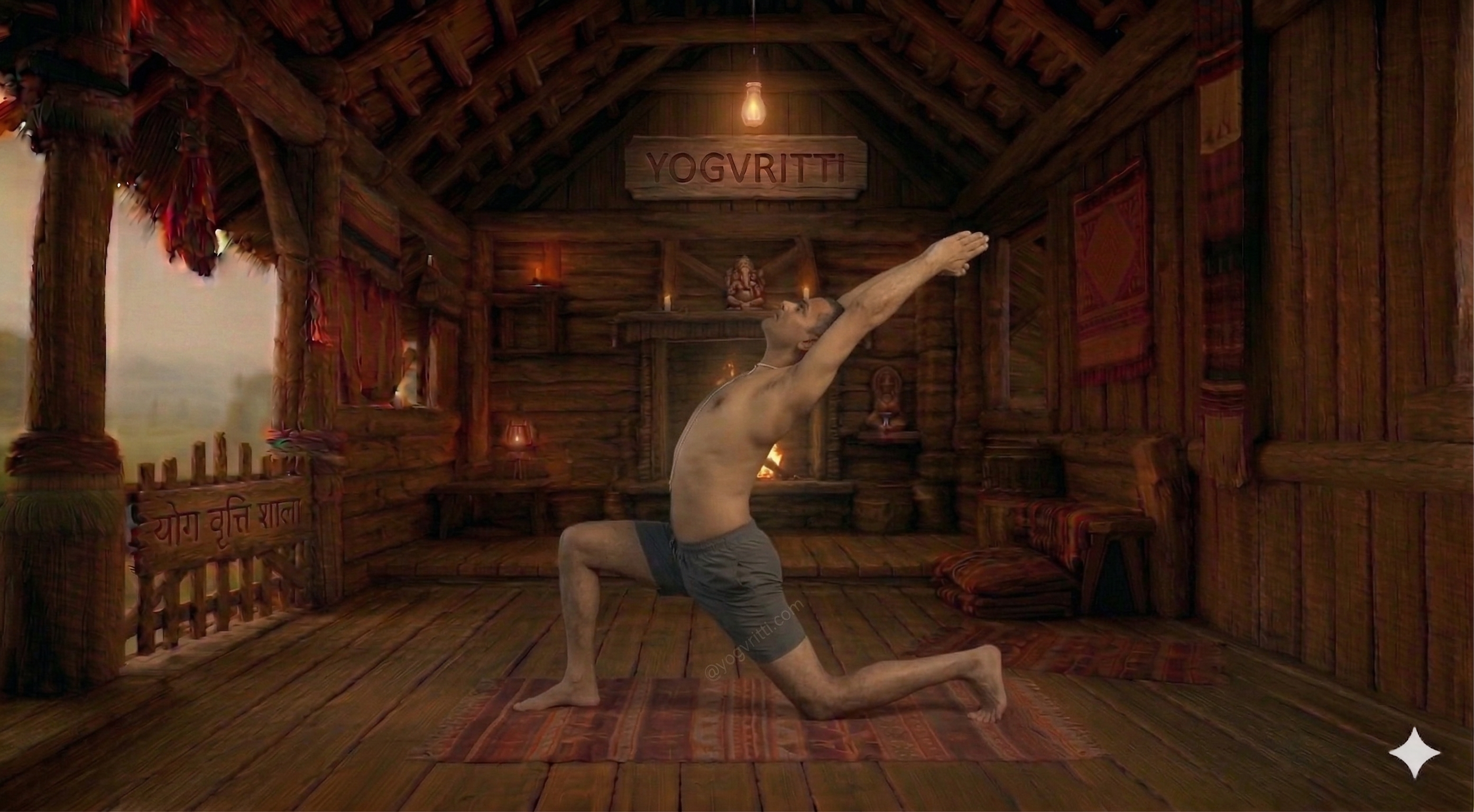
Anjaneyasana
आञ्जनेयासन
Anjaneyasana, or Low Lunge, is a foundational kneeling posture that deeply unravels tightness in the front of the hips and thighs while simultaneously strengthening the legs and stabilizing the core. This gentle backbend creates space in the chest and cultivates a sense of openness and courage, inviting a free flow of vital energy (prana). For both teachers and students, it's a potent practice for improving balance, enhancing proprioception, and releasing deep-seated tension often held in the anterior fascial lines, paving the way for more complex poses and a greater sense of ease in daily movement and inner peace.
Low Lunge Pose, also called Crescent Low Lunge is a classical yoga posture. Its Sanskrit name Anjaneyasana translates word-for-word as: Anjaneya (Son of Anjana (Hanuman)) · Asana (Pose). Beginning from a kneeling position, the practitioner aligns the body with precision and intentional breath. The posture works to stretch the hip flexors, strengthen the quadriceps and activate the glutes. Strengthens legs and core. Improves balance. Suitable for beginners and regular practitioners alike, it is an excellent warm-up, particularly beneficial for prenatal and postnatal. A blanket and block can be used to make the posture more accessible and support correct alignment. Practitioners with hip injury and knee injury should approach with care or consult a qualified teacher.
Muscles Worked
Hip Flexors
[Iliopsoas, Rectus Femoris]
The deep muscles at the front of your hip and thigh on the back leg (iliopsoas and rectus femoris) receive a profound, sustained stretch here.
This action helps to release chronic tightness often caused by prolonged sitting, which can pull on the lower back and compromise posture.
As these muscles lengthen, a sense of freedom expands from the pelvis, allowing for greater mobility and an uninhibited flow of apana vayu, the grounding energy, through the lower abdomen.
Quadriceps
[Rectus Femoris, Vastus Lateralis, Medialis, Intermedius]
On the back leg, the large muscles on the front of your thigh (quadriceps, particularly the rectus femoris) are actively lengthened as you deepen into the lunge, improving flexibility.
Simultaneously, the quadriceps of the front leg engage powerfully to stabilize the knee and support your body weight, building strength and endurance.
This dual action cultivates both flexibility and stability, bringing an intelligent balance to the legs and preparing them for dynamic movement.
Glutes
[Gluteus Maximus, Medius]
The powerful muscles in your buttocks (gluteus maximus and medius) on the front leg are actively engaged to stabilize the hip joint and support the deep flexion of the front knee.
This engagement prevents undue strain on the knee and lumbar spine, creating a solid foundation for the pose.
By consciously activating these muscles, we foster a sense of rootedness and power, channeling energy upwards from the earth through the legs and establishing a firm base.
Core Muscles
[Transversus Abdominis, Obliques, Erector Spinae]
The deep muscles of your abdomen and back (transversus abdominis, obliques, and erector spinae) work synergistically to support the spine and pelvis, preventing excessive arching in the lower back during the gentle backbend.
This intelligent engagement creates a strong, stable center, protecting the lumbar spine and allowing the chest to open safely and freely.
This core awareness cultivates inner strength and discernment, anchoring the practitioner in the present moment.
Joints Mobilized
Hip Joint
mobilizing (extension)The hip joint of the back leg moves into deep extension, gently mobilizing the joint capsule and encouraging greater range of motion, particularly in the anterior aspect.
This movement helps to counteract the effects of prolonged sitting, which often keeps the hips in a chronically flexed position.
Over time, this sustained opening creates more freedom in the pelvis, releasing stagnant energy and promoting a sense of lightness and fluidity in the lower body.
Knee Joint
weight bearing, stabilizingThe knee joint of the front leg bears significant weight in deep flexion, requiring active engagement of the surrounding musculature for stability and protection.
This strengthens the ligaments and muscles around the knee, improving its resilience and proprioception, which is crucial for overall joint health.
Through mindful engagement, the practitioner learns to support this crucial joint, fostering a sense of trust in their own body's capacity for strength and balance.
Spine
mobilizing (gentle extension)The entire spine, particularly the lumbar and lower thoracic regions, undergoes a gentle and controlled extension, creating length and space between the vertebrae.
This subtle backbend helps to decompress the spinal discs and improve spinal mobility, counteracting the effects of slouching and promoting better posture.
As the spine lengthens and arches gracefully, an energetic lift is felt, promoting a sense of confidence and expanding the capacity for breath.
Organ & System Benefits
Abdominal Organs
The gentle extension of the spine and the slight compression in the front of the abdomen (from the hip flexor stretch) create a subtle massage for the internal organs.
This encourages fresh blood flow to the digestive system, aiding in peristalsis and overall gut health, which is vital for nutrient absorption.
In yogic terms, this gentle stimulation helps to balance Samana Vayu, the energy responsible for digestion and assimilation, fostering a sense of inner harmony and well-being.
Lungs and Heart
As the chest opens and lifts in Anjaneyasana, a profound sense of expansion is created around the heart and lungs, freeing the respiratory diaphragm.
This increased space allows for deeper, fuller breaths, enhancing oxygen intake and circulation throughout the body, improving vitality.
This opening not only improves physical respiratory capacity but also symbolically opens the heart chakra (Anahata), cultivating compassion, courage, and emotional spaciousness.
Nervous System
The inherent challenge of balancing in Anjaneyasana, particularly as the arms lift, actively engages the proprioceptive and vestibular systems, sharpening the body's awareness in space.
This focused attention on equilibrium helps to quiet the fluctuations of the mind (chitta vritti), drawing awareness inward and grounding the practitioner in the present moment.
The sustained stretch of the anterior hip also signals a release of tension, gently shifting the nervous system towards a more parasympathetic, rest-and-digest state, promoting deep relaxation.
The gentle backbend quality of the pose, coupled with the chest opening, can be both invigorating and calming, depending on the practitioner's state of mind.
It stimulates the sympathetic nervous system just enough to promote alertness and vitality, while the deep, rhythmic breathing that the open chest encourages simultaneously activates the vagus nerve.
This dual action fosters a balanced state of energetic presence and inner tranquility, allowing one to feel both alive and at peace.
Mental & Emotional
Holding Anjaneyasana requires sustained focus and concentration, especially when balancing, which cultivates dharana, the practice of single-pointed concentration.
This process draws the mind away from external distractions and into the present experience of the body and breath, enhancing mindfulness.
Through this process, students learn to steady their minds, building mental resilience and a deeper connection to their inner self, fostering a sense of calm clarity.
The expansive chest opening and gentle backbend in Anjaneyasana can evoke a sense of courage, vulnerability, and emotional openness, allowing one to feel more expansive.
Physically opening the front of the body often correlates with a willingness to face challenges and embrace new experiences, releasing guardedness.
This psychological shift helps practitioners release fear and cultivate a more optimistic outlook, fostering a sense of empowerment and self-acceptance.
Because of Its Shape
kneeling
Anjaneyasana deeply targets the front of the hips, specifically the hip flexors, which often become tight from modern sedentary lifestyles.
This sustained lengthening helps to restore the natural mobility of the hip joint, improving gait and reducing strain on the lower back.
Energetically, opening the hips can release stored emotions and promote a free flow of energy through the sacral and root chakras, enhancing creativity and grounding.
The gentle backbend in this pose actively lifts and expands the rib cage, creating significant space across the chest and collarbones, counteracting stooped posture.
This action improves the flexibility of the thoracic spine and strengthens the intercostal muscles, allowing for greater lung capacity and more efficient breathing.
From a yogic perspective, opening the chest stimulates the heart chakra, fostering feelings of compassion, joy, and emotional liberation.
Anjaneyasana introduces a subtle yet profound backbend that extends the spine, particularly in the lumbar and thoracic regions, promoting spinal health.
This gentle extension helps to decompress the spinal column and strengthen the postural muscles along the back, improving overall spinal alignment and reducing back pain.
Energetically, backbends are considered uplifting and energizing, stimulating the central nervous system and inviting a sense of vitality and optimism.
Maintaining stability in Anjaneyasana, especially with the arms lifted, significantly challenges and refines one's sense of balance and proprioception.
This requires constant micro-adjustments from the core and leg muscles, enhancing neuromuscular coordination and body awareness.
Developing balance in yoga translates to greater stability and confidence in daily life, both physically and mentally, fostering a sense of inner equilibrium and presence.
Fascial Lines
Anjaneyasana provides a profound release and lengthening along the entire Superficial Front Line (SFL) of the body, particularly on the extended back leg, from the toes to the head.
This fascial chain, which wraps around the anterior aspect of the body, is gently decompressed and stretched, counteracting gravitational pull and habitual flexion.
By patiently holding the pose, we encourage the viscous ground substance within the fascia to become more fluid, releasing restrictions and allowing for greater freedom of movement and a more expansive flow of prana throughout the body.
This unwinding also influences the Deep Front Line, fostering core stability and inner spaciousness.
Breathing & Respiratory
The expansive chest opening and gentle spinal extension inherent in Anjaneyasana naturally encourage a fuller, deeper inhalation, creating more space for the lungs to fill completely and efficiently.
This posture facilitates diaphragmatic breathing by releasing tension in the anterior torso and allowing the diaphragm to move more freely, enhancing respiratory volume.
As the breath deepens and lengthens, it calms the nervous system, making it an excellent preparation for pranayama practices that focus on expanding lung capacity, such as Ujjayi or even a gentle Viloma pranayama, enhancing vitality and mental clarity.
Anatomical Caution
Teachers should guide students to be particularly mindful of the back knee, ensuring a blanket or ample padding is used for cushioning to prevent discomfort or pressure on the patella or joint capsule.
It's also crucial to emphasize active core engagement to protect the lower back from over-arching or compression, especially for those with lumbar sensitivities or disc issues.
For students with balance challenges, suggest keeping hands on blocks or the front thigh to maintain stability and build confidence gradually.