4
Muscles
3
Joints
2
Organs
2
Mental
Ankle Rotations
टखने का घुमाव
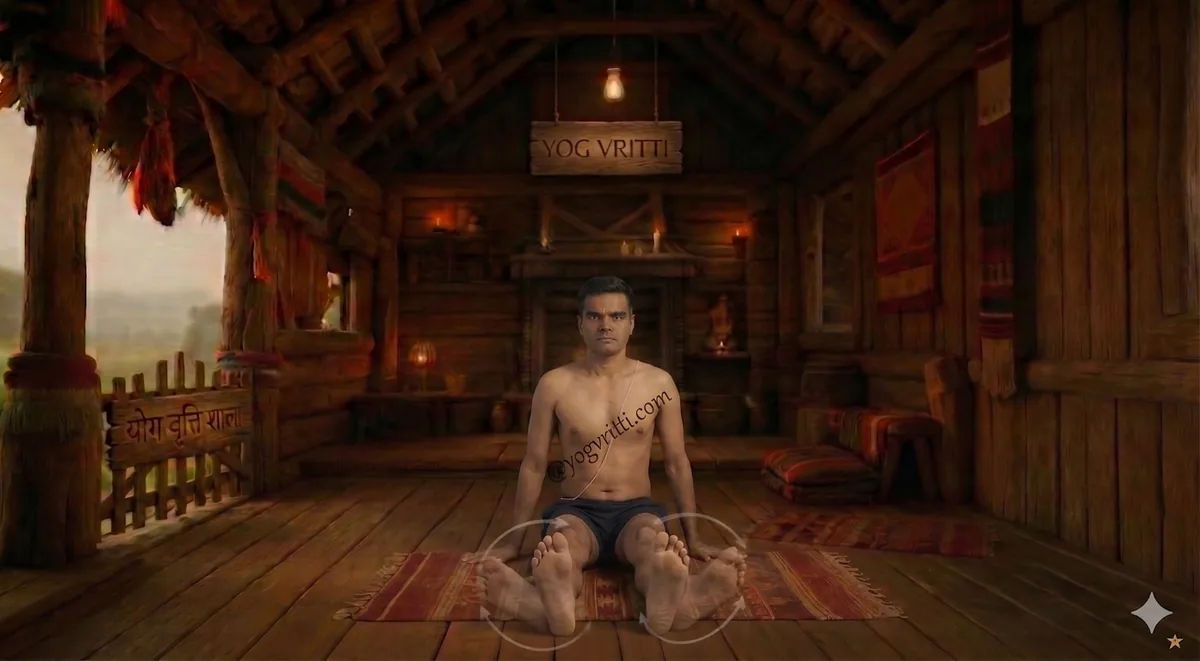
Ankle Rotations, performed thoughtfully in a prone position, serve as a foundational preparatory movement, awakening the intricate architecture of the feet and lower legs. This gentle practice mobilizes the primary ankle joint and the subtalar joint, enhancing lubrication and range of motion while subtly engaging the muscles of the calves and shins. Beyond the physical, it refines proprioception, grounding the practitioner in their body and fostering a quiet, focused mind, essential for cultivating stability and awareness in all subsequent asanas.
Ankle Rotations, also called Ankle Circles is a classical yoga posture in the Iyengar tradition. Performed lying down, the body engages the posterior chain against the gentle resistance of gravity. The posture works to stretch the calves. Warms the joint for standing postures. Enhances proprioception and balance awareness. It is particularly valued for developing greater flexibility. Suitable for beginners and regular practitioners alike, it is an excellent warm-up, particularly beneficial for seniors and prenatal. Practitioners with ankle injury should approach with care or consult a qualified teacher.
Helps with
Muscles Worked
Calves
[Gastrocnemius & Soleus]
Located at the back of your lower leg, these powerful muscles are gently engaged and released as your foot circles through its full range.
Though not a deep stretch, this subtle movement helps to release latent tension, often held from prolonged standing or sitting, promoting better circulation.
From a yogic perspective, this action helps to free the flow of Prana through the lower leg, contributing to a feeling of lightness and ease.
Regular practice enhances their pliability, supporting healthier gait and standing postures.
Shins
[Tibialis Anterior]
Positioned along the front of your lower leg, this muscle actively lifts the foot towards the shin (dorsiflexion) and helps control the lowering motion.
During ankle rotations, it engages rhythmically, strengthening the often-underutilized muscles that counterbalance the strong calf muscles.
This balanced activation prevents imbalances around the ankle joint, fostering a sense of stability and responsiveness in the entire foot and lower leg.
Peroneals
[Fibularis Longus & Brevis]
These muscles run along the outer side of your lower leg and are crucial for turning the sole of the foot outwards (eversion) and stabilizing the ankle, especially on uneven surfaces.
As you consciously articulate the ankle through its circles, these muscles are gently awakened and coordinated.
This improved engagement helps to protect the ankle from sprains and cultivates a deeper sense of connection to the earth beneath your feet in standing poses.
Intrinsic Foot Muscles
[Various small muscles within the foot]
These small, intricate muscles lie deep within the arch of your foot, responsible for fine motor control, shock absorption, and supporting the foot's natural arches.
The mindful, slow rotation of the ankle encourages the subtle activation of these often-neglected muscles, improving their strength and proprioceptive feedback.
This foundational work enhances the intelligence of the feet, allowing them to become more responsive and stable platforms for all of life's movements and yoga asanas.
Joints Mobilized
Ankle Joint
mobilizingThis hinge joint, formed by the shin bones (tibia and fibula) and the top of the foot bone (talus), is the primary site of movement in ankle rotations, allowing the foot to point and flex.
Slowly circling the foot through its maximum range of motion encourages the production and distribution of synovial fluid, effectively lubricating the joint surfaces.
This lubrication reduces friction, improves overall mobility, and brings a feeling of greater freedom and fluidity to the joint, which is vital for preventing stiffness and preparing for weight-bearing poses.
Subtalar Joint
mobilizingLocated just below the main ankle joint, between the talus and the heel bone (calcaneus), this joint is responsible for the intricate side-to-side movements of the foot, known as inversion and eversion.
The gentle, circular motion subtly mobilizes this joint, enhancing its natural ability to adapt to uneven terrain and absorb shock.
This improved adaptability translates into better balance and a more grounded sensation, allowing for greater stability and confidence in challenging balancing postures.
Midfoot Joints
mobilizingComprising numerous small articulations within the arch of the foot, these joints contribute significantly to the foot's flexibility and ability to mold to surfaces.
While the ankle rotates, these smaller joints also experience gentle movement, promoting their intrinsic health and responsiveness.
This subtle mobilization helps to maintain the natural elasticity and spring of the foot, ensuring it can effectively support the body's weight and act as a resilient foundation in all asanas.
Organ & System Benefits
Circulatory System (Lower Extremities)
The rhythmic, gentle movement of the ankles acts as a subtle pump, encouraging venous return and arterial flow in the feet and lower legs.
This increased circulation helps to combat stagnation, reducing swelling and delivering fresh, oxygenated blood to the tissues.
From a yogic perspective, this enhances the flow of Prana, revitalizing the energy channels (nadis) in the feet, which are often overlooked yet crucial for overall vitality.
Lymphatic System (Lower Extremities)
The lymphatic system relies on muscle contraction and body movement to circulate lymph fluid, which removes waste products and toxins from the body.
Ankle rotations provide a gentle, non-strenuous pumping action that aids this process in the lower extremities, helping to reduce fluid retention and swelling.
This cleansing effect contributes to a feeling of lightness and purity in the legs, aligning with the yogic principle of Saucha (cleanliness).
Nervous System
By moving the ankle slowly and mindfully, you are sending a rich stream of sensory information back to the brain about the joint's position, movement, and effort.
This deliberate practice sharpens your body's internal GPS, enhancing your proprioception and kinesthetic awareness.
This heightened sensitivity allows for more intelligent and precise movements in all asanas, fostering a deeper connection between mind and body, a vital aspect of Pratyahara.
The gentle, repetitive, and non-strenuous nature of ankle rotations, especially when performed in a relaxed, prone position, can act as a soothing balm for the nervous system.
This mindful attention to a simple movement helps to shift the body away from a stress response and towards a state of rest and digest.
As the breath remains calm and even, the mind quiets, reducing the incessant chatter (chitta vritti) and promoting a state of inner tranquility.
Mental & Emotional
The simplicity of ankle rotations provides an excellent opportunity to cultivate unwavering focus.
By directing your attention entirely to the subtle sensations, movements, and range of motion in the ankle, you train the mind to stay present and anchored.
This practice of Dharana strengthens your mental discipline, preparing you for more complex asanas and deeper states of meditation.
In a world that often values speed and intensity, the slow, deliberate pace of ankle rotations encourages patience and a non-judgmental approach to your body.
It teaches you to honor your current limitations and celebrate small improvements, fostering a sense of self-acceptance and kindness.
This cultivation of Santosha, or contentment, extends beyond the mat, promoting a more harmonious relationship with yourself.
Because of Its Shape
prone
Lying on the belly (prone) provides a deeply grounding and supportive base for the entire torso and pelvis.
This stable foundation allows the practitioner to fully release tension in the back and hips, directing their awareness and energy specifically to the extremities without concern for balance.
This deep connection to the earth cultivates a sense of steadiness and security, preparing the nervous system for more dynamic movements.
The prone position is inherently relaxing for many, offering a sense of surrender and release.
It makes this preparatory movement highly accessible to individuals with varying levels of strength, balance, or mobility, as the body is fully supported against gravity.
This ease allows for a deeper exploration of internal sensation, fostering a meditative quality even in a simple physical action.
Fascial Lines
The intricate web of connective tissue (fascia) that envelops muscles, bones, and organs throughout the body is gently influenced by these subtle ankle movements.
Specifically, the fascial lines surrounding the lower leg, including the deep posterior compartment and lateral compartment, experience a mild, rhythmic engagement and release.
This helps to maintain the pliability and hydration of these tissues, preventing adhesions and promoting the free flow of energy (Prana) through the lower limbs, thus improving overall mobility and reducing stiffness.
Breathing & Respiratory
In the prone position, with the torso supported, the breath can naturally deepen and expand into the back and sides of the rib cage, encouraging a full diaphragmatic breath.
This relaxed and unrestricted breathing pattern allows for a more complete exchange of gases and helps to calm the nervous system.
Connecting the slow, deliberate ankle rotations with a smooth, even breath enhances body-mind integration, making the movement a form of moving meditation and naturally complementing gentle pranayama practices like Dirgha Swasam (three-part breath).
Anatomical Caution
Practitioners with acute ankle injuries, severe pain, or recent surgery in the foot or ankle should approach this movement with extreme caution or avoid it entirely.
Always advise students to listen intently to their bodies, moving only within a pain-free range and consulting a healthcare professional if any discomfort persists.
The goal is mobilization, not aggravation.