6
Muscles
5
Joints
2
Organs
2
Mental
Ardha Padma Padangusthasana
अर्ध पद्म पादांगुष्ठासन
Ardha Padma Padangusthasana is a profound standing forward fold that beautifully integrates hip opening, spinal lengthening, and shoulder mobility with a challenging balance component. It systematically unwinds tension along the entire posterior chain from the heel to the crown, while simultaneously cultivating deep internal stability through core engagement and focused awareness. This pose offers a unique opportunity to explore the intricate connection between physical alignment and mental tranquility, grounding the practitioner while expanding their sense of inner space and freedom. It's a journey into stillness and strength, revealing areas of both physical and energetic holding, making it invaluable for developing both physical and mental fortitude.
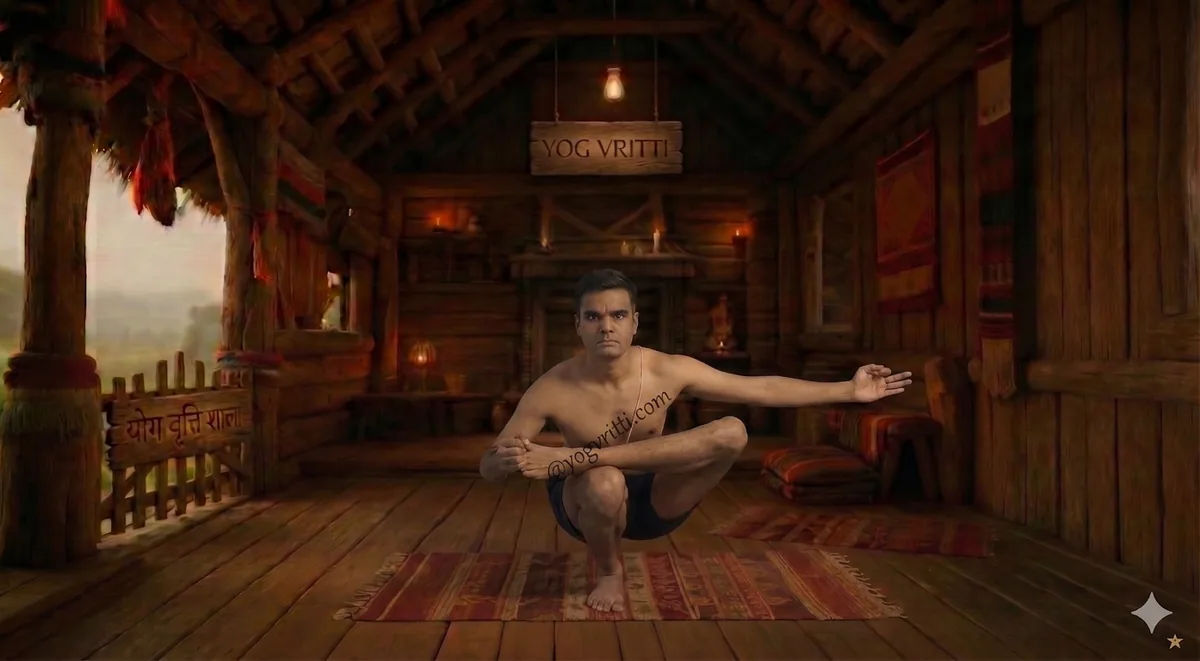
Half Lotus Toe Hold Pose, also called Standing Half Lotus Toe Grab is a classical yoga posture. Its Sanskrit name Ardha Padma Padangusthasana translates word-for-word as: Ardha (Half) · Padma (Lotus) · Pada (Foot) · Angustha (Big Toe). From a standing position, the body roots firmly through the feet while the spine extends upward. The posture works to lengthen the hamstrings, open and strengthen the shoulders and engage the core. Develops binding ability. Standing balance challenge. It is particularly valued for developing greater flexibility. Suitable for intermediate practitioners with foundational yoga experience, it is a meaningful addition to any practice. Practitioners with knee injury and hip injury should approach with care or consult a qualified teacher.
Helps with
Muscles Worked
Hamstrings
[Biceps femoris, Semitendinosus, Semimembranosus]
The powerful muscles along the back of your standing thigh (hamstrings) receive a sustained, intelligent lengthening as the pelvis tilts forward over the stable leg.
These muscles are gently encouraged to release, not forced, allowing for a deeper forward fold and reducing chronic tension that often pulls on the sitting bones and sacrum.
This action frees the downward flow of apana vayu, promoting a feeling of groundedness and ease in the lower body.
Gluteal muscles
[Gluteus maximus, medius, minimus]
On the standing leg, the large muscles of your buttocks (gluteals) lengthen as the hip flexes deeply, releasing tightness from prolonged sitting and contributing to the forward fold.
Simultaneously, on the bent leg, the smaller deep gluteal muscles (such as piriformis) are actively engaged in external rotation to create the half-lotus position.
This dual action brings balance to the hips, promoting both stability and openness, and helps to release stagnation in the pelvic region.
Erector Spinae
[Iliocostalis, Longissimus, Spinalis]
The long muscles running parallel to your spine (erector spinae) are encouraged to lengthen as you fold forward, creating space between the vertebrae rather than collapsing the trunk.
The intention is to draw the spine long from the tailbone to the crown of the head, counteracting the compressive forces of gravity.
This gentle traction helps to decompress the spinal column, allowing prana to flow more freely upwards along the central channel (sushumna nadi).
Deep Hip Rotators
[Piriformis, Gemelli, Obturators, Quadratus femoris]
On the leg in half lotus, the deep muscles nestled around your hip joint (deep hip rotators) are called into significant external rotation.
This action, when performed mindfully, works to increase the range of motion in the hip capsule, gently coaxing open tightness that can restrict movement and energy flow.
Over time, this targeted release helps to free stiffness in the pelvis and lower back, cultivating a sense of freedom and spaciousness in the hips.
Pectoral muscles
[Pectoralis major, minor]
The muscles of the chest (pectorals) on the side of the binding arm are significantly lengthened as the arm rotates externally and draws behind the back, opening the front of the body.
This counteracts the common postural tendency of rounded shoulders and a collapsed chest, which can restrict breath and energy.
By opening this area, the heart space feels more expansive, allowing for deeper breathing and a greater sense of emotional freedom and openness.
Core muscles
[Transversus abdominis, Obliques, Pelvic floor]
Your deep abdominal and pelvic floor muscles (core) are continuously engaged to stabilize the trunk and maintain balance in this challenging posture.
Rather than a rigid contraction, it's an intelligent drawing in and up, supporting the spine and preventing undue strain on the lower back during the forward fold.
This internal support cultivates a sense of inner strength and centeredness, channeling the energy of apana vayu upwards and grounding the entire being.
Joints Mobilized
Hip Joint
mobilizingBoth hip joints are profoundly engaged here: the standing hip moves into deep flexion and adduction, while the lotus hip undergoes significant external rotation and flexion.
This multifaceted mobilization works to increase the overall range of motion in the hip sockets, releasing tension held deep within the joint capsule.
Regular practice can alleviate stiffness and improve fluidity in daily movements, fostering a sense of lightness and ease in the lower body.
Knee Joint
flexion (lotus leg), stabilization (standing leg)The knee of the lotus leg is deeply flexed, requiring careful attention to its alignment to protect the ligaments and menisci from torque.
Meanwhile, the standing leg's knee is either extended or softly bent, stabilizing the entire lower limb and supporting the body's weight.
This pose teaches intelligent engagement around the knees, building strength and flexibility without strain, thus improving overall knee health and ensuring stable support for the body.
Spine (Vertebral Joints)
mobilizing (flexion), decompressingThe entire spinal column, from the sacrum to the cervical vertebrae, experiences a gentle, elongating flexion in this forward fold.
The action is one of creating space between each vertebra, encouraging the natural curves of the spine to extend rather than collapse.
This decompression helps to relieve pressure on spinal nerves and discs, fostering a sense of lightness and freedom in the back and allowing prana to flow unobstructed along the sushumna nadi.
Shoulder Joint
mobilizing (external rotation, adduction, extension)The shoulder joint of the binding arm undergoes significant external rotation, adduction, and extension, working to open the front of the chest and mobilize the shoulder capsule.
This action helps to counteract habitual forward rounding of the shoulders, improving posture and increasing the functional range of motion in the upper body.
Energetically, this opening cultivates a sense of courage and expansiveness in the heart center (anahata chakra).
Sacroiliac (SI) Joint
stabilizing, gentle mobilizationThe SI joint, where the sacrum meets the pelvis, is encouraged to stabilize on the standing leg side while subtly mobilizing on the lotus leg side through the action of the hips.
The forward fold, when initiated from the hips with a long spine, helps to maintain the integrity of this crucial joint, preventing undue torque.
This intelligent engagement brings awareness to the foundational stability of the pelvis, grounding the practitioner and preventing lower back discomfort.
Organ & System Benefits
Abdominal Organs
In this deep forward fold, the abdominal organs receive a gentle, internal compression as the torso folds towards the standing thigh.
This mild massage encourages circulation to the digestive and excretory organs, stimulating their function without creating strain.
Upon release from the pose, there's a surge of fresh, oxygenated blood, which helps to cleanse and revitalize the entire abdominal region, supporting healthy digestion and elimination.
Heart
As a mild inversion, Ardha Padma Padangusthasana gently shifts the relationship of the heart to gravity, with the head positioned below the heart.
This reduces the workload on the cardiovascular system and encourages venous return from the lower extremities.
This subtle change can feel calming and restorative, providing a moment of repose for the heart and allowing for a deeper connection to the internal rhythm of the body.
Nervous System
The challenge of balancing on one leg while simultaneously folding forward and binding an arm demands intense focus and proprioceptive awareness, drawing the mind inward (pratyahara).
This deep concentration quiets the fluctuations of the mind (chitta vritti), shifting the nervous system from a state of external reactivity to internal calm.
The sustained hold, combined with a steady breath, activates the parasympathetic nervous system, inducing a profound sense of groundedness and inner peace.
The mild inversion, where the head is below the heart, helps to soothe the nervous system by subtly altering blood flow to the brain, which can reduce mental fatigue and anxiety.
This promotes a sense of clarity and tranquility, fostering a more introspective state.
The combination of physical effort and mental stillness creates a meditative environment, allowing the practitioner to feel more centered and less overwhelmed by external stimuli.
Mental & Emotional
This pose demands immense mental focus and unwavering attention (dharana) to maintain balance and alignment, effectively training the mind to stay present and anchored in the moment.
The act of folding forward symbolizes introspection and humility, encouraging a surrender to the present moment and a release of external distractions.
This cultivation of inner stillness helps to quiet the incessant chatter of the mind, fostering a profound sense of mental clarity and calm.
Ardha Padma Padangusthasana builds patience and perseverance, as achieving depth in the pose requires consistent effort and a non-grasping attitude towards results.
The challenge of the bind and the balance component teaches acceptance of one's current limitations while inspiring gentle, mindful progress.
This mental discipline translates into daily life, helping students approach challenges with greater equanimity and a deeper trust in their own inner resources.
Because of Its Shape
forward bend
Forward bends are inherently introspective and calming, drawing the senses inward and quieting the mind, which is essential for cultivating inner awareness.
Physically, they create length along the entire posterior chain of the body, from the heels to the crown of the head, releasing tension in the hamstrings, glutes, and spinal extensors.
Energetically, this shape encourages the downward flow of apana vayu, promoting grounding and a sense of surrender, which in turn pacifies the nervous system.
Fascial Lines
This pose creates a profound release along the entire superficial back line of fascia, stretching from the soles of the feet up the calves, hamstrings, glutes, and along the spine to the back of the head.
Simultaneously, the binding arm engages and stretches the lateral and spiral lines of fascia on the torso and shoulder, creating a deep opening.
This integrated lengthening helps to unravel deeply held patterns of tension in the connective tissue, allowing for greater freedom of movement and a palpable sense of energetic unblocking throughout the body.
Breathing & Respiratory
The deep forward fold and abdominal compression in Ardha Padma Padangusthasana naturally encourage a longer, more complete exhalation, as the diaphragm has less space to descend.
The gentle squeeze on the abdomen helps to expel stale air from the lungs, making space for a deeper, more nourishing inhalation upon release.
This emphasis on exhalation calms the nervous system and is particularly conducive to practices like Ujjayi breath, which further draw the awareness inward and promote a sense of tranquility and groundedness.
Anatomical Caution
Approach this pose with utmost care for the knee of the lotus leg; never force the hip if the knee protests, as the knee is a hinge joint not designed for rotation.
Also, be mindful of the lower back; ensure the forward fold initiates from the hips with a long spine, rather than rounding the lumbar spine, to protect the vertebral discs.
Students with shoulder impingement or rotator cuff issues should modify or omit the arm bind, finding an alternative chest opening.