4
Muscles
3
Joints
2
Organs
2
Mental
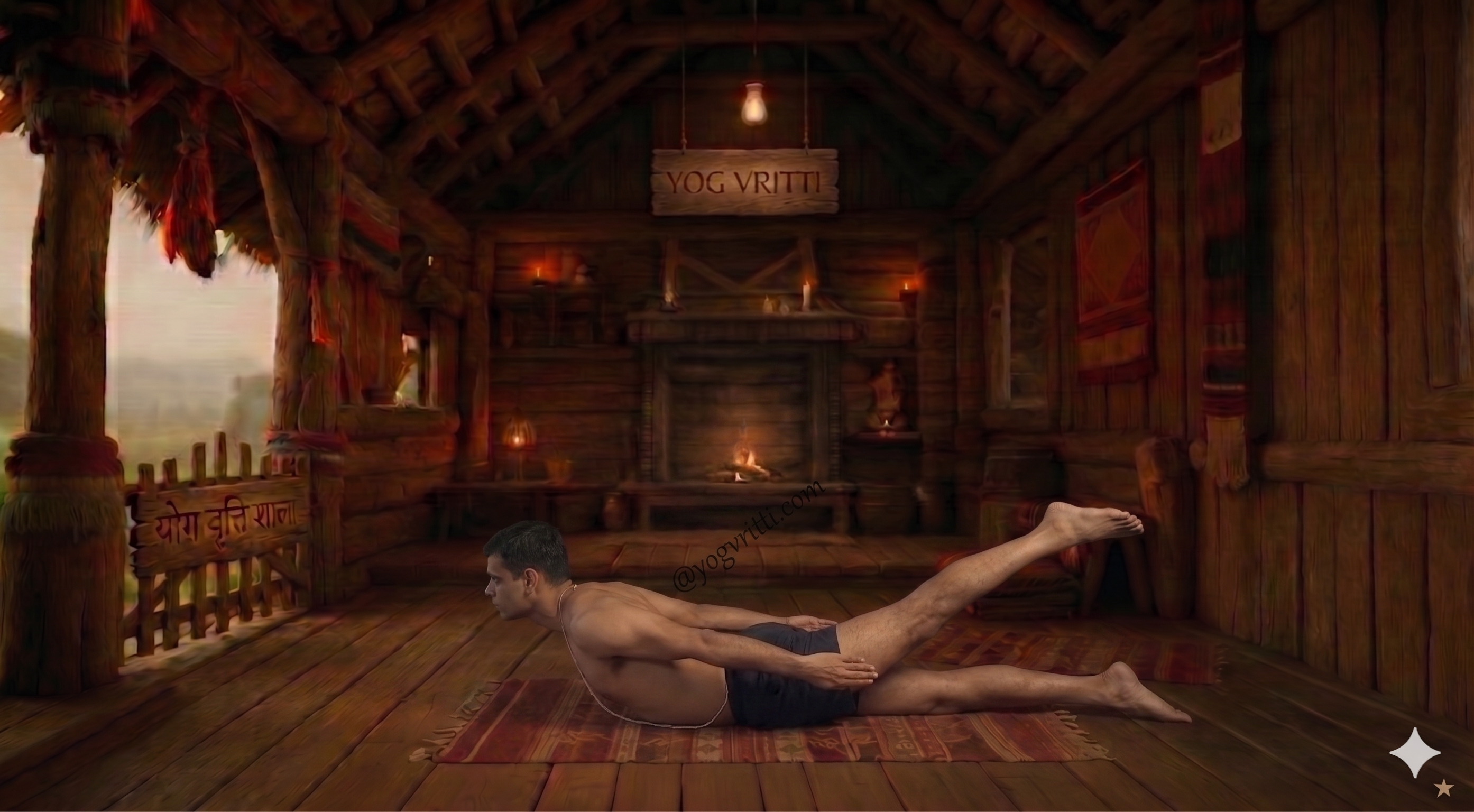
Ardha Salabhasana
अर्ध शलभासन
Ardha Salabhasana, or Half Locust, is a foundational prone backbend that gently strengthens the entire posterior chain, particularly the muscles of the lower back and glutes. By lifting one leg at a time, it systematically builds stability and resilience in the spinal column and pelvis, counteracting the effects of prolonged sitting. Energetically, this pose cultivates a sense of grounded strength and an upward, expansive quality, awakening the innate power of the back body. It’s an invaluable practice for anyone seeking to alleviate back pain, improve posture, and cultivate deep bodily awareness.
Half Locust Pose, also called One-Leg Locust is a classical yoga posture. Its Sanskrit name Ardha Salabhasana translates word-for-word as: Ardha (Half) · Salabha (Locust) · Asana (Pose). In this posture, the body engages the posterior chain against the gentle resistance of gravity. The posture works to release the lower back, activate the glutes and lengthen the hamstrings. Tones glutes and hamstrings. Prepares for full salabhasana. It is particularly valued for alleviating back discomfort and easing sciatic discomfort. Suitable for beginners and regular practitioners alike, it is an excellent warm-up, particularly beneficial for beginners and seniors. Practitioners with pregnancy and abdominal surgery should approach with care or consult a qualified teacher.
Helps with
Muscles Worked
Spinal Erectors
[Erector Spinae]
These long, deep muscles running parallel to your spine (erector spinae) are the primary movers in Ardha Salabhasana.
As you lift the leg, they engage concentrically to extend the lumbar spine, building essential strength that supports good posture and protects against injury.
This action awakens the core intelligence of your back body, encouraging it to hold itself with strength and integrity rather than relying on external support.
Through consistent practice, these muscles gain endurance, contributing to a feeling of effortless uprightness and reducing chronic lower back fatigue.
Buttock Muscles
[Gluteus Maximus]
The largest muscle of your buttocks (gluteus maximus) plays a crucial role in lifting the leg and extending the hip in this pose.
Activating these muscles powerfully yet intelligently helps to stabilize the pelvis and sacrum, preventing undue strain on the lower back.
This engagement creates a strong, supportive foundation for the spine, allowing the backbend to originate safely from the hips rather than hyper-extending the lumbar spine.
Yogically, strong glutes help root the lower body, providing a sense of grounding and stability that supports the upward lift of the spine.
Back of Thighs
[Hamstrings]
The muscles along the back of your thigh (hamstrings) work in concert with the glutes to extend the hip and lift the leg off the floor.
While often associated with stretching, here they are strengthening isometrically and concentrically, building power in the posterior chain.
This coordinated action helps to distribute the effort of lifting evenly across the hip and leg, preventing isolated strain in the lower back.
Cultivating strength in the hamstrings through such actions helps to balance the body's muscular forces, promoting better alignment and energetic flow in the lower limbs.
Deep Abdominal Muscles
[Transverse Abdominis & Obliques]
Though not actively lifting, your deep abdominal muscles (transverse abdominis and obliques) are crucial for stabilizing the core and pelvis during the lift.
Engaging these muscles gently acts like an internal corset, protecting the lumbar spine from excessive arching and ensuring the backbend is safe and controlled.
This subtle activation fosters a sense of inner containment and support, allowing the energy of the pose to lift and extend without compromise.
It teaches the practitioner how to integrate core stability with spinal mobility, a key principle for healthy movement.
Joints Mobilized
Lower Back Joints
mobilizingThe small facet joints between the vertebrae of your lower back (lumbar spine) experience a gentle, controlled extension in Ardha Salabhasana.
This movement, when performed mindfully, helps to mobilize these joints, improving their range of motion and encouraging the healthy flow of synovial fluid.
The careful, single-leg lift ensures that the extension is distributed rather than concentrated in one area, reducing stiffness and promoting a feeling of ease in the lower back.
Regular practice contributes to sustained spinal health and flexibility, preventing age-related rigidity.
Sacroiliac (SI) Joint
stabilizingThe Sacroiliac (SI) joint, where your sacrum meets your pelvis, is a common area of instability or pain.
In Ardha Salabhasana, the strong engagement of the gluteus maximus and deep core muscles helps to stabilize this joint.
This creates a supportive girdle around the pelvis, reducing shear forces and promoting a sense of integration between the lower spine and legs.
Energetically, stabilizing the SI joint helps to ground the root chakra (Muladhara), fostering a sense of security and stability throughout the entire posture and body.
Hip Joint
mobilizingThe ball-and-socket joint of your hip (hip joint) undergoes extension as you lift the leg away from the floor.
This action mobilizes the hip joint capsule, improving its flexibility and range of motion, which is often restricted by prolonged sitting.
The controlled lift strengthens the muscles responsible for hip extension, contributing to better gait and overall lower body function.
Yogically, freeing up the hips can release stored emotional tension, allowing for a greater sense of fluidity and openness in the lower body and pelvis.
Organ & System Benefits
Abdominal Organs
In this prone backbend, your abdominal organs receive a gentle, internal compression against the floor.
This mild pressure can stimulate circulation to the digestive organs, subtly encouraging their healthy function and improving peristalsis.
While not a strong massage, this gentle compression brings fresh blood flow upon release, which can aid in detoxification and revitalization.
From a yogic perspective, this action helps to awaken *samana vayu*, the balancing energy responsible for assimilation and digestion, promoting a sense of centeredness in the core.
Lungs and Diaphragm
Lying prone with the torso gently lifting encourages a more diaphragmatic breath, as the chest's expansion is somewhat restricted by the floor.
This position naturally invites a deeper, more abdominal breath, which can be calming and restorative.
The subtle lift of the chest also creates a gentle opening across the front of the body, encouraging fuller inhalation and expanding lung capacity over time.
This mindful breathing helps to bring prana, vital life force, into the abdominal region, nourishing the internal organs and steadying the mind.
Nervous System
As you lift one leg with mindful awareness, the focus required grounds your attention, drawing it away from external distractions and into the present moment.
This deliberate, slow movement, synchronized with the breath, encourages a shift from the sympathetic 'fight or flight' response to the parasympathetic 'rest and digest' state.
The gentle, rhythmic engagement of the back muscles sends calming signals to the brain, fostering a sense of inner quietude and reducing *chitta vritti*, the fluctuations of the mind.
The inherent symmetry and groundedness of a prone pose like Ardha Salabhasana provide a sense of security and stability to the nervous system.
By working consciously with one side at a time, the practitioner develops a heightened proprioceptive awareness, meaning a better sense of where their body is in space.
This increased body awareness helps to integrate the nervous system, reducing fragmentation and promoting a feeling of wholeness and calm within the body-mind complex.
Mental & Emotional
Ardha Salabhasana cultivates immense patience and sustained focus, as the lift is subtle and requires deep internal engagement rather than brute force.
This precise, measured effort translates into a mental discipline, teaching the mind to sustain attention on a single action without wavering.
The pose becomes a moving meditation, training *dharana* (concentration) and fostering a quiet, observant state of mind, essential for deeper yogic practices.
By systematically strengthening the back body, this pose can instill a profound sense of inner courage and self-reliance.
The act of lifting against gravity, even gently, builds resilience not just physically but also mentally, helping to overcome feelings of weakness or helplessness.
This inner fortitude translates off the mat, empowering the practitioner to face challenges with greater confidence and a steadier resolve, fostering a quiet strength that emanates from within.
Because of Its Shape
backbend
As a gentle backbend, Ardha Salabhasana systematically strengthens the entire posterior chain, counteracting the common forward-slouching posture of modern life.
It encourages the spine to extend and lengthen, creating space between the vertebrae and improving overall spinal mobility.
This action helps to lift the chest and open the front of the body, making breathing feel fuller and more expansive, and fostering an uplifted energetic quality in the upper body.
Backbends are known in yoga for their invigorating and uplifting qualities, and Ardha Salabhasana is a wonderful entry point to this category.
By gently engaging the back muscles, it stimulates the sympathetic nervous system in a balanced way, promoting alertness and combating lethargy without overstimulation.
This subtle energetic lift helps to clear stagnation, allowing *prana* to flow more freely along the spine and invigorating the entire being, leaving one feeling refreshed and centered.
The prone nature of this backbend provides a uniquely supportive and grounding experience.
Lying on the belly offers a direct connection to the earth, fostering a sense of security and stability as the spine extends.
This grounding quality helps to balance the uplifting energy of the backbend, ensuring that the practice feels both expansive and deeply rooted, cultivating a harmonious blend of strength and surrender.
Fascial Lines
The fascial network, that intricate web of connective tissue enveloping every muscle and organ, is gently engaged and toned in Ardha Salabhasana, particularly along the posterior superficial line.
As you lift the leg and extend the spine, this fascial chain is subtly stretched and strengthened, improving its elasticity and communication throughout the back body.
This mindful engagement helps to release chronic tension patterns held deep within the fascia, allowing for greater freedom of movement and a more integrated sense of self.
Energetically, this opening of the fascial channels allows for an unhindered flow of *prana* along the spine, awakening dormant vitality.
Breathing & Respiratory
In Ardha Salabhasana, the prone position naturally encourages a deeper, more diaphragmatic breath, as the abdomen presses gently into the floor on inhalation.
This subtle restriction on the belly encourages the breath to expand laterally into the ribs and upwards into the chest, promoting full lung capacity.
This rhythmic, conscious breathing helps to calm the nervous system and deepen the experience of the pose.
Integrating a slow, steady *Ujjayi* breath here can further enhance focus and the energetic benefits, turning the physical action into a profound *pranayama* practice.
Anatomical Caution
Teachers, please guide students to approach this pose with immense sensitivity, especially if they have any existing lower back discomfort or disc issues.
Emphasize lifting from the glutes and hamstrings, keeping the pelvic bones grounded, rather than forcing the lift from the lumbar spine.
Encourage students to keep the neck long and gaze down, avoiding any strain in the cervical spine.
The aim is gentle strengthening, not a dramatic lift, so less is often more here to protect the spine.