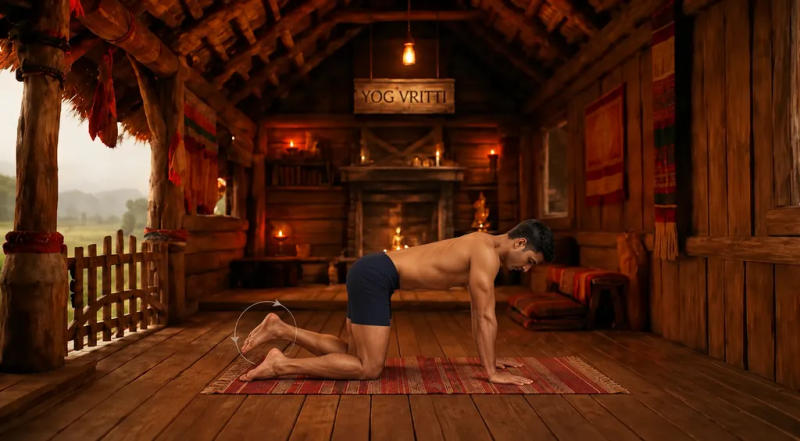
Variations
kneeling · beginner· भरमानासन - पैर के घेरे
Tabletop Foot Circles
Bharmanasana (table top pose) - Foot Circles · All Fours Foot Circles
BharmanSupporting / BearingAsanaTabletop — Foot Circles
Beginning from a kneeling position, the practitioner aligns the body with precision and intentional breath. Mobilizes the hip joint through full range. Strengthens the gluteal muscles. Improves neuromuscular control and balance. It is particularly valued for developing greater flexibility. Suitable for beginners and regular practitioners alike, it is an excellent warm-up, particularly beneficial for beginners and prenatal. A blanket can be used to make the posture more accessible and support correct alignment. Practitioners with wrist injury and knee injury should approach with care or consult a qualified teacher.
Level BeginnerType KneelingSides One side
How to practise
Place a folded blanket under your knees to provide cushioning and support for the joints.
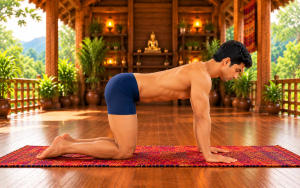
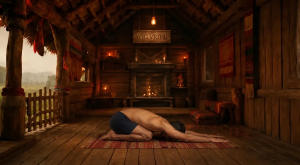
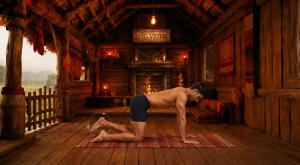
Come onto your hands and knees in Bharmanasana, with wrists under shoulders and knees under hips.
Spread your fingers wide, press the palms firmly into the mat, and keep your gaze between your hands.
Lengthen your spine from the crown of the head to the tailbone, keeping the abdomen slightly engaged.
Inhale, lift your right foot off the floor while keeping the right knee bent and stable.
Teaching cues
Say this
- Place padding under the knees if needed for comfort
- Align the hips directly above or behind the knees
- Keep the spine long and the chest lifted
- Press the tops of the feet or toes firmly into the floor
- Engage the core to support the lower back
Watch for
- Placing excessive pressure on the kneecaps without padding
- Letting the hips shift forward of the knees
- Collapsing the lower back
- Tensing the shoulders and neck
- Ignoring pain in the knees or ankles — use props or modify
What it works
Tap an area to see its muscles3D anatomy adapted from Z-Anatomy, CC BY-SA 4.0
Calves & feet
BothTabletop Foot Circles both stretches and strengthens your calves and feet.
Muscles at work
- GastrocnemiusStretches⚑ Limits the pose
Stabilizes the lower leg and ankle during standing poses and ankle stretches.
Main action: plantar flexes foot; assists in flexing the knee
- Tibialis AnteriorContracts
Supports arch integrity and ankle dorsiflexion in standing poses and transitions.
Main action: dorsiflexes and inverts the foot
⚑ Where you’ll feel it
Tightness in the gastrocnemius is what usually stops you going deeper here. Ease off at the first strong stretch and keep breathing — don’t force the end range. Props that help: blanket.
- Mobilizes the hip joint through full range
- Strengthens the gluteal muscles
- Improves neuromuscular control and balance
- Warms the hips for deeper postures
- Builds core stability
Take care
Hip Injury
Deep hip flexion, external rotation, or weight-bearing can aggravate labral tears, impingement, or bursitis.
Modify · Place a block or blanket under the hip to reduce joint compression; keep the weight evenly distributed.
Wrist Injury / Carpal Tunnel
Weight-bearing or extended wrist positions can compress the median nerve and aggravate inflamed tendons, worsening pain and causing numbness.
Modify · Place a folded blanket under the wrists or make fists to keep the wrist neutral in the tabletop position.
Balance Disorders
Impaired proprioception increases the risk of falls during standing and balancing poses.
Modify · Practise next to a wall or chair for support; keep both feet on the ground wherever possible.
Wrist Injury
Modify · Use forearms on the floor, or use props under hands to elevate wrists.
Knee Injury
Modify · Use thick padding under knees, or perform seated if kneeling is impossible.
Ankle Injury
Modify · Limit range of motion, perform very gently, or avoid if painful.
Pregnancy
Modify · Widen knees for comfort and ensure no pressure on the abdomen.
In a class
Quick answers
What is Tabletop Foot Circles?
Beginning from a kneeling position, the practitioner aligns the body with precision and intentional breath. Mobilizes the hip joint through full range. Strengthens the gluteal muscles. Improves neuromuscular control and balance. It is particularly valued for developing greater flexibility.
How do you do Tabletop Foot Circles?
Place a folded blanket under your knees to provide cushioning and support for the joints. Come onto your hands and knees in Bharmanasana, with wrists under shoulders and knees under hips. Spread your fingers wide, press the palms firmly into the mat, and keep your gaze between your hands.
What are the benefits of Tabletop Foot Circles?
Mobilizes the hip joint through full range. Strengthens the gluteal muscles. Improves neuromuscular control and balance. Warms the hips for deeper postures.
Is Tabletop Foot Circles good for beginners?
Yes, it is a beginner-level pose. Useful preparation: Tabletop Pose and Child's Pose.
Who should avoid Tabletop Foot Circles?
Take extra care, or skip it, with hip injury, wrist injury / carpal tunnel or balance disorders. If you are unsure, check with a qualified teacher or your doctor first.
Which props help with Tabletop Foot Circles?
Helpful props: blanket.
- Pose type
- Core Strengthener
- Body focus
- Lower Body, Core, Ankles
- Best for
- Beginners, Prenatal, Postnatal, Desk Workers
- Yoga styles
- Iyengar, Hatha, Vinyasa
- When to practise
- Warm Up, Quick Practice