5
Muscles
4
Joints
2
Organs
1
Mental
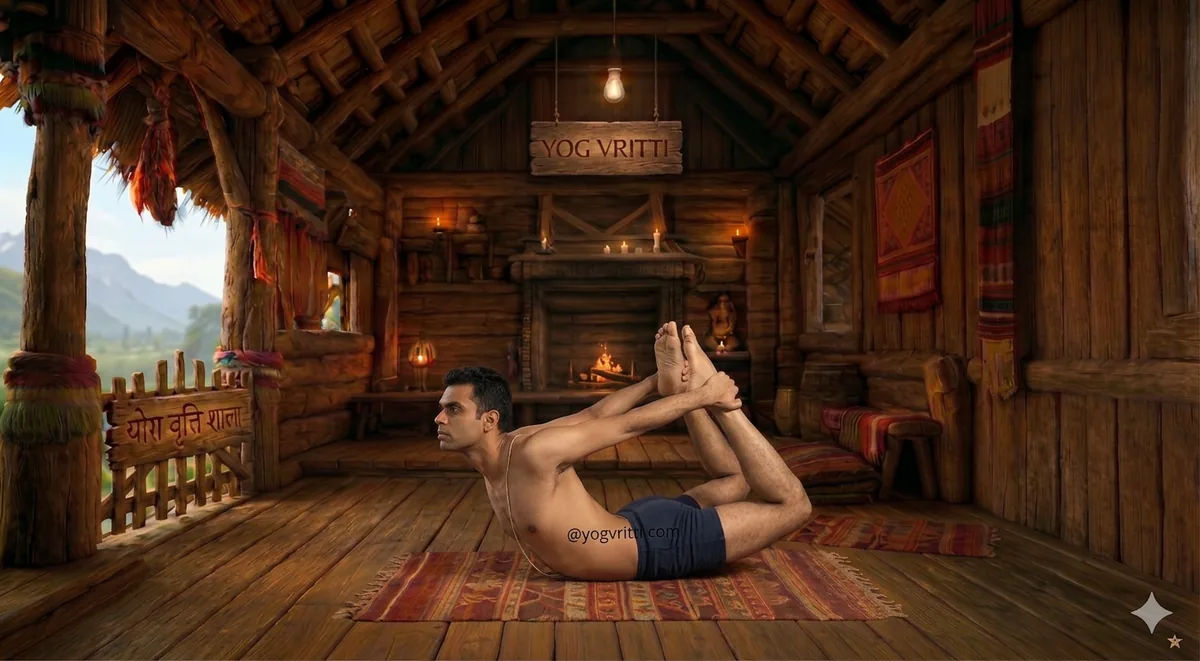
Dhanurasana Variation (One Leg at a Time)
धनुरासन (विविधता)
This accessible variation of Dhanurasana allows for a gentle yet profound opening of the entire front body, while simultaneously strengthening the back. By working one side at a time, we can meticulously observe and address imbalances in the spine, hips, and shoulders, fostering greater symmetry and awareness. It’s an intelligent approach to cultivate spinal flexibility and build core strength, preparing the mind and body for deeper backbends with confidence and grace. This pose encourages the upward flow of prana, invigorating the spirit and cultivating a sense of expansive freedom.
Bow Pose Variation, also called One-Leg Bow Pose is a classical yoga posture. Its Sanskrit name Dhanurasana Variation (One Leg at a Time) translates word-for-word as: Dhanu (Bow) · Asana (Pose). Performed lying down, the body engages the posterior chain against the gentle resistance of gravity. The posture works to strengthen and extend the back and release tension in the hips. Stretches the front body progressively. Strengthens the back muscles. It is particularly valued for alleviating back discomfort and developing greater flexibility. Suitable for beginners and regular practitioners alike, it is a meaningful addition to any practice, particularly beneficial for beginners. A strap can be used to make the posture more accessible and support correct alignment. Practitioners with spinal injury and abdominal surgery should approach with care or consult a qualified teacher.
Helps with
Muscles Worked
Erector Spinae
[Spinal extensors]
These vital muscles run along the entire length of your spine, from the sacrum all the way up to the skull, acting as the primary architects of spinal extension.
In this pose, they work dynamically and concentrically to lift and sustain the torso against gravity, building resilient strength in the posterior chain.
This action directly counteracts the effects of prolonged sitting, helping to restore the natural curve of the lumbar spine and fostering an upright, confident posture.
Energetically, strengthening these muscles helps to awaken the central channel (sushumna nadi), allowing for a more harmonious flow of vital energy.
Gluteus Maximus
[Largest buttock muscle]
Located at the back of your hip, this powerful muscle is crucial for extending the hip and lifting the leg away from the floor.
In this variation, the gluteus maximus on the lifted side contracts strongly to elevate the thigh, contributing significantly to the backbend.
This targeted engagement not only builds strength in the hip extensors but also stabilizes the pelvis, creating a firm foundation for the spinal arch.
From a yogic perspective, strong glutes provide a sense of grounded power and stability, connecting us more deeply to our root chakra.
Quadriceps
[Front thigh muscles]
The quadriceps femoris group covers the front of your thigh, extending the knee and assisting in hip flexion.
As you bend the knee and lift the leg back, these muscles are intensely stretched across the front of the hip and thigh.
This deep, sustained lengthening helps to release chronic tightness often accumulated from activities like running or sitting, improving overall leg flexibility.
Releasing tension in the quadriceps can alleviate pressure on the knees and hips, allowing prana to flow more freely through the major energy channels of the legs.
Psoas Major
[Deep hip flexor]
This deep, powerful muscle connects your lumbar spine to your inner thigh, playing a critical role in hip flexion and lumbar stability.
In Dhanurasana, particularly as the hip extends and the thigh lifts, the psoas on the working side receives a profound and often much-needed stretch.
Releasing tension in the psoas can alleviate lower back discomfort, improve posture, and free up movement in the pelvic region.
Energetically, a supple psoas is linked to emotional release and a sense of internal spaciousness, allowing the practitioner to feel less constricted and more at ease.
Rhomboids and Trapezius
[Upper back muscles]
These muscles span your upper back, connecting your shoulder blades to your spine and neck.
As you lift the chest and draw the shoulder blade back to hold the ankle, the rhomboids and middle trapezius actively contract to retract and stabilize the scapula.
This action helps to broaden the chest and externally rotate the shoulders, counteracting the common rounded-shoulder posture.
Building strength and awareness in these muscles cultivates a sense of openness and confidence in the chest, allowing the heart chakra to blossom and encouraging an expansive, uplifting breath.
Joints Mobilized
Spinal Column
mobilizingThe entire spinal column undergoes a gentle yet profound extension in this pose, particularly in the thoracic and lumbar regions.
This controlled arching helps to decompress the intervertebral discs anteriorly, while encouraging mobility and flexibility between each vertebra.
Regular practice can counteract stiffness from prolonged sitting, improving the natural curves of the spine and reducing the likelihood of back pain.
From a yogic perspective, a flexible spine is essential for the upward flow of kundalini energy, fostering vitality and mental clarity.
Shoulder Girdle
mobilizingAs you reach back and hold your ankle, the shoulder joint (glenohumeral) moves into extension and external rotation, while the shoulder blade (scapula) retracts and depresses against the rib cage (scapulothoracic joint).
This combined movement gently opens the chest and fronts of the shoulders, releasing tension often held from daily activities.
This opening creates physical space for the lungs and heart, fostering a sense of emotional liberation and allowing for a fuller, more expansive breath, which in turn enhances the flow of prana.
Hip Joint
mobilizingOn the working side, the hip joint moves into significant extension as the thigh lifts away from the floor, while the opposite hip remains grounded, creating a stable base.
This targeted extension stretches the hip flexors, particularly the psoas and rectus femoris, which are often tight in modern lifestyles.
Improving hip mobility is crucial for a healthy lower back and pelvis, allowing for greater freedom of movement in all directions.
Energetically, releasing tension in the hips can unlock stored emotions, promoting a sense of ease and fluidity in the lower body.
Knee Joint
mobilizingThe knee joint on the lifted side moves into deep flexion as the heel draws towards the buttock, preparing to catch the ankle.
This action gently mobilizes the knee, improving its range of motion and flexibility.
It is important to approach this flexion with care, ensuring no strain on the ligaments.
A healthy, mobile knee supports the entire leg and hip, contributing to overall stability and allowing for smooth, unhindered movement, which is vital for maintaining an active and pain-free yogic practice.
Organ & System Benefits
Abdominal Organs
Lying prone with the abdomen pressed against the floor, and then lifting the torso and leg, creates a gentle yet effective compression and release of the abdominal organs.
This internal massage stimulates peristalsis and improves blood circulation to the digestive tract, aiding in the detoxification process and alleviating issues like constipation.
From a yogic perspective, this action helps to stoke Agni, the digestive fire, transforming food into vital energy and enhancing overall vitality and well-being.
Lungs and Diaphragm
The expansive lift of the chest in this backbend directly creates more space for the lungs to inflate and for the diaphragm to move freely.
This encourages deeper, more complete inhalations, increasing lung capacity and oxygen uptake.
This physical opening of the chest cavity supports the natural rhythm of the breath, fostering a sense of lightness and vitality throughout the entire body.
It allows prana, the life force, to permeate every cell, invigorating the system and clearing energetic blockages.
Nervous System
The focused attention required to lift and balance one leg at a time, combined with the gentle chest opening, helps to calm the fluctuations of the mind (chitta vritti).
This steady engagement of the body, coupled with conscious breathing, shifts the nervous system from a state of "fight or flight" (sympathetic) towards "rest and digest" (parasympathetic).
Practitioners often feel a profound sense of grounded calm yet invigorated energy after this pose, as the body learns to release tension without becoming lax.
The sustained effort encourages dharana, or concentration, bringing the mind into the present moment.
Mental & Emotional
This pose cultivates a deep sense of presence and self-awareness, as the practitioner must listen intently to the sensations on each side of the body.
By working asymmetrically, it fosters patience and discernment, encouraging us to meet our body where it is without forcing.
The chest opening inherent in this backbend also helps to release emotional blockages and cultivate courage, allowing the heart to feel more open and resilient.
It teaches us to find stability amidst exertion, translating into a greater capacity to remain poised and balanced in the face of life's challenges.
Because of Its Shape
backbend
Backbends are uniquely powerful in counteracting the pervasive forward-folding postures of modern life, which often lead to rounded shoulders and spinal stiffness.
This shape extends the spine, particularly in the thoracic region, restoring its natural curvature and promoting healthy disc hydration.
It's a direct antidote to slumping, helping to alleviate chronic back pain and improve overall postural alignment.
Yogically, backbends are considered energizing and uplifting, encouraging the upward flow of prana and stimulating the manipura chakra, the seat of personal power.
This backbending action profoundly opens the entire front of the body, including the chest, abdomen, and hip flexors.
By stretching these often-tight areas, it creates physical and energetic spaciousness, allowing for deeper breathing and improved circulation.
This opening is not just physical; it's a metaphorical opening of the heart, fostering courage, vulnerability, and a sense of expansive freedom.
Releasing tension in the front body can alleviate emotional burdens, promoting a feeling of lightness and joy.
The active engagement of the posterior chain muscles – the erector spinae, glutes, and hamstrings – is a cornerstone of backbending.
This strengthens the muscles that support the spine, creating a resilient and stable foundation for movement and posture.
This intelligent strengthening, rather than just stretching, helps to protect the spine and build lasting physical integrity.
From an energetic perspective, building strength in the back body grounds us and empowers us, rooting us in our own internal power source.
Fascial Lines
This pose intelligently addresses the superficial front line of fascia, which runs from the tops of the feet, up the shins, quadriceps, abdominal wall, and chest.
As the leg lifts and the chest opens, this entire fascial chain receives a lengthening stretch, releasing patterns of tightness that can pull the body into a forward slump.
Simultaneously, the posterior fascial lines, particularly the superficial back line, are actively engaged and strengthened to lift the body.
This dual action of lengthening the front and strengthening the back helps to restore balance in the fascial web, allowing for more fluid movement and a sense of integrated lightness throughout the entire body, enhancing the flow of prana.
Breathing & Respiratory
The prone position combined with the chest opening in this variation naturally encourages a more diaphragmatic and expansive breath.
As the abdomen is gently compressed against the floor, the breath is encouraged to lift and broaden into the side and back ribs, creating a fuller respiratory experience.
This deep, unhindered breath is crucial for calming the nervous system and enhancing the flow of prana throughout the body.
Practicing Ujjayi breath in this pose can further deepen the internal heat and focus, allowing for a more profound release of tension and a greater sense of internal spaciousness.
Anatomical Caution
Always approach this pose with sensitivity, especially if students have any lower back discomfort or knee issues.
Ensure the lower back is not compressed by lifting the chest and engaging the glutes, and that the knee is not twisted or strained when bending to catch the ankle.
Encourage students to listen to their body's signals and use a strap if reaching the ankle is challenging, prioritizing safety and stability over depth.