5
Muscles
4
Joints
2
Organs
3
Mental
Durvasasana
दुर्वासासन
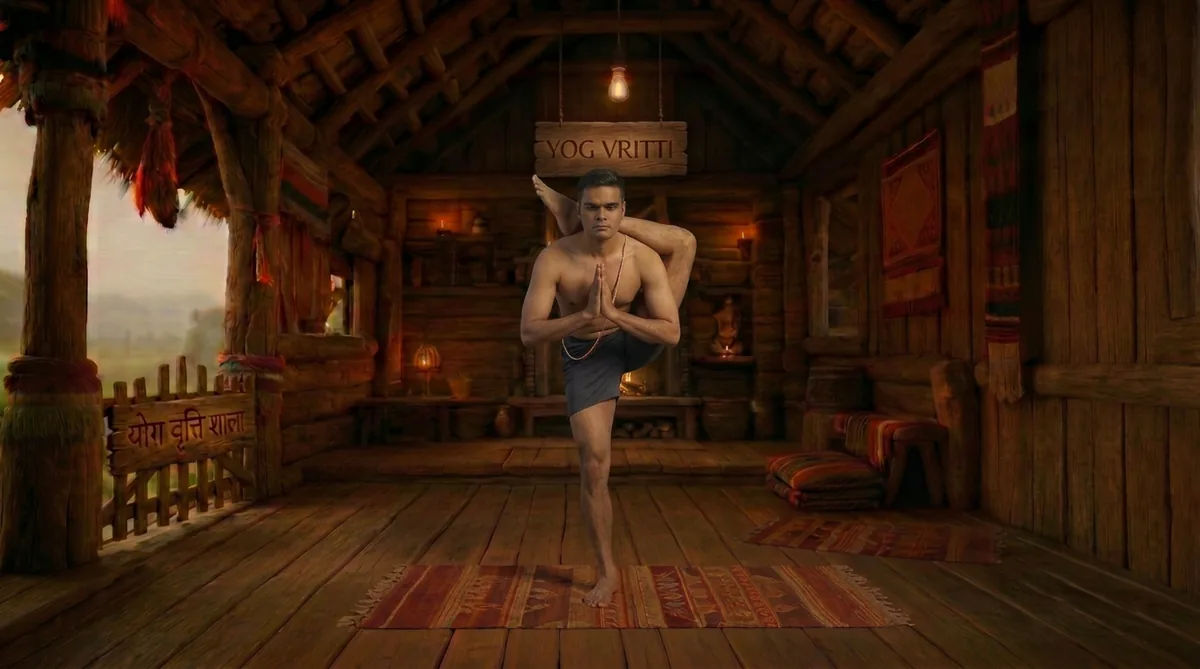
Durvasasana is a profound standing balance that demands exceptional flexibility in the hips and hamstrings, coupled with unwavering mental focus and core strength. This advanced asana deeply lengthens the posterior chain of the lifted leg while powerfully activating the anterior chain of the standing leg, creating an intricate interplay of stability and release. Energetically, it grounds the practitioner through the standing leg, while simultaneously opening the pelvis to release deep-seated tensions, challenging the mind to cultivate one-pointed awareness amidst intense physical sensation. A teacher values this pose for its capacity to refine proprioception, cultivate profound patience, and unlock new dimensions of hip mobility and mental fortitude.
Sage Durvasa's Pose, also called Durvasasana is a classical yoga posture. Its Sanskrit name Durvasasana translates word-for-word as: Durvasa (Sage Durvasa) · Asana (Pose). From a standing position, the body roots firmly through the feet while the spine extends upward. The posture works to lengthen the hamstrings and engage the core. Standing balance mastery. Mental focus and determination. It is particularly valued for developing greater flexibility. Suitable for advanced practitioners with developed body awareness, it is a meaningful addition to any practice. Practitioners with hip injury and hamstring injury should approach with care or consult a qualified teacher.
Helps with
Muscles Worked
Hamstrings
[Biceps femoris, Semitendinosus, Semimembranosus]
The long muscles running along the back of your lifted thigh (hamstrings) experience an extraordinary, sustained lengthening here, far beyond typical stretches.
As you patiently guide the leg behind the head, the nervous system is encouraged to release its protective tension, allowing these muscles to truly unwind from their origins at the sitting bones to their insertions below the knee.
In yogic terms, this deep release of the posterior chain helps to free apana vayu, facilitating a sense of lightness and unburdening in the lower body, and directly addressing tightness that can pull on the pelvis and lower back.
Deep Hip Rotators
[Piriformis, Gemelli, Obturators, Quadratus femoris]
These small but mighty muscles, nestled deep within your buttocks (deep hip rotators), are crucial for enabling the extreme external rotation required to bring the leg behind the head.
They are not merely stretching but are being coaxed into a new range of motion, which can feel intensely liberating as chronic tension held in this region begins to dissipate.
From an energetic perspective, opening these deep hip structures can release stored emotional patterns and blockages, allowing for a freer flow of prana through the pelvic bowl and sacral area.
Quadriceps
[Rectus femoris, Vastus lateralis, Vastus medialis, Vastus intermedius]
The powerful muscles on the front of your standing thigh (quadriceps) are working intensely to maintain stability and prevent the knee from collapsing.
They are actively engaged in isometric contraction, providing the foundational support necessary for the balance and the lift of the torso.
This engagement builds significant strength and endurance in the standing leg, cultivating sthira (steadiness) not just physically but also energetically, grounding your awareness deeply into the earth through your foot.
Gluteus Medius & Minimus
[Gluteus medius, Gluteus minimus]
Located on the outer side of your standing hip, these muscles (gluteus medius and minimus) are paramount for maintaining the lateral stability of your pelvis in this one-legged balance.
They prevent the standing hip from swaying outwards or collapsing inwards, acting as critical anchors.
Their consistent engagement refines your proprioceptive awareness in the standing leg, developing a subtle yet profound sense of equilibrium that extends beyond the mat, fostering a steady and unwavering connection to your center.
Core Muscles
[Transversus Abdominis, Obliques, Rectus Abdominis, Erector Spinae]
The entire cylinder of your core musculature, including the deep abdominal wall and spinal stabilizers, is actively engaged to create a strong, stable trunk from which the legs can extend and balance.
This deep engagement provides crucial support for the spine, preventing undue compression or strain as you lift and rotate one leg so dramatically.
A strong, integrated core ensures that the energy (prana) can flow freely through the central channel, allowing for both stability and lightness in the posture.
Joints Mobilized
Hip Joint (lifted leg)
mobilizingThe ball-and-socket joint of the lifted hip is taken into its extreme range of flexion, abduction, and external rotation, which is the defining action of Durvasasana.
This intense mobilization helps to break down fascial restrictions and increase synovial fluid production, promoting greater lubrication and health within the joint capsule.
Over time, this consistent, mindful exploration of range of motion can release deep-seated stiffness, creating a sense of freedom and openness in the entire pelvic region, allowing energy to flow more unimpeded.
Hip Joint (standing leg)
stabilizingThe hip joint of the standing leg bears the entire weight of the body while maintaining a subtle alignment to support the deep action of the lifted leg.
It requires a blend of strength in the surrounding muscles (like the gluteals and quadriceps) and intelligent engagement to prevent strain or misalignment.
This active stabilization cultivates resilience and endurance in the standing leg, teaching the body how to create a strong, grounded foundation from which advanced movements can safely unfold, fostering sthira and sukha simultaneously.
Knee Joint (standing leg)
stabilizingThe knee joint of the standing leg is held in a subtle, protective micro-bend, preventing hyperextension and creating a spring-like quality in the support structure.
While primarily a hinge joint, its stability is paramount in this balance, relying on the strength of the quadriceps and hamstrings to keep it aligned over the ankle.
This mindful engagement protects the ligaments and menisci, teaching the practitioner a refined sense of stability and intelligent weight distribution, which translates into greater confidence and ease in all standing poses.
Sacroiliac Joint (SIJ)
stabilizingThe sacroiliac joints, where the sacrum meets the ilium, are subtly engaged in Durvasasana, requiring a delicate balance of stability to support the deep hip opening.
While the lifted leg creates significant torque on the pelvis, the core muscles and intelligent engagement of the gluteals on both sides work to maintain the integrity of these joints.
This awareness helps to prevent strain and promotes a sense of integration between the lower spine and pelvis, cultivating a stable foundation for the entire spinal column.
Organ & System Benefits
Abdominal Organs
The deep flexion of the lifted leg and the slight forward lean in Durvasasana create a gentle, sustained compression and massage of the abdominal organs, including the intestines and stomach.
This mild internal pressure, combined with the focus on breath, can stimulate peristalsis and improve circulation to these vital areas, aiding in digestion and detoxification.
Energetically, this gentle compression can help to awaken samana vayu, balancing the digestive fire and promoting a sense of inner harmony and integration.
Pelvic Organs
The profound opening of the hips in Durvasasana brings increased blood flow and energetic activation to the pelvic bowl, directly benefiting the reproductive and excretory organs.
The sustained position encourages a release of tension that can often accumulate in this region due to prolonged sitting or stress.
This increased circulation and release can contribute to the healthy functioning of these organs, while energetically, it helps to clear blockages in the Muladhara and Svadhisthana chakras, fostering a sense of grounding and creative flow.
Nervous System
This advanced balancing pose demands absolute presence and stillness of the mind, which directly impacts the nervous system.
The intense concentration required to maintain equilibrium, combined with the deep stretch, initially engages the sympathetic nervous system as the body adapts to the challenge.
However, as the practitioner settles into the pose with a steady breath, the parasympathetic nervous system is gradually activated, leading to a profound sense of calm and heightened body awareness, quieting the constant fluctuations (chitta vritti) of the mind.
Proprioception, the body's sense of its position in space, is intensely refined in Durvasasana.
Sensory receptors in the muscles, tendons, and joints send continuous feedback to the brain, enhancing the body's internal map and coordination.
This heightened sensory input grounds awareness deeply into the physical form, effectively drawing the senses inward (pratyahara) and cultivating a profound state of present moment awareness that can be deeply therapeutic for reducing anxiety and mental distraction.
The sustained effort and mindful engagement in Durvasasana can lead to a release of endorphins and other neurochemicals associated with well-being and reduced pain perception.
While challenging, the eventual 'breakthrough' in flexibility and balance creates a sense of accomplishment and self-efficacy, positively reinforcing the nervous system's capacity for resilience.
This fosters a calm, focused state that persists beyond the pose, enhancing mental clarity and emotional stability.
Mental & Emotional
Durvasasana is a powerful teacher of patience and perseverance, demanding consistent, non-striving effort over time.
The journey to mastering this pose cultivates a deep acceptance of one's current limitations while inspiring dedicated practice, challenging the ego's desire for instant gratification.
This process builds mental resilience and an unwavering commitment to the path, mirroring the yogic principle of tapas – self-discipline that purifies and strengthens both body and mind.
This pose requires an extraordinary level of one-pointed focus (dharana), compelling the mind to remain entirely in the present moment to maintain balance and navigate the deep sensation.
Any wandering of the mind often results in a loss of equilibrium, serving as an immediate feedback mechanism.
This intense concentration acts as a form of meditation in action, effectively stilling the fluctuations of the mind and offering a profound sense of mental clarity and inner quietude.
Durvasasana fosters humility and self-acceptance, as its advanced nature means it is not accessible to everyone immediately, and progress can be slow.
It teaches the practitioner to let go of judgment and comparison, focusing instead on their personal journey and effort (karma yoga).
This cultivation of contentment (santosha) with one's present capacity, while still striving mindfully, is a profound psychological shift that extends far beyond the yoga mat, leading to greater peace and self-compassion.
Because of Its Shape
balance
As a balance pose, Durvasasana profoundly challenges and refines the body's equilibrium, engaging a complex interplay of muscular strength, proprioception, and inner ear (vestibular system) input.
This constant recalibration strengthens the deep stabilizing muscles of the standing leg and core, enhancing overall coordination and agility.
Energetically, mastering balance cultivates mental steadiness (sthira) and a deep sense of grounding, helping to calm a restless mind and foster inner peace.
The extreme hip opening involved in Durvasasana works to release deep-seated tension and fascial restrictions around the hip joint, which are often sites of stored emotional stress and physical rigidity.
By patiently and mindfully expanding the range of motion in the hips, practitioners can experience not only increased physical flexibility but also a sense of emotional liberation.
This opening facilitates the freer flow of apana vayu and prana through the pelvic region, promoting vitality and energetic balance.
As a standing pose, Durvasasana grounds the practitioner deeply through the earth, connecting them to a sense of stability and rootedness.
The standing leg becomes a powerful conduit for energy, building strength and resilience from the feet upwards through the core.
This strong foundation enables the practitioner to explore advanced movements with confidence, while yogically, it reinforces the connection to Muladhara chakra, fostering a feeling of security, stability, and presence in the world.
Fascial Lines
Durvasasana creates an extraordinary, comprehensive lengthening and release along the entire Superficial Back Line of the lifted leg, from the sole of the foot up through the hamstrings, glutes, and even subtly into the back.
Simultaneously, the Spiral Lines and Functional Lines around the trunk and hips are intensely engaged and integrated to maintain stability in the standing leg and core.
This deep fascial unwinding not only improves flexibility but also frees up energetic pathways (nadis), allowing for a more unimpeded flow of prana and releasing chronic patterns of holding that often contribute to stiffness and pain.
Breathing & Respiratory
In Durvasasana, the intense physical demand and deep stretch often initially restrict the breath, making it shallow and quick.
However, the practice requires a conscious effort to deepen and steady the breath, particularly focusing on elongating the exhalation to calm the nervous system and facilitate release into the pose.
A slow, rhythmic ujjayi breath becomes a crucial anchor for both physical stability and mental focus, allowing prana to permeate the stretched areas and soothe the intense sensations, transforming challenge into a meditative experience.
Anatomical Caution
Teachers, approach Durvasasana with utmost care and a deep understanding of individual limitations, especially regarding the knees, hips, and lower back.
Never force the leg behind the head; prioritize hip external rotation and hamstring length over achieving the full shape.
Watch for any signs of knee pain or pinching in the hip joint, as these are clear indicators to back off immediately.
Emphasize gradual progression and the importance of preparatory poses to ensure safety and sustainable practice.