4
Muscles
3
Joints
1
Organs
2
Mental
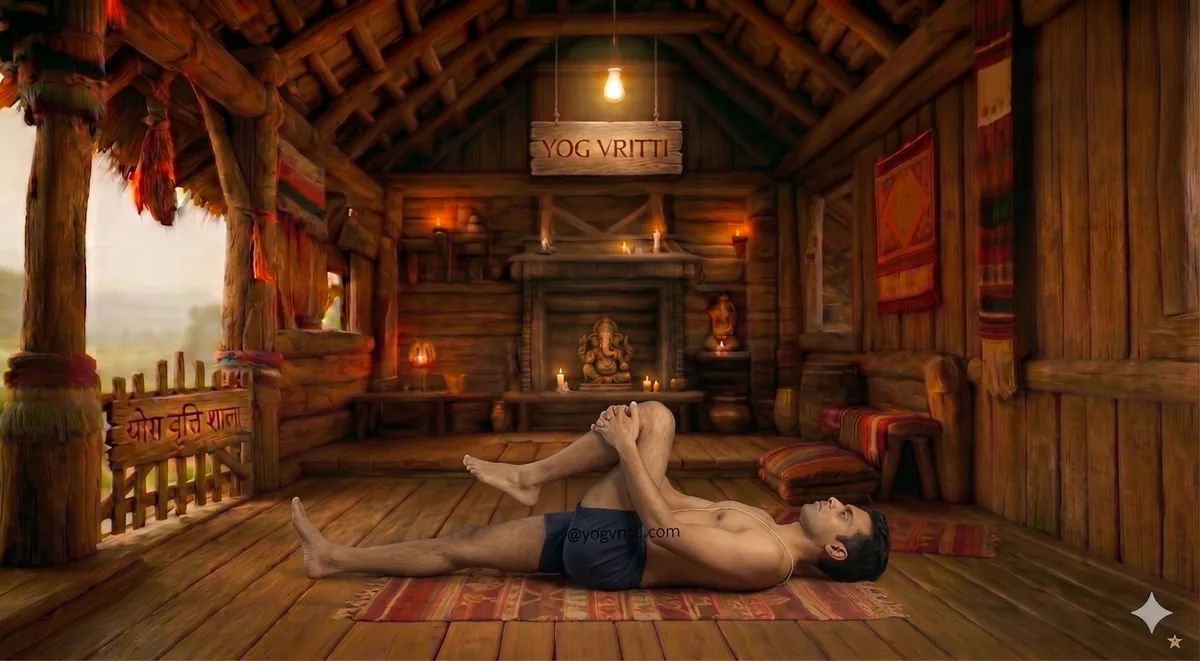
Pavana Muktasana Single Leg
एकपाद पवनमुक्तासन
Eka Pada Pavana Muktasana is a profoundly grounding supine pose that gently draws one knee to the chest, offering a deep release to the lower back and hips while simultaneously engaging the core and subtly stimulating abdominal organs. It systematically lengthens the posterior chain of the extended leg and releases tension in the bent leg's hip and glutes. This accessible shape calms the nervous system, fostering a quiet, inward awareness that allows for a profound sense of ease and stability throughout the entire body, making it invaluable for both physical and mental restoration.
Single Knee-to-Chest Pose, also called One-Leg Wind Release is a classical yoga posture. Its Sanskrit name Pavana Muktasana Single Leg translates word-for-word as: Eka (One) · Pada (Leg) · Pavana (Wind) · Mukta (Released). In this posture, the body releases into the support of the floor, allowing gravity to assist. The posture works to release the lower back, stretch the hip flexors and activate the glutes. Stretches hip flexors of the extended leg. Aids digestion. It is particularly valued for alleviating back discomfort. Suitable for beginners and regular practitioners alike, it is a calming cool-down, particularly beneficial for beginners and seniors. Practitioners with abdominal surgery and hernia should approach with care or consult a qualified teacher.
Helps with
Muscles Worked
Hamstrings
[Biceps femoris, Semitendinosus, Semimembranosus]
These powerful muscles run down the back of your thigh, from your sitting bones to just below the knee.
In this pose, the extended leg remains long and active, promoting a subtle but sustained lengthening through the entire posterior chain of that leg.
This gentle stretch, without force, helps to release chronic tightness that often contributes to lower back pain.
Yogically, it helps to release deeply held tension, allowing apana vayu (downward-moving energy) to flow more freely, enhancing a sense of stability and groundedness.
Glutes
[Gluteus maximus, medius, minimus]
Your gluteal muscles form the bulk of your buttocks, connecting your pelvis to your thigh bone.
When you draw the knee towards the chest, these muscles on the bent leg are gently stretched and released, especially if they are tight.
This passive lengthening helps to reduce compression in the hip joint and can alleviate referred pain that might be originating from tight glutes, such as piriformis syndrome.
The release in this area can feel like an unburdening, allowing a sense of freedom and ease to spread through the pelvis.
Hip Flexors
[Iliopsoas, Rectus femoris]
The hip flexors are deep muscles at the front of your hip, connecting your spine and pelvis to your thigh bone, often shortened from prolonged sitting.
In this pose, the extended leg stretches these muscles, particularly the psoas, as the front of the hip gently lengthens away from the torso.
This subtle yet significant opening helps to counteract the effects of a sedentary lifestyle, promoting better posture and reducing anterior pelvic tilt.
Energetically, releasing the psoas can unlock deep emotional tension, fostering a sense of emotional openness and ease.
Erector Spinae and Multifidus
[Sacrospinalis group and Multifidus]
These deep muscles run along either side of your spine, providing support and allowing for spinal movement.
By drawing one knee to the chest and keeping the other leg extended, the lumbar curve is gently flattened and elongated against the floor.
This provides a mild traction and release to the muscles of the lower back, decompressing the vertebral discs.
This gentle unwinding of the lower back muscles can alleviate chronic stiffness and pain, promoting a feeling of deep relaxation and ease through the spine, which is crucial for the free flow of prana.
Joints Mobilized
Sacroiliac (SI) Joint
mobilizingLocated where the sacrum (the triangular bone at the base of your spine) meets the ilium (the largest part of your hip bone), the SI joint can become stiff or painful.
In this pose, the gentle flattening of the lower back against the floor, combined with the mild traction created by drawing the knee to the chest, can subtly mobilize and decompress these joints.
This can relieve pressure and improve the stability of the pelvis, fostering a sense of grounding and reducing discomfort often associated with SI joint dysfunction.
Regular practice helps maintain healthy mobility and reduce inflammation in this crucial area.
Hip Joint
mobilizingThe hip joint is a ball-and-socket joint where your thigh bone (femur) meets your hip bone (pelvis).
Drawing the knee towards the chest creates a deep flexion in this joint, gently mobilizing the joint capsule and increasing the range of motion.
This movement encourages synovial fluid production, lubricating the joint and nourishing the cartilage.
The increased ease and freedom of movement experienced here can translate into better walking and sitting posture, promoting a sense of youthful agility and less stiffness over time.
Lumbar Vertebral Joints
decompressingThese are the joints between the vertebrae in your lower back, crucial for spinal flexibility and protecting the spinal cord.
Lying supine and drawing one knee to the chest helps to gently lengthen the lumbar spine, subtly increasing the space between the vertebral bodies and decompressing the intervertebral discs.
This gentle traction can alleviate pressure on nerve roots, reducing conditions like sciatica.
The practitioner often feels a profound sense of relief and extension in the lower back, fostering a healthier, more resilient spine.
Organ & System Benefits
Abdominal Organs
As you draw one knee deeply towards your chest, a gentle, sustained compression is applied to the abdominal area on that side.
This mild pressure can stimulate the internal organs, encouraging peristalsis (the wave-like contractions that move food through the digestive tract).
This stimulation is particularly beneficial for alleviating digestive issues like constipation and bloating.
From a yogic perspective, this action helps to 'wring out' stagnant energy (apana vayu) from the digestive system, promoting detoxification and a feeling of lightness and clarity in the gut.
Nervous System
The supine position and gentle compression of the abdomen naturally quiet the nervous system, shifting it from a sympathetic (fight-or-flight) response towards a parasympathetic (rest-and-digest) state.
This physical stillness, combined with the focus on breath, helps to calm the fluctuations of the mind (chitta vritti), reducing feelings of stress and anxiety.
The practitioner often feels a profound sense of peace and groundedness, allowing for deeper introspection and release of stored tension.
The gentle traction on the lower back and release in the hips can directly alleviate irritation of nerve roots that exit the spine, such as the sciatic nerve.
By creating space and reducing muscular compression, the pose helps to soothe nerve pathways, diminishing pain and discomfort.
This physical relief translates into a calmer mental state, as the nervous system is no longer constantly signaling pain, allowing for a greater sense of ease and well-being.
Mental & Emotional
This pose cultivates an inward focus and a sense of surrender, as the body is supported by the earth.
By gently drawing the knee towards the chest, the attention is drawn inward, away from external distractions, fostering the yogic principle of Pratyahara (withdrawal of the senses).
This internal gaze helps to quiet the mind, allowing for a deeper connection to one's inner self and a release of mental clutter.
The grounding nature of the supine position combined with the gentle, rhythmic breath in this pose helps to stabilize the mind and emotions.
It encourages a state of gentle acceptance and patience, as one learns to breathe into areas of tension rather than forcing a stretch.
This practice builds mental resilience and self-awareness, allowing practitioners to observe their reactions to discomfort with greater equanimity, fostering a sense of calm strength.
Because of Its Shape
hip opener
Hip openers, like Eka Pada Pavana Muktasana, create space and flexibility in the hip joints and surrounding musculature.
Anatomically, this involves lengthening the glutes and external rotators of the bent leg and the hip flexors of the extended leg.
This release can improve overall mobility and reduce strain on the lower back and knees.
Yogically, the hips are often considered storage centers for emotional tension and unprocessed experiences, so opening them can facilitate emotional release and a feeling of liberation.
The supine position of this pose promotes a sense of grounding and support, allowing the body to fully relax into the earth.
This horizontal alignment helps to decompress the spine naturally, especially the lumbar region, by removing the constant downward pull of gravity experienced in upright postures.
This profound physical support translates into a deep psychological sense of security and safety, encouraging the nervous system to switch into its restorative mode.
Fascial Lines
This pose gently addresses the superficial back line of fascia (especially in the extended leg) and the deep front line (through the lengthening of the hip flexors of the extended leg).
By drawing the knee to the chest, the fascial sheath around the glutes and lower back is subtly elongated and released, improving the glide between muscle layers.
This gentle unwinding of the connective tissue helps to release long-held patterns of tension, allowing for greater freedom of movement and a more fluid flow of prana throughout the body, enhancing vitality and reducing stiffness.
Breathing & Respiratory
In Eka Pada Pavana Muktasana, the gentle compression of the abdomen by the bent thigh naturally encourages a deeper, more diaphragmatic breath.
This position often makes the exhalation feel more complete and satisfying, as the abdominal pressure assists in expelling residual air.
This focus on a long, slow exhalation activates the parasympathetic nervous system, making it an excellent preparatory pose for pranayama, particularly those focused on calming and lengthening the breath, such as Viloma Pranayama (interrupted exhalation) or simply a sustained Ujjayi breath.
Anatomical Caution
Teachers should advise students with recent abdominal surgery or hernia to avoid deep compression, possibly modifying by placing hands behind the thigh instead of on the shin.
For those with knee issues, ensure the knee is not over-flexed or twisted; support under the thigh might be helpful to avoid direct pressure on the joint.
Always prioritize comfort and listen to the body's signals, especially with lower back or hip sensitivities, to prevent overstretching.