5
Muscles
4
Joints
3
Organs
3
Mental
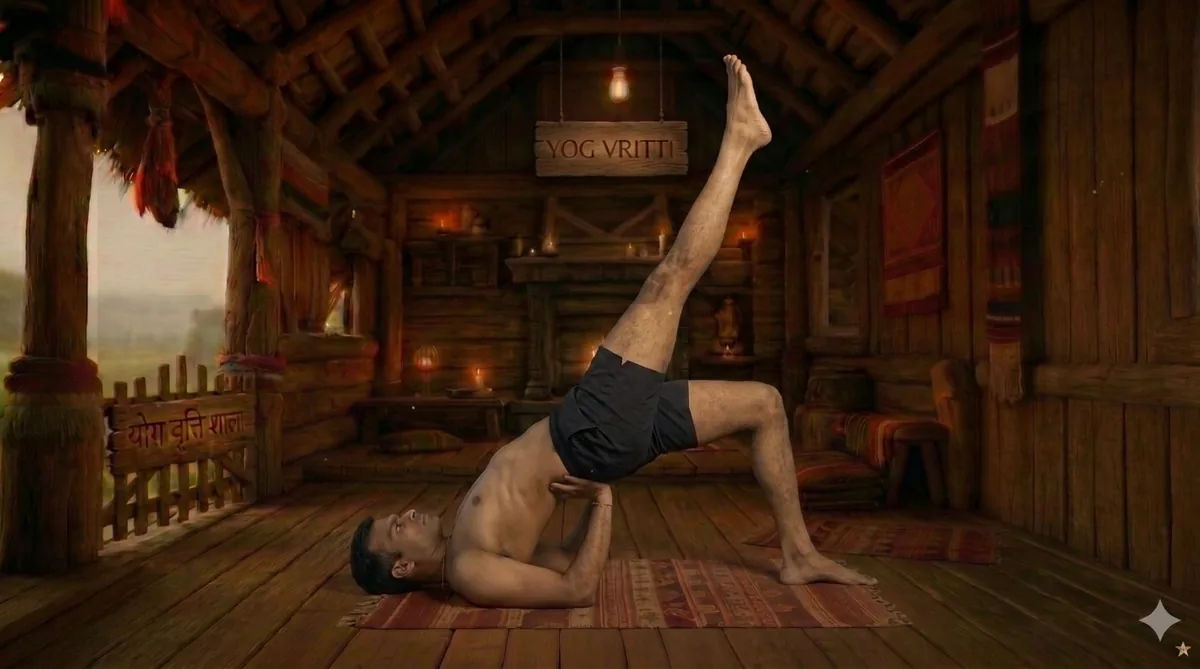
Eka Pada Setu Bandhasana
एक पाद सेतु बन्धासन
Eka Pada Setu Bandhasana elevates the foundational strength of Bridge Pose by introducing a unilateral challenge, demanding greater engagement from the core and stabilizing muscles. This variation compels the body to actively resist rotation and uneven weight distribution, transforming a bilateral lift into a profound exploration of pelvic stability and integrated strength. It's chosen to specifically cultivate muscular endurance and balance, preparing the practitioner for more complex inversions and single-leg balancing postures. Setu Bandha Sarvangasana, or Bridge Pose, is a foundational backbend that gently lifts the spine, creating length and opening across the front of the body while strengthening the posterior chain. It engages the glutes and hamstrings to elevate the hips, promoting spinal mobility and stability. This pose offers a mild inversion, calming the nervous system and drawing energy inward, making it deeply grounding and restorative. For any practitioner or teacher, it’s invaluable for cultivating spinal awareness, releasing tension, and fostering a sense of inner strength and tranquility.
One-Legged Bridge Pose, also called Single Leg Bridge is a classical yoga posture. Its Sanskrit name Eka Pada Setu Bandhasana translates word-for-word as: Eka (One) · Pada (Leg) · Setu (Bridge) · Bandha (Lock). In this posture, the body releases into the support of the floor, allowing gravity to assist. The posture works to activate the glutes, lengthen the hamstrings and engage the core. Core stability. Prepares for wheel variations. It is particularly valued for building full-body strength and alleviating back discomfort. Suitable for intermediate practitioners with foundational yoga experience, it is a meaningful addition to any practice, particularly beneficial for athletes. Practitioners with neck pain and knee injury should approach with care or consult a qualified teacher.
Helps with
What This Variation Changes
The primary 'positional change' in Eka Pada Setu Bandhasana is the extension of one leg, which fundamentally shifts the body's base of support from bilateral to unilateral. This action immediately redistributes the entire body's weight onto a single heel and shoulder girdle, demanding an intensified effort from the supporting leg and core. Energetically, it focuses the practitioner's awareness on maintaining a stable, level pelvis despite the asymmetry, cultivating a powerful sense of internal balance and integrated strength.
Muscles Worked
Buttocks (Glutes)
In this unilateral variation, the gluteus maximus and medius of the *standing* leg are profoundly challenged, working synergistically to not only lift the pelvis but also to prevent it from dropping or rotating to the side of the extended leg.
This intensified isometric contraction builds exceptional power and endurance, cultivating a deeper connection to the rooting action through the heel.
The glute of the extended leg still offers some support, but the primary work shifts dramatically to the single supporting side.
Back of Thighs (Hamstrings)
The hamstrings of the supporting leg experience a significant increase in load, as they must powerfully contract to extend the hip and maintain the lift of the pelvis against the absence of support from the other leg.
This heightened demand on a single hamstring group refines its ability to work in tandem with the glutes for posterior chain strength, fostering stability and preventing hyperextension in the supporting knee.
The sustained engagement builds remarkable endurance and muscular awareness in these crucial posterior thigh muscles.
Spinal Erectors (Back Muscles)
While still extending the spine, the spinal erectors in Eka Pada Setu Bandhasana must now work harder to maintain the integrity of the spinal curve and prevent any lateral flexion or rotation of the trunk.
They become crucial stabilizers, ensuring the spine remains centered and elongated even as the base of support becomes asymmetrical.
This refinement of their role cultivates a more intelligent and responsive back body, preparing it for the demands of more complex backbends with greater control.
Abdominal Muscles (Core)
The abdominal muscles, particularly the transverse abdominis and obliques, take on a dramatically increased role in this variation, becoming the primary stabilizers of the pelvis against rotation and anterior tilt.
They actively draw the navel towards the spine and knit the ribs together, creating an internal girdle that supports the lumbar spine and prevents the hip of the extended leg from dropping.
This intense engagement builds profound core strength and awareness, essential for protecting the lower back and maintaining equilibrium.
Front of Hip (Psoas)
In the extended leg, the psoas and other hip flexors are actively engaged to hold the leg aloft, requiring a subtle balance of isometric contraction and controlled lengthening as the leg reaches.
Concurrently, the psoas of the *standing* leg plays a crucial role in stabilizing the hip joint in extension, ensuring the pelvis remains level and steady.
This dual action cultivates both strength in holding the limb and stability in the supporting hip, deepening the energetic connection from the core to the periphery.
Joints Mobilized
Spine (Vertebral Column)
mobilizingThe spine undergoes a gentle, even extension, particularly in the thoracic and lumbar regions.
This articulation helps to mobilize the individual vertebrae, creating space and decompressing the intervertebral discs.
Regular practice can restore natural spinal curves, alleviating stiffness and allowing the nervous system to function with greater ease and vitality.
Sacroiliac Joint (SI Joint)
stabilizingWith the intelligent engagement of the glutes and hamstrings, the powerful muscles surrounding the pelvis help to stabilize the sacroiliac joint, the junction between the sacrum and the hip bones.
This muscular support can alleviate discomfort and improve the structural integrity of the pelvis.
A stable SI joint provides a strong foundation for the entire spine, promoting a feeling of inner security and balance.
Shoulder Girdle (Scapulothoracic, Glenohumeral)
stabilizingBy pressing the upper arms and shoulders firmly into the mat, the shoulder girdle becomes a stable base from which to lift the chest.
This action helps to broaden the collarbones and open the chest, preventing slumping in the upper back.
This stability grounds the upper body, allowing for a more expansive and uninhibited breath, connecting the practitioner to a sense of openness and freedom.
Hip Joint (Coxofemoral)
mobilizingThe hip joints move into extension as the pelvis lifts, gently stretching the tissues at the front of the hips.
This movement is vital for counteracting the common pattern of hip flexion from sitting, improving range of motion and circulation.
Mobilizing the hips can release stagnation in the pelvic area, promoting a sense of lightness and fluidity in the lower body, and supporting the upward flow of prana.
Organ & System Benefits
Digestive Organs (Intestines, Stomach)
As the abdomen lifts and extends upwards, the digestive organs receive a gentle internal massage and improved blood flow.
This mild compression and release can stimulate peristalsis, aiding in the natural movement of food through the digestive tract.
Yogically, this action helps to balance Samana Vayu, the energy responsible for digestion and assimilation, promoting overall gut health and a feeling of inner warmth.
Thyroid Gland
The gentle chin lock and compression at the base of the neck, combined with the mild inversion, can stimulate the thyroid and parathyroid glands.
This action is believed to help regulate metabolism, energy levels, and hormonal balance.
In yoga, stimulating the Vishuddha Chakra (throat chakra) through such actions is thought to promote clear communication and self-expression.
Heart and Lungs (Cardiopulmonary System)
The elevated chest and open front body create more space for the lungs to expand fully, encouraging deeper and more complete breaths.
This improved respiratory capacity enhances oxygen intake and carbon dioxide release, supporting cardiovascular health.
The mild inversion also encourages venous return, lightening the load on the heart and invigorating the entire circulatory system, fostering vitality and energetic uplift.
Nervous System
The sustained engagement of the posterior chain and the grounding through the feet and shoulders send reassuring signals to the brain, activating the parasympathetic nervous system.
This shift from 'fight or flight' to 'rest and digest' calms the mind and body, reducing overall stress and anxiety.
The gentle inversion, with the heart slightly higher than the head, also helps to soothe the brain, promoting a sense of inner peace and quietude.
By subtly lifting the pelvis and opening the chest, the breath naturally deepens and lengthens, which directly influences vagal nerve tone.
A more regulated breath pattern signals safety to the nervous system, diminishing the chatter of the mind (chitta vritti) and fostering a state of focused awareness.
This mindful connection to breath cultivates a profound sense of presence and stability, both physically and mentally.
Mental & Emotional
Bridge Pose, though gentle, demands a focused awareness to maintain the lift and proper alignment, drawing the mind away from external distractions.
This sustained attention, a form of Dharana, helps to quiet mental agitation and improve concentration.
By engaging in this deliberate practice, students cultivate a sense of mental discipline and resilience, which translates into greater clarity and focus in daily life.
The opening of the chest and the subtle backbend can evoke a feeling of emotional release and courage, especially for those who tend to hunch or protect their heart space.
Physically opening the front body can symbolically and energetically open one to vulnerability and self-acceptance.
This cultivation of an open heart fosters a sense of compassion and inner strength, helping to alleviate anxiety and build self-confidence.
The mild inversion in Setu Bandha Sarvangasana offers a shift in perspective, literally and figuratively, by reversing the usual pull of gravity on the body.
This subtle energetic change can help to release mental patterns of stagnation or heaviness, refreshing the mind.
It encourages a sense of letting go, allowing for new insights and a renewed sense of optimism and lightness.
Because of Its Shape
backbend
As a backbend, Bridge Pose extends the front of the body, creating length and space along the abdominal wall, chest, and hip flexors.
This action counteracts the pervasive forward-folding postures of modern life, restoring spinal mobility and natural curvature.
Energetically, backbends are associated with opening the heart center (Anahata Chakra), cultivating courage, compassion, and a vital, uplifting quality of prana.
This pose also functions as a gentle inversion, where the head is lower than the heart, encouraging a reversal of blood flow towards the upper body and brain.
This mild inversion calms the nervous system, reduces fatigue, and can alleviate mild headaches by refreshing circulation.
In yogic philosophy, inversions are powerful for shifting perception and quieting the mind, offering clarity and a renewed sense of perspective.
The elevation of the chest and the broadening across the collarbones make this an excellent chest opener.
This expansion creates more room for the lungs to fill, improving respiratory capacity and efficiency.
Opening the chest is not just physical; it allows for emotional release, fostering a sense of freedom, self-expression, and unburdening the heart from accumulated tension and stress.
Fascial Lines
In Setu Bandha Sarvangasana, we engage and lengthen several key myofascial lines.
The Superficial Front Line, running from the tops of the feet up the front of the body to the skull, is gently elongated, particularly in the hip flexors and abdomen.
Simultaneously, the Superficial Back Line, from the soles of the feet up the back of the body, is toned and strengthened, especially in the hamstrings, glutes, and erector spinae.
This balanced action helps to release chronic tension patterns, improving overall bodily integrity and allowing for unimpeded flow of energy (prana) throughout the interconnected fascial web.
Breathing & Respiratory
The open chest and elevated diaphragm in Bridge Pose naturally encourage a fuller, deeper inhalation, creating more space for the lungs to expand.
This expansive quality of the breath helps to invigorate the body and mind, drawing in fresh prana.
The gentle abdominal lift also supports a complete exhalation, allowing for a thorough release of stale air and accumulated tension, making it an excellent preparation for more subtle pranayama practices like Ujjayi, which can be deepened and refined within this stable and open shape.
Anatomical Caution
This variation introduces specific challenges to pelvic stability, making it unsuitable for individuals with acute sacroiliac joint instability or significant low back pain, as the unilateral load can exacerbate these conditions.
Practitioners must ensure deep core engagement to prevent the pelvis from tilting or rotating, which could otherwise strain the lumbar spine or SI joint.
It demands a heightened sense of body awareness and controlled strength to execute safely.