5
Muscles
3
Joints
3
Organs
2
Mental
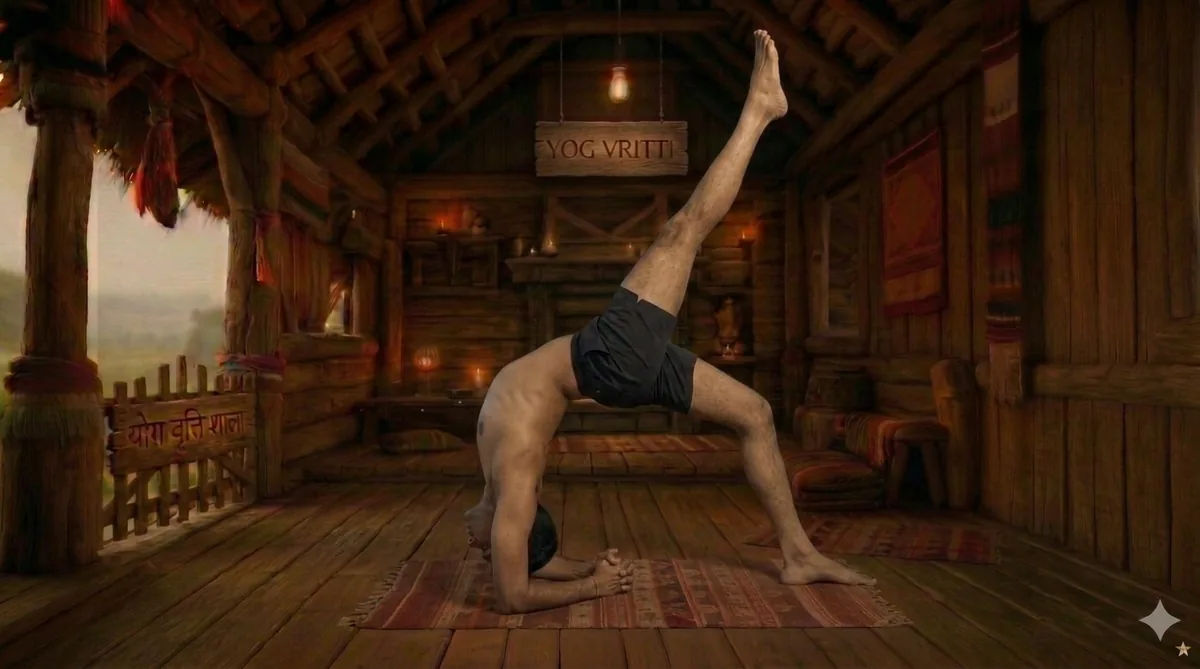
Eka Pada Viparita Dandasana
एक पाद विपरीत दण्डासन
Eka Pada Viparita Dandasana is a profound backbend and inversion that demands both immense strength and supple flexibility, particularly in the spine and shoulders. This pose intricately engages the entire posterior chain while opening the anterior body, creating a powerful energetic lift. It cultivates unwavering focus and courage, allowing practitioners to experience a profound sense of lightness and expansion, not just physically but also within their consciousness. For teachers, mastering and understanding this pose allows for deeper insights into spinal health and the subtle energies of the body.
One-Legged Inverted Staff Pose, also called Single Leg Forearm Wheel is a classical yoga posture. Its Sanskrit name Eka Pada Viparita Dandasana translates word-for-word as: Eka (One) · Pada (Foot / Leg) · Viparita (Inverted) · Dandasana (Dandasana). In this posture, the body opens the chest and stretches the entire front body. The posture works to engage the core, open and strengthen the shoulders and stretch the hip flexors. Core and shoulder strength. Opens chest deeply. It is particularly valued for developing greater flexibility and building full-body strength. Suitable for advanced practitioners with developed body awareness, it is a meaningful addition to any practice. A wall can be used to make the posture more accessible and support correct alignment. Practitioners with spinal injury and shoulder injury should approach with care or consult a qualified teacher.
Helps with
Muscles Worked
Spine Extensors
[Erector Spinae, Multifidus]
The muscles running along the entire length of your spine, from the sacrum to the skull, are asked to lengthen deeply in this pose.
As the spine extends into a significant arch, these muscles, often tight from sitting, are encouraged to release and unwind.
This action not only increases the flexibility of the vertebral column but also helps to decompress the spinal discs, fostering a sense of spaciousness and freedom within the core of the body.
Abdominals
[Rectus Abdominis, Obliques, Transversus Abdominis]
The entire abdominal wall, particularly the deeper transverse abdominis, works intensely to support and protect the lumbar spine during the backbend.
By drawing the navel towards the spine and lifting the lower ribs, these muscles create a protective corset, preventing undue compression in the lower back.
This strong engagement cultivates a powerful inner core, grounding the energetic lift of the pose and fostering a sense of stability and centeredness.
Shoulder Stabilizers
[Deltoids, Rotator Cuff, Serratus Anterior]
The muscles around your shoulder blades and upper arms are powerfully engaged to bear weight and stabilize the shoulder girdle.
The serratus anterior, in particular, works to protract the shoulder blades, lifting the chest and creating space around the neck.
This active engagement prevents sinking into the shoulders, building resilience and strength that translates into a feeling of empowerment and unwavering support in the upper body.
Hip Flexors
[Iliopsoas, Rectus Femoris]
The deep muscles at the front of your hips, connecting your spine to your thighs, receive a profound lengthening stretch in the leg that is bent towards the head.
Chronic tightness in these muscles often pulls on the lower back, but in this pose, they are encouraged to release.
This release helps to free the pelvis, allowing for deeper spinal extension and a greater sense of fluidity and openness in the hips, facilitating the upward flow of prana.
Quadriceps
[Rectus Femoris, Vastus Lateralis, Vastus Medialis, Vastus Intermedius]
The large muscles at the front of your thighs, particularly the rectus femoris, are intensely lengthened as the front of the thigh extends towards the floor in the bent leg.
Simultaneously, the quadriceps in the raised leg are actively engaged to keep the leg straight and lifted.
This dual action brings awareness to the entire length of the legs, cultivating both strength and flexibility, and creating a feeling of lightness and lift from the lower body upwards.
Joints Mobilized
Spine
mobilizingThe entire vertebral column is deeply mobilized into extension, moving each vertebra incrementally to create a smooth, expansive arc.
This action helps to restore the natural curves of the spine and can decompress the intervertebral discs, improving nutrient flow and spinal health.
Practitioners often feel a significant release of stiffness and a greater sense of freedom and agility in their back, enhancing the flow of prana along the sushumna nadi.
Shoulder Girdle
stabilizingThe shoulder joints are actively engaged in both weight-bearing and stabilization, requiring the muscles surrounding the scapula and humerus to work synergistically.
This pose strengthens the rotator cuff and other supporting muscles, improving overall shoulder integrity and range of motion.
The awareness cultivated here prevents 'dumping' into the joints, fostering a sense of empowered support and preventing injury, while opening the heart space.
Hip Joints
mobilizingThe hip joints experience significant mobilization; one hip is in deep extension while the other is in flexion, depending on which leg is raised.
This asymmetrical action helps to increase the range of motion in the hip capsule, releasing tension often held deep within the joint.
Over time, this improves pelvic alignment and flexibility, allowing for greater ease in daily movements and a release of emotional blockages often stored in the hips.
Organ & System Benefits
Abdominal Organs
The organs within the abdominal cavity receive a gentle, yet profound, compression and stretch in this deep backbend.
This action can stimulate digestion and elimination, promoting healthy organ function by increasing blood flow to the area.
Yogically, this stimulation of the Manipura Chakra (solar plexus) ignites inner fire, enhancing metabolic processes and cultivating a sense of vitality and inner strength.
Lungs and Heart
The chest cavity is dramatically opened and expanded, creating more space for the lungs to fully inflate and for the heart to beat freely.
This expansion encourages deeper breathing, increasing oxygen intake and promoting cardiovascular health.
Energetically, this opening of the Anahata Chakra (heart center) fosters feelings of courage, compassion, and emotional openness, allowing one to connect more deeply with their true self.
Endocrine System
Deep backbends, especially inversions, are believed to stimulate various glands of the endocrine system, including the adrenals and thyroid, through gentle compression and increased blood flow.
This stimulation can help to regulate hormone production, potentially improving energy levels, mood, and overall metabolic balance.
The fresh blood supply to these vital centers invigorates the subtle energy channels, promoting overall well-being.
Nervous System
While challenging, the sustained focus required for Eka Pada Viparita Dandasana can paradoxically bring a profound sense of calm and presence.
The intense physical effort, coupled with the inversion, shifts the autonomic nervous system towards a more balanced state, moving away from fight-or-flight and towards rest-and-digest.
This deep concentration stills the fluctuations of the mind (chitta vritti nirodhah), allowing for a quiet inner awareness to emerge amidst the intensity.
The inversion aspect of the pose reverses the flow of gravity on the nervous system, potentially alleviating pressure on the lower body nerves and bringing fresh blood to the brain.
This can lead to increased mental clarity, reduced anxiety, and a feeling of rejuvenation.
The sustained engagement required also builds proprioceptive awareness, enhancing the body's internal mapping and strengthening the mind-body connection.
Mental & Emotional
This advanced backbend inherently cultivates immense courage and a willingness to step beyond perceived limitations.
The act of turning upside down and exposing the front of the body fosters a mental shift, encouraging practitioners to confront fears and embrace vulnerability with strength.
This translates into a heightened sense of self-confidence and an ability to face life's challenges with greater resilience and an open heart.
Eka Pada Viparita Dandasana demands intense concentration (dharana) to maintain alignment, balance, and breath.
This unwavering focus on the present moment quietens the incessant chatter of the mind, drawing awareness inwards (pratyahara).
The mental discipline cultivated here extends beyond the mat, enhancing one's ability to concentrate and remain present in all aspects of life, fostering mental clarity and inner peace.
Because of Its Shape
backbend
Backbends are inherently expansive and invigorating, countering the pervasive tendency to slouch and round the spine in modern life.
They extend the vertebral column, creating space between the vertebrae and strengthening the muscles along the back of the body.
This opens the chest and heart, fostering an uplifting quality that can alleviate feelings of depression and lethargy, inviting a sense of joy and vitality.
As an inversion, this pose reverses the gravitational pull on the body, promoting venous return and lymphatic drainage, especially from the legs and abdominal organs.
This fresh circulation to the upper body and brain can enhance cognitive function, reduce swelling, and rejuvenate the entire system.
Energetically, inversions are powerful tools for shifting perspective and channeling prana upwards, awakening higher centers of consciousness.
Fascial Lines
The entire anterior fascial line, from the soles of the feet up through the quadriceps, hip flexors, abdominals, and chest, receives a profound and sustained lengthening in this pose.
Simultaneously, the posterior fascial line is powerfully engaged and strengthened, particularly in the back and glutes.
This intricate interplay helps to release deeply held tension patterns in the body's connective tissue, improving overall flexibility and fluidity, and allowing for a more unhindered flow of prana throughout the subtle body.
Breathing & Respiratory
The deep backbend and chest opening in Eka Pada Viparita Dandasana naturally encourages a full, expansive inhalation, but it can also feel restrictive initially.
The challenge lies in maintaining a smooth, even breath, especially in the upper chest and diaphragm, without holding tension.
This conscious, deep breathing calms the nervous system even amidst intensity, making it an excellent preparation for advanced pranayama practices that focus on expanding the lung capacity and directing prana.
Anatomical Caution
Teachers must approach this pose with extreme care, especially regarding the lumbar spine, neck, and shoulders.
Ensure students have sufficient core strength and spinal flexibility to avoid compressing the lower back; a common error is allowing the abdomen to 'drop.' Watch for any discomfort in the neck or shoulders, ensuring the head is supported and the shoulders are actively engaged away from the ears.
It's crucial to build up to this pose gradually through preparatory work, never forcing the body into the shape.