5
Muscles
4
Joints
2
Organs
2
Mental
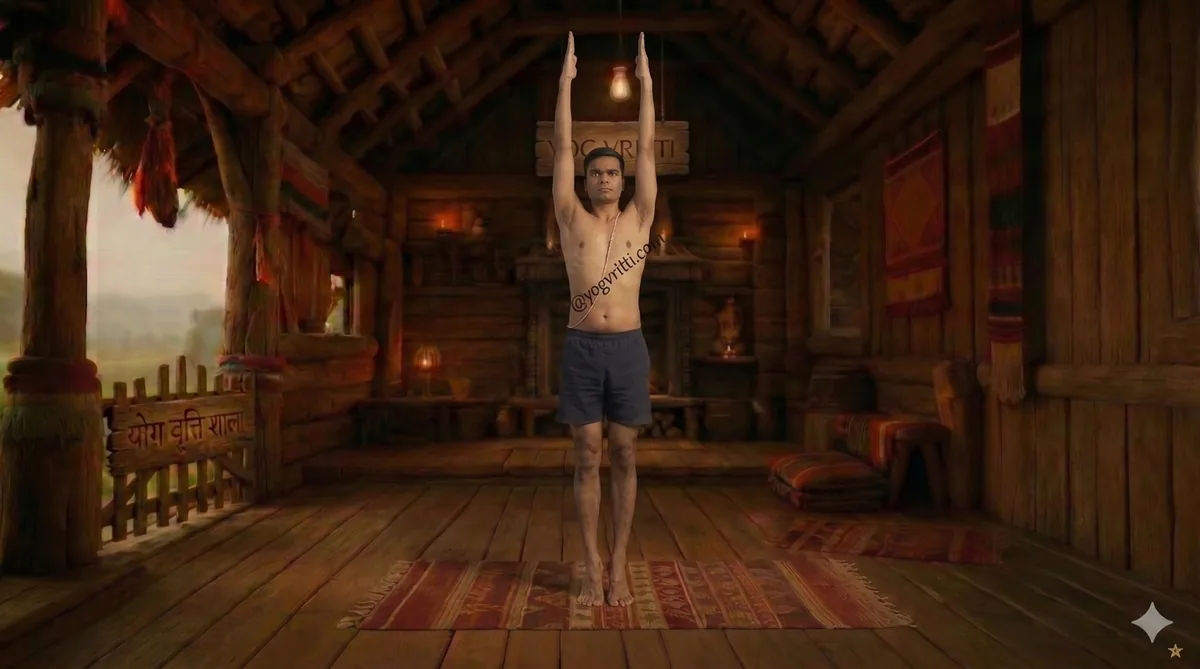
Extended Tip-Toe Pose
उत्थित प्रपद पादासन
Extended Tip-Toe Pose is a profound lesson in cultivating stability from the ground up, a true testament to the body's innate intelligence. This foundational standing balance pose meticulously strengthens the intricate network of muscles in the feet, ankles, and calves, while simultaneously engaging the quadriceps, glutes, and deep core stabilizers to lift the entire torso with integrity. Energetically, it grounds the practitioner deeply through the earth while simultaneously fostering a sense of lightness and upward lift (udana vayu), allowing the spine to lengthen and the mind to sharpen its focus. For any yoga teacher or student, mastering this pose provides an unshakeable base for all subsequent standing asanas and instills a profound sense of inner equilibrium and presence.
Extended Tip-Toe Pose, also called Toe Balance Variation is a classical yoga posture in the Iyengar tradition. From a standing position, the body roots firmly through the feet while the spine extends upward. The posture works to stretch the calves, stabilise the ankles and strengthen the quadriceps. Improves balance and focus. Tones leg muscles. It is particularly valued for building full-body strength. Suitable for beginners and regular practitioners alike, it is an excellent warm-up, particularly beneficial for beginners and desk workers. A wall can be used to make the posture more accessible and support correct alignment. Practitioners with ankle injury and knee injury should approach with care or consult a qualified teacher.
Helps with
Muscles Worked
Calves
[Gastrocnemius & Soleus]
These powerful muscles at the back of your lower leg are intensely engaged as you lift your heels high, working concentrically to elevate the body.
The gastrocnemius, being a two-joint muscle, also plays a role in knee stability, while the soleus, deeper and always active, provides sustained endurance.
This action builds incredible strength and stamina in the lower legs, which is crucial for dynamic movement and maintaining an upright posture throughout life.
In yogic terms, this active engagement helps to pump stagnant energy upwards, invigorating the lower extremities.
Ankle Stabilizers
[Peroneals (Fibularis Longus & Brevis), Tibialis Anterior, Posterior]
The muscles surrounding your ankles, particularly on the outer (peroneals) and inner (tibialis posterior) sides, are constantly micro-adjusting to maintain your balance on the balls of your feet.
These intrinsic and extrinsic muscles of the foot and ankle work synergistically to prevent excessive pronation or supination, keeping the ankle joint stable and aligned.
This constant, subtle engagement cultivates heightened proprioception, allowing the body to intuitively sense and correct any deviation, fostering a deep connection to the earth beneath you and sharpening focus (dharana).
Quadriceps
[Rectus Femoris, Vastus Lateralis, Medialis, Intermedius]
The large muscles at the front of your thighs are actively engaged to keep the knees straight and lifted, preventing them from collapsing or hyperextending.
This isometric contraction stabilizes the knee joint, ensuring that the weight is distributed evenly and supporting the upward lift of the torso.
Through this sustained engagement, the quadriceps contribute to a feeling of solid support from the hips down, allowing the energy to flow freely up the spine without any energetic leaks at the knees.
Gluteals
[Gluteus Medius, Minimus, Maximus]
The muscles of your buttocks, particularly the gluteus medius and minimus, subtly activate to keep your hips level and prevent the knees from splaying outwards or rolling inwards.
This deep engagement ensures proper alignment of the pelvis and femoral head within the hip socket, creating a stable foundation for the entire torso.
By integrating these muscles, the pose teaches a holistic engagement of the lower body, connecting the power of the pelvis to the groundedness of the feet, and fostering a sense of energetic integrity in the muladhara chakra.
Deep Core Stabilizers
[Transversus Abdominis, Multifidus, Pelvic Floor]
The deepest layer of your abdominal muscles, wrapping around your trunk like a corset, engages subtly to support the lumbar spine and lift the rib cage away from the pelvis.
This gentle drawing in and up of the lower abdomen (uddiyana bandha) creates internal stability, allowing for length and lightness in the spine.
This core engagement is not about brute strength but about intelligent support, enabling the breath to flow more freely and the consciousness to expand upwards through the central channel (sushumna nadi).
Joints Mobilized
Ankle Joint
weight bearingThe ankle joint, where your shin bones meet your foot, bears the entire body's weight in a significantly altered position, with the heel lifted high.
This challenges the joint's stability and range of motion in plantarflexion, strengthening the surrounding ligaments and tendons.
Regular practice enhances the integrity of the ankle complex, leading to greater freedom and confidence in walking and other weight-bearing activities, and liberating the feet from stiffness, allowing for more energetic freedom.
Knee Joint
stabilizingIn this pose, the knee joint is held in a straight, aligned position, requiring constant vigilance from the surrounding musculature to prevent hyperextension or lateral movement.
The quadriceps and hamstrings work in concert to create a balanced tension across the joint, protecting the ligaments and menisci.
This sustained, isometric stability promotes healthy cartilage and synovial fluid production, ensuring the knees remain resilient and free from strain, supporting the upward flow of energy (udana vayu).
Hip Joint
stabilizingThe hip joints are held in a neutral position, with the surrounding gluteal and adductor muscles working subtly to maintain pelvic alignment and prevent any external or internal rotation.
This balanced engagement ensures that the head of the femur sits optimally within the acetabulum, providing a stable base for the torso.
Over time, this cultivation of hip stability translates into greater ease in walking, sitting, and all movements that originate from the pelvis, fostering a sense of centeredness and poise in the physical and energetic body.
Spine
decompressingAs the core muscles engage and the crown of the head reaches upwards, the entire vertebral column experiences a gentle decompression, creating space between each vertebra.
This axial elongation encourages the natural curves of the spine to align optimally, reducing compressive forces on the intervertebral discs.
The resulting feeling is one of lightness and spaciousness, allowing the prana to flow unimpeded along the central energetic channel (sushumna nadi), promoting both physical and energetic uprightness and clarity.
Organ & System Benefits
Digestive Organs
With the gentle lift of the abdominal wall and the upward lengthening of the torso, the internal organs receive a subtle lift and gentle massage.
This mild internal compression and decompression can stimulate peristalsis, aiding in healthy digestion and elimination by encouraging the smooth flow of contents.
Energetically, this pose supports samana vayu, the balancing energy responsible for digestion and assimilation, promoting a sense of inner harmony and physical well-being.
Circulatory System
The sustained engagement of the calf muscles, often referred to as the 'second heart,' actively assists in pumping venous blood from the lower extremities back towards the heart against gravity.
This action improves venous return, reducing fluid stagnation in the legs and promoting overall cardiovascular health.
The pose cultivates a steady, rhythmic pulse throughout the body, enhancing the flow of vital energy (prana) to all cells and tissues, fostering vitality and a feeling of aliveness.
Nervous System
The act of balancing on a narrow base demands intense focus and presence, immediately drawing the mind away from external distractions and into the present moment.
This sustained concentration activates the parasympathetic nervous system, shifting the body from a state of 'fight or flight' to one of 'rest and digest,' promoting a profound sense of inner calm.
The heightened awareness of subtle shifts in weight and muscle engagement refines proprioception, deepening the body-mind connection and quieting the fluctuations of the mind (chitta vritti).
The use of the wall as a prop initially provides external support, allowing the nervous system to relax into the challenge without the immediate fear of falling.
This scaffolding helps to build confidence and gradually recalibrate the vestibular system, teaching the brain to trust the body's innate balancing mechanisms.
Over time, as the reliance on the wall diminishes, the internal sense of stability becomes deeply ingrained, fostering a sense of unwavering self-reliance and mental fortitude, which is a key aspect of pratyahara.
Mental & Emotional
Extended Tip-Toe Pose is a powerful practice in cultivating unwavering concentration (dharana), demanding that the mind be fully present to maintain equilibrium.
The challenge of balancing on a small base forces the practitioner to quiet mental chatter and direct all attention to the subtle sensations within the body.
This intense focus acts as a form of active meditation, training the mind to remain steady and one-pointed, a quality invaluable for navigating life's challenges with clarity and composure.
The pose inherently builds patience and resilience, as maintaining balance often requires micro-adjustments and a willingness to stay with discomfort or wobbles.
Overcoming the initial fear of falling and learning to find stability amidst instability cultivates inner strength and self-trust.
This mental fortitude, born from dedicated physical practice, translates into a greater capacity to face life's uncertainties with a calm and centered mind, fostering a deep sense of inner peace and equanimity.
Because of Its Shape
standing
This standing pose fundamentally challenges and refines the body's sense of balance by significantly narrowing the base of support.
It stimulates the intricate network of proprioceptors in the feet, ankles, and inner ear (vestibular system), constantly feeding information to the brain for real-time adjustments.
Through consistent practice, the body learns to integrate these signals more efficiently, enhancing coordination and fostering a deep, intuitive sense of internal equilibrium, both physically and mentally.
Despite lifting onto the balls of the feet, the precise alignment and active engagement required in this pose paradoxically create a profound sense of grounding.
The focused pressure through the metatarsal heads and big toe mound establishes a strong connection to the earth, anchoring the practitioner even as they reach upwards.
This dual action of grounding and lifting helps to stabilize apana vayu (downward energy) while encouraging udana vayu (upward energy), creating a harmonious flow that fosters inner stability and presence.
The standing shape of Utthita Prapada Padasana builds foundational strength throughout the entire lower kinetic chain, from the intrinsic muscles of the feet to the deep core stabilizers.
The sustained isometric contractions required to maintain the lift and alignment progressively strengthen muscles that are often underutilized in daily life.
This integrated strength not only supports more advanced standing poses but also cultivates a sense of physical power and energetic resilience, making the body feel capable and robust.
Fascial Lines
In Extended Tip-Toe Pose, the fascial lines running along the back of the body (Superficial Back Line) and the deep core (Deep Front Line) are both engaged and elongated, albeit subtly.
As you lift through the balls of the feet and extend the crown of the head upwards, the fascial sheath around the calves and hamstrings gets a gentle stretch, while the deep abdominal fascia is toned and lifted.
This integrated engagement helps to release chronic tension patterns held within the connective tissue, allowing for greater fluidity of movement and an unhindered flow of prana throughout the body's energetic channels (nadis).
Breathing & Respiratory
The upright and elongated posture of Extended Tip-Toe Pose naturally encourages a more vertical and diaphragmatic breath, rather than shallow chest breathing.
As the spine lengthens and the abdominal wall gently engages, space is created for the diaphragm to descend more fully during inhalation, drawing breath deep into the lower lobes of the lungs.
This deeper, more rhythmic breath cultivates a sense of calm and stability, making it an excellent pose to practice with Ujjayi pranayama, which further refines the breath and focuses the mind.
Anatomical Caution
Teachers should guide students to maintain a soft engagement in the knees, avoiding hyperextension, especially if they are hypermobile.
Pay close attention to any sharp pain in the ankles or feet; students with recent ankle injuries or severe bunions may need to modify the height of their heel lift or avoid the pose entirely.
The focus should always be on stability and alignment, not on simply lifting the heels as high as possible, to prevent strain.