5
Muscles
4
Joints
2
Organs
2
Mental
Kraunchasana
क्रौञ्चासन
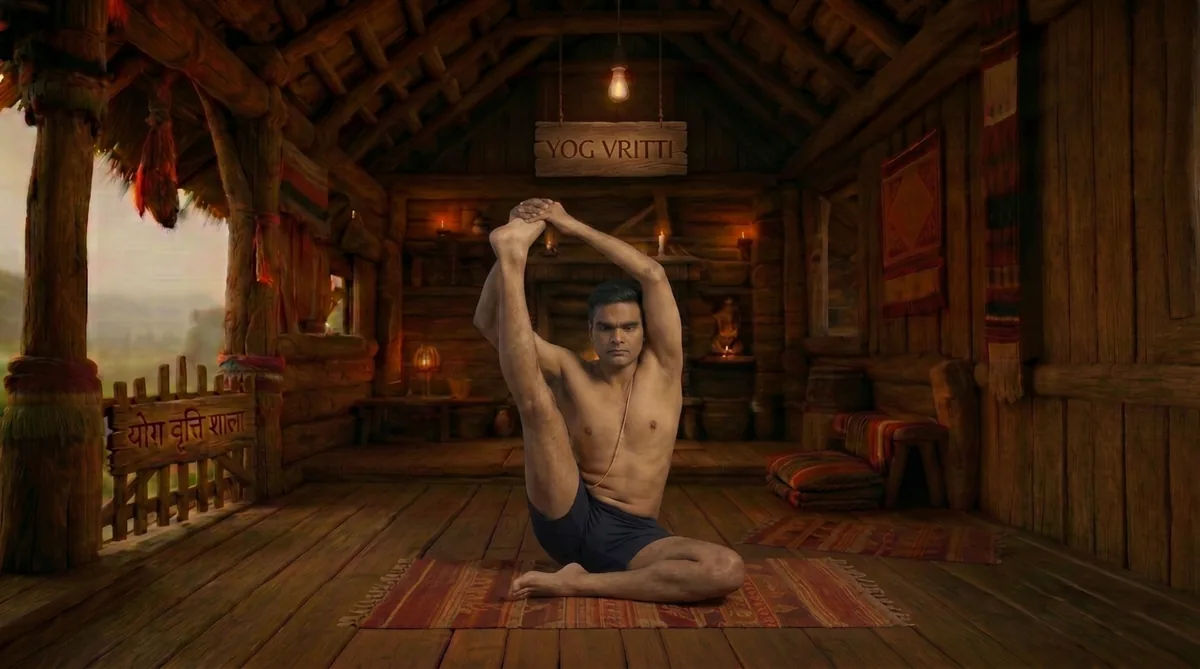
Kraunchasana, or Heron Pose, is a profound seated forward bend that meticulously unwinds the entire posterior chain of the body, particularly targeting the hamstrings and calves. It demands and cultivates significant spinal length, requiring a balanced engagement of core muscles to support the axial extension. Energetically, this pose is deeply grounding and introspective, drawing awareness inward to release physical and mental tension. For the dedicated practitioner, it offers a path to greater flexibility, improved posture, and a quiet spaciousness within the body and mind.
Heron Pose Variation, also called Kraunchasana is a classical yoga posture. Its Sanskrit name Kraunchasana translates word-for-word as: Krauncha (Heron) · Asana (Pose). In this posture, the body grounds through the sit bones while the spine rises tall. The posture works to lengthen the hamstrings, strengthen the quadriceps and stretch the hip flexors. Strengthens the core and quadriceps. Lengthens the spine and improves posture. It is particularly valued for improving overall posture. Suitable for intermediate practitioners with foundational yoga experience, it is an excellent warm-up, particularly beneficial for desk workers and runners. A strap and blanket can be used to make the posture more accessible and support correct alignment. Practitioners with knee injury and sciatica should approach with care or consult a qualified teacher.
Helps with
Muscles Worked
Hamstrings
[Biceps femoris, Semitendinosus, Semimembranosus]
The powerful muscles running along the back of your thigh (hamstrings) receive a deep, sustained lengthening in Kraunchasana, especially on the extended leg.
This isn't a forceful stretch but a gradual unwinding, as the nervous system is encouraged to release chronic tension often held from prolonged sitting.
In yogic terms, this release allows apana vayu, the downward-moving energy, to flow more freely, fostering a profound sense of groundedness and ease in the lower body.
Regular practice progressively increases their elasticity, significantly contributing to spinal health and reducing lower back strain.
Quadriceps
[Rectus femoris, Vastus lateralis, medialis, intermedius]
On the extended leg, the large muscles on the front of your thigh (quadriceps) are subtly lengthened, particularly the rectus femoris which crosses both the hip and knee joints.
This action helps to decompress the knee joint and allows for a deeper stretch in the hamstrings by creating more space at the front of the thigh.
Actively engaging these muscles by gently pressing the thigh down towards the floor helps to release their antagonists, the hamstrings, promoting a more balanced and intelligent stretch.
This engagement brings awareness to both sides of the limb, harmonizing muscular effort.
Hip Flexors
[Iliopsoas, Sartorius, Tensor fasciae latae, Rectus femoris]
On the extended leg, the deep muscles at the front of the hip (hip flexors) are encouraged to lengthen as the leg extends forward and the pelvis is tilted anteriorly.
This counteracts the common tightness from prolonged sitting, which often shortens these muscles and pulls the pelvis into a posterior tilt.
By releasing the hip flexors, we create more freedom in the hip joint and allow the spine to lengthen upwards from a stable base.
This opening at the front of the body can feel incredibly liberating, allowing prana to flow more freely through the pelvic region.
Gluteals
[Gluteus maximus, medius, minimus]
The large muscles of the buttocks (gluteals) on the bent leg side are in deep flexion and internal rotation, which encourages a release and lengthening of these powerful hip extensors.
This action helps to open the hip joint, allowing for a deeper external rotation and flexion.
For many, tightness in the gluteals can restrict hip mobility, so this pose offers a gentle yet effective way to unwind these deeper patterns of tension.
This release can bring a sense of softening and openness to the entire pelvic bowl, creating a stable yet adaptable foundation for the spine.
Core Muscles
[Transversus abdominis, Obliques, Erector spinae]
Maintaining a long, lifted spine in Kraunchasana requires significant engagement of the deep abdominal muscles (transversus abdominis) and the muscles along the spine (erector spinae).
This intelligent activation of the core creates a stable base for the spine to lengthen, protecting the lower back from strain often associated with forward bends.
By drawing the navel gently towards the spine, we cultivate a sense of inner support and lift, preventing the tendency to collapse into the stretch.
This core awareness not only strengthens the physical body but also helps to center the mind, fostering a feeling of inner stability and focus.
Joints Mobilized
Hip Joints
mobilizingThe hip joints (acetabulofemoral joints) are profoundly mobilized in Kraunchasana, with one hip in deep flexion and internal rotation, and the other in extension.
This asymmetrical action helps to increase the range of motion in both hips, addressing stiffness and improving overall flexibility.
The sustained stretch encourages the production of synovial fluid, lubricating the joint and promoting healthier cartilage.
With consistent practice, this mobilization can alleviate discomfort, improve gait, and allow for a greater sense of freedom and ease in all hip movements.
Knee Joint
mobilizingThe knee joint (tibiofemoral joint) on the bent leg is in deep flexion, while the knee on the extended leg is in full extension.
This dual action helps to maintain the full range of motion of the knee, gently stretching the surrounding ligaments and tendons.
On the bent leg, the deep flexion can help release tension in the quadriceps and hamstrings that cross the knee, while on the extended leg, active extension helps to strengthen the quadriceps and protect the joint.
This mindful engagement ensures the knee remains healthy and mobile, preventing stiffness and promoting fluidity in movement.
Spine
decompressingKraunchasana emphasizes axial extension of the spine (vertebral column), particularly as you work to lengthen through the crown of the head.
This action creates space between each vertebra, decompressing the spinal discs and allowing for better nerve flow.
By actively lifting the spine from the pelvis, we counteract the compressive forces of gravity and habitual slumping, fostering a sense of lightness and openness.
This spinal lengthening not only improves posture but also allows prana to ascend more freely, bringing mental clarity and a feeling of inner upliftment.
Sacroiliac Joint (SIJ)
stabilizingThe sacroiliac joint, where the sacrum meets the pelvis, is encouraged towards stability through the intelligent engagement of the core and the symmetrical grounding of the sitting bones (ischial tuberosities).
While there's a gentle stretch across the back of the pelvis, the emphasis is on maintaining a neutral pelvic tilt to prevent excessive strain on the SIJ.
This mindful alignment helps to balance tension across the joint, promoting its stability and reducing potential for discomfort.
A stable SIJ provides a firm foundation for the entire spine, allowing for greater freedom in spinal movement and energy flow.
Organ & System Benefits
Abdominal Organs (Digestive System)
The gentle compression of the abdominal organs in this forward bend provides a subtle internal massage to the digestive system.
This mild pressure can stimulate peristalsis, the rhythmic contractions that move food through the intestines, aiding in digestion and elimination.
As you release the pose, there's a fresh rush of blood to these areas, which can help to detoxify and revitalize the organs.
This internal cleansing can alleviate issues like sluggish digestion and constipation, contributing to a lighter, more energetic feeling in the body and mind.
Kidneys and Adrenal Glands
The forward bend and gentle compression in the lumbar area can subtly stimulate the kidneys and the adrenal glands, which sit atop them.
While not a direct squeeze, the mild pressure and subsequent release can encourage fresh blood flow to these vital organs, supporting their function in filtering blood and regulating stress hormones.
From a yogic perspective, working with the lower back and kidney area can help to calm the nervous system, as these glands are closely linked to our stress response.
This can lead to a feeling of greater tranquility and reduced anxiety.
Nervous System
Kraunchasana, as a seated forward bend, naturally encourages a shift towards the parasympathetic nervous system, promoting a state of 'rest and digest.' The sustained stretch, combined with the focus on lengthening the spine and deepening the breath, signals to the brain that it is safe to relax.
This quieting of the nervous system helps to reduce the 'fight or flight' response, calming the mental chatter (chitta vritti) and fostering a profound sense of inner peace.
Students often report feeling less anxious and more centered after practicing such introspective poses.
The deliberate lengthening of the hamstrings and the sustained hold in Kraunchasana can help to desensitize muscle spindles, which are sensory receptors within the muscle that detect stretch.
By patiently working with this sensation, we teach the nervous system to tolerate a greater range of motion without triggering a protective 'stretch reflex.' This intelligent engagement helps to unwind deeply held patterns of tension, not just physically but also energetically, allowing for a more harmonious flow of prana throughout the body and a greater sense of bodily freedom.
Mental & Emotional
The introspective nature of Kraunchasana naturally draws the practitioner's awareness inward, fostering a state of dharana, or sustained concentration.
The challenge of maintaining spinal length while deepening the hamstring stretch requires keen mental focus, effectively diverting the mind from external distractions.
This single-pointed attention cultivates mental clarity and a sense of presence, allowing students to observe their internal landscape without judgment.
Regular practice helps to train the mind to be more stable and less reactive, translating into greater equanimity in daily life.
Kraunchasana cultivates immense patience and the ability to surrender to the present moment, challenging the ego's desire for immediate results.
The pose teaches us that true flexibility comes not from forcing but from allowing, from breathing into resistance with calm persistence.
This mental discipline, a form of pratyahara (withdrawal of the senses), strengthens one's capacity for acceptance and non-attachment.
For a teacher, understanding this subtle mental shift allows them to guide students beyond mere physical achievement to a deeper, more profound yogic experience of self-awareness.
Because of Its Shape
forward bend
Forward bends are inherently grounding and introspective, encouraging the practitioner to turn their senses inward (pratyahara).
Physiologically, this shape compresses the front of the body and stretches the back, calming the nervous system by activating the parasympathetic response.
Energetically, it helps to draw apana vayu downwards, promoting stability and release of accumulated tension, leading to a profound sense of peace and mental quietude.
This turning inward is essential for cultivating self-awareness and inner stillness.
Fascial Lines
Kraunchasana deeply addresses the superficial back line of fascia, which runs from the soles of the feet up the back of the legs, pelvis, and spine to the crown of the head.
This continuous fascial chain receives a profound lengthening, helping to release widespread myofascial restrictions that can limit flexibility and contribute to poor posture.
By patiently unwinding these connective tissues, we improve the body's overall elasticity and fluidity, enhancing the flow of prana and releasing deeply held physical and emotional patterns.
This fascial release is key to creating lasting changes in flexibility and posture, opening energetic channels throughout the body.
Breathing & Respiratory
The forward bending nature of Kraunchasana naturally encourages a deeper and longer exhalation, as the abdominal compression aids in expelling stale air from the lungs.
This emphasis on exhalation helps to calm the nervous system and release tension, aligning perfectly with the introspective quality of the pose.
While holding the pose, the practitioner is encouraged to maintain diaphragmatic breathing, allowing the abdomen to expand gently against the thigh, which further massages the internal organs.
Ujjayi pranayama, with its subtle constriction in the throat, complements this pose beautifully, deepening the meditative aspect and enhancing the flow of prana.
Anatomical Caution
Teachers, please advise students with hamstring tears, significant lower back pain, or acute knee issues to approach Kraunchasana with extreme caution.
It's crucial to emphasize lengthening the spine from the pelvis first, rather than forcing the forward bend, to protect the lower back and hamstrings.
For sensitive knees, ensure the bent knee is comfortable, perhaps by placing a blanket underneath, and avoid any sharp sensations.