4
Muscles
3
Joints
2
Organs
3
Mental
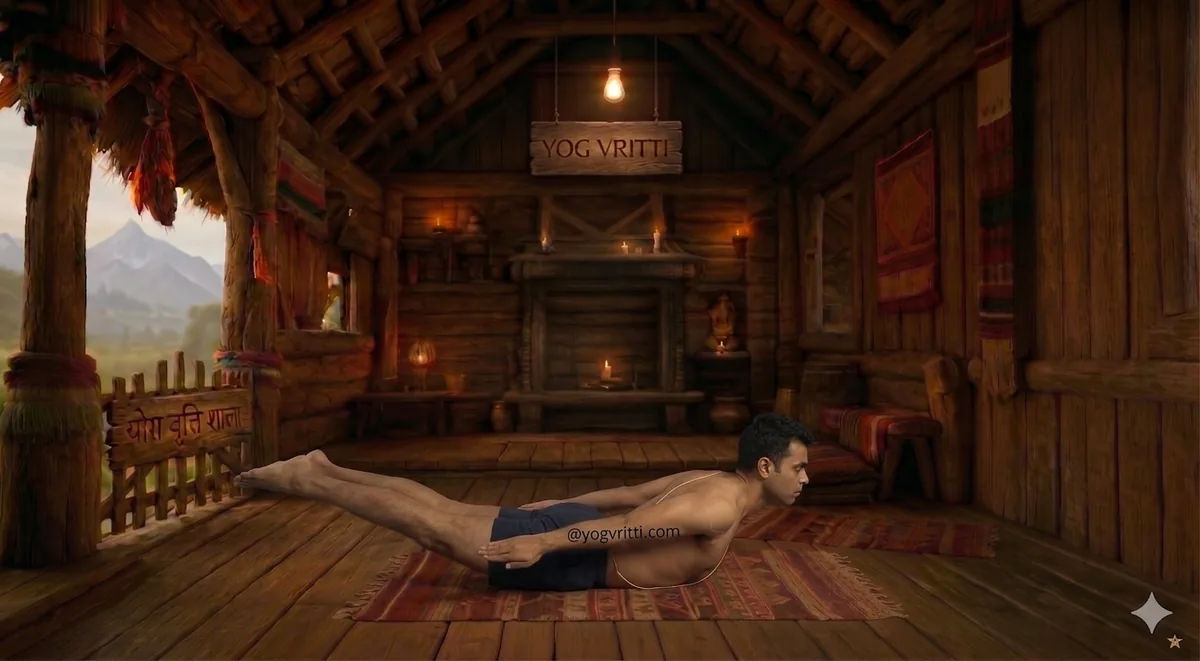
Locust Pose Variation Arms to Sides
शलभासन भिन्नता पार्श्वयोः हस्त
Locust Pose Variation Arms to Sides is a foundational backbend that powerfully strengthens the entire posterior chain, including the muscles along the spine, the glutes, and hamstrings. This shape actively lifts the body against gravity, not only building physical strength and improving posture but also cultivating inner resilience and an expansive sense of self. By opening the chest and shoulders, it encourages deeper breathing and fosters a feeling of courage and openness. It's a vital pose for counteracting the effects of modern sedentary life, awakening the core strength that supports both body and mind.
Locust Pose Arms to Sides, also called T-Pose Locust is a classical yoga posture known in Sanskrit as Locust Pose Variation Arms to Sides (शलभासन भिन्नता पार्श्वयोः हस्त). In this posture, the body opens the chest and stretches the entire front body. The posture works to strengthen and extend the back, activate the glutes and lengthen the hamstrings. Strengthens glutes and hamstrings. Improves posture. Suitable for beginners and regular practitioners alike, it is an excellent warm-up, particularly beneficial for beginners and seniors. A blanket and bolster can be used to make the posture more accessible and support correct alignment. Practitioners with pregnancy and neck pain should approach with care or consult a qualified teacher.
Muscles Worked
Spinal Extensors
[Erector Spinae, Multifidus]
These deep muscles run along the entire length of your spine, from the sacrum to the skull.
In this pose, they work intensely to lift your torso and head away from the floor, actively extending the vertebral column against gravity.
This sustained isometric contraction builds endurance and strength in the spinal muscles, directly supporting the natural curves of your back and counteracting slouching.
Yogically, strengthening this central axis helps to awaken and channel prana along the sushumna nadi, fostering a sense of inner uprightness and vitality.
Glutes
[Gluteus Maximus]
The large muscles of your buttocks are primary movers for hip extension, and they engage powerfully to lift your legs in Locust Pose.
They work in concert with the hamstrings to elevate the lower limbs, providing significant lift from the pelvis.
This activation not only builds strength in a crucial area for locomotion and stability but also grounds the lower body, creating a sense of rooted power and stability.
Energetically, it helps to awaken the muladhara chakra, fostering a feeling of security and connection to the earth.
Hamstrings
[Biceps Femoris, Semitendinosus, Semimembranosus]
Located on the back of your thighs, these muscles are essential partners to the glutes, working concentrically to extend the hip and lift the legs.
Their active engagement creates length and lift in the lower body, contributing significantly to the overall shape and integrity of the pose.
This strengthens a muscle group that often becomes weak or overstretched in daily life, helping to balance the strength of the quadriceps and improve knee and pelvic stability.
It also helps to release apana vayu, promoting a grounded and stable feeling in the lower body.
Shoulder Retractors
[Rhomboids, Middle Trapezius]
These muscles reside between your shoulder blades and are responsible for drawing the shoulder blades towards the spine and slightly downwards.
In this variation, with arms by your sides, they actively engage to broaden across the collarbones and lift the chest, preventing the shoulders from rounding forward.
This action creates space in the heart center, promoting deeper breathing and a sense of openness and courage.
Yogically, this expansion helps to open the anahata chakra, fostering emotional generosity and receptivity.
Joints Mobilized
Spine
mobilizingThe vertebral joints of the spine, particularly in the thoracic and lumbar regions, are encouraged into extension.
This gentle backbend articulates the individual vertebrae, moving them out of their habitual forward-flexed patterns and restoring natural mobility.
While the posterior elements experience mild compression, the anterior spine lengthens, stimulating circulation and bringing a feeling of renewed vitality along the central axis.
Regular practice enhances spinal flexibility and resilience, contributing to better posture and a more youthful, supple spine.
Hip Joint
mobilizingThe hip joints extend as the legs lift away from the floor, requiring active engagement of the glutes and hamstrings while gently lengthening the hip flexors.
This action helps to counteract the stiffness often developed from prolonged sitting, which can shorten the hip flexors and restrict pelvic movement.
Greater freedom in the hip joints translates to improved gait and reduced strain on the lower back.
Yogically, this opening in the hip region can release deeply held emotional and physical tension, fostering a sense of liberation and ease in movement.
Shoulder Girdle
stabilizingWith the arms alongside the body and palms down, the shoulder blades retract and depress, stabilizing the shoulder girdle.
This action brings the head of the humerus (arm bone) back into its socket, creating a sense of broadness across the chest without unnecessary tension in the neck.
This subtle engagement strengthens the muscles surrounding the shoulders, improving overall stability and posture in the upper body.
The result is a feeling of open, unburdened shoulders and a more expansive presence, allowing prana to flow freely into the upper chest.
Organ & System Benefits
Abdominal Organs
As the torso lifts off the floor, the abdominal organs receive a gentle, rhythmic compression against the mat.
This mild internal massage stimulates blood flow to the digestive system and aids in peristalsis, promoting efficient digestion and elimination.
From a yogic perspective, this action helps to stoke Agni, the digestive fire, which is crucial for the assimilation of nutrients and the removal of toxins, leading to a feeling of lightness and inner cleansing.
Lungs
The uplifting action of the chest and the broadening across the collarbones create more space for the lungs to expand, particularly in their upper lobes.
This encourages deeper, fuller inhalations, increasing vital capacity and enhancing oxygen intake throughout the body.
This opening of the chest not only optimizes physical respiration but also symbolically opens the heart center, fostering emotional openness, courage, and a greater capacity to receive and give prana, leading to a sense of invigoration.
Nervous System
This pose, as a gentle yet active backbend, provides an invigorating but grounding effect on the nervous system.
The active engagement of the entire posterior body, combined with the stable support of the torso on the floor, cultivates a sense of strength and confidence.
This balanced activation helps to gently stimulate the sympathetic nervous system, providing a healthy energetic boost without overstimulation, promoting a feeling of alertness and readiness.
The sustained effort required to hold the pose draws awareness inward, effectively quieting the restless fluctuations of the mind (chitta vritti).
As the body works cohesively against gravity, the mind becomes more present and less prone to distraction, fostering a state of mild meditative concentration.
This focused engagement, coupled with conscious breathing, can alleviate mild anxiety and cultivate a profound sense of calm resilience.
The opening of the chest and the expansion of the breath, which is naturally encouraged in this pose, gently stimulates the vagus nerve.
This activation helps to balance the nervous system by promoting parasympathetic activity, leading to feelings of relaxation and well-being.
The combination of effort and support from the earth helps to regulate mood and cultivate emotional equilibrium, leaving the practitioner feeling both energized and settled.
Mental & Emotional
Locust Pose is a powerful antidote to feelings of lethargy or despondency, as it cultivates profound inner strength and a sense of upliftment.
By actively engaging the body to lift against gravity, practitioners develop mental fortitude and the courage to meet life's challenges with greater resolve.
This physical effort directly translates into a psychological readiness to stand tall and embody inner power.
The expansive, chest-opening quality of this backbend can help to release emotional guardedness and foster a sense of openness and vulnerability.
As the heart center expands, practitioners may experience a shift from a contracted, self-protective stance to one of greater receptivity and compassion.
This connection to the anahata chakra promotes emotional healing and an increased capacity for love and empathy.
Sustaining this pose requires focused attention and perseverance, training the mind in dharana (concentration).
The deliberate effort involved helps to quiet mental chatter and anchor the mind firmly in the present moment, enhancing overall mindfulness.
This mental discipline, born from deep physical engagement, builds a stronger mind-body connection and enriches one's capacity for sustained, calm awareness in daily life.
Because of Its Shape
backbend
Backbends are inherently uplifting and energizing, acting as a powerful counter-posture to the pervasive forward-flexed postures of modern life.
This shape extends and mobilizes the entire spine, bringing vitality and flexibility to the vertebral column, which can often become stiff and rigid.
Energetically, backbends are said to awaken and circulate prana along the sushumna nadi, promoting a sense of inner radiance and profound awakening.
The opening of the entire front body in a backbend creates expansive space in the chest and abdomen, which significantly improves respiration and gently stimulates the internal organs.
This release of physical and emotional tension, often stored deeply around the heart and diaphragm, fosters a feeling of emotional liberation.
From a yogic perspective, this expansive quality helps to open the anahata (heart) chakra, cultivating courage, joy, and emotional freedom.
Backbends are unparalleled in their ability to build strength in the posterior chain, specifically the spinal extensors, glutes, and hamstrings, which are critical for maintaining excellent posture and spinal health.
This deep strengthening provides a robust and stable foundation for the spine, effectively counteracting the debilitating effects of prolonged sitting.
This physical strength translates directly into mental resilience and a profound feeling of being well-supported from within.
Fascial Lines
This pose primarily engages and strengthens the entire Superficial Back Line of fascia, which runs from the soles of the feet, up the back of the legs and torso, and over the head.
As you lift the head, chest, and legs, this integrated fascial chain is powerfully activated and toned, creating a cohesive sense of lift and length throughout the posterior body.
This sustained engagement helps to awaken the proprioceptors within the fascial network, significantly improving body awareness and releasing chronic stiffness or adhesions.
Energetically, this activation helps to unblock subtle energy channels (nadis) along the back body, allowing prana to flow more freely and invigorating the entire system with renewed vitality.
Breathing & Respiratory
In this backbend, the active lifting of the chest and the broadening across the collarbones naturally encourages a fuller, more expansive inhalation.
The diaphragm gains more space to descend, and the rib cage lifts and expands, promoting a deeper breath into the often underutilized upper lobes of the lungs.
This enhanced capacity for inhalation, particularly when consciously practiced, helps to energize the body and mind.
Conversely, focusing on a prolonged, smooth exhalation as you sustain the pose or gently release can help to calm the nervous system, balancing the invigorating nature of the backbend with a profound sense of grounded awareness.
Anatomical Caution
Teachers must emphasize lifting from the strength of the back muscles and glutes, rather than straining the neck or lower back.
Guide students to keep the neck long, gazing down or slightly forward, to avoid compressing the cervical spine.
Students with acute lower back pain, disc issues, or recent abdominal surgery should approach this pose with extreme caution, using minimal lift or appropriate modifications with props like a bolster under the pelvis for support.