5
Muscles
4
Joints
2
Organs
2
Mental
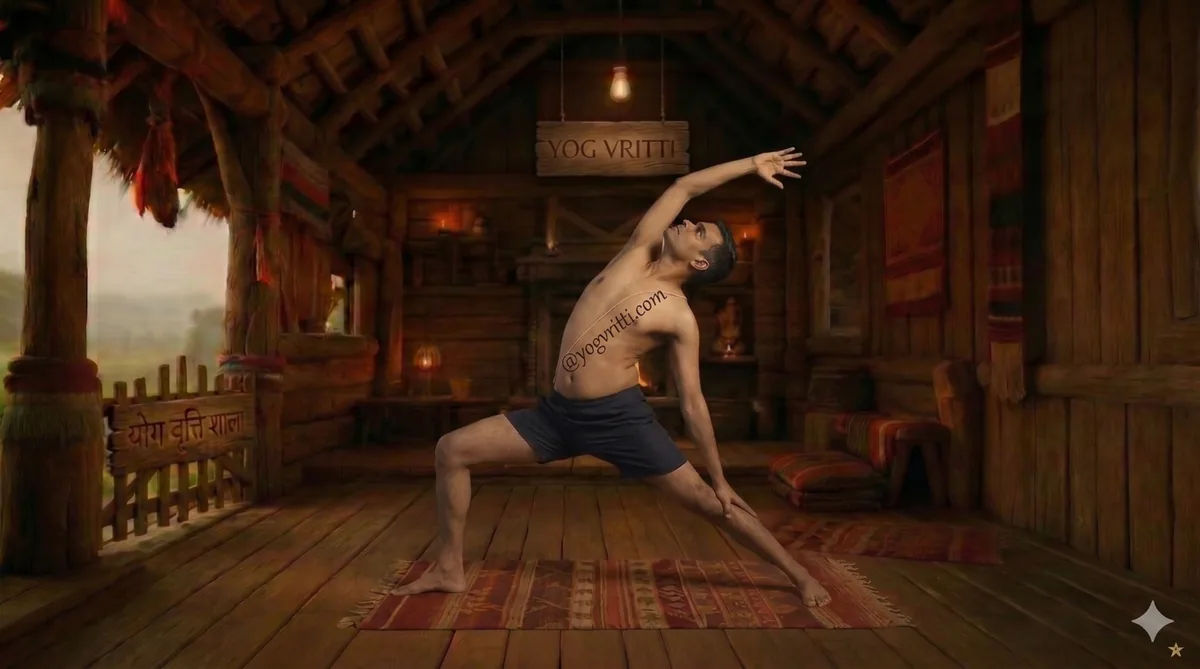
Reverse Warrior Pose
विपरीत वीरभद्रासन
Reverse Warrior Pose (Viparita Virabhadrasana) is a vibrant expression of strength and openness, grounding us through the powerful engagement of the legs while uplifting the spirit. It creates a profound lateral stretch along the entire side body, from the outer heel to the fingertips, lengthening the superficial fascial lines and decompressing the spine. This asana cultivates a sense of expansive awareness, allowing prana to flow freely through previously restricted energetic channels. It's a powerful practice for integrating stability with fluidity, bringing balance to both the physical and energetic bodies, embodying the essence of a serene yet powerful warrior.
Reverse Warrior Pose, also called Viparita Virabhadrasana is a classical yoga posture in the Iyengar tradition. From a standing position, the body roots firmly through the feet while the spine extends upward. The posture works to strengthen the quadriceps, lengthen the hamstrings and stretch the hip flexors. Stretches groin and side body. Opens chest and shoulders. It is particularly valued for improving overall posture and developing greater flexibility. Suitable for intermediate practitioners with foundational yoga experience, it is an excellent warm-up, particularly beneficial for athletes and runners. Practitioners with neck pain and knee injury should approach with care or consult a qualified teacher.
Helps with
Muscles Worked
Quadriceps
[Rectus Femoris, Vastus Lateralis, Vastus Medialis, Vastus Intermedius]
The large muscles at the front of your leading thigh (quadriceps) are powerfully engaged here, working eccentrically to control the deep bend in the knee.
This sustained isometric contraction builds incredible strength and endurance in the legs, creating a stable and unwavering foundation for the entire pose.
Energetically, this grounding force helps to anchor the root chakra (Muladhara), fostering a deep sense of security, presence, and vitality in the lower body.
Hamstrings
[Biceps Femoris, Semitendinosus, Semimembranosus]
In the trailing leg, the muscles at the back of the thigh (hamstrings) receive a subtle but significant lengthening along their entire length as the hip extends, especially for those with tight hips.
Simultaneously, the hamstrings of the front leg work synergistically with the quadriceps to stabilize the knee joint, preventing hyperextension and protecting the joint.
This dual action brings awareness to the entire posterior chain, releasing held tension and allowing for a more fluid connection between the pelvis and the earth, supporting the upward flow of prana.
Obliques
[External Oblique, Internal Oblique]
The muscles along the sides of your waist (obliques) are deeply involved, with the obliques on the top side of the lateral bend experiencing a profound stretch, creating space along the torso.
Conversely, the obliques on the underside contract to support the lateral flexion of the trunk, creating stability and protecting the lumbar spine.
This action not only tones the core but also stimulates the digestive organs, allowing apana vayu (downward and outward energy) to move more freely, cleansing and refreshing the abdominal cavity.
Latissimus Dorsi
[Latissimus Dorsi]
The broad muscle across your upper back and side (latissimus dorsi) on the elevated arm side gets a magnificent stretch, extending from the pelvis all the way to the arm bone.
This opening releases tightness in the side body, which often compresses the thoracic spine and restricts the natural flow of breath.
As this large muscle unwinds, you can feel an expansion in the rib cage, inviting deeper, more expansive breaths and creating a profound sense of upliftment and freedom in the upper torso.
Gluteus Medius and Minimus
[Gluteus Medius, Gluteus Minimus]
These deeper muscles on the outer hip of your bent leg (gluteus medius and minimus) are actively engaged to abduct and externally rotate the thigh, preventing the knee from collapsing inward.
Their consistent work stabilizes the hip joint, providing a solid base for the upper body's expansion and protecting the knee.
This subtle but powerful engagement builds intelligent strength in the hips, cultivating a sense of rootedness and stability, essential for dynamic balance and emotional security.
Joints Mobilized
Spine
mobilizing | decompressingThe entire vertebral column undergoes a beautiful lateral flexion, creating significant space between the vertebrae on the top side of the bend.
This gentle lengthening helps to decompress the spinal discs and release tension in the paraspinal muscles, particularly in the thoracic and lumbar regions.
Over time, this mobilization improves spinal flexibility and vitality, allowing prana to flow unimpeded along the central energetic channel (Sushumna Nadi), leading to a feeling of lightness and fluidity throughout the body.
Hips
mobilizing | stabilizingThe hip joint of the front leg is in deep flexion, abduction, and external rotation, significantly mobilizing the joint capsule and surrounding soft tissues, enhancing range of motion.
Simultaneously, the hip of the back leg is extended and adducted, providing a strong, stable anchor for the pose, which helps to ground the practitioner.
This dynamic interplay between mobility and stability in the hips releases stagnant energy often held in this area, promoting emotional release and a greater sense of freedom in movement and being.
Shoulders
mobilizing | stabilizingThe shoulder joint of the raised arm moves into deep flexion and abduction, creating significant space and mobility in the glenohumeral joint and the entire shoulder girdle.
The grounding arm, resting on the back leg, helps to stabilize the shoulder blade (scapula) and further open the chest, enhancing the lateral stretch.
This expansive movement not only improves range of motion but also helps to release tension often stored in the upper back and neck, inviting a feeling of openness and capacity for receiving life's experiences.
Knees
weight bearing | extensionThe front knee joint bears significant weight while in deep flexion, requiring strength and precise alignment from the surrounding muscles to prevent injury.
The back knee is in full extension, demanding active engagement of the quadriceps and integrity of the joint capsule.
This controlled engagement strengthens the ligaments and muscles around the knee, improving joint health and proprioception, giving a sense of unwavering support and resilience in the lower body, fostering confidence in one's foundation.
Organ & System Benefits
Lungs
The deep lateral bend in Reverse Warrior creates a wonderful expansion in the rib cage, particularly on the elevated arm side, allowing the lung on that side to fully inflate and expand.
This increased thoracic volume facilitates deeper, more complete inhalations, enhancing oxygen uptake and carbon dioxide release, directly improving respiratory efficiency.
Yogically, this expansion invigorates Prana Vayu, the inward moving life force, bringing vitality, clarity, and a sense of boundless energy to the mind and body.
Abdominal Organs
The gentle compression on the underside of the lateral bend and the profound stretch on the upper side subtly stimulate the abdominal organs, including the liver, spleen, and intestines.
This subtle internal massage encourages healthy blood flow and lymphatic drainage, supporting optimal digestive function and detoxification processes.
This cleansing action helps to balance Samana Vayu, the equalizing energy, fostering a sense of harmony and balance in the core of the body and mind.
Nervous System
This pose, while outwardly dynamic, cultivates a profound sense of inner calm and focused attention.
The strong, grounding foundation in the legs, combined with the expansive opening of the chest, invites a balanced state, gently activating both the sympathetic (strength, alertness) and parasympathetic (calm, release) nervous systems.
The sustained hold, integrated with conscious, rhythmic breathing, allows the mind to settle, effectively reducing mental chatter (chitta vritti) and fostering a state of profound present awareness.
The expansive lateral stretch along the side body helps to release chronic tension in the intercostal muscles, which directly influences the vagus nerve's ability to signal relaxation throughout the body.
As the breath deepens and becomes more spacious, the nervous system receives clear signals of safety and ease, diminishing the stress response.
This can significantly reduce feelings of anxiety and chronic stress, promoting a profound sense of well-being, emotional regulation, and inner peace.
Mental & Emotional
Reverse Warrior cultivates courage and an expansive, optimistic outlook on life.
The open chest, lifted gaze, and strong foundation embody a willingness to face life's challenges with an open heart and unwavering resolve, transforming fear into resilience.
This powerful physical stance translates into a robust mental attitude of optimism and self-assurance, encouraging practitioners to stand tall in their own power and embrace their inner warrior.
The pose demands a delicate balance between effort (sthira) and ease (sukham), requiring focused attention (dharana) to maintain precise alignment while allowing for internal spaciousness and surrender.
This sustained concentration trains the mind to be present, drawing awareness away from external distractions and deeply inward.
Regular practice of this mental discipline leads to greater clarity, improved concentration, and enhanced emotional equilibrium in the face of daily demands.
Because of Its Shape
lateral bend
This deep lateral bend creates significant length along the entire side of the body, from the outer foot to the fingertips, directly stretching the myofascial lateral lines.
This action helps to decompress the spine, particularly in the lumbar region, alleviating stiffness and improving overall spinal mobility and health.
Energetically, it opens channels for Apana Vayu to descend, grounding the practitioner while simultaneously creating space for Prana Vayu to rise and invigorate.
Lateral bends are profoundly opening for the intercostal muscles, which are located between the ribs and often become tight from sedentary habits, poor posture, or chronic stress.
By actively expanding the rib cage, this shape directly enhances lung capacity and facilitates deeper, more efficient, and three-dimensional breathing.
This increased space for the breath allows for a greater intake of prana, invigorating the body and calming the nervous system, fostering a sense of inner spaciousness.
Fascial Lines
This pose is a magnificent opener for the entire lateral line of fascia, which forms a continuous web from the outer ankle, up the outer leg, across the hip, along the side of the torso, and into the arm.
As you extend and lengthen through the side body, you are directly releasing restrictions in this continuous fascial web, significantly improving overall flexibility, reducing stiffness, and enhancing proprioception.
This fascial unwinding allows for a more fluid transmission of force and energy throughout the body, cultivating a sense of unhindered movement and an unobstructed energetic flow.
Breathing & Respiratory
The expansive lateral bend in Reverse Warrior naturally encourages a deeper, more three-dimensional breath, particularly into the side of the rib cage that is lifting and opening.
This shape facilitates a fuller, more complete inhalation as the intercostal muscles stretch, creating more available space for the lungs to expand laterally.
This type of breath cultivates a profound sense of spaciousness and internal freedom, making it an excellent preparatory shape for lateral thoracic breathing (Parsva Pranayama) to enhance overall lung capacity and vital energy.
Anatomical Caution
Teachers should carefully observe students' knee alignment in the front leg, ensuring the knee tracks directly over the ankle and doesn't collapse inward or splay excessively outward, which can strain the joint.
For those with neck sensitivities or cervical spine issues, advise keeping the gaze forward or slightly down instead of turning it upward, to avoid unnecessary strain.
Always prioritize stability, comfort, and intelligent alignment over achieving maximum depth, especially in the initial stages of practice.