7
Muscles
6
Joints
3
Organs
3
Mental
Svarga Dvijasana
स्वर्ग द्विजासन
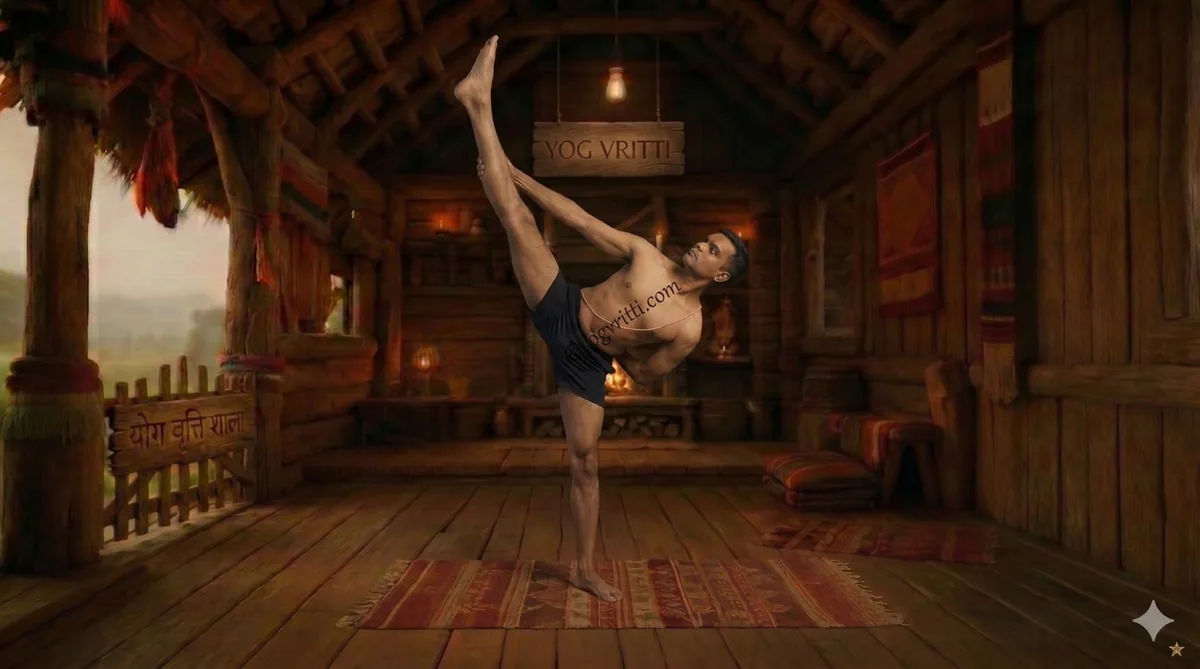
Svarga Dvijasana, the Bird of Paradise, is a profound standing balance pose that meticulously sculpts the body's strength and flexibility, particularly in the lower kinetic chain. It demands deep engagement from the standing leg's quadriceps and glutes, while simultaneously unraveling chronic tension in the hamstrings and inner thighs of the lifted leg. Energetically, this pose cultivates unwavering focus and a sense of graceful expansion, embodying both grounding stability and an exhilarating openness. For a dedicated practitioner, it's a journey into the subtle mechanics of balance, breath, and the expansive potential of the hips and heart.
Bird of Paradise Pose, also called Svarga Dvijasana is a classical yoga posture. Its Sanskrit name Svarga Dvijasana translates word-for-word as: Svarga (Heaven) · Dvija (Bird / Twice-Born) · Asana (Pose). From a standing position, the body roots firmly through the feet while the spine extends upward. The posture works to lengthen the hamstrings, stretch the hip flexors and strengthen the quadriceps. Strengthens the standing leg, ankles, and core. Improves balance, concentration, and focus. It is particularly valued for developing greater flexibility. Suitable for advanced practitioners with developed body awareness, it is a meaningful addition to any practice, particularly beneficial for athletes and teens. A strap can be used to make the posture more accessible and support correct alignment. Practitioners with hip injury and knee injury should approach with care or consult a qualified teacher.
Helps with
Muscles Worked
Hamstrings
[Semitendinosus, Semimembranosus, Biceps Femoris]
The muscles along the back of the lifted thigh (hamstrings) undergo a significant, sustained lengthening in this pose, particularly as the knee extends.
This is not a passive hang but an active release, encouraging the muscle spindles to gradually relax and increase their resting length over time.
From a yogic perspective, this deep opening in the posterior chain helps to release stored 'apana vayu,' the downward-moving energy, often associated with stagnant emotional patterns, promoting a feeling of liberation and ease in the pelvis.
Hip Flexors
[Iliopsoas, Rectus Femoris]
While the standing leg's hip flexors are engaged to stabilize the pelvis, the hip flexors of the lifted leg experience a gentle yet profound lengthening, especially if the leg is actively extending from the hip.
This counter-intuitive lengthening occurs as the entire leg is drawn away from the torso, creating space in the anterior hip joint.
Releasing tension in the hip flexors, often tight from prolonged sitting, can alleviate lower back compression and allow for a freer flow of 'prana' into the pelvic region, enhancing vitality and creative energy.
Quadriceps
[Rectus Femoris, Vastus Lateralis, Vastus Medialis, Vastus Intermedius]
The muscles at the front of the standing thigh (quadriceps) are intensely engaged to maintain a strong, stable base, working eccentrically to prevent the knee from collapsing and isometrically to hold the extension.
This deep activation builds muscular endurance and bone density in the weight-bearing leg, creating a powerful foundation.
Energetically, this strength in the 'sthira' (steadiness) of the standing leg allows the 'sukha' (ease) of the lifted leg to unfold, embodying the balance between effort and surrender that is central to yoga practice.
Glutes
[Gluteus Maximus, Gluteus Medius, Gluteus Minimus]
The muscles of the buttocks (glutes) on the standing leg are crucial for stabilizing the hip and pelvis, preventing external rotation and maintaining alignment.
The gluteus medius and minimus, in particular, work to prevent the standing hip from 'dumping' outwards, ensuring the femur stays centered in the hip socket.
This foundational stability grounds the pose, allowing the practitioner to feel deeply rooted and secure, which translates into a mental steadiness ('dharana') that is vital for advanced balancing postures.
Core Muscles
[Transversus Abdominis, Obliques, Rectus Abdominis, Erector Spinae]
The deep muscles of the abdomen and back (core muscles) are continuously active, creating a strong central pillar that supports the spine and facilitates balance.
This engagement prevents excessive arching or rounding of the lower back, ensuring spinal integrity as the leg lifts.
A strong and stable core fosters a sense of inner containment and confidence, allowing 'prana' to flow freely through the central channel ('sushumna nadi') and promoting a feeling of integration between the upper and lower body.
Shoulder Stabilizers
[Rotator Cuff muscles (Supraspinatus, Infraspinatus, Teres Minor, Subscapularis), Rhomboids, Serratus Anterior]
While holding the strap, the muscles around the shoulder blade and shoulder joint (rotator cuff and scapular stabilizers) work synergistically to maintain the integrity of the shoulder girdle and create leverage.
They resist the pull of the lifted leg, preventing strain and ensuring a stable platform for the arm.
This subtle but powerful engagement cultivates an awareness of the upper body's connection to the core, fostering a sense of integrated strength and an open, receptive heart space even in a challenging posture.
Adductors
[Adductor Magnus, Adductor Longus, Adductor Brevis, Pectineus, Gracilis]
The inner thigh muscles (adductors) of the lifted leg experience a significant lengthening, particularly as the leg abducts and extends to the side.
This stretch can be quite intense, as these muscles are often tight, limiting hip mobility.
Releasing tension in the adductors not only improves hip joint range of motion but also symbolically opens the root chakra ('Muladhara Chakra'), fostering a sense of security, stability, and connection to the earth, allowing for deeper emotional release and grounding.
Joints Mobilized
Hip Joint (Lifted Leg)
mobilizingThe hip joint of the lifted leg undergoes a complex combination of abduction, external rotation, and extension, creating significant mobility in the femoral head within the acetabulum.
This movement pattern actively lubricates the joint capsule and encourages a broader range of motion, which can alleviate stiffness and improve overall hip health.
Yogically, opening the hips in this way is believed to release deeply held emotions and stagnant energy, fostering a sense of freedom and emotional lightness.
Hip Joint (Standing Leg)
stabilizingThe hip joint of the standing leg is powerfully engaged in maintaining stability, with the surrounding musculature creating a strong, supportive base.
It works in slight flexion and internal rotation to keep the pelvis level and the torso aligned over the foot.
This isometric engagement strengthens the deep stabilizing muscles around the hip, improving proprioception and balance.
A stable standing hip provides a feeling of unshakeable groundedness, allowing the practitioner to explore the pose's expansive qualities with confidence and security.
Knee Joint (Lifted Leg)
mobilizingThe knee joint of the lifted leg moves into full extension, requiring strength from the quadriceps and flexibility from the hamstrings.
The patella (kneecap) tracks efficiently along the femoral groove as the leg straightens, promoting healthy joint mechanics.
This active extension helps to decompress the knee joint and strengthens the muscles supporting it, contributing to long-term knee health and the yogic sense of unimpeded flow ('sukha') through the entire limb.
Ankle Joint (Standing Leg)
stabilizingThe ankle joint of the standing leg is constantly making micro-adjustments in dorsiflexion and plantarflexion to maintain balance, engaging the intrinsic muscles of the foot and calf.
This dynamic stabilization refines proprioception and strengthens the ligaments and tendons surrounding the joint, improving overall ankle resilience.
Cultivating 'sthira' (steadiness) in the ankle directly translates to mental focus and a deeper connection to the earth, allowing the practitioner to feel rooted and present.
Spine (Lumbar and Thoracic)
stabilizingThe lumbar spine (lower back) and thoracic spine (mid-back) are actively engaged in maintaining a neutral, elongated position, resisting the tendency to collapse or arch excessively.
The deep core muscles work to support each vertebra, preventing compression and promoting spinal health.
This spinal integrity allows for the free flow of 'prana' through the central energy channel ('sushumna nadi'), fostering a sense of energetic alignment and mental clarity that is crucial for advanced postures.
Shoulder Joint
mobilizingThe shoulder joint of the arm holding the strap experiences a combination of flexion, abduction, and external rotation, opening the anterior chest and shoulder girdle.
This movement pattern enhances the range of motion in the glenohumeral joint and stretches the pectoral muscles, counteracting rounded shoulders from daily activities.
This opening creates space for deeper breathing and symbolically represents an open heart ('Anahata Chakra'), fostering feelings of compassion, courage, and generosity.
Organ & System Benefits
Abdominal Organs
The gentle engagement of the core muscles in Svarga Dvijasana provides a subtle compression and lift to the abdominal organs.
This internal massage can stimulate digestion and improve circulation to the digestive tract, aiding in detoxification.
From a yogic perspective, this activation of 'Manipura Chakra' (navel center) stokes the digestive fire ('agni'), enhancing metabolism and cultivating a sense of personal power and vitality.
Circulatory System
As a standing balance pose, Svarga Dvijasana challenges the circulatory system by requiring the heart to work efficiently against gravity to pump blood throughout the body.
The sustained muscle engagement, particularly in the legs, acts as a secondary pump, facilitating venous return and promoting healthy circulation.
This invigorates the entire system, bringing fresh, oxygenated blood to all tissues and organs, enhancing overall energy levels and a feeling of aliveness ('prana shakti').
Respiratory System
The expansion of the chest and the engagement of the intercostal muscles in the upper body help to create more space for the lungs to fully expand.
This encourages deeper, fuller breaths, increasing lung capacity and improving oxygen exchange.
A stable, open torso allows the diaphragm to move freely, enhancing the natural rhythm of 'pranayama' (breath control) and promoting a sense of calm and centeredness amidst the pose's challenge.
Nervous System
The intense focus required to maintain balance in Svarga Dvijasana acts as a powerful anchor for the mind, drawing attention away from external distractions and internal chatter.
This sustained concentration activates the parasympathetic nervous system, promoting a sense of calm and reducing the 'chitta vritti' (mind fluctuations).
As the mind becomes quieter, the practitioner experiences a profound sense of presence and inner stillness, even within a physically demanding posture.
The deep, sustained stretches in the hamstrings and adductors stimulate stretch receptors, sending signals to the brain that can help to downregulate the sympathetic nervous system's 'fight or flight' response.
This promotes relaxation and encourages the body to release chronic tension held in the connective tissues.
Over time, this practice cultivates a more resilient and adaptable nervous system, leading to reduced anxiety and a greater capacity for ease in daily life.
Holding Svarga Dvijasana requires immense mental and physical steadiness, which trains the nervous system to maintain equilibrium under duress.
The constant micro-adjustments needed for balance refine proprioception and neuromuscular coordination.
This integrated effort fosters a sense of inner harmony and resilience, strengthening the connection between mind and body, and allowing the 'prana' to flow more evenly and powerfully throughout the system.
Mental & Emotional
Svarga Dvijasana demands unwavering concentration, cultivating a profound sense of 'dharana' (focused attention) as the mind becomes fully absorbed in the intricate details of balance and alignment.
This intense mental engagement provides a powerful antidote to a scattered or restless mind, fostering mental clarity and a heightened state of awareness.
The challenge of the pose helps to quiet mental chatter, bringing the practitioner into the present moment with laser-like focus.
The journey into and hold of this advanced posture builds remarkable patience and persistence, as mastery is a gradual process requiring consistent effort and a willingness to embrace imperfection.
Overcoming the physical and mental hurdles of Svarga Dvijasana cultivates inner resilience and self-trust, teaching the practitioner to remain steady ('sthira') and graceful ('sukha') amidst difficulty.
This develops a profound sense of inner strength and determination that extends beyond the mat.
Achieving the graceful extension of Svarga Dvijasana fosters a deep sense of accomplishment and self-expression, encouraging the practitioner to embody openness and courage.
The expansive nature of the pose, with the leg extended high and the chest open, can metaphorically represent breaking free from limitations and embracing one's full potential.
This cultivates a feeling of lightness, joy, and an uninhibited spirit, inviting a sense of 'ananda' (bliss) into the practice.
Because of Its Shape
standing
As a standing pose, Svarga Dvijasana establishes a strong connection to the earth, grounding the practitioner and building foundational stability through the feet and legs.
The weight-bearing nature strengthens bones and joints, particularly in the lower body, while enhancing proprioception and balance.
This grounding experience cultivates 'Muladhara Chakra' energy, fostering a sense of security, rootedness, and stability in both the physical and energetic bodies.
The advanced balance required in this pose profoundly refines the body's proprioceptive awareness and neuromuscular coordination.
The constant micro-adjustments in the standing foot and leg challenge the brain to integrate sensory input from the joints and muscles, enhancing overall bodily intelligence.
This heightened awareness translates into improved focus and mental clarity, allowing the practitioner to develop 'dharana' (concentration) and a deeper connection to their inner self.
Svarga Dvijasana is a significant hip opener, specifically targeting the hamstrings and adductors of the lifted leg, while also requiring external rotation and abduction.
This deep release in the hip joint can alleviate physical stiffness and also helps to release emotional tension often stored in this area, which is linked to 'Svadhisthana Chakra'.
The opening promotes greater mobility, ease of movement, and a sense of emotional freedom and creative flow.
With the chest lifted and the shoulders engaged to hold the strap, this pose also functions as a subtle chest opener, creating space across the collarbones and sternum.
This expansion improves respiratory capacity and encourages an uplifted posture, counteracting the effects of prolonged sitting and slouching.
Energetically, opening the chest ('Anahata Chakra') fosters feelings of courage, compassion, and emotional openness, allowing the practitioner to breathe more freely and connect more deeply with their heart.
Fascial Lines
The fascial network, the body's intricate web of connective tissue, plays a crucial role in Svarga Dvijasana, as it is deeply stretched and organized.
The Superficial Back Line, running from the soles of the feet up the back of the legs and torso, experiences a profound lengthening, particularly in the hamstrings and calves.
Simultaneously, the Lateral Line and Spiral Line are engaged in the standing leg for stabilization and integrated movement.
This comprehensive fascial release and strengthening helps to unwind chronic tension patterns, improving overall flexibility and creating a sense of spaciousness within the body, allowing 'prana' to flow unimpeded through these interconnected channels.
Breathing & Respiratory
In Svarga Dvijasana, the breath naturally deepens and becomes more controlled due to the pose's demanding nature and the simultaneous opening of the chest.
The core engagement supports the diaphragm, encouraging a full, three-part yogic breath (Dirgha Pranayama) that fills the abdomen, ribs, and chest.
While the physical challenge might initially restrict breath, the practice teaches us to maintain a steady, even 'Ujjayi' breath, using it as an anchor for stability and focus.
This conscious breathing calms the nervous system and allows the practitioner to find 'sukha' (ease) within the 'sthira' (effort), embodying true 'pranayama' in action.
Anatomical Caution
Teachers must emphasize meticulous alignment and never force the stretch, especially in the hamstrings and inner thighs, as the attachments at the sitting bones can be vulnerable.
Pay close attention to the standing knee, ensuring it's not hyperextended or collapsing inwards, and teach students to engage the quadriceps to protect the joint.
Always prioritize spinal integrity, ensuring the lower back doesn't round or arch excessively, and encourage the use of the strap to avoid straining the shoulders.