5
Muscles
4
Joints
3
Organs
2
Mental
Vrschikasana
वृश्चिकासन
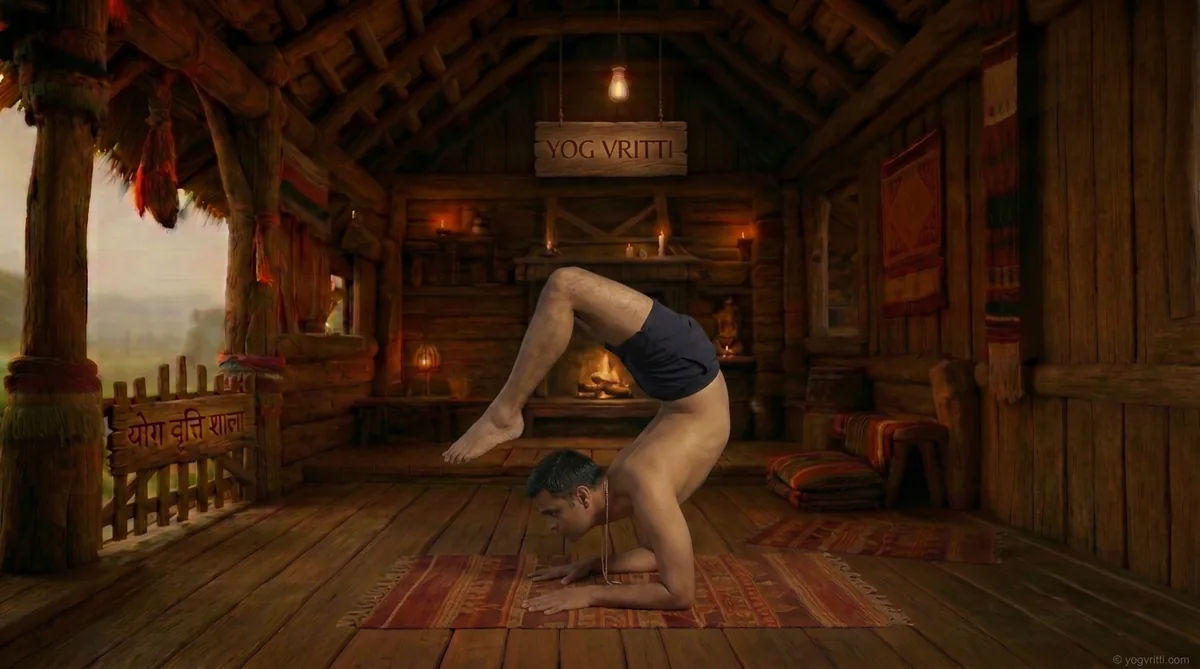
Vrschikasana, the Scorpion Pose, is a formidable inversion and a profound backbend that demands both immense physical strength and unwavering mental focus. It meticulously sculpts the upper body and core while inviting a deep, expansive opening across the entire anterior chain of the body. Energetically, this asana acts as a powerful catalyst for courage, balance, and a radical shift in perspective, reversing the usual flow of energy to deeply invigorate the mind and spirit. For a dedicated teacher, understanding its intricate interplay of anatomy and energetic flow allows for guiding students safely and profoundly into this transformative practice, fostering not just physical mastery but also a deep wellspring of inner resilience and self-discovery.
Scorpion Pose, also called Vrschikasana is a classical yoga posture. Its Sanskrit name Vrschikasana translates word-for-word as: Vrschika (Scorpion) · Asana (Pose). In this posture, the body reverses the pull of gravity, bringing the hips or legs above the heart. The posture works to open and strengthen the shoulders and engage the core. Deep spinal backbend in inversion. Develops fearlessness. It is particularly valued for building full-body strength. Suitable for advanced practitioners with developed body awareness, it is a meaningful addition to any practice. A wall can be used to make the posture more accessible and support correct alignment. Practitioners with shoulder injury and neck pain should approach with care or consult a qualified teacher.
Helps with
Muscles Worked
Shoulders
deltoids, rotator cuff group
The muscles capping your shoulder (deltoids) and the deeper stabilizing muscles surrounding the joint (rotator cuff group) are intensely engaged, bearing the body's weight.
They actively press the forearms and elbows into the ground, creating a solid, unyielding foundation, preventing any collapse in the shoulder girdle.
This sustained isometric contraction builds remarkable strength and endurance in the upper body, translating to a feeling of unwavering support and a powerful uplift, cultivating a profound sense of inner fortitude and stability.
Core Abdominals
transversus abdominis, obliques, rectus abdominis
The deep abdominal muscles, encompassing your transversus abdominis, obliques, and rectus abdominis, are profoundly activated to stabilize the pelvis and lumbar spine.
They prevent the lower back from collapsing into an excessive arch, maintaining integrity in the spinal curves and protecting the vertebral discs.
This intelligent engagement creates a strong, contained central axis, allowing the spine to extend safely and freely, fostering a sense of inner containment and control over the upward-moving energy (udana vayu).
Spine Extensors
erector spinae, multifidus
The long muscles running along either side of your spine (erector spinae) and the deeper, smaller muscles between individual vertebrae (multifidus) are powerfully recruited to lift and extend the spinal column into the backbend.
They work concentrically to create the arch, lengthening the front of the body while strengthening the back, building resilience in the spinal column.
This action allows for greater mobility and an expansive feeling of openness through the chest, releasing stagnant energy and invigorating the central channel (sushumna nadi).
Forearms
flexors and extensors of the forearm
The muscles in your forearms (flexors and extensors) are crucial for establishing and maintaining the forearm balance, actively pressing down through the entire forearm and palm.
This active grounding creates a stable, broad base, protecting the wrists and transferring the body's weight effectively to the ground.
The strength cultivated here provides a feeling of rootedness and connection to the earth, anchoring the physical form while allowing the rest of the body to lift and soar with grace.
Gluteals
gluteus maximus, medius
The muscles of your buttocks (gluteus maximus and medius) are actively engaged to support the pelvis and assist in the powerful lift of the legs towards the head.
They help to prevent over-arching in the lumbar spine by creating a stable base for the sacrum and pelvis, ensuring a safe and even curve.
This intelligent activation provides a sense of lift and lightness in the lower body, allowing for greater freedom in the backbend and a feeling of integrated strength from the core outwards, supporting the upward flow of prana.
Joints Mobilized
Shoulder Girdle
stabilizingThe complex of joints comprising the shoulder (glenohumeral joint) and the articulation of the shoulder blade on the rib cage (scapulothoracic joint) are intensely stabilized under the body's weight.
The shoulder blades draw down and in towards the spine, creating a broad, firm platform that prevents collapse and protects delicate structures.
This precise alignment fosters an experience of unwavering support and a spaciousness across the upper chest, allowing the heart chakra to open and expand freely.
Spine
mobilizingThe entire vertebral column undergoes significant mobilization, particularly in the thoracic and lumbar regions, into a deep backbend.
While the back muscles strengthen, the individual spinal segments are encouraged to articulate, preventing compression in any single area.
The inversion aspect also offers a gentle decompression, reversing the usual gravitational pull, leading to a feeling of lightness and increased fluidity, enhancing the flow of prana along the central axis (sushumna nadi).
Hip Joints
mobilizingThe hip joints (acetabulofemoral joints) are actively engaged in extension, as the legs lift powerfully towards the head and the pelvis tilts anteriorly.
This action requires significant flexibility in the hip flexors and strength in the gluteals to create the deep backbend.
The opening through the front of the hips allows for a deeper and safer spinal curve, promoting a sense of freedom and spaciousness in the pelvis, which in turn influences the root chakra (muladhara) and sacral chakra (svadhisthana).
Elbows
weight bearingThe elbow joints (humeroulnar and humeroradial joints) are critical for supporting the body's weight, requiring precise alignment directly over the wrists and in line with the shoulders.
They must remain stable, neither hyperextending nor collapsing inwards, creating a strong vertical line from the forearms to the shoulders.
This stable foundation ensures the safety of the upper limb and provides a solid, unwavering base for the entire inversion, cultivating a sense of grounded strength and unwavering support.
Organ & System Benefits
Abdominal Organs
The deep backbend and inversion in Vrschikasana gently compress the abdominal organs, including the stomach, intestines, and liver.
This compression acts like a subtle internal massage, stimulating circulation and assisting in the removal of stagnant blood and toxins.
Upon release from the pose, a fresh surge of oxygenated blood flows into these organs, promoting healthy digestion, elimination, and overall vitality, akin to a cleansing effect that revitalizes the manipura chakra.
Thyroid & Parathyroid Glands
The deep backbend and the extension through the neck gently stimulate the thyroid and parathyroid glands, situated in the throat region.
This subtle pressure and subsequent release can help regulate their function, influencing metabolism, energy levels, and calcium balance throughout the body.
The opening of the throat in this posture is also deeply associated with the Vishuddha chakra, promoting clear communication, self-expression, and authenticity.
Brain
As a powerful inversion, Vrschikasana significantly increases blood flow to the brain, providing a rich supply of oxygen and essential nutrients.
This enhanced circulation can improve cognitive function, mental clarity, memory, and overall brain health.
The reversal of gravity also brings a fresh perspective, literally and figuratively, calming the mind (chitta vritti) and fostering a sense of mental alertness, inner peace, and expanded consciousness.
Nervous System
The intense focus and precise alignment required to maintain balance in Vrschikasana quietens the restless fluctuations of the mind (chitta vritti), drawing awareness profoundly inward.
This sustained concentration acts as a powerful form of active meditation, gradually shifting the nervous system from a sympathetic (fight-or-flight) response towards a parasympathetic (rest-and-digest) state.
While initially stimulating, the disciplined effort ultimately calms the nervous system, leading to a deep sense of inner stillness, presence, and mental clarity.
The unique challenge of Vrschikasana, combining inversion with a deep backbend, powerfully stimulates the proprioceptors throughout the body, significantly enhancing spatial awareness and body mapping.
This heightened sensory input integrates various parts of the nervous system, refining coordination, balance, and fine motor control.
The successful execution of such a complex pose builds profound confidence and resilience, empowering the practitioner to navigate life's challenges with greater equanimity and a deeper connection to their innate inner wisdom.
Mental & Emotional
Vrschikasana demands immense courage and a willingness to transcend perceived limitations, both physical and psychological.
As you balance on your forearms, lifting your legs and deeply arching your spine, you confront fear, self-doubt, and the instinct to retreat head-on, cultivating unwavering determination (tapas) and mental fortitude.
This act of confronting and moving beyond fear translates into a profound sense of empowerment and self-trust, allowing you to approach other challenges in life with greater confidence and an open heart.
The inverted nature of Vrschikasana literally turns your world upside down, offering a fresh and often profound shift in perspective.
This physical inversion encourages a mental inversion, challenging habitual thought patterns and opening the mind to new possibilities and solutions.
It fosters the yogic principle of Pratyahara, drawing the senses inward, and Dharana, cultivating single-pointed concentration, leading to increased mental clarity, reduced attachment to external distractions, and a deeper sense of inner peace.
Because of Its Shape
inversion
Inversions reverse the gravitational pull on the body, offering a unique cascade of physiological benefits.
Blood flow is directed towards the brain and upper body, invigorating these areas with oxygenated blood while providing a gentle, natural decompression for the spine and lower body.
This reversal of energy flow (prana vayu) is profoundly rejuvenating, combating fatigue, improving circulation, and promoting a feeling of lightness and vitality throughout the entire system.
Beyond the physical, inversions challenge our conventional perception and encourage a profound shift in consciousness.
By literally turning our world upside down, we learn to see things from a new angle, fostering detachment from worldly concerns and cultivating a sense of inner peace and expanded awareness.
This practice aligns with the yogic understanding of elevating consciousness and gaining a broader, more expansive perspective on life's challenges and opportunities.
Fascial Lines
In Vrschikasana, the fascial lines along the entire front of the body, particularly the Superficial Front Line (SFL) and the Deep Front Line (DFL), are profoundly lengthened, stretched, and released, especially through the hip flexors, abdominals, chest, and throat.
Simultaneously, the Superficial Back Line (SBL) and Deep Back Line are strengthened and toned to create the powerful spinal extension and support.
This intricate interplay of lengthening and strengthening helps to reorganize fascial patterns, releasing long-held restrictions and chronic tension that might be holding the body in habitual, often dysfunctional, postures.
From a yogic perspective, this systematic opening and toning of the fascial web helps clear energetic blockages (granthis), allowing for a more unimpeded flow of prana throughout the body's channels (nadis), fostering a feeling of profound integration, fluidity, and freedom within.
Breathing & Respiratory
The inverted and deeply back-bent nature of Vrschikasana significantly alters the natural rhythm of the breath.
The deep backbend expands the front of the chest and lifts the sternum, creating more space for the lungs to expand, potentially inviting a fuller, more expansive inhalation into the upper lobes.
However, the compression of the abdomen and the intense effort required for balance can initially restrict diaphragmatic breathing.
The profound challenge is to maintain a steady, smooth, and even breath (sama vritti pranayama) despite the physical intensity, transforming the pose from a mere physical feat into a profound meditative experience.
Mastering the breath in this pose cultivates immense mental fortitude and a deep connection to prana, allowing for sustained focus and a sense of calm amidst intensity.
Anatomical Caution
Vrschikasana is an advanced pose requiring significant preparation, strength, and acute body awareness.
Teachers must be vigilant for any signs of strain in the neck or lower back, ensuring students have developed sufficient core strength and spinal mobility before attempting this challenging asana.
Individuals with wrist or shoulder injuries, hypertension, glaucoma, or recent head trauma should avoid this pose, and careful, hands-on guidance is absolutely essential to prevent hyperextension in the lumbar spine or compression in the cervical spine.
Always prioritize safety, intelligent progression, and student well-being over achieving the 'full' expression of the pose.