4
Muscles
4
Joints
3
Organs
2
Mental
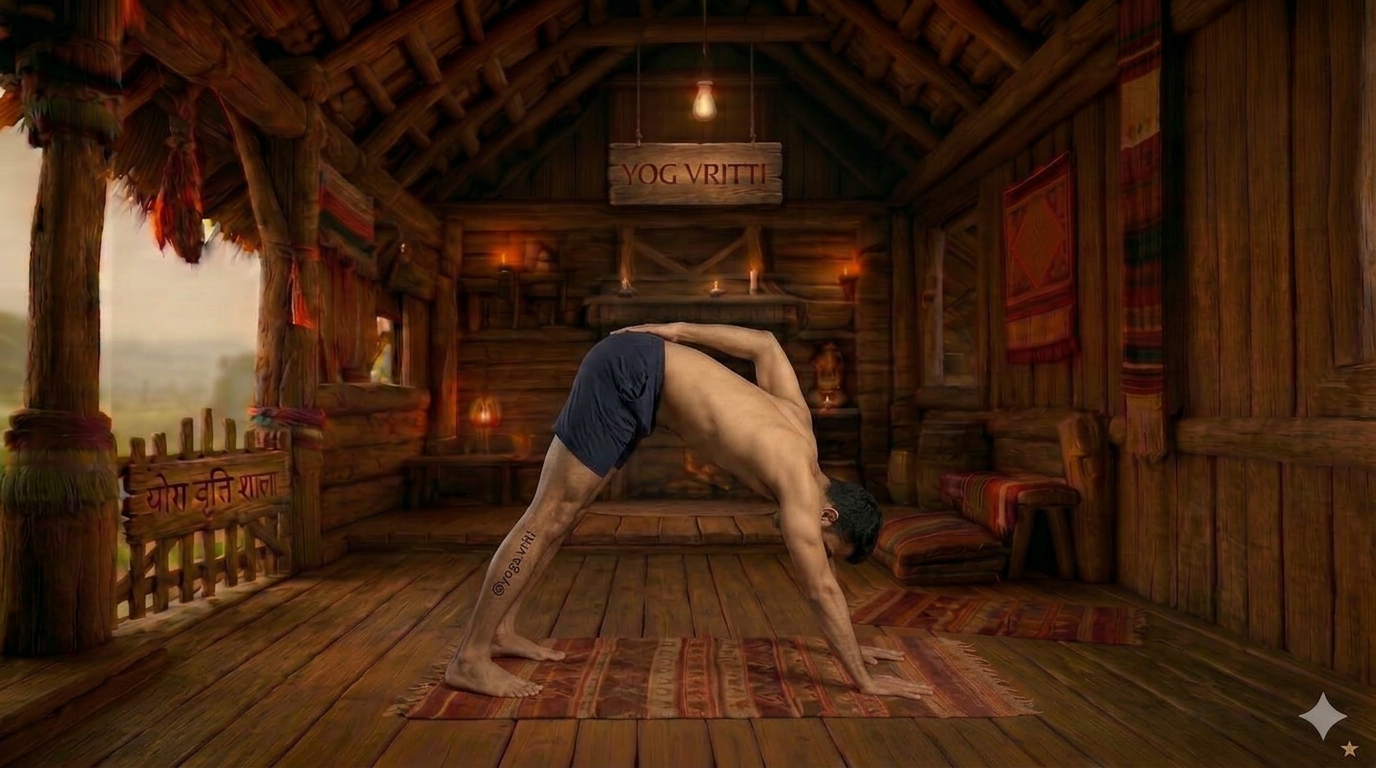
Adho Mukha Svanasana One Arm Reaching Back
अधो मुख श्वानासन एक हस्त पृष्ठे
Adho Mukha Svanasana One Arm Reaching Back is a profound inversion and twist that invites a deep, integrated opening throughout the body. While grounding through the supporting hand and foot, the pose actively lengthens the entire posterior chain—from the hamstrings and calves to the spinal extensors—while the twisting action engages and strengthens the deep core muscles, particularly the obliques. This unique combination of grounding, inversion, and rotational movement stimulates the internal organs, refreshes the nervous system, and cultivates a profound sense of balance and centered awareness. It's an exploration of stability within dynamic extension, challenging and refining the practitioner's proprioception and resolve, making it a valuable practice for enhancing both physical vitality and mental clarity.
One-Arm Reach Downward Dog, also called Reaching Down Dog is a classical yoga posture. Its Sanskrit name Adho Mukha Svanasana One Arm Reaching Back translates word-for-word as: Adho (Downward) · Mukha (Face) · Svana (Dog) · Asana (Pose). In this posture, the body roots firmly through the feet while the spine extends upward. The posture works to open and strengthen the shoulders, lengthen the hamstrings and stretch the calves. Improves spinal flexibility. Strengthens core. Suitable for intermediate practitioners with foundational yoga experience, it is a meaningful addition to any practice, particularly beneficial for athletes. Practitioners with back pain and wrist injury should approach with care or consult a qualified teacher.
Muscles Worked
Hamstrings (posterior thigh muscles)
[Biceps Femoris, Semitendinosus, Semimembranosus]
These powerful muscles running along the back of your thighs are often chronically shortened from sitting, and here they receive a sustained, intelligent lengthening.
As the hips lift and the heels descend, the hamstrings are elongated from their origin on the sitting bones (ischial tuberosities) to their insertion below the knee, releasing deep fascial restrictions.
This action allows for greater freedom in the pelvis and lower back, promoting the flow of apana vayu and fostering a feeling of grounded ease throughout the lower limbs.
Regular practice progressively increases the flexibility of this posterior chain, directly reducing strain on the lumbar spine.
Shoulder Girdle (supporting arm)
[Deltoids, Rotator Cuff (Supraspinatus, Infraspinatus, Teres Minor, Subscapularis), Serratus Anterior]
The supporting shoulder joint requires immense stability as it bears a significant portion of the body's weight, actively engaging the deltoids and the deep rotator cuff muscles to maintain the integrity of the glenohumeral joint.
The serratus anterior works tirelessly to protract and stabilize the shoulder blade (scapula) against the rib cage, creating a firm, broad foundation.
This intelligent co-activation prevents collapse and teaches the shoulder girdle to become a strong, integrated unit, channeling prana efficiently through the arm and into the earth for unwavering support.
Obliques (side abdominal muscles)
[External and Internal Obliques]
As you twist the torso, your external and internal oblique muscles are powerfully engaged, working synergistically to rotate the spine and draw the navel towards the spine, creating a corset-like action.
This deep engagement of the core creates both stability for the twist and a gentle compression of the abdominal organs, enhancing proprioception in the trunk.
The active twisting purifies the core, igniting samana vayu and cultivating inner fire (agni), which in turn supports digestion and metabolic processes throughout the body.
Latissimus Dorsi & Rhomboids (upper back and arm muscles)
[Latissimus Dorsi, Rhomboid Major, Rhomboid Minor]
The large 'lat' muscles (latissimus dorsi) of the back are stretched profoundly, especially on the side of the reaching arm, as the arm extends back and the torso twists, creating a powerful opening across the side body.
Simultaneously, the rhomboids on the supporting side engage to stabilize the shoulder blade (scapula), preventing winging and ensuring a solid base for the supporting arm.
This intelligent interplay releases tension that often accumulates from habitual posture, creating space for the heart and lungs, and allowing for a more expansive flow of prana through the upper torso.
Joints Mobilized
Spine (Vertebral Column)
rotating | decompressing | mobilizingThe entire spinal column experiences a gentle, yet profound, rotational movement, particularly in the thoracic and lumbar regions, enhancing its natural elasticity.
This twisting action, combined with the inversion, helps to decompress the intervertebral discs, creating more space between the vertebrae and nourishing them.
Regular practice enhances the spine's natural range of motion, alleviating stiffness and promoting the healthy circulation of cerebrospinal fluid, which in yogic terms keeps the sushumna nadi clear and vibrant for energetic flow.
Shoulder Joint (Glenohumeral Joint)
stabilizing (supporting arm) | mobilizing (reaching arm)The supporting shoulder joint is challenged to maintain isometric stability, strengthening the surrounding musculature and ligaments that secure the head of the humerus in the glenoid fossa.
Simultaneously, the reaching arm's shoulder is mobilized through a greater range of internal rotation and adduction as it extends back, promoting flexibility in the joint capsule and surrounding muscles.
This dual action cultivates both strength and freedom, preventing chronic stiffness and allowing for unhindered energetic flow (prana) into the arms and hands, enhancing overall upper body integrity.
Hip Joint (Acetabulofemoral Joint)
mobilizing (flexion)In this pose, the hip joints are deeply flexed, with the leg bones (femurs) drawing closer to the pelvis, creating space and mobility within the hip sockets.
This consistent, gentle flexion, combined with the lengthening of the hamstrings, helps to release tightness in the deep hip rotators and surrounding connective tissues.
Over time, this improves overall hip mobility and stability, supporting the healthy functioning of the pelvic floor and grounding the practitioner both physically and energetically through a greater connection to the earth.
Wrist Joint (Radiocarpal and Intercarpal Joints)
weight bearing | stabilizingThe wrist joint of the supporting hand bears significant weight, requiring strength and intelligent alignment to distribute the load evenly across the carpals and into the forearm bones.
The engagement of the forearm muscles stabilizes the wrist, preventing hyperextension and promoting healthy joint mechanics.
This strengthens the smaller muscles and ligaments of the wrist, preparing them for more complex weight-bearing poses, and in yogic terms, grounding the vital energy through the hands into the earth.
Organ & System Benefits
Abdominal Organs (Digestive System)
The twisting action of Adho Mukha Svanasana One Arm Reaching Back provides a gentle yet effective compression and release for the abdominal organs, including the stomach, liver, spleen, and intestines.
This 'wringing out' action encourages fresh blood flow to these organs upon release, stimulating their natural functions and aiding in detoxification and digestion.
From a yogic perspective, this stokes Agni, the digestive fire, and helps to clear blockages in the energetic channels (nadis) related to the manipura chakra, promoting vitality in the core.
Lungs & Diaphragm (Respiratory System)
The inverted position combined with the chest opening and twisting action creates a unique environment for the respiratory system.
The diaphragm works more effectively against the pull of gravity, encouraging deeper, fuller breaths, while the twist can help to release tension in the intercostal muscles, increasing lung capacity.
This increased capacity for breath allows for greater oxygen intake and prana absorption, leading to a profound sense of rejuvenation, expanded vital energy, and a calmer respiratory rhythm.
Circulatory System (Brain & Heart)
As an inversion, this pose reverses the flow of gravity, bringing a fresh supply of oxygenated blood to the brain and sense organs, which can uplift mood and sharpen mental clarity.
This gentle flushing can improve cognitive function, reduce fatigue, and calm the nervous system.
The heart, working against gravity in a different way, benefits from a mild decompression, allowing for more efficient circulation throughout the body and promoting a sense of inner peace and balance in the cardiovascular system.
Nervous System
The inverted nature of the pose, combined with the focused effort required for balancing and twisting, effectively shifts the nervous system from a state of sympathetic arousal to parasympathetic dominance.
This allows the practitioner to experience a profound sense of calm and mental quietude amidst physical exertion.
The deliberate engagement of the body helps to withdraw the senses (pratyahara), quieting the constant chatter of the mind (chitta vritti) and fostering inner peace.
The deep and rhythmic breathing naturally encouraged by the pose directly influences the vagus nerve, stimulating the parasympathetic nervous system and promoting relaxation.
This activation helps to reduce heart rate variability and alleviate stress and anxiety, creating a sense of inner steadiness.
The sustained mindful effort required to maintain the pose cultivates a sense of inner resilience and grounding, bringing the nervous system into a more balanced and centered state.
Mental & Emotional
This pose demands intense focus and concentration (dharana) to maintain balance while simultaneously executing a twist and reaching, requiring the mind to be fully present.
This sustained mental engagement draws the mind away from external distractions and internal rumination, fostering a deep sense of presence and mental clarity.
The challenge of the pose builds mental tenacity and cultivates a quiet, unwavering resolve, teaching the mind to remain steady under pressure.
The inversion aspect of the pose offers a unique shift in perspective, both physically and mentally, by literally turning the world upside down.
This can lead to a release of mental rigidity and a greater sense of openness to new possibilities, fostering creativity and a broader understanding of self and surroundings.
It encourages practitioners to challenge habitual thought patterns and perceive situations from a new, less conventional angle, cultivating a more flexible and adaptive mindset.
Because of Its Shape
inversion
An inversion reverses the gravitational pull on the body, bringing fresh blood flow to the brain and vital organs, which can uplift mood and sharpen mental faculties.
Anatomically, it de-compresses the spine and internal organs, allowing them to gently reposition and relieving chronic pressure.
Yogically, inversions are considered highly rejuvenating, reversing the downward flow of apana vayu and promoting vitality, clarity, and a quiet mind, while enhancing the flow of prana throughout the body.
Fascial Lines
Fascia, the intricate web of connective tissue enveloping every muscle, organ, and nerve, plays a crucial role in this pose, creating a holistic stretch.
The entire superficial back line, running from the soles of the feet up to the skull, is profoundly lengthened, especially in the hamstrings and calves, releasing deep-seated restrictions.
Simultaneously, the spiral lines of the body are engaged and stretched through the integrated twisting action, releasing deep-seated tension patterns that can restrict movement and energy flow.
This intelligent engagement of fascia helps to open energetic channels (nadis), allowing for a more harmonious and unrestricted flow of prana throughout the body, cultivating a sense of release and integration.
Breathing & Respiratory
In Adho Mukha Svanasana One Arm Reaching Back, the inverted and twisting nature of the pose naturally encourages a deeper and more expansive diaphragmatic breath.
The gentle compression of the abdomen on the twist, followed by the release, facilitates a more complete exhalation, while the open chest and broad back allow for a fuller inhalation, enhancing lung capacity.
This deepened breath calms the nervous system and is ideal for cultivating Ujjayi breath, as the subtle constriction in the throat helps to lengthen both inhalation and exhalation, guiding prana more consciously through the body and fostering inner awareness.
Anatomical Caution
Teachers should carefully observe students for any strain in the wrists, shoulders, or neck, particularly in the supporting arm and shoulder, ensuring proper alignment to prevent injury.
Advise students to lengthen the spine before initiating the twist to protect the lower back, and never to force the rotation.
Students with high blood pressure, glaucoma, carpal tunnel syndrome, or recent injuries to the back, shoulders, or wrists should approach this pose with extreme caution or avoid it entirely, consulting with a medical professional if necessary.