5
Muscles
4
Joints
2
Organs
2
Mental
Adho Mukha Uttanasana
अधो मुख उत्तानासन
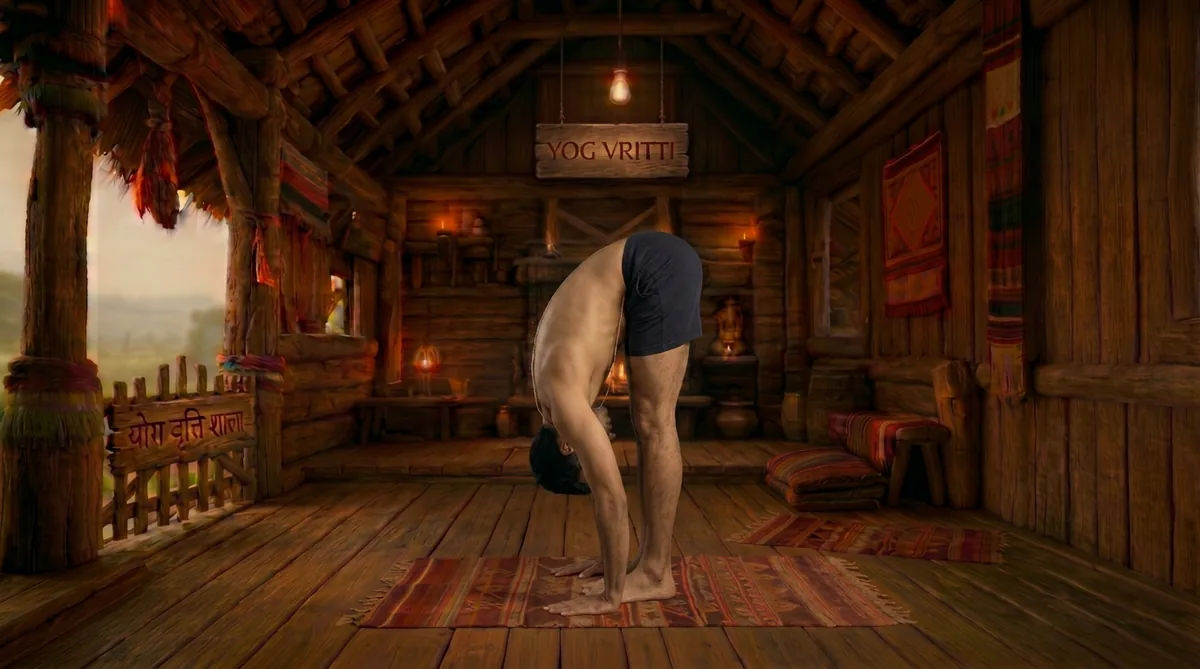
Adho Mukha Uttanasana, a foundational standing forward bend, invites the entire posterior chain of the body to lengthen and release with profound intelligence. It's a journey into spinal extension and hip flexion, allowing the hamstrings, calves, and back muscles to unwind deeply. This pose cultivates a sense of grounded stability while simultaneously decompressing the spine and calming the nervous system. For any practitioner, it offers a pathway to release physical tension, quiet the mind, and connect more deeply with their inner stillness and strength, embodying stability and introspection.
Downward Facing Intense Stretch Pose, also called Downward Forward Fold is a classical yoga posture. Its Sanskrit name Adho Mukha Uttanasana translates word-for-word as: Adho (Downward) · Mukha (Face) · Uttana (Intense Stretch) · Asana (Pose). From a standing position, the body roots firmly through the feet while the spine extends upward. The posture works to lengthen the hamstrings, stretch the calves and open and strengthen the shoulders. Strengthens the spine. Calms the brain and relieves stress. Suitable for beginners and regular practitioners alike, it is an excellent warm-up, particularly beneficial for beginners and seniors. A block and wall can be used to make the posture more accessible and support correct alignment. Practitioners with pregnancy and glaucoma should approach with care or consult a qualified teacher.
Muscles Worked
Hamstrings
[Biceps Femoris, Semitendinosus, Semimembranosus]
The long muscles running along the back of your thighs (hamstrings) get a deep, sustained release here — not a forced stretch but a patient unwinding.
As you hold the pose and breathe, the nervous system gradually allows these muscles to let go of years of tension stored from sitting and stress.
In yogic understanding, this releases apana vayu — the downward-moving energy — allowing a feeling of groundedness and ease in the lower body.
Regular practice progressively lengthens this posterior chain, directly reducing the pull on the lower back.
Calves
[Gastrocnemius, Soleus]
The powerful muscles at the back of your lower legs (gastrocnemius and soleus) experience a subtle but significant stretch as you press your heels down and lift your sitting bones.
This action helps to release tightness often held from walking, running, or standing, which can restrict ankle mobility and affect the entire posterior chain.
Energetically, releasing the calves helps to ground the body, connecting us more firmly to the earth and fostering a sense of stability from the ground up.
Over time, this improves circulation in the lower legs and ankles.
Back Extensors
[Erector Spinae group]
The deep muscles running alongside your spine (erector spinae) are encouraged to lengthen and extend, creating space between each vertebra.
This gentle traction helps to decompress the spinal column, alleviating pressure and encouraging a more fluid, upright posture.
From a yogic perspective, this opening of the spine allows prana to flow more freely along the central energetic channel (sushumna nadi), enhancing vitality and mental clarity.
Consistent practice strengthens the capacity for spinal extension, counteracting the effects of slouching.
Shoulder Muscles
[Deltoids, Rotator Cuff]
As you reach your arms forward to the wall or blocks, the muscles around your shoulders (deltoids and rotator cuff) engage to create length and stability.
This action helps to broaden the collarbones and draw the shoulder blades down the back, preventing slumping and opening the chest.
This intelligent engagement cultivates a sense of spaciousness across the upper chest and back, allowing the breath to deepen and fostering a feeling of energetic lift in the torso.
It teaches the arms to support the spine, not just hang from it.
Deep Abdominal Muscles
[Transversus Abdominis, Obliques]
Even in a forward bend, the deep core muscles, particularly the transversus abdominis and obliques, are subtly engaged to support the lumbar spine and lift the abdominal organs.
This gentle drawing in and up prevents the lower back from rounding excessively and creates an internal lift, protecting the spine.
This internal support is crucial for stabilizing the core, allowing for greater freedom in the stretch of the posterior chain, and fostering a sense of inner strength and integration (bandha).
It teaches the body to find length from the core outward.
Joints Mobilized
Hip Joint
mobilizingThe ball-and-socket joints of your hips (coxal joints) move into flexion, allowing the torso to hinge forward from the pelvis.
This action gently mobilizes the hip capsules, releasing tension held deep within the groin and outer hips, which often restricts movement in daily life.
As the hips open, a sense of freedom and spaciousness permeates the pelvis, allowing for a more profound connection to the earth and a release of emotional holding.
Regular practice improves hip mobility and reduces stiffness, contributing to ease in walking and sitting.
Spine
decompressing | lengtheningThe entire vertebral column experiences a gentle traction and lengthening as you extend forward from the hips, creating space between each individual vertebra.
This decompression alleviates pressure on the intervertebral discs and nerve roots, which often become compressed from gravity and poor posture.
From a yogic perspective, this spaciousness in the spine facilitates the upward flow of prana, revitalizing the nervous system and fostering mental clarity and alertness.
Over time, the spine becomes more supple, resilient, and capable of supporting an upright posture with ease.
Shoulder Girdle
mobilizing | stabilizingAs the arms reach forward and the hands press into the wall or blocks, the shoulder blades (scapulae) move into protraction and depression, creating stability while the arm bones (humeri) flex.
This precise action helps to broaden the upper back and open the chest, releasing tension commonly held in the neck and upper trapezius muscles.
This creates a sense of spaciousness and lightness across the upper torso, allowing for freer breathing and an energetic lift that counteracts gravitational pull.
It cultivates both strength and mobility in the often-stiff shoulder region.
Knee Joint
mobilizingThe knee joints (tibiofemoral joints) are encouraged towards full extension, but without hyperextension, allowing for a deeper stretch in the hamstrings and calves.
This gentle lengthening helps to release tightness around the back of the knees, improving circulation and reducing strain on the joint itself.
As the legs straighten intelligently, a feeling of stability and strength grounds the lower body, connecting the practitioner to the earth's support.
Regular practice ensures healthy joint mechanics and contributes to overall leg strength and flexibility.
Organ & System Benefits
Abdominal Organs
In this gentle forward bend, the abdominal organs receive a soft, internal lift and mild compression as the torso folds forward and the deep core muscles engage.
This internal massage stimulates circulation to the digestive and excretory organs, aiding in their healthy function and promoting detoxification.
Energetically, this action can help to calm the manipura chakra, reducing feelings of anxiety and promoting a sense of inner balance and digestive ease.
It's a subtle way to invigorate the internal systems without harsh compression.
Brain
While not a full inversion, the slight lowering of the head below the heart in Adho Mukha Uttanasana creates a gentle reversal of gravitational pull on the brain.
This subtle shift encourages fresh blood flow to the head and calms the nervous system, which can help alleviate stress, anxiety, and mild headaches.
The quiet introspection fostered by the forward bend further pacifies the mind, allowing for a release of mental chatter (chitta vritti) and a deeper sense of inner peace.
It offers a gentle reset for the mind.
Nervous System
The sustained, supported forward fold in Adho Mukha Uttanasana activates the parasympathetic nervous system, shifting the body from a state of 'fight or flight' to 'rest and digest.' This physiological change manifests as a reduction in heart rate and blood pressure, promoting a profound sense of calm and relaxation.
The deliberate lengthening of the spine and posterior chain sends signals of safety to the brain, allowing deep-seated tension to dissolve.
The introspective nature of the pose, coupled with the focus on steady, deep breathing, helps to quiet the fluctuations of the mind (chitta vritti nirodhah).
This internal focus draws awareness away from external stressors, grounding the practitioner in the present moment.
The downward flow of energy (apana vayu) is encouraged, fostering a feeling of stability and emotional equilibrium, making it a powerful antidote to anxiety and overthinking.
Mental & Emotional
Adho Mukha Uttanasana cultivates a profound sense of introspection and mental stillness, akin to drawing the senses inward (pratyahara).
By folding forward and gently inverting, the external world recedes, allowing the mind to turn inward and observe its own patterns without judgment.
This practice develops a quiet strength, teaching the mind to find solace and clarity amidst life's demands.
The act of lengthening the spine and releasing tension in the posterior body directly correlates with releasing mental and emotional burdens.
This pose offers a safe space to let go of accumulated stress and worry, fostering a sense of lightness and freedom from mental clutter.
It's a practical application of dharana (concentration), where the focus on alignment and breath guides the mind towards a single point, promoting mental stability and peace.
Because of Its Shape
forward bend | standing
Forward bends are inherently grounding and introspective, encouraging the practitioner to turn their awareness inward.
Physiologically, they provide a deep, sustained stretch to the entire posterior chain of the body, including the hamstrings, calves, and back muscles, which are often tight from prolonged sitting or standing.
This lengthening action promotes flexibility and alleviates tension throughout the back body.
Energetically, forward bends help to calm the nervous system by stimulating the parasympathetic response, reducing stress and anxiety.
They encourage the downward flow of energy (apana vayu), fostering a sense of stability, rootedness, and mental quietude.
This shape is invaluable for cultivating patience and surrender, allowing the body and mind to release resistance.
Standing poses build strength, stability, and a profound connection to the earth, anchoring the practitioner firmly in their foundation.
They engage the muscles of the legs and core, improving balance and proprioception.
This grounding quality helps to stabilize the nervous system and bring a sense of presence and alertness to the mind.
In Adho Mukha Uttanasana, the standing aspect allows for a strong foundation through the feet and legs, enabling a more effective and safe lengthening of the spine and posterior chain.
It teaches the body to use gravity intelligently to create space and length, while simultaneously building strength in the supporting structures.
This cultivates both physical power and mental resilience.
Fascial Lines
The extensive web of connective tissue (fascia) throughout the body receives a significant release and lengthening in this pose, particularly along the Superficial Back Line, which runs from the soles of the feet up the calves, hamstrings, glutes, spine, and even to the scalp.
This interconnected fascial line, often shortened by habitual posture, is encouraged to unwind, releasing deep-seated tension and improving overall postural integrity.
Energetically, this opening of fascial pathways allows for an unimpeded flow of prana, releasing stagnation and fostering a sense of fluidity and lightness throughout the body.
The subtle unwinding of these lines brings a feeling of deep internal release.
Breathing & Respiratory
In Adho Mukha Uttanasana, the gentle forward fold and spinal lengthening naturally encourage a longer, more expansive exhalation, which is inherently calming and restorative.
The slight compression of the abdomen against the thighs, when done mindfully, can also stimulate the diaphragm, promoting deeper, more diaphragmatic breathing.
This deep, steady breath directly influences the vagus nerve, signaling the nervous system to relax and release tension.
It complements pranayama practices focused on exhalation and retention, such as Viloma Pranayama, as it prepares the body for deeper internal exploration and quietude.
Anatomical Caution
Always remind students to listen intently to their bodies, especially regarding hamstring sensation; a gentle stretch is beneficial, but sharp, pulling pain indicates overstretching.
Encourage a soft bend in the knees if there's any rounding in the lower back or intense strain in the hamstrings, as protecting the lumbar spine is paramount.
Also, ensure the neck is long and relaxed, avoiding any compression or tension in the cervical spine to prevent strain.