7
Muscles
3
Joints
1
Organs
3
Mental
Adho Mukha Virasana Arms Extended
अधो मुख वीरासन
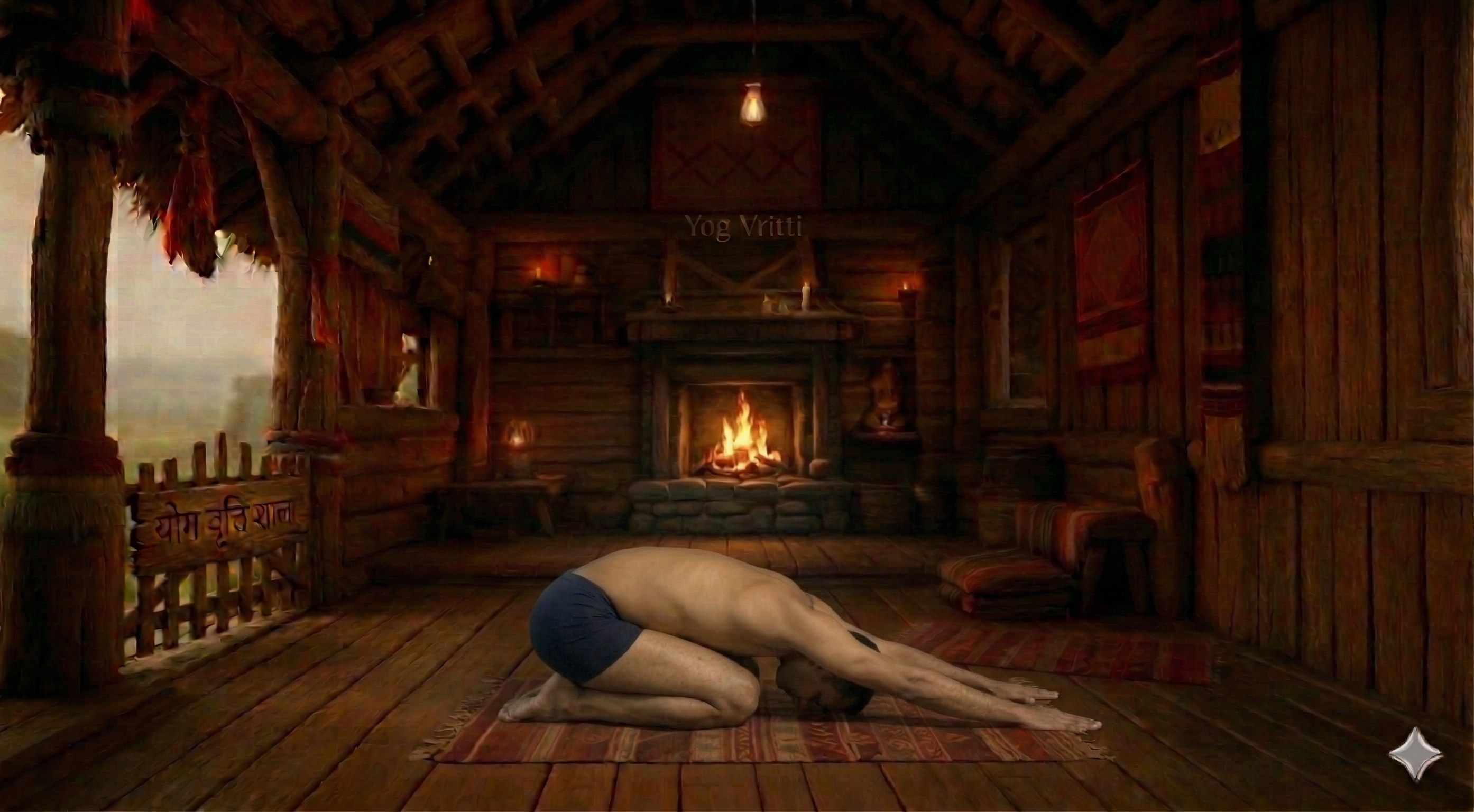
This variation transforms the introspective release of Adho Mukha Virasana into an active exploration of spinal and shoulder length. By extending the arms forward, the practitioner introduces a gentle traction along the entire back body, inviting a deeper, more expansive stretch from the fingertips to the tailbone. It shifts the energetic focus from pure surrender to a balanced blend of grounding and outward reach, cultivating both stability and spaciousness. Adho Mukha Virasana, or Child's Pose, is a profound forward fold that offers deep sanctuary for the entire being, physically and mentally. It gently lengthens the often-contracted muscles of the lower back (erector spinae) and releases tension in the hips (gluteals, hip flexors), while softly compressing the abdominal organs to aid digestion. Energetically, this pose grounds the practitioner, encouraging introspection and a profound release of mental and emotional tension, making it an invaluable tool for restoring balance and cultivating inner stillness. For a teacher, it is a foundational posture for teaching surrender, self-awareness, and the therapeutic power of internal alignment.
Extended Child's Pose, also called Arms Extended Child's Pose is a classical yoga posture. Its Sanskrit name Adho Mukha Virasana Arms Extended translates word-for-word as: Adho (Downward) · Mukha (Face) · Vira (Hero) · Asana (Pose). Beginning from a kneeling position, the practitioner aligns the body with precision and intentional breath. The posture works to open and strengthen the shoulders, strengthen and extend the back and tone the arms. Calms the brain and helps relieve stress. Reduces fatigue. It is particularly valued for alleviating back discomfort and quieting an anxious mind. Suitable for beginners and regular practitioners alike, it is an excellent warm-up, particularly beneficial for seniors and prenatal. A blanket can be used to make the posture more accessible and support correct alignment. Practitioners with knee injury and hypertension should approach with care or consult a qualified teacher.
Helps with
What This Variation Changes
The blanket, if used, maintains its role in supporting the shins or forehead, providing comfort and grounding as in the root pose. However, the primary 'positional change' of extending the arms forward acts as a leverage point, allowing gravity and the intention of reach to gently decompress the spinal column. This subtle shift redistributes a mild weight forward, encouraging a deeper forward fold and enhancing the stretch through the entire back body.
Muscles Worked
Lower back muscles
While these muscles gently lengthen in the root pose, the extension of the arms in this variation introduces a more active and sustained traction along the entire spinal column.
The reaching action encourages the erector spinae to release more profoundly, particularly in the thoracic and lumbar regions, fostering a greater sense of length and decompression throughout the vertebral segments.
This active lengthening helps to unravel deeper patterns of spinal compression, enhancing spinal fluidity.
Buttock muscles
[Gluteus Maximus, Medius, Minimus]
The gluteal muscles, particularly the large gluteus maximus, form the bulk of your buttocks and are often tight from daily activities like walking, running, or prolonged sitting.
In this pose, as the hips are deeply flexed and the pelvis is gently pressed towards the heels, these muscles experience a profound, passive release.
This softening helps to unlock stiffness in the sacrum and hips, allowing for a more unhindered flow of apana vayu (downward-moving energy), enhancing a feeling of grounded stability and openness in the pelvic region.
Hip flexors
[Iliopsoas, Rectus Femoris]
While often associated with lengthening in other postures, here the hip flexors, situated at the front of your hip joint and deep within the abdomen, are in a shortened but deeply relaxed state.
This non-strenuous position allows the deep psoas muscle, often a repository of emotional tension, to release its grip and soften.
The absence of active engagement encourages a profound letting go in the pelvic bowl, inviting a sense of surrender and ease that can alleviate tightness radiating into the lower back.
Front thigh muscles
[Quadriceps Femoris]
The quadriceps, a powerful group of four muscles on the front of your thighs, are in a lengthened but relaxed state as the knees are deeply bent and the hips flex.
This sustained flexion, particularly when the torso rests between the thighs, gently stretches the rectus femoris component, which crosses both the hip and knee joints.
The passive nature of this stretch helps to release tension that can pull on the patella and surrounding knee structures, promoting a feeling of ease and openness throughout the entire leg.
Latissimus Dorsi
Latissimus Dorsi
As the arms extend forward and overhead, the broad sheets of the latissimus dorsi, connecting the humerus to the spine and pelvis, are significantly lengthened.
This stretch opens the sides of the torso and broadens the back, releasing chronic tension often held from daily activities like sitting or driving.
Energetically, lengthening these muscles creates a sense of spaciousness across the entire back, alleviating feelings of constriction and promoting a sense of freedom.
Serratus Anterior
Serratus Anterior
This muscle, often called the 'boxer's muscle,' becomes engaged to protract and stabilize the scapulae as the arms reach purposefully forward.
Its activation helps to broaden the shoulder blades across the back, preventing them from 'winging' and creating a stable base for the arm extension.
This subtle engagement strengthens the connection between the shoulder girdle and the rib cage, improving postural awareness and promoting healthier shoulder mechanics.
Triceps Brachii
Triceps Brachii
To achieve full extension of the arms, the triceps brachii, located on the back of the upper arm, actively lengthens as the elbows straighten.
This engagement ensures that the stretch initiated from the spine can extend unimpeded all the way through the fingertips, creating a continuous line of energy.
It helps to release tension often stored in the arms and shoulders, promoting a feeling of lightness and openness in the upper limbs.
Joints Mobilized
Spine
decompressingThe entire vertebral column, from the sacrum to the cervical spine, experiences a gentle, passive decompression in this forward fold.
As the torso rests and gravity subtly pulls the vertebrae apart, particularly in the lumbar region, pressure on the intervertebral discs is alleviated.
This creates space and fluidity within the spinal column, encouraging improved nerve signal transmission and fostering a profound sense of release and lengthening along the central axis of the body.
Hip joints
mobilizingThe hip joints (acetabulofemoral joints) are deeply flexed in Adho Mukha Virasana, allowing for a gentle, non-weight-bearing mobilization of the femoral heads within the acetabulum.
This passive flexion encourages the release of tightness in the surrounding ligaments and joint capsule, which can become stiff from prolonged sitting or standing.
Over time, this consistent, gentle movement can improve range of motion in the hips, reducing stiffness and promoting a feeling of freedom and energetic flow in the pelvis.
Knee joints
mobilizingThe knee joints (tibiofemoral joints) are in a position of deep flexion, which gently mobilizes the articulation between the tibia and femur.
With appropriate support, such as a blanket under the buttocks or between the calves and thighs, excessive pressure is avoided, allowing for a safe and sustained stretch of the surrounding soft tissues.
This sustained flexion, without active muscular engagement, can enhance synovial fluid production and circulation, improving joint lubrication and reducing stiffness, leading to greater ease in kneeling and walking.
Organ & System Benefits
Abdominal Organs
As the torso folds over the thighs, the abdominal organs, including the stomach, intestines, and liver, receive a gentle, sustained compression.
This mild internal massage can stimulate peristalsis, the muscular contractions that move food through the digestive tract, thereby aiding in digestion and promoting healthy elimination.
From a yogic perspective, this action helps to stoke Agni (digestive fire) and release stagnant energy (apana vayu) from the abdominal region, contributing to a sense of lightness and internal cleansing.
Nervous System
The deep forward fold and the gentle pressure of the torso on the thighs stimulate the vagus nerve, initiating a powerful parasympathetic nervous system response.
This immediately shifts the body from a state of 'fight or flight' (sympathetic dominance) to 'rest and digest' (parasympathetic activation), leading to a profound sense of calm and safety.
The slowed heart rate and relaxed muscles signal to the brain that it is safe to let go, allowing deep relaxation to permeate the entire being and soothe an overstimulated system.
The inward focus inherent in the pose, with the eyes closed and the forehead resting on the earth, naturally draws the senses away from external distractions (pratyahara).
This reduction in sensory input allows the mind (chitta) to quiet its constant fluctuations (vritti), fostering a state of mental stillness and clarity.
It's a direct invitation to turn awareness inward, cultivating a sense of presence and inner peace that is profoundly restorative for the entire nervous system.
The gentle compression on the front of the body and the lengthening of the entire back body, combined with the grounded nature of the pose, creates a sense of security and containment.
This physical containment translates into a psychological feeling of safety, which helps to soothe an overstimulated nervous system and alleviate anxiety.
It's a primal posture of surrender and retreat, allowing the body to release held tension and the mind to unwind from stress.
Mental & Emotional
Adho Mukha Virasana is a profound antidote to mental agitation and anxiety, offering a sanctuary from external stimuli and internal worries.
By folding inward and resting the forehead on the earth, the mind naturally begins to quiet, shifting focus from outward concerns to the internal landscape of breath and sensation.
This act of surrendering brings a deep sense of peace and helps to dissolve mental chatter, allowing for greater clarity and emotional balance.
This pose cultivates a powerful sense of introspection and self-reflection, acting as a gateway to inner awareness (dharana).
By consciously withdrawing the senses and turning inward, practitioners can observe their thoughts and feelings without judgment, fostering a deeper connection to their inner wisdom and intuition.
For a teacher, guiding students into this space helps them develop self-compassion and resilience, essential qualities for navigating life's challenges with grace.
The physical act of bowing down and resting the forehead on the ground can be deeply humbling and helps to release egoic tension and self-judgment.
This posture encourages humility and a surrender to the present moment, fostering a non-reactive state of mind that embraces acceptance.
It teaches us to find strength in stillness and vulnerability, allowing for a profound psychological release and a renewed sense of emotional equilibrium.
Because of Its Shape
forward bend
Forward bends are inherently grounding and calming, bringing the forehead closer to the earth, which is a powerful sensory input for the nervous system.
This physical connection to the ground helps to anchor scattered energy and quiet an overactive mind, drawing awareness inward.
Anatomically, it lengthens the entire posterior chain of the body while gently compressing the anterior, creating a sense of containment and safety.
The act of folding forward creates a gentle, sustained compression on the abdominal organs, which can stimulate digestive function and detoxification processes within the body.
Energetically, forward bends encourage the downward flow of energy (apana vayu), promoting healthy elimination and a feeling of release from physical and emotional burdens.
This helps to clear stagnation and rejuvenate the internal systems.
Psychologically, forward bends are postures of introspection and surrender, offering a sanctuary from external demands and the constant pull of the outside world.
They encourage a turning inward, facilitating pratyahara (withdrawal of the senses) and dharana (concentration), which are vital preparatory steps on the path to meditation.
This cultivation of inner stillness is deeply therapeutic for managing stress and cultivating mental peace.
Fascial Lines
In Adho Mukha Virasana, the entire posterior fascial line, from the soles of the feet (though less directly here) up through the calves, hamstrings, glutes, and especially the thoracolumbar fascia of the lower back, receives a gentle, sustained stretch and release.
This passive lengthening helps to improve the hydration and fluidity of the connective tissue matrix, releasing adhesions that can restrict movement and hold tension.
From a yogic perspective, this opening of the fascial web helps to release stored emotional tension and energetic blockages (prana granthis), allowing for a more harmonious and unrestricted flow of vital energy throughout the body.
Breathing & Respiratory
The forward-folding nature of Adho Mukha Virasana gently compresses the front of the torso, naturally encouraging a deeper, fuller breath into the back and sides of the rib cage.
This subtle restriction on the anterior chest wall facilitates a compensatory expansion of the posterior and lateral lungs, inviting a slower, more diaphragmatic breath.
This type of breathing calms the nervous system and naturally deepens the exhalation, making it an excellent pose to prepare for or integrate with pranayama practices focused on lengthening the exhale, such as Viloma or Nadi Shodhana, to further quiet the mind and balance energetic channels.
Anatomical Caution
When extending the arms, individuals with pre-existing shoulder impingement, rotator cuff injuries, or wrist pain should exercise particular caution.
Modifying the arm position by keeping elbows gently bent, placing hands on blocks, or avoiding excessive pressing can prevent undue strain.
It is crucial to listen to the body's signals and avoid pushing into any sharp or pinching discomfort.