4
Muscles
4
Joints
2
Organs
3
Mental
Anahatasana
अनाहतासन
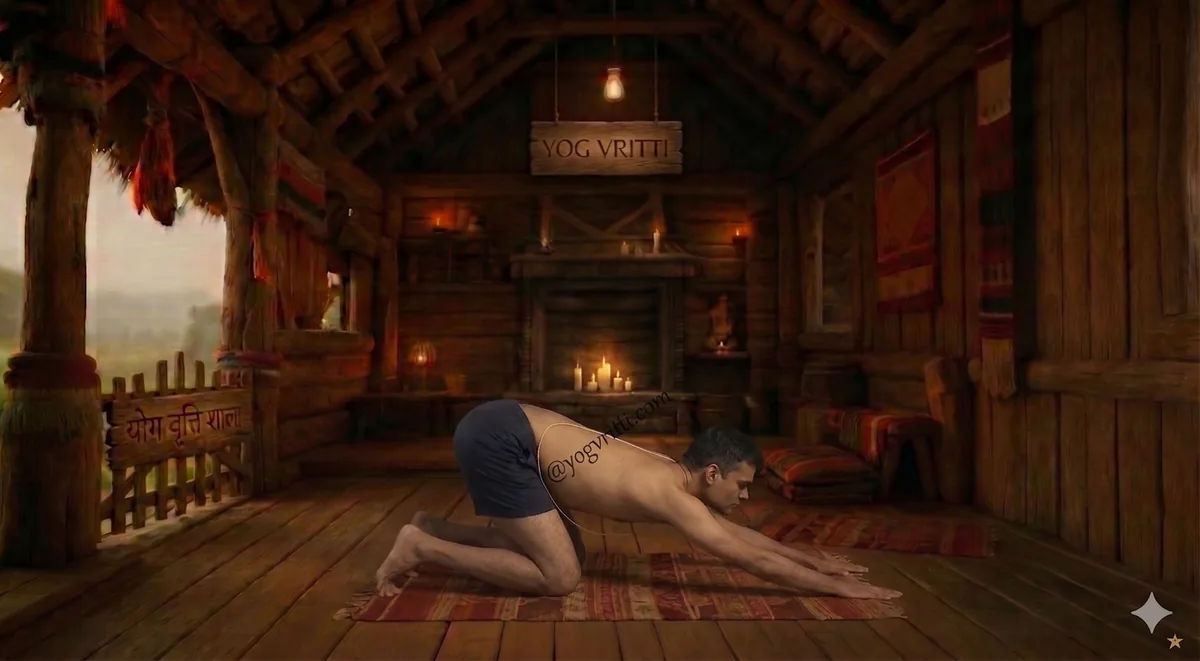
Anahatasana, or Heart Melting Pose, is a profound kneeling chest opener that encourages a gentle, sustained extension of the upper back (thoracic spine) while stabilizing the lower back. This beginner-friendly pose focuses on lengthening the entire front of the torso and arms, particularly the chest and shoulder muscles. Energetically, it is a deeply opening and surrendering posture, designed to release emotional tension and foster a profound sense of compassion and inner peace. It is highly valued in therapeutic yoga for its ability to improve posture, alleviate anxiety, and address upper back and shoulder stiffness.
Heart Melting Pose, also called Puppy Pose is a classical yoga posture. Its Sanskrit name Anahatasana translates word-for-word as: Anahata (Unstruck Heart Chakra) · Asana (Pose). Beginning from a kneeling position, the practitioner aligns the body with precision and intentional breath. The posture works to open and strengthen the shoulders, open the chest and mobilise the thoracic spine. Stretches upper back and lats. Calms the nervous system. It is particularly valued for alleviating back discomfort and quieting an anxious mind. Suitable for beginners and regular practitioners alike, it is an excellent warm-up, particularly beneficial for beginners and desk workers. A blanket can be used to make the posture more accessible and support correct alignment. Practitioners with shoulder injury and neck pain should approach with care or consult a qualified teacher.
Helps with
Muscles Worked
Chest muscles
[Pectoralis Major/Minor]
These broad muscles cover the front of your chest and often become tight from daily activities like sitting or holding forward postures.
In Anahatasana, as your chest melts towards the floor, the pectoralis major and minor are gently and deeply stretched, creating significant space across the front of the rib cage.
This sustained release not only improves shoulder mobility but also, in yogic terms, opens the 'heart space,' allowing for a greater sense of emotional freedom and courage to emerge.
Latissimus Dorsi
[Lats]
The latissimus dorsi are large, flat muscles spanning the width of your mid-back, extending up to your armpits.
As you reach your arms forward and allow your torso to descend in Anahatasana, these muscles are significantly lengthened along their entire length, from their attachments on the spine and pelvis to the arm.
This deep stretch releases tension in the side body and upper back, which often restricts shoulder movement and breathing.
Energetically, releasing the lats creates a feeling of expansiveness and unburdening, allowing prana to flow more freely through the torso.
Rhomboids
[Rhomboid Major/Minor]
Located between your shoulder blades, the rhomboids are crucial for retracting and stabilizing the scapulae.
In this pose, as the arms reach forward and the chest opens, the rhomboids are engaged in a subtle, eccentric lengthening action, allowing the shoulder blades to protract while still maintaining a connection to the spine.
This controlled engagement prevents the shoulder blades from 'winging out' excessively, promoting healthy scapular rhythm and creating a stable foundation for the heart opening.
This awareness helps to integrate the upper back, fostering better postural habits.
Erector Spinae (Thoracic)
[Erector Spinae Group]
These muscles run along either side of your spine, and in the upper back (thoracic region), they are gently encouraged into extension.
Anahatasana counters the common rounded posture of the thoracic spine by promoting a gentle arch, which lengthens these spinal extensors.
This action improves the flexibility and mobility of the upper back, reducing stiffness and promoting an upright posture.
Yogically, this subtle awakening of the thoracic spine helps to clear energetic blockages along the central channel, allowing for a more unimpeded flow of prana.
Joints Mobilized
Glenohumeral Joint
mobilizingThis is your main shoulder joint, where the arm bone (humerus) meets the shoulder blade (scapula).
In Anahatasana, the arms move into deep flexion (overhead reach) and are encouraged into external rotation as the chest melts.
This action significantly mobilizes the glenohumeral joint, improving its range of motion, which is often restricted by daily habits and tension.
Regular, mindful mobilization here can prevent stiffness, alleviate shoulder discomfort, and restore a greater sense of freedom and ease in all upper body movements.
Scapulothoracic Joint
mobilizingThis is not a true anatomical joint but describes the movement of your shoulder blade (scapula) gliding over your rib cage.
In this pose, the scapulae gently protract (move away from the spine) and elevate as the arms reach forward, allowing for the deep chest opening while maintaining a degree of stability against the rib cage.
This dynamic movement improves the coordination between the shoulder blade and the thoracic spine, which is essential for healthy shoulder mechanics and preventing impingement.
From a yogic perspective, a stable yet mobile shoulder girdle creates a strong foundation for the expansive energy of the heart.
Thoracic Spine
mobilizingThe thoracic spine, or upper back, consists of twelve vertebrae that are naturally curved into a gentle kyphosis (rounding).
Anahatasana gently encourages these vertebrae into extension, counteracting the excessive rounding often seen from prolonged sitting.
This action increases flexibility and mobility in the thoracic spine, which is crucial for good posture, deep breathing, and overall spinal health.
Yogically, an open and mobile thoracic spine allows for the free flow of prana and helps to unblock the Anahata Chakra, fostering a sense of openness and vitality.
Lumbar Spine
stabilizingThe lumbar spine, or lower back, should ideally remain relatively neutral in Anahatasana, with the hips stacked directly over the knees to prevent excessive arching.
This controlled stability in the lower back is vital for protecting the intervertebral discs and distributing weight evenly, preventing strain.
While the upper back opens, the lower back provides a grounded anchor.
From a therapeutic perspective, this stability helps to decompress the lumbar discs, making it beneficial for certain types of lower back pain.
Yogically, a stable foundation in the lower body supports the expansive opening of the upper body, preventing energetic leaks and creating a sense of groundedness.
Organ & System Benefits
Lungs
As the chest melts towards the floor, the front of the rib cage experiences a gentle compression, while the back of the lungs and the posterior rib cage are encouraged to expand.
This subtle, intelligent action can stimulate deeper diaphragmatic breathing and increase lung capacity, particularly in the often-neglected posterior and lateral lobes.
This fresh influx of oxygen and prana purifies the respiratory system, enhancing vitality, mental clarity, and a feeling of inner lightness.
Heart
By creating generous space in the chest and gently extending the thoracic spine, Anahatasana subtly decompresses and broadens the physical space around the heart.
This action can alleviate any habitual physical constriction in the chest, potentially allowing the heart to function with less impediment.
Energetically, this pose is a direct pathway to the Anahata Chakra, the heart center, fostering profound feelings of love, compassion, and emotional release.
It encourages an open-hearted engagement with the world.
Nervous System
The sustained, gentle opening of the chest, combined with the introspective quality of the upper body folding forward, encourages a profound sense of surrender and calm.
This unique combination helps to activate the parasympathetic nervous system, slowing the heart rate and deepening the breath.
This activation directly counteracts the 'fight or flight' response, bringing the mind out of its usual fluctuations (chitta vritti) and into a state of profound inner peace and stillness.
Anahatasana is a powerful antidote to chronic stress, as it directly addresses physical tension in the upper back and shoulders, which are common repositories of stress.
The gentle stretch in the chest muscles and the subtle extension of the thoracic spine send signals of safety and openness to the brain, releasing stored physical and emotional tension.
This physical release translates into a significant reduction of mental and emotional stress, allowing the practitioner to feel less burdened and more at ease in their being.
Holding Anahatasana requires a sustained and subtle awareness of the body's internal sensations, particularly around the chest, shoulders, and spine.
This focused internal attention significantly enhances *interoception*—your ability to perceive and understand internal bodily states and signals.
This heightened awareness of the inner landscape helps to ground the mind in the present moment, fostering deep mindfulness and strengthening the vital connection between your physical and energetic self.
Mental & Emotional
The profound opening of the chest and heart space in Anahatasana often serves as a gateway for the release of stored emotions, particularly those related to grief, sadness, or vulnerability.
By creating a physically safe and energetically open container, the pose allows these emotions to gently surface and be processed, rather than remaining trapped within the body.
This release can be deeply cathartic, leading to a lighter, more expansive emotional state and a sense of liberation.
The act of 'melting' the heart towards the floor, while mindfully maintaining the stability of the hips over the knees, teaches a profound lesson in surrender and trust.
It encourages letting go of the need for control and allowing gravity to assist in the opening, rather than forcing the body.
This mental attitude, cultivated on the mat, can profoundly translate into daily life, fostering a greater capacity for acceptance, resilience, and trust in oneself and the unfolding process of life.
As the Anahata Chakra (heart center) is deeply emphasized and opened in this pose, Anahatasana naturally cultivates and strengthens qualities of compassion, empathy, and kindness, both towards oneself and towards others.
The physical opening mirrors an energetic willingness to connect, give, and receive love.
Regular practice can soften rigid emotional patterns, fostering a more open-hearted engagement with the world and deepening one's sense of interconnectedness with all beings.
Because of Its Shape
chest opener
The chest opener shape of Anahatasana directly addresses the pervasive issue of rounded shoulders and upper back (thoracic kyphosis), which is rampant in modern, sedentary lifestyles.
It gently encourages extension of the thoracic spine and a healthy positioning of the shoulder blades, actively reversing the habitual slump.
This not only dramatically improves physical posture but also cultivates a more confident, expansive, and open energetic presence in the world.
By broadening the collarbones and lifting the sternum, this chest opener physically expands the entire front of the body, particularly around the heart center.
This physical expansion is directly mirrored energetically, facilitating a greater, more unimpeded flow of *prana* (life force) through the *Anahata Chakra*.
It helps to release stagnation and density in the chest, promoting profound feelings of joy, love, courage, and emotional freedom.
The open chest wall and gentle extension of the thoracic spine create significantly more space for the lungs to expand, especially during the inhalation phase of breathing.
This facilitates deeper, fuller, and more conscious breaths, which are absolutely essential for optimal oxygenation of the body and calming the nervous system.
From a yogic perspective, a free and open breath is the key to vitalizing the entire being, achieving mental clarity, and connecting to our inner source of vitality.
Fascial Lines
Anahatasana profoundly targets and releases tension within the superficial front line (SFL) and the arm lines of the body's intricate fascial network.
As the chest melts and the arms extend forward, the fascial sheath encasing the pectoralis muscles and the anterior shoulder is gently and deeply stretched.
Simultaneously, both the deep front arm line and the superficial front arm line are elongated through the sustained reach of the arms.
This intelligent release within the connective tissue helps to unwind chronic tension patterns that restrict movement and contribute to poor posture.
Yogically, releasing this dense fascial web allows for a more unhindered and vibrant flow of *prana* through the *nadis* (energy channels), creating a palpable sense of lightness, fluidity, and energetic freedom in the upper body.
Breathing & Respiratory
This unique pose shape naturally encourages a deeper, more expansive inhalation, particularly into the often-neglected back and sides of the rib cage.
As the chest melts towards the floor, the gentle anterior compression cues the body to expand posteriorly and laterally, creating generous space for the lungs to fill more fully and evenly.
The subtle extension of the thoracic spine further facilitates this expansive breathing.
This inherent quality makes Anahatasana an excellent preparatory pose for *Pranayama* practices that focus on broadening and deepening the rib cage, such as *Dirgha Swasam* (Three-Part Breath), as it preconditions the body for greater respiratory capacity and a calmer, more mindful breath.
Anatomical Caution
Teachers should offer clear guidance to students, ensuring their hips remain stacked directly over their knees to protect the lower back (lumbar spine) from any excessive or unsupported arching.
Be attentive to any sharp or pinching sensation in the shoulders; students with pre-existing shoulder injuries should modify the pose by not reaching the arms too far forward, or by keeping the elbows slightly bent and wider apart.
The essence of the pose is a gentle, sustained opening, never a forced or painful stretch.