5
Muscles
3
Joints
2
Organs
3
Mental
Apanasana
अपानासन
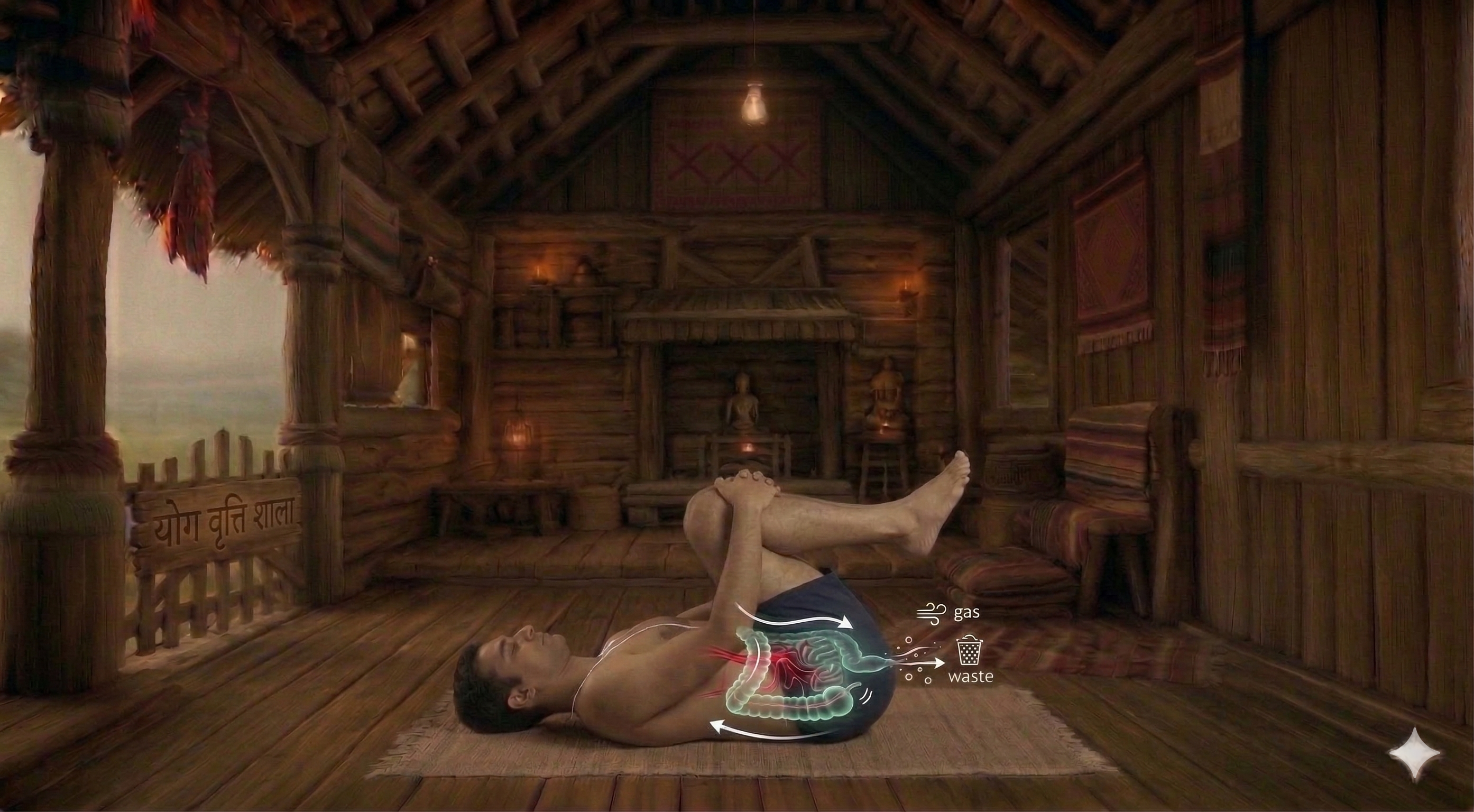
Apanasana, the Knees-to-Chest pose, is a profoundly grounding and introspective supine posture that gently rounds the spine and brings the thighs into deep flexion at the hips. This action softly compresses the abdominal organs, stimulating digestion and elimination, while simultaneously creating space and release in the lumbar spine and sacroiliac joint. Energetically, it encourages the descent of apana vayu, fostering a sense of calm, stability, and release of physical and energetic tension in the lower body. For both teachers and students, it's a foundational pose for cultivating inner awareness and preparing the body for deeper practice or promoting restorative healing.
Knees-to-Chest Pose, also called Wind-Relieving Pose is a classical yoga posture. Its Sanskrit name Apanasana translates word-for-word as: Apana (Downward-Moving Breath) · Asana (Pose). Performed lying down, the body releases into the support of the floor, allowing gravity to assist. The posture works to engage the core and release tension in the hips. Massages the abdominal organs and aids digestion. Releases trapped gas and bloating. It is particularly valued for alleviating back discomfort. Suitable for beginners and regular practitioners alike, it is a calming cool-down, particularly beneficial for seniors and prenatal. Practitioners with abdominal surgery and pregnancy should approach with care or consult a qualified teacher.
Helps with
Muscles Worked
Hamstrings
[Biceps femoris, Semitendinosus, Semimembranosus]
The muscles running along the back of your thighs (hamstrings) receive a gentle, sustained lengthening in Apanasana.
As the knees draw towards the chest, the pelvis naturally tucks under, reducing the usual pull these muscles exert on the sitting bones, allowing them to release.
This mindful unwinding helps to alleviate chronic tightness often associated with prolonged sitting, contributing to a feeling of ease in the entire posterior chain and releasing apana vayu from the legs.
Gluteal Muscles
[Gluteus maximus, medius, minimus]
The large muscles of the buttocks (gluteal muscles) are gently stretched and released as the hips move into deep flexion.
This action helps to unwind deep-seated tension often held in these powerful muscles, which can become stiff from daily activities.
The release here can improve mobility in the hip joint and free up energetic blockages in the pelvis, contributing to a sense of openness and fluidity in the lower body.
Iliopsoas
[Psoas major, Iliacus]
The deep hip flexors, the iliopsoas, which connect the lower spine to the inner thigh bone, are initially shortened in this deep hip flexion, and then encouraged to release as you soften into the pose.
Often referred to as the 'muscle of the soul' due to its connection to the nervous system and emotional holding, a gentle release here can help to soothe anxiety and release stored tension.
This creates a feeling of spaciousness in the front of the hip and lower abdomen, allowing for deeper breath and energetic flow.
Abdominal Muscles
[Rectus abdominis, Obliques, Transversus abdominis]
The muscles of your core (abdominal muscles) receive a gentle compression from the thighs pressing into the abdomen.
While not a strengthening pose, there is a subtle engagement as you draw the knees closer, providing a mild internal massage to the abdominal wall.
This gentle pressure cultivates awareness of the deep core and encourages a softening of the outer abdominal layers, supporting the internal organs.
Erector Spinae Muscles
[Spinalis, Longissimus, Iliocostalis]
The long muscles running along either side of your spine (erector spinae) are gently lengthened as the lower back rounds into the mat.
This action creates a mild traction effect, decompressing the vertebral discs and releasing persistent tension that often accumulates from upright posture or sitting.
This deep release in the back body contributes significantly to alleviating lower back pain and promoting a sense of ease and fluidity in the spinal column.
Joints Mobilized
Lumbar Spine
decompressingThe five vertebrae of your lower back (lumbar spine) are gently rounded and decompressed in Apanasana.
By bringing the knees to the chest, the natural arch of the lower back is softened against the floor, creating space between the vertebral bodies and relieving pressure on the spinal discs.
This action is incredibly soothing for chronic lower back stiffness and helps to restore natural spinal mobility, promoting a feeling of lightness and freedom in the torso.
Sacroiliac (SI) Joint
mobilizing / releasingThe joint connecting your sacrum (triangular bone at the base of the spine) to your pelvis (iliac bones) often holds significant tension.
Apanasana's gentle rounding of the lower back and deep hip flexion can subtly mobilize this joint, encouraging a release of stiffness and imbalance.
This can bring profound relief to those experiencing SI joint discomfort, fostering greater stability and an unburdened feeling in the pelvic girdle.
Hip Joints
mobilizingThe ball-and-socket joints of your hips (acetabulofemoral joints) move into deep flexion in this pose.
This extensive range of motion helps to lubricate the joint capsules, improving their overall health and flexibility.
Regular practice enhances the mobility of the hips, which are central to almost all movement, and can release energetic stagnation, allowing for greater freedom and comfort in walking and other activities.
Organ & System Benefits
Digestive Organs
The gentle compression of the thighs against the abdomen provides a soft, internal massage to the digestive organs, including the intestines and stomach.
This mild pressure stimulates peristalsis, the wave-like muscular contractions that move food through the digestive tract, and encourages healthy circulation to the area.
This aids in detoxification and elimination, aligning perfectly with Apanasana's role in stimulating apana vayu, the downward-moving energy responsible for waste removal and grounding.
Kidneys and Adrenal Glands
While not a direct massage, the gentle pressure on the lower back region in Apanasana can subtly influence the kidneys and the adrenal glands situated atop them.
This soothing compression, combined with the overall calming effect of the pose, can help to quiet the 'fight or flight' response regulated by the adrenals.
The subtle energetic shift supports the body's natural processes of cleansing and regeneration, fostering a deeper sense of internal balance.
Nervous System
Apanasana is a powerful tool for activating the parasympathetic nervous system, the body's 'rest and digest' mode.
The supine position, combined with the gentle abdominal compression and the natural lengthening of the exhalation, signals safety and stillness to the brain.
This calms the mind, reduces the heart rate, and melts away the physiological manifestations of stress, allowing the practitioner to experience deep relaxation and a profound sense of inner peace.
The sustained, gentle pressure and stretch throughout the back body and hips in Apanasana enhance proprioception—your body's sense of its position in space—and interoception—your awareness of internal bodily states.
By drawing attention inward to these subtle sensations, the pose helps to quiet the 'chitta vritti' (mind fluctuations), fostering a deeper connection to the present moment and cultivating heightened self-awareness, which is fundamental to yogic practice.
Mental & Emotional
This simple, enclosed posture naturally draws the senses inward, facilitating pratyahara, the withdrawal of the senses from external distractions.
By minimizing external stimuli, the mind is encouraged to settle and become quiet, making it an excellent pose for cultivating focus and preparing for meditation.
Students often report a feeling of mental clarity and reduced anxiety, as the mind is given a chance to disengage from its usual busy patterns.
Apanasana offers a profound sense of grounding and security, akin to returning to a fetal position, which can be deeply comforting.
The gentle compression and connection to the earth beneath you create a feeling of being held and supported, helping to alleviate feelings of being scattered or overwhelmed.
This mental centering allows practitioners to release emotional tension and cultivate a stable, unwavering presence, fostering inner resilience and calm.
The act of consciously releasing tension in the lower back and hips within this pose cultivates a sense of letting go, both physically and mentally.
This mindful release can help practitioners shed patterns of holding onto stress, worry, or past events.
It encourages a mental spaciousness, allowing for a fresh perspective and a renewed ability to navigate challenges with greater ease and detachment.
Because of Its Shape
forward bend
While supine, Apanasana functions as a gentle forward bend, specifically rounding the lumbar spine and bringing the thighs closer to the torso.
This shape promotes introspection and a turning inward, which is inherently calming for the nervous system.
Anatomically, it lengthens the posterior chain of the body, particularly the erector spinae and hamstrings, releasing tension and creating space along the entire back.
As a forward bend, Apanasana also encourages the descent of energy, specifically apana vayu, which governs elimination and grounding.
This energetic direction helps to clear stagnant energy from the lower abdomen and pelvis, fostering a sense of release and renewal.
The introspective quality of the pose makes it ideal for quieting the mind and preparing for deeper states of meditation or rest.
Fascial Lines
Apanasana gently influences several key fascial lines, particularly the Superficial Back Line as it elongates the entire posterior aspect of the body from the skull to the heels.
It also subtly engages the Deep Front Line by encouraging a release in the iliopsoas.
This gentle stretch and release through the connective tissue web helps to unwind habitual tension patterns, improving the fluidity of movement and opening energetic channels (nadis) within the body, leading to a feeling of greater integration and ease.
Breathing & Respiratory
The gentle compression of the thighs against the abdomen in Apanasana naturally encourages diaphragmatic breathing, where the breath expands into the back and sides of the torso rather than just the chest.
This position also tends to lengthen the exhalation, which is directly linked to activating the parasympathetic nervous system.
Practicing a slow, even Ujjayi breath or simply observing the natural rhythm of the breath in this pose deepens its calming effects, promoting mental clarity and emotional equilibrium.
Anatomical Caution
While generally safe and gentle, teachers should advise students with acute knee pain to only draw the knees as far as comfortable, or to place hands behind the thighs rather than on the shins.
Those with severe lower back issues should move very slowly and ensure the lumbar spine is not aggravated by excessive rounding.
Always encourage students to listen to their body and prioritize comfort over depth, especially if experiencing any abdominal discomfort or recent surgery.