5
Muscles
5
Joints
3
Organs
3
Mental
Ardha Baddha Padmottanasana Variation
अर्ध बद्ध पद्मोत्तानासन
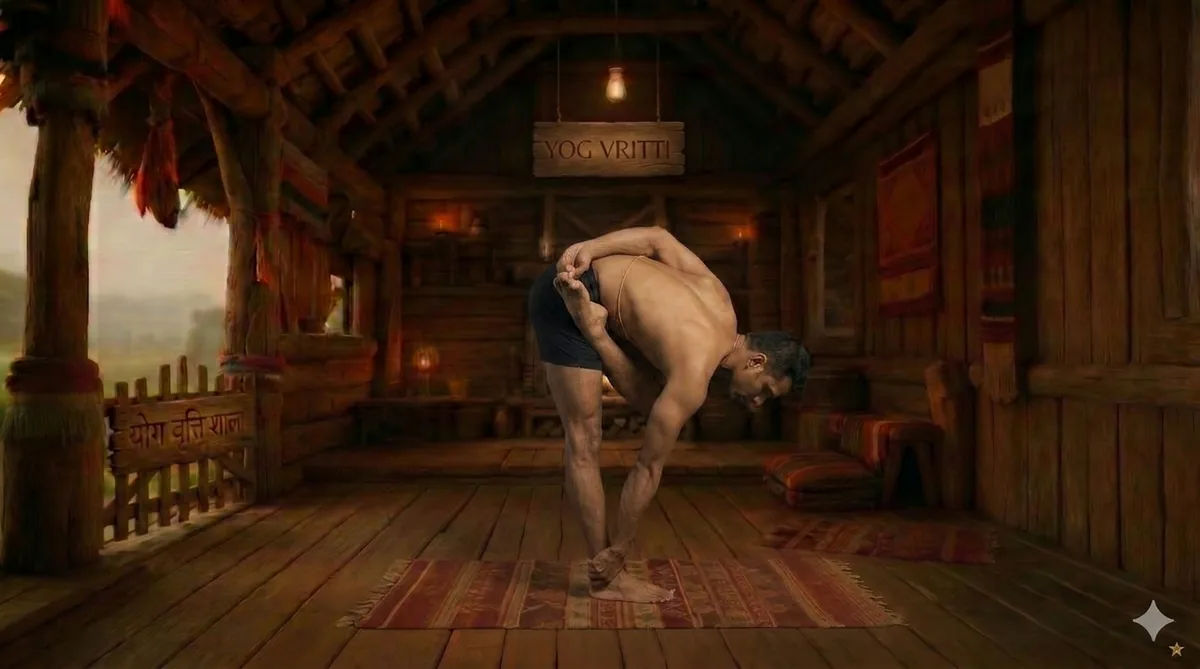
Ardha Baddha Padmottanasana is a profound standing forward bend that intricately weaves strength, balance, and deep flexibility. It grounds the practitioner through the standing leg while simultaneously creating expansive opening in the hips and shoulders, and a gentle lengthening through the entire posterior chain of the body. This pose is a beautiful inversion that invites introspection and quietude, challenging the mind to focus (dharana) amidst physical intensity. It cultivates a sense of inner stillness and release, making it invaluable for both physical refinement and mental clarity.
Half Bound Lotus Standing Pose, also called Half Lotus Standing Forward Fold is a classical yoga posture. Its Sanskrit name Ardha Baddha Padmottanasana Variation translates word-for-word as: Ardha (Half) · Baddha (Bound) · Padma (Lotus) · Uttana (Intense Stretch). From a standing position, the body roots firmly through the feet while the spine extends upward. The posture works to lengthen the hamstrings, strengthen the quadriceps and stretch the hip flexors. Stretches hamstrings, hip flexors, and shoulders. Strengthens the standing leg and core. It is particularly valued for improving overall posture and developing greater flexibility. Suitable for advanced practitioners with developed body awareness, it is a meaningful addition to any practice, particularly beneficial for athletes and runners. A block can be used to make the posture more accessible and support correct alignment. Practitioners with knee injury and ankle injury should approach with care or consult a qualified teacher.
Helps with
Muscles Worked
Hamstrings
Biceps femoris, Semitendinosus, Semimembranosus
The powerful muscles at the back of your standing thigh (hamstrings) experience a deep, sustained lengthening as you fold forward and maintain the integrity of your leg.
This isn't a forceful stretch but a gradual unwinding, allowing the nervous system to release chronic tension often held from prolonged sitting.
In yogic terms, this release facilitates the downward flow of apana vayu, bringing a profound sense of grounding and stability to the lower body.
Regular practice helps to elongate this crucial posterior chain, alleviating undue strain on the lumbar spine.
Gluteal Muscles
Gluteus medius, Gluteus minimus
The muscles on the side of your standing hip (gluteus medius and minimus) are actively engaged, working tirelessly to stabilize the pelvis and prevent it from tilting or collapsing.
This deep isometric engagement creates a strong, rooted foundation, allowing for balance and upward lift through the torso.
This active rooting helps to cultivate a sense of unwavering stability, mirroring the mental steadiness required to hold such a challenging pose.
Strengthening these often-neglected stabilizers is key to healthy hip mechanics and preventing imbalances.
Quadriceps
Rectus femoris, Vastus lateralis, Vastus medialis, Vastus intermedius
On the standing leg, the front thigh muscles (quadriceps) are powerfully engaged, providing eccentric control to protect the knee and lift the kneecap, creating a sense of lift and lightness.
This active engagement ensures the knee joint is stable, preventing hyperextension and promoting healthy alignment.
Simultaneously, the quadriceps of the lifted leg, particularly the rectus femoris, experience a stretch as the hip flexes and externally rotates, contributing to the overall hip opening.
This dynamic interplay of strength and release embodies the yogic principle of Sthira Sukham Asanam – steadiness and ease.
Psoas Major and Iliacus
Iliopsoas
As you fold deeply into this forward bend, the primary hip flexors (iliopsoas) on the standing leg side are encouraged to lengthen, especially if the pelvis remains level and the spine extends.
This release is crucial for freeing up the front of the hip and creating more space in the lumbar spine.
For the lifted leg, the psoas is actively shortened to bring the knee high into the half lotus position, but the mindful lengthening on the standing side helps to balance this action.
Releasing tension in this deep core muscle is often linked to emotional liberation, as it's believed to store deep-seated stress and trauma.
Rotator Cuff Muscles
Supraspinatus, Infraspinatus, Teres minor, Subscapularis
The small, deep muscles surrounding the shoulder joint (rotator cuff) are significantly mobilized, particularly in the arm that reaches back to bind the foot.
This action requires a combination of internal rotation and extension, creating a deep opening across the front of the chest and shoulder girdle.
This broadens the collarbones and creates space in the heart center, allowing for freer breathing and a sense of emotional openness.
Regular work in this area can improve shoulder mobility and alleviate stiffness, releasing stagnant energy (prana) in the upper body.
Joints Mobilized
Hip Joint (Standing Leg)
mobilizingThe standing hip joint undergoes significant flexion as you fold forward, while simultaneously maintaining stability through the engagement of surrounding musculature.
This dynamic action mobilizes the joint capsule, enhancing its range of motion in flexion while strengthening its stabilizing structures.
Through this mindful engagement, the practitioner cultivates a sense of rootedness and freedom in movement, which translates to ease in daily activities and a more fluid connection to the earth.
Over time, this practice can reduce stiffness and improve overall hip health.
Hip Joint (Lifted Leg)
mobilizingThe lifted hip joint experiences an intense degree of external rotation and flexion to bring the foot into Ardha Padmasana.
This deep mobilization targets the often-tight external rotators and adductors, creating significant opening in the hip socket.
While challenging, this action systematically increases the range of motion in the hip, releasing physical and energetic blockages.
From a yogic perspective, opening the hips can release stored emotions and promote a sense of freedom and emotional agility, enhancing the flow of apana vayu.
Knee Joint (Standing Leg)
weight bearingThe standing knee joint bears the full weight of the body, requiring precise alignment and muscular engagement to remain stable and protected.
Active engagement of the quadriceps ensures the kneecap lifts and the joint is supported, preventing hyperextension.
This mindful awareness cultivates a sense of intelligent strength and stability, teaching the body to bear weight safely and efficiently.
Over time, this practice strengthens the supporting structures around the knee, promoting long-term joint health and resilience.
Vertebral Joints (Spine)
mobilizingThe many small joints of the spine (vertebral joints) are gently mobilized through flexion as you fold forward, creating space between the vertebrae.
Gravity assists in this gentle traction, helping to decompress the spinal column and release tension along the entire length of the back.
This forward bend encourages a lengthening of the spinal column, promoting flexibility and fluidity in the torso.
From a yogic viewpoint, this action helps to release blocked energy along the sushumna nadi, promoting clearer energy flow and a sense of lightness in the spine.
Shoulder Joint (Glenohumeral)
mobilizingThe shoulder joint of the binding arm undergoes significant internal rotation and extension to grasp the lifted foot, creating a deep opening across the chest and anterior shoulder capsule.
This action mobilizes the glenohumeral joint, improving its range of motion and releasing stiffness in the shoulder girdle.
This broadens the chest, which is linked to increased lung capacity and a more open heart center, both physically and energetically.
Regular practice helps to counteract the effects of slouching and improves overall posture.
Organ & System Benefits
Abdominal Organs (Digestive System)
In this deep forward bend, the abdominal organs receive a gentle yet sustained compression against the thighs.
This internal massage stimulates peristalsis, the muscular contractions that move food through the digestive tract, encouraging healthy digestion and elimination.
By compressing and then releasing, fresh blood flow is invited back into these organs, revitalizing their function.
From a yogic perspective, this action can help to balance Samana Vayu, the energy responsible for assimilation and digestion, promoting a sense of inner harmony and well-being.
Brain and Head
As an inversion, this pose brings the head below the heart, reversing the usual flow of gravity and encouraging fresh, oxygenated blood to the brain and facial tissues.
This increased circulation can calm the nervous system, reduce mental fatigue, and promote mental clarity and focus.
The inversion also helps to soothe the eyes and quiet the sensory organs, drawing the awareness inward (pratyahara), which is a key step towards deeper meditative states.
This fresh perspective can alleviate feelings of anxiety and promote a sense of calm resilience.
Lungs
While the forward bend might initially feel restrictive, the sustained hold, combined with conscious breathing, encourages deeper diaphragmatic engagement and a more complete exhalation.
The gentle compression on the abdomen supports the diaphragm in its upward movement during exhalation, helping to expel stale air more effectively.
This action increases lung capacity over time and promotes more efficient gaseous exchange, leading to increased vitality.
The deep, rhythmic breathing in this pose helps to regulate prana, fostering a sense of inner peace and equilibrium.
Nervous System
The sustained nature of this advanced balance pose demands profound concentration and stillness, which directly engages the parasympathetic nervous system, promoting a state of calm and rest.
As the body works to maintain balance, the mind becomes singularly focused on the present moment, effectively quieting the constant chatter of the mind (chitta vritti).
This intense but meditative focus helps to reduce anxiety and stress, guiding the practitioner towards a state of inner tranquility and mental clarity.
The balance challenge inherent in Ardha Baddha Padmottanasana significantly enhances proprioception – your body's awareness of its position in space – and interoception, your awareness of internal bodily sensations.
This heightened sensory feedback refines the communication pathways between the brain and the body, improving coordination and motor control.
From a yogic perspective, this deep sensitivity helps to awaken the subtle body, making the practitioner more attuned to the flow of prana and enhancing self-awareness on a profound level.
The inverted nature of the pose, with the head below the heart, stimulates the baroreceptors in the neck and aorta, signaling the brain to slow the heart rate and lower blood pressure.
This physiological response is a direct mechanism for activating the 'rest and digest' aspect of the nervous system.
This calming effect helps to alleviate symptoms of anxiety and restlessness, creating a profound sense of grounded peace and mental composure, even amidst physical challenge.
Mental & Emotional
Ardha Baddha Padmottanasana is a masterclass in concentration (dharana) and single-pointed focus.
The intricate balance and deep physical demands require the mind to be fully present, leaving no room for distraction or mental wandering.
This intense mental engagement trains the mind to be steady and unwavering, a skill that translates into greater clarity and effectiveness in all aspects of life, fostering a profound sense of inner discipline and mental resilience.
This forward bend, combined with the inversion, naturally encourages introspection and a turning inward of the senses (pratyahara).
As the gaze softens and the head descends, the external world recedes, allowing for a deeper connection to one's inner landscape.
This practice cultivates self-awareness and encourages a contemplative state, where one can observe thoughts and emotions without judgment, fostering emotional regulation and a profound sense of inner peace.
The challenge of maintaining balance in this pose cultivates immense patience and perseverance.
Falling out of the pose is a natural part of the learning process, teaching humility and the importance of returning to the present moment without self-judgment.
This resilience, born from repeated effort and acceptance, builds mental fortitude and a quiet confidence that extends beyond the mat, empowering students to face life's challenges with greater equanimity and grace.
Because of Its Shape
standing
As a standing pose, Ardha Baddha Padmottanasana anchors the practitioner firmly to the earth, cultivating a profound sense of grounding and stability.
The active engagement of the legs and feet strengthens the foundation of the body, enhancing physical and energetic rootedness.
This connection to the earth helps to balance apana vayu, bringing a sense of security and presence, reducing feelings of scatteredness or instability in daily life.
The forward bend aspect of this pose brings the head below the heart, making it a gentle inversion that calms the nervous system and encourages introspection.
Physiologically, it lengthens the entire posterior chain of the body, from the heels to the crown of the head, promoting spinal decompression and flexibility.
Energetically, forward bends are known to quiet the mind (chitta vritti nirodha), fostering a sense of surrender and drawing awareness inward, away from external distractions.
This pose is a deep hip opener, particularly for external rotation, which systematically releases tension in the deep muscles surrounding the hip joint.
This increased mobility in the hips helps to free up the pelvic area, which is often a storage site for emotional stress and stagnant energy.
From a yogic perspective, opening the hips facilitates the flow of prana through the lower chakras, promoting emotional release, creativity, and a sense of liberation.
The intricate balance required in this pose significantly enhances proprioception and kinesthetic awareness, refining the body's understanding of its position in space.
This mental and physical challenge sharpens focus and concentration, cultivating a steady mind (dharana) amidst physical intensity.
The ability to find stillness in such a dynamic pose builds mental resilience and a quiet confidence that translates into greater poise and presence in all aspects of life.
Fascial Lines
The forward bend in Ardha Baddha Padmottanasana creates a profound lengthening along the entire Superficial Back Line of fascia, which runs from the soles of the feet, up the hamstrings, along the erector spinae, and over the scalp.
This sustained tension release helps to unwind chronic tightness throughout this fascial chain, improving overall postural integrity and reducing systemic drag.
Additionally, the deep hip opening and arm binding engage the Spiral Line and parts of the Deep Front Line, releasing deep-seated fascial restrictions around the pelvis and shoulders.
This comprehensive fascial release opens energetic channels (nadis), allowing prana to flow more freely and releasing held patterns of tension in the body.
Breathing & Respiratory
In Ardha Baddha Padmottanasana, the forward bend gently compresses the abdomen against the thighs, which naturally encourages a more diaphragmatic and expansive breath into the back and sides of the rib cage.
This position tends to lengthen the exhalation, promoting a deeper release of stale air and a greater sense of calm.
Practicing Ujjayi breath in this pose helps to regulate the flow of prana, intensifying the internal heat (tapas) that aids in releasing muscular and fascial tension.
The sustained, conscious breathing fosters mental focus and helps to quiet the fluctuations of the mind, deepening the introspective quality of the pose.
Anatomical Caution
Teachers, approach this pose with immense care, especially regarding the knees and hips.
Ensure the standing leg's knee is not hyperextended and the lifted leg's knee is pain-free; never force the half lotus if there's any discomfort in the knee joint.
Watch for any strain in the lower back, guiding students to maintain length in the spine rather than collapsing into a rounded back.
Students with hamstring tears, significant balance issues, or acute hip pain should avoid this pose or modify extensively with props and support.