5
Muscles
4
Joints
2
Organs
2
Mental
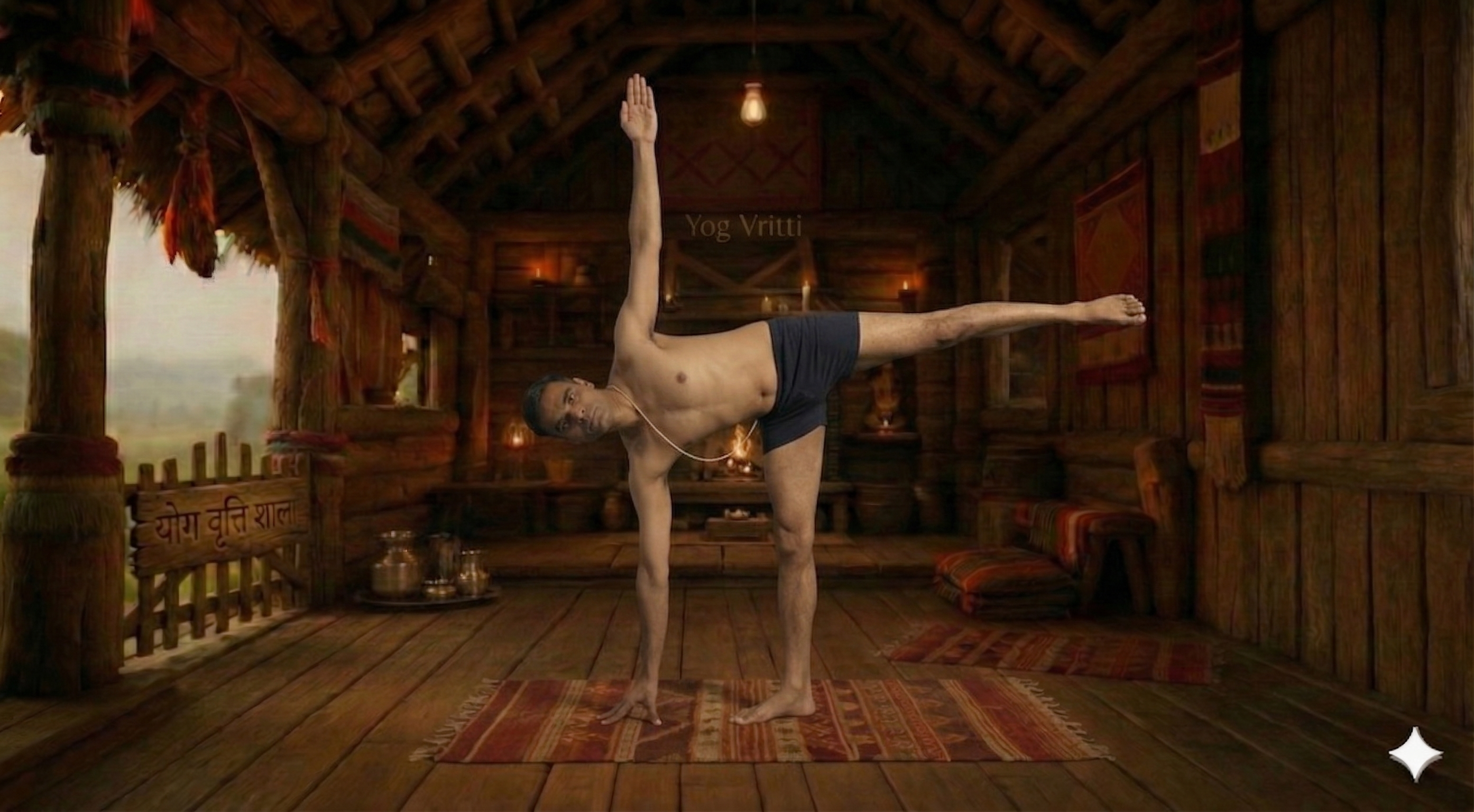
Ardha Chandrasana
अर्ध चंद्रासन
Ardha Chandrasana, the Half Moon Pose, is a profound standing balance that integrates strength, flexibility, and refined awareness. It dynamically strengthens the entire lower limb chain, from the arch of the foot to the glutes, while simultaneously opening the hips and chest. Energetically, it cultivates a sense of lightness and expansion, lifting the prana upwards while rooting the standing leg firmly to the earth. For any teacher, understanding this pose deeply allows for precise instruction that balances effort and surrender, guiding students towards physical stability and mental clarity.
Half Moon Pose, also called Half Moon is a classical yoga posture. Its Sanskrit name Ardha Chandrasana translates word-for-word as: Ardha (Half) · Chandra (Moon) · Asana (Pose). From a standing position, the body roots firmly through the feet while the spine extends upward. The posture works to lengthen the hamstrings, strengthen the quadriceps and activate the glutes. Improves balance and coordination. Stretches hamstrings, calves, and spine. It is particularly valued for building full-body strength and developing greater flexibility. Suitable for intermediate practitioners with foundational yoga experience, it is a meaningful addition to any practice, particularly beneficial for teens and athletes. A block and wall can be used to make the posture more accessible and support correct alignment. Practitioners with migraine and low blood pressure should approach with care or consult a qualified teacher.
Helps with
Muscles Worked
Hamstrings
[Semitendinosus, Semimembranosus, Biceps Femoris]
The muscles along the back of the standing thigh (hamstrings) experience a deep, intelligent lengthening as the torso extends forward and the leg lifts.
This eccentric loading helps to increase flexibility in the posterior chain, releasing chronic tightness often held from prolonged sitting.
In a yogic sense, this unwinds old patterns of resistance, allowing for a greater flow of apana vayu and a sense of freedom through the back of the leg and pelvis.
Quadriceps
[Rectus Femoris, Vastus Lateralis, Vastus Medialis, Vastus Intermedius]
The powerful muscles on the front of the standing thigh (quadriceps) engage intensely to stabilize the knee and support the body's weight, particularly the vastus medialis which helps prevent knee collapse.
This isometric contraction builds significant strength and endurance in the leg, creating a solid foundation for the pose.
This engagement cultivates tapas, inner heat, which purifies and strengthens the physical structure, allowing the practitioner to feel more grounded and powerful.
Glutes
[Gluteus Maximus, Gluteus Medius, Gluteus Minimus]
The muscles of the buttocks and outer hip (gluteus maximus and medius) are crucial in Ardha Chandrasana, working both to extend the lifted leg and to stabilize the standing hip.
The gluteus medius, in particular, prevents the standing hip from collapsing inwards, maintaining pelvic alignment.
This deep activation brings strength and stability to the pelvis, which is the seat of creativity and security, fostering a sense of rootedness and balance in the practitioner's energetic body.
Core muscles
[Transversus Abdominis, Obliques, Rectus Abdominis, Erector Spinae]
The deep abdominal muscles (transversus abdominis and obliques) and the muscles along the spine (erector spinae) work continuously to stabilize the trunk and maintain the lateral opening.
This integrated engagement protects the lower back and creates a strong, supportive cylinder around the torso.
A strong core in yoga is not just about physical power but also about cultivating a stable center (manipura chakra), from which all actions can originate with clarity and strength, reducing mental wavering.
Spinal Erectors
[Erector Spinae group – Spinalis, Longissimus, Iliocostalis]
The long muscles running along either side of the spine (erector spinae) activate to lengthen the torso and lift the chest, counteracting gravity's pull.
This engagement helps to decompress the spinal discs and create space between the vertebrae, promoting healthy spinal alignment.
Energetically, this spinal extension allows prana to flow more freely up the central channel (sushumna nadi), fostering mental alertness and a feeling of buoyancy and lift in the entire being.
Joints Mobilized
Hip Joint
mobilizingThe standing hip joint (coxal joint) is the pivot point for the entire pose, requiring significant stability while simultaneously allowing for abduction and external rotation of the lifted leg.
This dynamic engagement strengthens the surrounding musculature, improving overall hip health and range of motion.
For the yogi, this opening in the hip area releases stored emotional tension and promotes a sense of freedom and mobility in the pelvis, which is often a repository of stress.
Knee Joint
stabilizingThe standing knee joint (tibiofemoral joint) requires precise alignment and muscular engagement to prevent hyperextension or collapse, bearing the full weight of the body.
Proper engagement of the quadriceps and hamstrings ensures the knee is strong and protected, promoting joint longevity.
This focused awareness on the knee fosters a sense of grounded stability, preventing the mind from wavering and bringing a conscious presence to the foundation of the pose, mirroring mental steadfastness.
Ankle Joint
stabilizingThe standing ankle joint (talocrural joint) and the intrinsic muscles of the foot work intensely to maintain balance and distribute weight evenly, making subtle adjustments throughout the pose.
This continuous micro-adjustment strengthens the ligaments and muscles around the ankle, enhancing proprioception.
This deep connection to the earth through the foot cultivates a powerful sense of rooting and steadiness, allowing the practitioner to feel deeply connected to the ground, no matter how challenging the balance becomes.
Spine
decompressingThe entire spine, particularly the lumbar and thoracic regions, is lengthened and subtly rotated in Ardha Chandrasana, creating space between the vertebrae.
This gentle decompression helps alleviate lower back compression and encourages better postural alignment.
This spinal extension allows for an unobstructed flow of vital energy (prana) through the central nervous system, bringing a sense of lightness and clarity to the mind and body, enhancing overall vitality.
Organ & System Benefits
Abdominal Organs
The gentle lateral opening and mild compression on one side of the abdomen, coupled with expansion on the other, provides a subtle massage to the digestive organs (stomach, intestines).
This action can stimulate peristalsis and improve circulation to these areas, aiding digestion and elimination.
From a yogic perspective, this cleansing action in the abdominal region helps to stoke agni, the digestive fire, leading to better assimilation of nutrients and a feeling of lightness and inner cleanliness.
Heart and Lungs
The expansive opening of the chest in Ardha Chandrasana creates more space for the lungs to fully inflate, encouraging deeper and fuller breathing.
This expansion also gently stimulates the heart, improving circulation and oxygenation throughout the body.
This chest opening is deeply connected to anahata chakra, fostering feelings of courage, compassion, and emotional openness, allowing the practitioner to breathe more freely both physically and emotionally.
Nervous System
The inherent challenge of balancing on one leg in Ardha Chandrasana demands acute focus and proprioceptive awareness, which can be profoundly calming for the nervous system.
As the mind concentrates on alignment and subtle shifts in weight, it draws attention away from external distractions and internal anxieties.
This sustained internal focus helps to quiet the 'chitta vritti' (mind fluctuations), leading to a state of mental stillness and reduced sympathetic nervous system activity, fostering a deep sense of presence and peace.
The sustained effort and precise muscular engagement required in this pose trains the neuromuscular pathways, enhancing coordination and body mapping in the brain.
This heightened communication between the brain and muscles refines motor control and balance, reducing the likelihood of falls and improving overall agility.
From a yogic perspective, this sharpens the senses (indriyas) and directs prana with intention, leading to a more integrated and harmonious mind-body connection.
Mental & Emotional
Ardha Chandrasana profoundly cultivates mental concentration and unwavering focus (dharana) as the practitioner must maintain a steady gaze and internal awareness to hold the balance.
This intense mental engagement acts as a potent anchor for the mind, drawing it away from external distractions and internal chatter.
The ability to maintain stability amidst physical challenge translates into greater mental resilience and the capacity to stay present and calm in life's unpredictable moments.
Successfully holding Ardha Chandrasana instills a profound sense of self-confidence and courage, as it challenges both physical and mental limitations.
The act of expanding and opening in such a vulnerable, unsupported position can be empowering, shifting one's perception of capability.
This physical courage reflects a deeper psychological shift, helping to overcome fear and cultivate an inner strength that extends beyond the mat, fostering a more expansive and optimistic outlook on life.
Because of Its Shape
balance
As a primary balancing pose, Ardha Chandrasana significantly enhances proprioception, the body's ability to sense its position and movement in space, by challenging the inner ear (vestibular system) and sensory receptors in the joints and muscles.
This continuous feedback loop refines neuromuscular coordination and strengthens the stabilizing muscles throughout the body.
Yogically, balancing poses teach us to find stillness amidst movement, cultivating mental equanimity and the ability to find our center even when external circumstances feel unstable.
The standing nature of Ardha Chandrasana deeply grounds the practitioner, connecting them firmly to the earth's energy through the standing foot.
This rooting action strengthens the legs and core, building a solid foundation from which to expand upwards.
This connection to the earth fosters a sense of stability and security, activating muladhara chakra and allowing for the safe release of tension, creating a feeling of being deeply supported and present in the moment.
The lateral opening of the torso and the abduction of the lifted leg in this pose gently opens the hips, releasing tension in the outer hip rotators and inner thigh muscles.
This can improve range of motion in the hip joint, alleviating stiffness and discomfort.
In yogic philosophy, the hips are often considered storage sites for emotional blockages and past trauma; opening them can facilitate emotional release and cultivate a sense of freedom and spaciousness in the pelvic region.
Ardha Chandrasana is a beautiful chest opener, extending the arms and creating space across the collarbones and sternum.
This expansion counteracts the slouched posture prevalent in modern life, improving respiratory capacity and promoting a more upright and confident stance.
This energetic opening of the heart space (anahata chakra) fosters feelings of compassion, generosity, and emotional vulnerability, allowing for a deeper connection to oneself and others.
Fascial Lines
Ardha Chandrasana creates a profound lengthening and release along the lateral fascial line of the body, from the outer ankle of the standing leg, up the outer thigh and torso, and out through the lifted arm.
Simultaneously, the superficial back line is engaged and lengthened, particularly in the standing leg.
This integrated fascial stretch helps to unravel chronic patterns of holding and stiffness, improving overall tissue hydration and fluidity.
Yogically, releasing these fascial constrictions opens energetic channels, allowing prana to flow more freely and removing physical impediments to deeper meditative states, fostering a feeling of lightness and unrestricted movement.
Breathing & Respiratory
The expansive chest opening in Ardha Chandrasana naturally invites a fuller, more complete breath, encouraging deep inhalation and a steady, controlled exhalation.
The lateral stretch of the torso creates space between the ribs, allowing the intercostal muscles to work more efficiently, enhancing lung capacity.
This mindful, rhythmic breathing (ujjayi pranayama) in a balancing pose helps to calm the nervous system, deepen concentration, and stabilize the mind, transforming physical effort into a moving meditation and grounding the practitioner in the present moment.
Anatomical Caution
Teachers must guide students to protect the standing knee, ensuring it does not hyperextend or lock; a micro-bend is always advised.
Be mindful of lower back compression by encouraging length through the spine rather than collapsing, particularly for those with existing lumbar issues.
For students new to balancing, always encourage the use of the wall or a block for support, prioritizing stability over depth to build confidence and prevent falls.