4
Muscles
2
Joints
2
Organs
2
Mental
Half Plow Pose
अर्ध हलासन
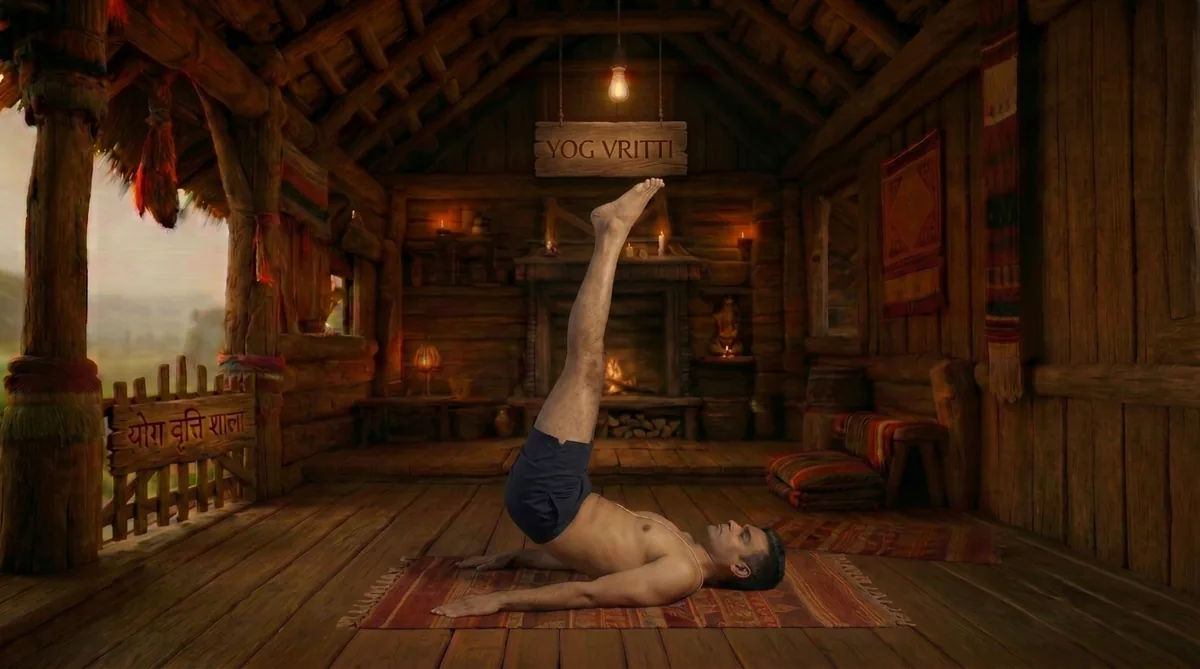
Ardha Halasana, or Half Plow Pose, is a foundational supine posture that profoundly strengthens the deep core muscles while simultaneously providing a gentle, sustained lengthening to the hamstrings. By engaging the abdominal wall and stabilizing the pelvis, it fosters a deep sense of inner support and groundedness. This pose not only builds physical resilience but also stimulates the abdominal organs, enhancing digestion and cultivating a calm, focused mind. It is a powerful practice for developing core integrity, improving spinal health, and grounding the energetic body.
Half Plow Pose, also called Half Halasana is a classical yoga posture whose Sanskrit roots break down as: Ardha (Half) · Hala (Plow) · Asana (Pose). In this posture, the body releases into the support of the floor, allowing gravity to assist. The posture works to engage the core and lengthen the hamstrings. Stretches hamstrings. Stimulates abdominal organs. Suitable for beginners and regular practitioners alike, it is an excellent warm-up, particularly beneficial for beginners and seniors. A blanket can be used to make the posture more accessible and support correct alignment. Practitioners with neck pain and glaucoma should approach with care or consult a qualified teacher.
Muscles Worked
Deep Abdominal Muscles
Transversus Abdominis, Rectus Abdominis, Obliques
The muscles across the front and sides of your belly (transversus abdominis, rectus abdominis, obliques) are powerfully engaged in this pose, working concentrically to lift and hold the legs against gravity.
This strong activation stabilizes the pelvis and lumbar spine, preventing any overarching and protecting the lower back.
Yogically, this engagement cultivates a strong inner core (tapas) and supports the upward flow of prana, fostering a sense of inner power and stability.
Hip Flexors
Iliopsoas (Iliacus and Psoas Major)
The deep muscles connecting your spine and pelvis to your inner thigh (iliopsoas) are actively contracting to initiate and sustain the leg lift.
While often prone to tightness, in this controlled supine position, their strengthening helps to balance their function with the abdominal muscles.
This balanced action promotes stability in the lumbar spine and pelvis, which translates to improved posture and a feeling of integrated strength in the lower torso.
Hamstrings
Biceps Femoris, Semitendinosus, Semimembranosus
The muscles running along the back of your thighs (hamstrings) receive a gentle, sustained lengthening as you extend your legs towards the ceiling.
This is not a forceful stretch, but rather a patient unwinding that encourages the nervous system to release chronic tension.
In yogic understanding, this release in the posterior chain helps to free apana vayu, the downward-moving energy, bringing a feeling of openness and ease to the legs and lower back.
Spinal Stabilizers
Erector Spinae
The long muscles running along either side of your spine (erector spinae) work subtly and isometrically to maintain the natural curve of your lower back, gently pressing it towards the mat.
They prevent the lumbar spine from arching excessively, ensuring that the abdominal work is balanced and protective.
This gentle engagement promotes spinal awareness and cultivates a feeling of grounded support along the entire length of the back, allowing for a steady flow of prana.
Joints Mobilized
Hip Joint
mobilizingThe ball-and-socket joint where your leg meets your pelvis (hip joint) undergoes controlled flexion as you lift your legs.
The surrounding musculature stabilizes this joint, ensuring smooth and safe movement without strain or impingement.
This mindful mobilization improves the active range of motion in the hips, connecting to a sense of energetic freedom and fluidity in the pelvic region over time.
Lumbar Spine
stabilizingThe five vertebrae of your lower back (lumbar spine) are actively stabilized and gently pressed towards the mat by the concerted effort of the abdominal muscles.
This action prevents hyperextension and protects this vulnerable area from strain, creating a solid foundation.
The stability fostered here builds trust in the body's core support, allowing for a sense of security and a clear pathway for the upward flow of prana in the central channel.
Organ & System Benefits
Abdominal Organs
As the deep abdominal muscles engage, a gentle, internal compression and release occurs around the organs of your digestive system, including the stomach, intestines, and liver.
This subtle internal massage stimulates peristalsis and enhances blood circulation to these vital areas, promoting efficient nutrient absorption and waste elimination.
In yogic terms, this action helps to stoke Agni, the digestive fire, leading to improved overall vitality and a sense of lightness in the gut.
Kidneys
The gentle pressure and subsequent release in the deep abdominal region also subtly influences the kidneys, located posteriorly beneath the rib cage.
This mild stimulation can enhance circulation to these vital organs, supporting their crucial filtration and detoxification functions.
Energetically, this pose contributes to balancing the water element (Apana Vayu) within the body, which aids in fluid regulation and overall systemic health.
Nervous System
The supine position, combined with the focused engagement of the core and a steady breath, cultivates a profound sense of groundedness and inner stability.
This mindful effort gently shifts the nervous system from a sympathetic (fight-or-flight) state towards a parasympathetic (rest-and-digest) response.
Practitioners experience a calming effect, reducing mental agitation (chitta vritti) and fostering a deeper connection to the present moment, promoting inner peace.
The controlled effort required to lift and hold the legs demands sustained, inward-directed attention, drawing awareness away from external distractions.
This intentional concentration helps to quiet the external senses (pratyahara) and steady the mind, building mental resilience.
As the body works steadily, the breath remains even and deep, further regulating the nervous system and promoting a profound sense of inner equilibrium and centeredness, even amidst effort.
Mental & Emotional
Ardha Halasana cultivates mental discipline and perseverance, as holding the legs with control requires sustained effort and unwavering focus.
This practice builds mental fortitude, teaching the practitioner to remain steady and calm even when faced with physical challenge or discomfort.
The quiet strength developed here translates into greater resilience in daily life, enabling one to face obstacles with a stable and centered mind, fostering a sense of inner mastery.
The pose encourages deep introspection and self-awareness, as attention is directed internally to the core, the breath, and the subtle sensations of the body.
This inward gaze helps to quiet external distractions, fostering a state of dharana, or concentrated attention, which is a key limb of yoga.
Through this practice, one learns to observe the fluctuations of the mind without judgment, cultivating a profound sense of inner stillness and presence, enhancing clarity of thought.
Because of Its Shape
supine
The supine position inherently provides a sense of grounding and full support from the earth, allowing the body to feel secure and stable.
This profound stability creates a safe foundation for focused internal work, as the need for external balance is minimized.
Energetically, lying on the back helps to draw awareness inward, cultivating a sense of calm and introspection, which is essential for deep yogic practice and self-study.
Lying on the back removes the challenge of gravity on the spine in the same way as standing poses, allowing for a more controlled and precise engagement of the deep core muscles.
This enables targeted strengthening of the abdominal wall without undue strain on the lower back, especially for beginners.
This foundational strengthening builds core integrity, which is fundamental for all other asanas and supports the healthy upward flow of prana (udana vayu).
Fascial Lines
In Ardha Halasana, the superficial and deep fascial lines along the back of the legs (superficial back line) are gently lengthened, while the anterior fascial lines of the core (anterior superficial line, anterior functional line) are actively toned.
As the hamstrings release and the core contracts, the interconnected fascial web is subtly stretched and strengthened in a balanced manner.
This integrated engagement helps to release restrictions and improve fluid dynamics within the connective tissue, enhancing the body's overall elasticity and promoting a feeling of integrated movement and unhindered energetic flow throughout the body.
Breathing & Respiratory
This pose naturally encourages a deeper, more diaphragmatic breath, as the supine position supports the gentle expansion of the abdomen on inhalation and its controlled drawing in on exhalation.
The engagement of the core muscles provides a subtle, internal resistance, which can deepen the respiratory effort without strain, promoting a more complete exhalation.
This mindful breathing (pranayama) calms the nervous system, enhances oxygen exchange, and helps to distribute prana throughout the body, fostering a sense of vitality and profound inner quiet, preparing the mind for meditation.
Anatomical Caution
Teachers should guide students with lower back sensitivity or recent abdominal surgery to approach this pose with great care, perhaps keeping the knees bent or lifting the legs only partially.
Emphasize engaging the lower abdominals to gently press the lower back towards the mat, preventing any arching that could cause strain.
The primary focus should always be on maintaining spinal integrity and stability, not on achieving maximum leg height, ensuring a safe and beneficial practice for all.