2
Muscles
2
Joints
1
Organs
1
Mental
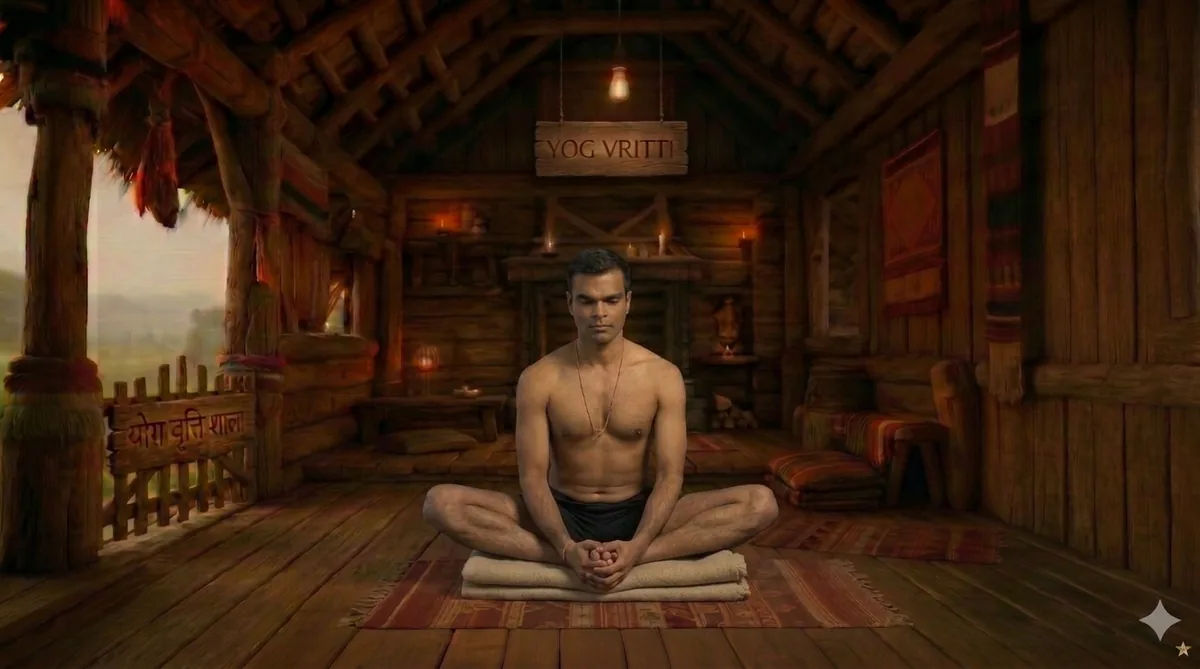
Baddha Konasana on Blanket
बद्ध कोणासन कम्बल
This variation of Baddha Konasana, performed with elevated hips on a blanket, fundamentally shifts the mechanics of the pose, making it significantly more accessible and therapeutic for those with tight hips, a stiff lower back, or a tendency to round the spine. By creating an anterior pelvic tilt, it invites a deeper, yet less effortful, release in the inner thighs and groin, transforming the experience from one of struggle to one of surrender and spaciousness. It allows the practitioner to find comfort and length, rather than forcing the stretch. Baddha Konasana is a foundational seated posture that profoundly addresses the pelvic girdle, offering both physical release and energetic grounding. By gently opening the inner thighs (adductors) and deep hip rotators, it mobilizes the hip joints and brings a generous sense of spaciousness to the entire pelvic region. This pose is a powerful vehicle for releasing deeply held tension, both muscular and emotional, allowing for a healthy flow of subtle energy (prana) in the lower body. It cultivates an inward journey, fostering stability and a quiet mind, making it invaluable for overall well-being and reproductive health, and gradually unwinding chronic stiffness.
Bound Angle Pose on Blanket, also called Supported Butterfly Pose is a classical yoga posture. Its Sanskrit name Baddha Konasana on Blanket translates word-for-word as: Baddha (Bound) · Kona (Angle) · Asana (Pose). In this posture, the body grounds through the sit bones while the spine rises tall. Accessible bound angle. Blanket elevation helps tight hips. Meditation seat alternative. It is particularly valued for developing greater flexibility and quieting an anxious mind. Suitable for beginners and regular practitioners alike, it is particularly invigorating in a morning routine, particularly beneficial for beginners and seniors. A blanket can be used to make the posture more accessible and support correct alignment. Practitioners with groin injury should approach with care or consult a qualified teacher.
Helps with
What This Variation Changes
The blanket, by elevating the hips, fundamentally changes the pelvic alignment, encouraging an anterior tilt. This reduces the strain on the lower back, allowing the spine to lengthen upwards with less effort, and provides a stable foundation from which the inner thighs can release. The elevation also alters the leverage on the hip joints, facilitating a deeper external rotation and a more comfortable descent of the knees, making the pose accessible for a wider range of body types and stiffness levels.
Muscles Worked
Inner Thighs
With the pelvis elevated on the blanket, the angle between the torso and thighs increases, promoting a natural anterior tilt of the pelvis.
This subtle yet profound shift alleviates the compensatory rounding often seen in the lower back, which typically restricts the inner thigh muscles (adductors).
Consequently, these muscles can release more profoundly and without the resistance of a posteriorly tilted pelvis, allowing for a deeper, yet more comfortable, lengthening action across the groin and inner thigh.
The stretch becomes less about brute force and more about intelligent surrender.
Deep Hip Rotators
The elevation of the hips allows the femur heads to find a more neutral and less impinged position within the hip sockets.
This reduction in compression and strain on the deep hip rotators (such as piriformis, gemelli, and obturators) means they are no longer fighting against a restricted range of motion.
Instead of actively resisting or being compressed, these muscles can surrender more completely, facilitating a passive and sustained external rotation of the thighs, allowing the knees to descend closer to the floor with greater ease and less discomfort.
This encourages a gentle unwinding of deep-seated tension in the hip joint.
Joints Mobilized
Hip Joints
mobilizingThe ball-and-socket joints of your hips (acetabulofemoral joints) are the central beneficiaries here, undergoing gentle but sustained external rotation and abduction.
This action encourages the synovial fluid within the joint capsule to circulate, nourishing the cartilage and improving the overall health and mobility of the joint.
Over time, consistent practice helps to increase the range of motion, alleviating stiffness and allowing for more fluid movement not just in the pose, but in all hip-related activities, fostering a greater sense of bodily freedom and vitality.
Sacroiliac (SI) Joints
stabilizingLocated at the base of your spine, where the sacrum meets the iliac bones, the SI joints are subtly influenced by the stability of your pelvis in this pose.
By grounding the sitting bones evenly and maintaining a neutral pelvis, Baddha Konasana encourages a balanced and stable relationship within these joints, rather than a direct stretch.
This foundational stability is crucial for supporting the entire spinal column and can alleviate discomfort related to SI joint dysfunction, offering a sense of rootedness and energetic integrity in the core of the body.
Organ & System Benefits
Pelvic Organs (Reproductive & Urinary Systems)
Baddha Konasana creates a generous opening in the pelvic bowl, which directly impacts the organs housed within, including the reproductive and urinary systems.
This spaciousness facilitates improved blood circulation to these vital organs, helping to nourish tissues and enhance their function.
From a yogic perspective, this increased circulation and release of tension in the pelvic floor supports the healthy flow of apana vayu, which governs elimination and reproduction, making the pose highly therapeutic for conditions like menstruation, PCOD, and supporting a healthy pregnancy.
Nervous System
As you settle into the stable, grounded shape of Baddha Konasana, an innate sense of calm begins to permeate the nervous system.
The sustained stretch in the inner thighs and groins, coupled with a steady, inward focus, signals safety to the brain, activating the parasympathetic nervous system.
This shift from 'fight or flight' to 'rest and digest' gently unwinds chronic tension, allowing the practitioner to experience a profound release of stress and a return to a state of inner peace and equilibrium, fostering mental clarity and emotional resilience.
Mental & Emotional
The grounded, symmetrical nature of Baddha Konasana inherently encourages a quieting of the mind, drawing awareness inwards, a foundational step in Pratyahara.
As the body finds stability and the breath deepens, the constant chatter of the mind (chitta vritti) gradually subsides, allowing for greater focus and presence.
This posture provides a safe container to observe and release emotional tension often stored in the hips, cultivating a sense of emotional liberation and mental clarity that extends beyond the mat into daily life.
Because of Its Shape
hip opener
Baddha Konasana is a quintessential hip opener, addressing the deep-seated stiffness that often accumulates from modern lifestyles and emotional holding.
Anatomically, it promotes external rotation and abduction of the femur within the acetabulum, gradually increasing the range of motion in these crucial joints.
Energetically, hip openers are believed to release pent-up emotions and stagnant prana, particularly in the muladhara and svadisthana chakras, fostering a sense of freedom, creativity, and emotional balance.
Fascial Lines
The body's intricate web of connective tissue, or fascia, receives a significant release in Baddha Konasana, particularly along the inner fascial lines of the legs and pelvis.
This sustained, gentle stretch encourages the viscous ground substance within the fascia to become more fluid, releasing adhesions and allowing for greater glide between muscle layers.
From a yogic perspective, this unwinding of fascial restriction helps to open the subtle energy channels (nadis), facilitating an unimpeded flow of prana and releasing long-held physical and energetic patterns that contribute to stiffness and discomfort.
Breathing & Respiratory
In Baddha Konasana, the stable, open posture of the pelvis and chest naturally invites a deepening and lengthening of the exhalation, particularly if the spine remains upright.
This gentle encouragement of a longer exhale stimulates the vagus nerve, further engaging the parasympathetic nervous system and promoting relaxation.
The pose is ideal for practicing Ujjayi breath, as the steady rhythm of breath complements the sustained nature of the stretch, allowing for a meditative state where the breath becomes a bridge between the physical release and mental stillness.
Anatomical Caution
When teaching Baddha Konasana, always advise students to listen to their body, especially those with knee or groin sensitivity.
Never force the knees down; instead, support them with blocks if they are high, ensuring the stretch is felt primarily in the inner thighs, not the knees.
For students with SI joint instability, emphasize grounding the sitting bones evenly and maintaining a neutral pelvis to avoid exacerbating discomfort.