4
Muscles
4
Joints
2
Organs
2
Mental
Bakasana
बकासन
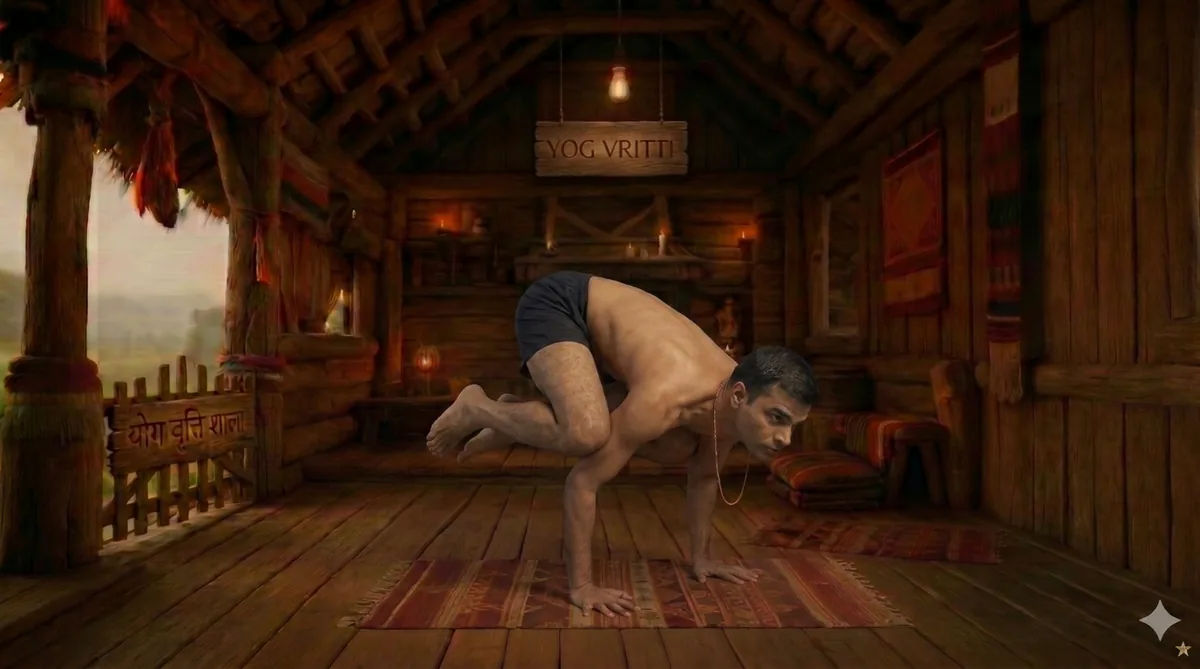
Bakasana is a powerful arm balance that cultivates deep core strength and upper body stability, while teaching the subtle art of focused attention. This pose dynamically engages the anterior core muscles, shoulder girdle stabilizers, and arm extensors, creating a sensation of lightness and lift. Energetically, it awakens our inner fire (Manipura Chakra) and brings an upward flow of energy (Udana Vayu), challenging us to rise above perceived limitations. For teachers and students, it's a profound practice in building physical power, mental clarity, and unwavering confidence.
Crow Pose, also called Crane Pose is a classical yoga posture. Its Sanskrit name Bakasana translates word-for-word as: Baka (Crane / Heron) · Asana (Pose). In this posture, the body reverses the pull of gravity, bringing the hips or legs above the heart. The posture works to engage the core, open and strengthen the shoulders and strengthen the wrists. Engages core muscles deeply. Improves balance and coordination. Suitable for intermediate practitioners with foundational yoga experience, it is a meaningful addition to any practice, particularly beneficial for intermediate and athletes. A block and blanket can be used to make the posture more accessible and support correct alignment. Practitioners with pregnancy and hypertension should approach with care or consult a qualified teacher.
Muscles Worked
Core Muscles
Rectus Abdominis, Transverse Abdominis, Obliques
These deep muscles of your abdomen and waist, including the rectus abdominis and transverse abdominis, work synergistically to lift your pelvis and draw your knees towards your chest, creating a stable, strong foundation.
This profound engagement of the core creates an internal 'lift' that supports the spine and protects the lower back, allowing the body to feel light.
Yogically, this activation is akin to engaging the bandhas, awakening Manipura Chakra and building inner strength, courage, and self-discipline.
It’s the engine that powers the lift, transforming effort into effortless grace.
Shoulder Stabilizers
Deltoids, Rotator Cuff (Supraspinatus, Infraspinatus, Teres Minor, Subscapularis)
The large muscles capping your shoulders (deltoids) and the deeper stabilizing muscles (rotator cuff) are actively engaged to broaden the collarbones and lift the chest away from the floor.
This intelligent action creates space in the neck and upper back, preventing compression and allowing the shoulder joint (glenohumeral joint) to remain stable and strong.
A steady, engaged shoulder girdle provides a powerful platform for the pose, fostering a sense of grounded confidence and an open heart.
This allows for an unrestricted flow of prana through the upper body, alleviating tension held around the heart center.
Triceps
Triceps Brachii
The muscles on the back of your upper arms (triceps brachii) are strongly engaged to extend and straighten your elbows, actively pushing the floor away and lifting your body.
This sustained isometric contraction is crucial for creating the necessary height and stability to balance, distinguishing Bakasana from the bent-arm Kakasana.
This physical effort cultivates tapas, the inner fire of discipline and purification, transforming mental resolve into physical action.
It channels energy upwards, helping to overcome inertia and cultivate a feeling of lightness and elevation.
Wrist Flexors
Flexor Carpi Radialis, Flexor Carpi Ulnaris
The muscles on the underside of your forearms (flexor carpi radialis and ulnaris) work to stabilize the wrist joint, preventing hyperextension and distributing the body's weight evenly across the entire palm.
This active engagement protects the delicate wrist bones (carpals) and ligaments, ensuring a strong, resilient foundation for the balance.
A mindful connection through the hands, pressing down through the fingertips and the base of the index finger (hasta bandha), grounds the pose and channels energy from the earth.
This cultivates a deep awareness of our connection to the ground, even as we lift, fostering both stability and lightness.
Joints Mobilized
Wrist Joint
weight bearingThe complex wrist joint, comprised of the radiocarpal and intercarpal joints, bears significant body weight in Bakasana, requiring strength and intelligent activation to prevent injury.
The even distribution of pressure across the entire palm, from the heel of the hand to the fingertips, is vital for joint protection and stability, preventing undue stress on any single point.
Regular, mindful practice in arm balances strengthens the supporting musculature and connective tissues around the wrist, improving its resilience and range of motion.
This builds a profound sense of connection to the earth, translating into greater stability and ease in all daily movements.
Elbow Joint
stabilizingThe elbow joint, formed by the humerus, ulna, and radius, is held in full extension in Bakasana, with the triceps actively working to maintain straight arms and prevent collapse.
It's crucial to maintain a subtle micro-bend, avoiding locking the joint, to protect the cartilage and allow for dynamic muscular engagement rather than passive hanging.
This active, yet fluid, extension of the arms creates a powerful channel for energy flow, symbolizing unwavering determination and clear intention.
Over time, this conscious engagement builds strength and resilience in the elbows, contributing to overall upper body integrity.
Shoulder Joint
stabilizingThe shoulder joint (glenohumeral joint) is actively stabilized by the surrounding muscles, particularly the rotator cuff, to prevent the upper arm bone from collapsing into the shoulder socket.
This intelligent engagement creates a broad and lifted chest, preventing slouching and protecting the delicate structures of the shoulder girdle.
This action brings a sense of spaciousness and openness to the upper body, allowing the breath to flow more freely and releasing tension held in the neck and shoulders.
Consistent practice builds strength and mobility in the shoulders, fostering a feeling of freedom and lightness.
Hip Joint
mobilizingThe hip joints (coxal joints) are deeply flexed in Bakasana, bringing the knees high onto the upper arms or into the armpits, requiring flexibility and strength in the groin and hip flexors.
This deep flexion creates leverage, allowing the weight of the legs to be supported and the core to engage more effectively, contributing to the lift.
The ability to draw the knees in close to the body signifies a drawing inward of energy and attention (pratyahara), focusing the mind.
With regular practice, this action helps to mobilize the hip joints, improving their range of motion and releasing tension in the inner thighs and groins.
Organ & System Benefits
Abdominal Organs
The deep engagement of the core muscles in Bakasana creates a gentle, sustained compression of the abdominal organs, including the stomach, intestines, and liver.
This internal massage stimulates circulation within the abdominal cavity, aiding digestion and promoting the healthy functioning of these vital organs.
Yogically, this compression awakens 'agni' (digestive fire) in the Manipura Chakra, enhancing metabolism and the assimilation of both physical nourishment and life experiences.
It helps to tone the entire digestive system, fostering vitality and well-being.
Brain
As a mild inversion, Bakasana subtly reverses the gravitational pull on the head, encouraging a fresh, oxygenated blood flow to the brain and scalp.
This increased circulation can enhance mental clarity, focus, and cognitive function, helping to clear mental fog.
This gentle inversion also helps to calm the nervous system, reducing mental fatigue and promoting a sense of inner peace and equilibrium.
It offers a fresh perspective, literally, helping to quiet the mind's incessant chatter.
Nervous System
The intense concentration and singular focus required to balance in Bakasana draws the mind inward, effectively initiating a state of pratyahara (withdrawal of the senses) and dharana (concentration).
This focused attention helps to quiet the incessant fluctuations of the mind (chitta vritti), shifting the nervous system from a state of sympathetic arousal (fight-or-flight) towards a more parasympathetic (rest-and-digest) response.
The steady gaze (drishti) further anchors the mind, cultivating a profound sense of presence and inner calm amidst the physical challenge.
This practice trains the nervous system to remain steady and composed, even under pressure, fostering mental resilience.
Successfully navigating the perceived challenge of Bakasana builds a profound sense of self-efficacy and reduces anxiety related to perceived physical limitations.
By consciously engaging strength and balance, the practitioner learns to trust their body and mind, fostering a sense of accomplishment that positively impacts emotional regulation.
This mastery over the physical form translates to greater resilience and equanimity in facing life's challenges off the mat.
It cultivates an inner steadiness that helps to regulate the subtle energies (prana) within the body, leading to greater emotional balance.
Mental & Emotional
Bakasana demands unwavering mental focus and concentration, drawing the practitioner's awareness entirely into the present moment, free from external distractions.
The challenge of maintaining balance requires a quiet, alert mind, thereby cultivating dharana (concentration) and preparing the mind for deeper meditative states.
This intense engagement helps to still the fluctuations of the mind, offering a profound sense of mental clarity and presence.
It trains the mind to be steady and sharp, an invaluable skill for all aspects of life.
Conquering the initial apprehension and fear of falling often associated with arm balances is a significant mental hurdle in Bakasana, leading to a profound boost in confidence and self-belief.
Each successful lift off the ground reinforces the idea that perceived limitations can be overcome with consistent effort, intelligent action, and a calm, determined mind.
This mental fortitude, developed through dedicated practice on the mat, translates into greater courage and resilience in navigating life's challenges off the mat.
It truly empowers the practitioner to face fears and trust their inner strength.
Because of Its Shape
balance
Arm balances like Bakasana build immense upper body and core strength, transforming the arms into strong, intelligent pillars of support.
This requires a precise alignment of bones and an intelligent, integrated engagement of muscles, teaching the entire body to work as a unified whole.
Yogically, arm balances cultivate a sense of lightness, agility, and freedom, challenging our perception of gravity and empowering us to lift beyond our perceived limitations.
They awaken a profound sense of inner power and self-reliance.
Although not a full inversion, the head is lower than the hips in Bakasana, gently reversing the gravitational pull on the lower body and internal organs.
This encourages a fresh, oxygenated blood flow to the upper body and head, revitalizing the brain and endocrine glands, and promoting mental clarity.
Energetically, inversions are said to reverse the flow of apana vayu (downward energy), bringing energy upwards and promoting a shift in perspective.
This subtle inversion helps to calm the nervous system and refresh the mind, offering a new way of seeing.
The deep hip flexion and bringing the knees high onto the upper arms in Bakasana incorporate elements of a forward fold, drawing the body inward and fostering introspection.
This internal focus helps to quiet the mind and connect with inner awareness, promoting a sense of groundedness and calm even within a challenging balance.
This aspect of the pose encourages pratyahara, the withdrawal of the senses from external distractions, leading to deeper self-reflection and inner peace.
It helps to soothe the nervous system and bring a quietness to the mind.
Fascial Lines
The intricate web of connective tissue (fascia) throughout the body plays a crucial role in Bakasana, particularly in integrating the anterior fascial lines of the core, arms, and shoulders.
This pose strengthens and integrates the superficial and deep front lines, creating a cohesive lift and stability from the ground (hands) through the core to the upper body.
By consciously engaging this fascial network, the body learns to distribute tension and support efficiently, releasing old patterns of holding and facilitating a more fluid and integrated movement.
This opening of fascial pathways allows for a freer flow of prana, enhancing overall vitality and ease.
Breathing & Respiratory
In Bakasana, the deep engagement of the core muscles and the slight compression of the abdomen can initially restrict the natural flow of diaphragmatic breathing.
However, with practice, the pose encourages a refined, subtle breath (ujjayi pranayama) that supports stability and focus rather than disrupting it.
The challenge of maintaining balance while consciously breathing deeply trains the practitioner to find stillness and expand their breath capacity even under physical exertion, calming the nervous system.
This mindful breathing cultivates a steady mind and a resilient spirit, allowing prana to flow freely and support the pose from within.
Anatomical Caution
Teachers should be acutely mindful of students with any wrist, elbow, or shoulder issues, ensuring proper alignment and sufficient foundational strength before attempting Bakasana.
Encourage students to listen to their bodies with intelligence (buddhi), using props like a folded blanket under the head for safety or blocks under the hands for added lift, and to never force the pose.
The emphasis is always on intelligent effort (tapas) and gradual, consistent progress, not a sudden, potentially injurious achievement, prioritizing safety and awareness above all else.