Benefits· लाभ
What Chair Pose does for you
उत्कटासन
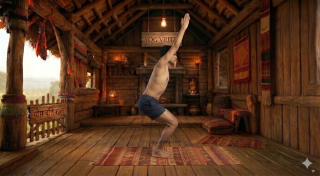
Chair Pose, or Utkatasana, is a foundational standing posture that deeply roots the practitioner while extending the spine skyward. It powerfully strengthens the entire lower body, particularly the quadriceps and glutes, while demanding profound engagement from the core stabilizers and the back extensors.
Muscles
- Quadricepsstrengthens
- Glutesstrengthens
- Core musclesstabilises
- Erector Spinaestrengthens
Joints
- Kneesstabilises
- Hipsmobilises
- Anklesstabilises
- Spinedecompressing
Inside the body
- Abdominal Organs
- Heart and Circulatory System
- Lungs and Respiratory System
- Breathing
Mind
Chair Pose is a powerful teacher of mental fortitude and perseverance, directly challenging the mind to remain steady when the body feels taxed.
Take care
Teachers should always guide students to protect their knees by ensuring they do not sink their hips lower than their knees, and by keeping their knees tracking over their ankles, not collapsing inward or splaying outward.
For individuals with existing knee injuries or severe low back pain, modifications such as reducing the depth of the squat or using a chair for support are essential. Always encourage students to listen to their bodies and prioritize safety over depth, fostering a practice of mindful self-care.
Muscles
Quadriceps
StrengthensVastus medialis, lateralis, intermedius, Rectus femoris
These powerful muscles on the front of your thighs are intensely engaged in Chair Pose, working concentrically to maintain the deep knee bend against gravity.
Read moreShow less
They bear the majority of your body weight, building significant strength and endurance in the legs.
This engagement cultivates tapas, the inner heat and discipline, fostering a sense of capability and resilience in the face of challenge.
Glutes
StrengthensGluteus maximus, medius
The muscles of your buttocks are actively recruited to support the hips and externally rotate the thighs slightly, helping to stabilize the pelvis and protect the lower back.
Read moreShow less
The Gluteus maximus, in particular, works to extend the hip and control the descent, supporting the powerful action of the quadriceps.
This activation creates a stable foundation, allowing the upward lift of the spine and a feeling of grounded strength from the pelvis.
Core muscles
StabilisesTransversus Abdominis, Multifidus, Obliques
Your deep abdominal and back muscles are crucial for stabilizing the trunk and maintaining the length of the spine as the hips descend.
Read moreShow less
The Transversus Abdominis compresses the abdominal contents, supporting the lumbar spine, while the Multifidus muscles articulate and stabilize individual vertebrae.
This integrated core engagement protects the lower back and creates a sense of central stability, allowing the breath to flow more freely and fostering a feeling of inner support and integrity.
Erector Spinae
StrengthensIliocostalis, Longissimus, Spinalis
These long muscles running alongside your spine work synergistically to extend and stabilize the vertebral column, counteracting the forward pull of gravity as you sit back.
Read moreShow less
They create the upward lift and length through the torso, preventing slouching and maintaining the natural curves of the spine.
This active extension promotes an open chest and a lifted heart, embodying a sense of dignity and expansive energy even in a challenging posture.
Joints
Knees
StabilisesThese joints undergo significant flexion and bear considerable weight in Chair Pose, requiring careful alignment to prevent undue stress.
Read moreShow less
The quadriceps muscles work to stabilize the patella (kneecap) and control the degree of flexion, while the instruction to track the knees over the ankles protects the joint from shearing forces.
Through mindful engagement, this pose strengthens the musculature around the knees, enhancing their stability and mobility over time, leading to a greater sense of confidence in movement.
Hips
MobilisesThe hip joints are deeply flexed in Utkatasana, with the femurs (thigh bones) moving into the acetabulum (hip socket), requiring both mobility and stability.
Read moreShow less
The gluteal muscles and outer thigh muscles work to stabilize the femoral head within the socket, preventing internal rotation and promoting a broad sacrum.
This deep flexion, coupled with active engagement, helps to mobilize the hips, releasing tension often stored in the pelvic region and allowing for a greater sense of freedom and lightness in the lower body.
Ankles
StabilisesThe ankle joints are primarily in a neutral to slight dorsiflexion position, acting as a crucial foundation for the entire posture.
Read moreShow less
The muscles of the lower leg, particularly the tibialis anterior, work to stabilize the ankles and arches of the feet, ensuring an even distribution of weight through the soles.
This active rooting through the feet cultivates a strong connection to the earth, enhancing balance and proprioception, allowing the practitioner to feel deeply grounded and secure.
Spine
DecompressingWhile the lower body is in flexion, the spine is actively extended and lengthened in Chair Pose, particularly the lumbar and thoracic regions.
Read moreShow less
The erector spinae muscles work to lift the torso away from the pelvis, creating space between the vertebrae and decompressing the spinal discs.
This dual action of lower body strength and spinal length brings a sense of inner spaciousness and uprightness, counteracting the compressive effects of gravity and promoting a feeling of lightness and vitality throughout the trunk.
Inside the body
Abdominal Organs
The deep squat position of Chair Pose creates a gentle, sustained compression on the abdominal organs.
Read moreShow less
This subtle internal massage, combined with the increased blood flow to the core muscles, stimulates peristalsis and enhances digestive function.
Yogically, this compression helps to stoke agni, the digestive fire, promoting efficient assimilation and elimination, leading to a feeling of lightness and inner cleanliness.
Heart and Circulatory System
Holding Chair Pose demands significant effort from the large muscle groups of the legs, increasing the heart rate and strengthening the cardiovascular system.
Read moreShow less
As the muscles work, they require more oxygenated blood, prompting the heart to pump more efficiently.
This cardiovascular demand builds endurance and stamina, both physically and energetically, enhancing the flow of prana throughout the body and invigorating the entire system.
Lungs and Respiratory System
While challenging, the upright spine and open chest in Chair Pose encourage deeper, fuller breaths, especially with conscious effort.
Read moreShow less
The engagement of the core muscles supports the diaphragm, allowing for more expansive movement and increased lung capacity.
This mindful breathing in a strenuous pose trains the respiratory system to maintain calm and efficiency under duress, linking the physical effort to a steady, life-giving flow of prana.
Breathing
In Chair Pose, the deep squat and upright torso naturally encourage diaphragmatic breathing, as the engagement of the core muscles supports the expansion of the lower ribs.
Read moreShow less
While the physical exertion can initially make the breath feel shallow, conscious effort can deepen and lengthen both the inhalation and exhalation, particularly with Ujjayi pranayama.
This steady, audible breath helps to regulate the nervous system, allowing the practitioner to find a sense of calm amidst the physical challenge.
The rhythmic flow of breath becomes a powerful anchor, drawing attention inward and transforming the effort into a meditative experience, cultivating inner fire (agni) and sustained energy (prana).
Fascia (connective tissue)
The extensive fascial network, a continuous web of connective tissue wrapping every muscle, organ, and bone, is deeply engaged and organized in Chair Pose.
Read moreShow less
The Superficial Front Line and Superficial Back Line are simultaneously challenged: the front line of the body (quadriceps, abdominals) is strengthened, while the back line (hamstrings, glutes, erector spinae) is actively engaged to support and lengthen.
This integrated action helps to release fascial restrictions in the hips and lower back, promoting greater fluidity and reducing patterns of stiffness.
Energetically, this work on the fascia helps to open the subtle energy channels (nadis), allowing prana to circulate more freely, releasing stored tension and fostering a sense of expansive well-being.
Mind and nervous system
- Nervous system
As you sink into Chair Pose, the initial effort can activate the sympathetic nervous system, creating a feeling of challenge and heightened awareness.
Read moreShow less
However, with sustained breath and focused attention, the pose becomes an opportunity to consciously transition towards a more parasympathetic state, cultivating inner calm despite external exertion.
This practice of finding steadiness in intensity develops resilience, teaching the nervous system to respond with composure rather than reactivity.
The deep engagement of large muscle groups in the legs sends a rich stream of proprioceptive feedback to the brain, enhancing body awareness and grounding the practitioner in the present moment.
Read moreShow less
This heightened connection to the physical body helps to quiet the fluctuations of the mind (chitta vritti), drawing attention inwards and fostering a state of mindful presence.
The consistent feedback helps to integrate the body's various parts into a cohesive whole, promoting a sense of inner harmony.
The focused concentration required to maintain alignment and depth in Chair Pose trains the nervous system to sustain attention, building mental fortitude.
Read moreShow less
By deliberately choosing to hold the pose and breathe through the sensation, the practitioner strengthens the neural pathways associated with self-regulation and perseverance.
This conscious effort to remain steady amidst challenge creates a powerful energetic shift, transforming perceived difficulty into a source of inner strength and unwavering resolve.
- Mind & mood
Chair Pose is a powerful teacher of mental fortitude and perseverance, directly challenging the mind to remain steady when the body feels taxed.
Read moreShow less
As the legs begin to fatigue, the mind is invited to observe sensations without immediate reaction or judgment, cultivating a deep sense of inner resilience and the ability to sustain effort with grace.
This practice directly translates to facing life's challenges with greater equanimity and an unwavering spirit.
The act of deliberately sinking the hips while simultaneously lifting the chest and spine demands a unique quality of focused attention (dharana) and internal awareness.
Read moreShow less
This dual action of grounding and uplifting helps to integrate the often-disparate parts of our mental landscape, fostering a sense of wholeness and centeredness.
By consciously aligning the physical body, the mind learns to align itself, bringing greater clarity and purpose to thought and action.
Through sustained holding, Utkatasana cultivates the quality of sthira (steadiness) and sukham (ease) in the mind, even amidst physical intensity.
Read moreShow less
The practitioner learns to find a point of balance between effort and surrender, observing the edges of their perceived limitations without pushing past them recklessly.
This mindful approach builds self-awareness and self-compassion, leading to a profound sense of inner stability and quiet confidence that extends beyond the mat.
Because it is a standing pose
Standing poses, like Chair Pose, are fundamental for cultivating a strong connection to the earth and developing foundational strength in the legs and core.
Read moreShow less
They require active engagement of the entire lower body, building muscular endurance and bone density.
This grounding action helps to stabilize the root chakra (Muladhara), fostering a deep sense of security, stability, and belonging in the world.
The upright nature of standing poses challenges and improves balance and coordination by engaging the proprioceptors in the feet, ankles, and legs.
Read moreShow less
The body constantly makes micro-adjustments to maintain equilibrium, enhancing neuromuscular communication.
This increased physical awareness translates into mental steadiness, helping to quiet a restless mind and bring a sense of centeredness and presence.
Standing poses help to align the skeletal structure against gravity, promoting good posture and creating space in the joints.
Read moreShow less
By strengthening the postural muscles of the back and core, they counteract the effects of prolonged sitting and slouching.
Energetically, they allow prana to flow freely upwards through the central channel, invigorating the entire system and fostering a sense of upliftment and vitality.