6
Muscles
4
Joints
2
Organs
2
Mental
Four-Limbed Staff Pose
चतुरङ्ग दण्डासन
Chaturanga Dandasana is far more than a push-up; it's an intelligent descent that integrates the entire body into a cohesive unit of strength and stability. It builds profound power in the shoulder girdle and core, teaching us to work against gravity with grace and precision. This pose cultivates the upward-moving energy (udana vayu) through active engagement of the arms and chest, while grounding us through the legs and pelvis, fostering a deep sense of internal fortitude and unwavering presence. It is a vital building block for more advanced arm balances and inversions, refining our awareness of anatomical alignment and energetic flow.
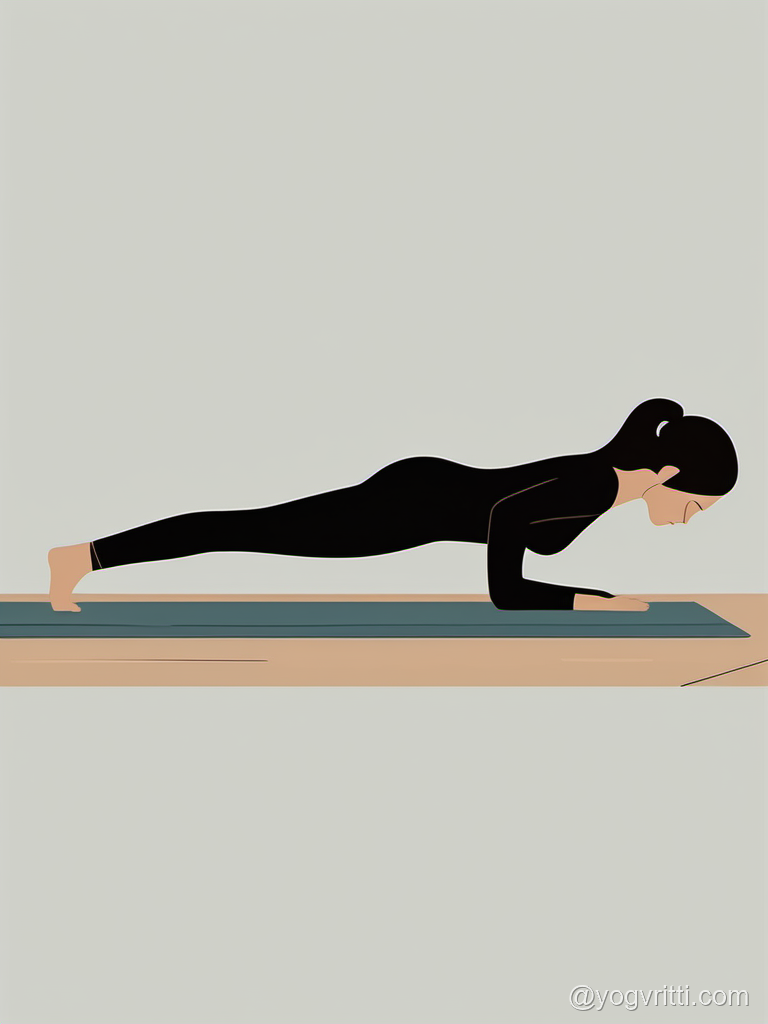
Four-Limbed Staff Pose, also called Chaturanga is a classical yoga posture whose Sanskrit roots break down as: Chatur (Four) · Anga (Limbs) · Danda (Staff) · Asana (Pose). In this posture, the body engages the posterior chain against the gentle resistance of gravity. Strengthens arms, wrists, and shoulders. Tones the abdominal muscles and strengthens the core. Improves posture and builds full-body endurance. It is particularly valued for improving overall posture and building full-body strength. Suitable for intermediate practitioners with foundational yoga experience, it is an excellent warm-up, particularly beneficial for athletes and runners. A block and wall can be used to make the posture more accessible and support correct alignment. Practitioners with wrist injury and shoulder injury should approach with care or consult a qualified teacher.
Helps with
Muscles Worked
Triceps
Triceps Brachii
These powerful muscles run along the back of your upper arms, connecting your shoulder blade and humerus to your forearm bone (ulna).
In Chaturanga, they work eccentrically, lengthening under tension to control your descent, then concentrically to hold the pose, preventing you from collapsing to the floor.
This controlled work builds incredible arm strength and teaches intelligent engagement, which is crucial for protecting the elbows in daily life and other arm balances.
Deltoids
Deltoideus
Forming the rounded cap of your shoulder, the deltoids are critical for stabilizing the shoulder joint, particularly the anterior (front) and middle heads.
In this pose, they actively hold the upper arm bone (humerus) in place, preventing it from drooping or internally rotating, which can strain the rotator cuff.
This engagement cultivates a sense of broadness and openness across the collarbones, allowing the breath to flow more freely into the upper chest, inviting a feeling of courage and expansion.
Pectorals
Pectoralis Major and Minor
Located across your chest, these muscles are vital for drawing the upper arms towards the midline of the body (adduction) and rotating them inwards, but in Chaturanga, their role is more nuanced.
They work with the serratus anterior to stabilize the shoulder blades against the back of the rib cage, preventing winging, while the chest itself remains broad and open.
This intelligent engagement strengthens the front of the body without collapsing the chest, supporting the heart space and fostering a sense of inner confidence.
Rectus Abdominis
Rectus Abdominis
Often called the “six-pack” muscles, these run vertically down the front of your abdomen, connecting your ribs to your pelvis.
In Chaturanga, they engage powerfully to prevent the lower back from arching excessively, keeping the torso long and stable, much like a plank.
This core stability protects the spine and integrates the upper and lower body, creating a unified flow of energy (prana) from the ground up, making the entire pose feel lighter and more integrated.
Obliques
External and Internal Obliques
These muscles wrap around the sides of your waist, connecting your ribs to your pelvis and working to rotate and flex the trunk.
In Chaturanga, they work synergistically with the rectus abdominis to create a strong, stable “corset” around your midsection, preventing any sagging or twisting of the torso.
This deep engagement cultivates an inner fire (agni) and a sense of centeredness, allowing the energy to lift through the crown of the head even as the body works intensely.
Quadriceps
Quadriceps Femoris
These four powerful muscles on the front of your thighs extend your knees and are crucial for stabilizing the legs.
In Chaturanga, they are actively engaged to lift the kneecaps and firm the thighs, preventing the hips from sagging towards the floor.
This activation creates a strong foundation through the legs, which in yogic terms, roots the lower body and allows the energy (apana vayu) to be drawn upwards, supporting the lightness and integrity of the entire pose.
Joints Mobilized
Shoulder Girdle
weight bearingThe shoulder girdle, comprising the ball-and-socket joint of the upper arm and shoulder blade (glenohumeral) and the floating articulation of the shoulder blade on the rib cage (scapulothoracic), bears significant weight in Chaturanga.
Precise alignment is critical to prevent strain, requiring the shoulder blades to draw down the back and hug the ribs, stabilizing the humerus in the socket.
This intelligent engagement protects the delicate shoulder joint from compression and teaches a refined awareness of how to create space and strength simultaneously, fostering a sense of spaciousness in the upper chest.
Elbow Joints
weight bearingThese hinge joints, connecting the upper arm bone to the forearm bones (humeroulnar and humeroradial), are deeply engaged in a controlled flexion during Chaturanga.
The triceps work eccentrically to regulate the bend, ensuring the elbows remain directly over the wrists and close to the body, preventing hyperextension or splaying.
This focused work strengthens the surrounding musculature, enhancing joint integrity and teaching the practitioner to maintain healthy joint alignment, which is vital for preventing injuries and cultivating a stable foundation for arm support.
Wrist Joints
weight bearingThe complex array of bones and ligaments at your wrists (radiocarpal and intercarpal joints) acts as the primary point of contact with the ground, bearing the entire body's weight.
Distributing this weight evenly through the palms, with fingers spread wide and pressing down, stabilizes the wrist joints and prevents excessive compression.
This action strengthens the muscles of the forearms and hands, cultivating a firm grip and a sense of unwavering connection to the earth, allowing energy to flow freely from the ground through the arms.
Sacroiliac Joint
stabilizingLocated at the base of your spine where your sacrum meets your pelvis, the SI joint is a crucial junction for transmitting forces between your upper and lower body.
In Chaturanga, strong core engagement, particularly of the transverse abdominis and pelvic floor, stabilizes this joint by preventing the pelvis from tilting anteriorly (forward) or posteriorly (backward).
This intelligent stabilization protects the lower back and creates a solid foundation for the entire torso, fostering a sense of deep grounding and integration throughout the spine.
Organ & System Benefits
Abdominal Organs
The strong engagement of the abdominal muscles in Chaturanga creates a gentle, sustained compression of the internal organs (stomach, liver, spleen, intestines).
This mild compression can stimulate blood flow as the muscles contract and release, promoting better circulation and aiding in the healthy functioning of the digestive and eliminative systems.
From a yogic perspective, this action helps to stoke the digestive fire (agni), enhancing metabolism and purifying the internal landscape, leading to a feeling of lightness and vitality.
Heart and Lungs
While not directly compressed, the prone position and the intense muscular engagement in Chaturanga demand a focused and steady breath.
The broadness maintained across the chest, even as the arms work, creates space for the lungs to expand, encouraging full, diaphragmatic breathing.
This mindful engagement supports cardiovascular health by strengthening the surrounding musculature, and yogically, it helps to balance the heart chakra (anahata), fostering courage and resilience even under physical exertion.
Nervous System
The intense focus required to maintain precise alignment and control the descent in Chaturanga Dandasana brings the mind into a state of heightened concentration, drawing awareness away from external distractions.
This sustained attention to the breath and subtle body adjustments helps to quiet the fluctuations of the mind (chitta vritti), promoting a sense of mental clarity and presence.
The challenge of the pose, when met with steady breath, activates the sympathetic nervous system initially, but then calms it through controlled effort, leading to a profound sense of inner stability.
The deep engagement of the core and the rooting through the hands and feet send proprioceptive feedback to the brain, enhancing body awareness and grounding the nervous system.
This constant internal dialogue between the body and brain cultivates a feeling of being fully embodied and present in the moment.
By consciously coordinating breath with movement and stillness, we learn to regulate our internal state, fostering a sense of calm resilience even when faced with physical intensity.
Mental & Emotional
Chaturanga Dandasana demands unwavering focus and mental fortitude, teaching us to meet challenge with a calm and steady resolve rather than collapsing under pressure.
The precise alignment and controlled descent require a deep level of concentration (dharana), drawing the mind inwards and away from external distractions.
This cultivation of mental discipline translates into greater clarity and resilience in daily life, helping us to navigate difficult situations with greater poise.
The act of holding oneself suspended against gravity, just inches from the earth, builds immense inner strength and self-trust.
It requires us to overcome the mental tendency to give up when faced with physical exertion, fostering a deep sense of empowerment and capability.
This practice of pushing beyond perceived limitations, while respecting the body's current capacity, cultivates courage and a profound belief in one's own inner resources, embodying a warrior's spirit.
Because of Its Shape
prone
The prone position, lying face down and parallel to the earth, immediately brings a sense of grounding and connection to the support beneath us.
In Chaturanga, this foundational connection is challenged as we lift and suspend the body, but the awareness of the earth remains.
This cultivates stability and a deep appreciation for the solid ground, both literally and metaphorically, allowing us to feel more rooted even in challenging circumstances.
Working against gravity in a prone position, especially in a suspended state like Chaturanga, builds incredible strength in the posterior chain and core, which are often neglected.
It teaches the body to lift and engage from its center, rather than collapsing, creating a strong energetic lift throughout the spine.
This action strengthens the entire trunk, enhancing core stability and improving overall posture, countering the effects of prolonged sitting and forward-bending habits.
Fascial Lines
The intricate web of connective tissue (fascia) that envelops every muscle, bone, and organ throughout your body is deeply engaged and integrated in Chaturanga.
Primarily, the superficial back line (which runs from the soles of your feet up the back of your legs, torso, and neck) and the deep front line (from the inner arches of the feet, inner thighs, pelvis, and up the front of the spine) are activated and strengthened to maintain the pose's integrity.
This full-body engagement helps to release tension patterns held within the fascial matrix, promoting better glide and communication between tissues, thereby enhancing overall flexibility, strength, and energetic flow throughout the body's channels (nadis).
Breathing & Respiratory
In Chaturanga Dandasana, the intense muscular engagement, particularly in the core and chest, naturally encourages a more refined and controlled breath.
The challenge of holding the pose requires a steady, rhythmic breath, often leading to a slight lengthening of both inhalation and exhalation to sustain effort without strain.
This mindful breathing helps to calm the nervous system even amidst exertion, and cultivates an awareness of the diaphragm's role in stabilizing the trunk.
Practicing Ujjayi breath (victorious breath) here is particularly beneficial, as its gentle constriction in the throat helps to build internal heat (tapas) and maintain focus, allowing prana to be directed intelligently throughout the body.
Anatomical Caution
Teachers must be vigilant for students collapsing through the shoulders or sagging in the lower back, as this can strain the delicate rotator cuff muscles and lumbar spine.
Encourage students to keep elbows hugging in and shoulders away from the ears, using props like a block between the thighs or a wall for support, to build strength safely and prevent injury.
Remind them that alignment and integrity are paramount over depth.