Benefits· लाभ
What Crocodile Pose Arms Overhead does for you
Crocodile Pose Variation Arms Overhead · मकरसन भिन्नता हस्त शिरोपरि
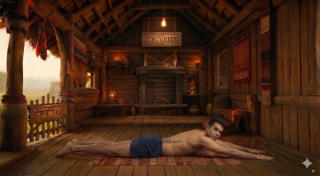
This deeply grounding prone posture, Crocodile Pose Variation Arms Overhead, invites a profound sense of surrender and release. By gently extending the spine and opening the anterior chest and shoulder girdle, it passively lengthens the posterior chain while creating space in the upper body.
Muscles
- Erector Spinaestrengthens
- Rhomboids & Trapeziusstabilises
- Anterior Deltoid & Pectoralis Majorstretches
- Triceps Brachiistretches
Joints
- Spinemobilises
- Shoulder Girdlemobilises
- Pelvisstabilises
Inside the body
- Lungs
- Abdominal Organs
- Breathing
Mind
This posture inherently cultivates a profound sense of stillness and surrender, as the body is fully supported by the earth with minimal muscular effort.
Take care
Teachers should advise practitioners with existing neck pain to support their forehead with a folded blanket or a soft block to maintain a neutral cervical spine, avoiding any strain.
Those with shoulder injuries should modify the arm position, perhaps keeping elbows bent or arms alongside the body, to ensure no discomfort. Pregnant individuals, particularly in later trimesters, should consult their healthcare provider or modify by placing a blanket roll under the chest/hips or opting for a side-lying variation to avoid sustained pressure on the abdomen.
Muscles
Erector Spinae
StrengthensSpinal Erectors
These long muscles running along either side of your spine from the pelvis to the skull are gently lengthened and passively strengthened here.
Read moreShow less
As you lie prone, gravity provides a subtle, sustained resistance, encouraging these muscles to release chronic tension and find a more extended state.
This unwinding along the spine facilitates the upward flow of prana (udana vayu), promoting vitality and openness throughout the central channel.
Regular practice helps to counteract the compressive forces of sitting, restoring natural spinal curves.
Rhomboids & Trapezius
StabilisesMid-Back Muscles
Located between your shoulder blades, these muscles are subtly engaged and stabilized as the shoulder girdle rests on the floor with arms extended overhead.
Read moreShow less
This gentle engagement helps to draw the shoulder blades down and away from the ears, creating a sense of width across the upper back.
From a yogic perspective, this action helps to open the heart center (anahata chakra), releasing stored emotional tension and fostering a feeling of spaciousness and ease.
Anterior Deltoid & Pectoralis Major
StretchesFront of Shoulders/Chest
These muscles, located at the front of your shoulder and across your chest, experience a gentle, sustained lengthening as the arms extend overhead.
Read moreShow less
This passive stretch helps to counteract the common postural tendency of rounded shoulders and a collapsed chest, which often stems from daily activities like sitting or driving.
Through this release, practitioners often feel a profound opening in the chest, allowing for deeper breathing and a sense of emotional liberation.
Triceps Brachii
StretchesBack of Upper Arm
Found on the back of your upper arm, these muscles are gently lengthened as the arms extend forward and overhead.
Read moreShow less
While not a primary focus, this subtle stretch contributes to the overall opening of the arm lines, promoting fluidity in the upper limbs.
Energetically, this encourages the unhindered flow of energy through the arms, supporting a sense of reaching out with clarity and intention.
Joints
Spine
MobilisesThe entire vertebral column experiences gentle mobilization and decompression in this prone position, allowing the natural curves of the spine to be supported by the earth.
Read moreShow less
Gravity assists in creating subtle space between the vertebrae, encouraging the discs to rehydrate and the spinal nerves to function optimally.
This subtle traction along the spine not only alleviates stiffness but also allows for a freer flow of prana, enhancing vitality and mental clarity.
Shoulder Girdle
MobilisesThe complex array of joints comprising the shoulder girdle, including where the shoulder blade meets the rib cage and the upper arm bone meets the shoulder blade, is gently mobilized and opened.
Read moreShow less
Extending the arms overhead encourages a more natural alignment and release of tension often held in this area.
This increased mobility translates to greater freedom in the upper body, reducing stiffness and promoting a feeling of lightness and unburdened movement.
Pelvis
StabilisesIn this posture, the pelvis is primarily stabilized, resting firmly against the earth, which brings a sense of grounding to the sacroiliac joints.
Read moreShow less
This stable foundation allows the muscles surrounding the hips and lower back to release their grip, promoting a subtle decompression within the pelvic girdle.
Yogically, this deep connection to the earth helps to activate and stabilize the root chakra (muladhara), fostering feelings of security, stability, and inner peace.
Inside the body
Lungs
The prone position with arms overhead subtly compresses the posterior aspect of the lungs while encouraging expansion in the anterior and lateral regions.
Read moreShow less
This gentle pressure against the back body prompts a more diaphragmatic breath, engaging the primary muscle of respiration more fully.
This deeper, more expansive breathing not only increases oxygen intake but also cultivates a profound sense of calm, allowing prana to permeate every cell.
Abdominal Organs
The gentle pressure of the floor against the abdomen provides a mild, passive massage to the digestive organs.
Read moreShow less
This subtle compression can stimulate peristalsis, aiding in digestion and elimination, and helps to release tension often held in the abdominal cavity.
From a yogic perspective, this gentle activation helps to balance samana vayu, the equalizing energy responsible for digestion and assimilation, promoting overall gut health and a sense of internal harmony.
Breathing
The prone position naturally encourages deeper, more diaphragmatic breathing, as the abdomen gently presses into the mat with each inhalation, prompting the diaphragm to descend fully.
Read moreShow less
This gentle resistance provides a tactile cue for the breath, making it easier to slow down and deepen the respiratory rhythm.
This posture beautifully complements pranayama practices focused on calming and lengthening the exhalation, such as Viloma Pranayama, as it intrinsically promotes a sense of release and surrender, preparing the mind for deeper meditative states.
Fascia (connective tissue)
This posture provides a gentle, yet comprehensive, stretch and release throughout the fascial network, particularly along the Superficial Front Arm Line and the Superficial Back Line of the torso.
Read moreShow less
As you extend your arms overhead and rest your body on the floor, the interconnected web of connective tissue that encases muscles, bones, and organs is encouraged to lengthen and hydrate.
This release of fascial restrictions improves overall body fluidity, enhances circulation, and in yogic terms, helps to clear energetic blockages, allowing prana to flow more freely and restore balance within the body's subtle channels (nadis).
Mind and nervous system
- Nervous system
The deep sense of grounding provided by lying prone, coupled with the gentle chest opening, immediately signals safety to the nervous system, initiating a shift towards the parasympathetic dominance.
Read moreShow less
This encourages the body's 'rest and digest' response, effectively downregulating the sympathetic 'fight or flight' mechanism often overactive in modern life.
Practitioners will feel a profound sense of calm wash over them, reducing anxiety and promoting deep relaxation.
By encouraging a slow, deep abdominal breath, this posture directly influences the vagus nerve, which plays a crucial role in regulating the nervous system.
Read moreShow less
The sustained, gentle pressure on the abdomen acts as a biofeedback mechanism, promoting rhythmic breathing that further calms the mind (chitta vritti nirodha).
This mindful engagement with the breath cultivates a state of inner quietude and presence, allowing for a deeper connection to one's inner self.
- Mind & mood
This posture inherently cultivates a profound sense of stillness and surrender, as the body is fully supported by the earth with minimal muscular effort.
Read moreShow less
This physical surrender naturally translates to a mental release, allowing the practitioner to let go of control, expectations, and the constant stream of mental chatter.
It's a powerful practice for cultivating patience and acceptance, fostering a quiet mind (pratyahara) that can rest in the present moment.
By turning the gaze inward and focusing on the subtle sensations within the body, Crocodile Pose Variation Arms Overhead encourages deep self-observation and introspection.
Read moreShow less
This shift in awareness from external distractions to internal experience is a foundational step in yogic philosophy, helping to reduce mental fragmentation and cultivate a unified sense of self.
It provides a sanctuary for the mind, allowing for mental restoration and clarity.
Because it is a backbend pose
Lying prone offers unparalleled grounding, allowing the entire front of the body to be supported by the earth, which is deeply comforting to the nervous system.
Read moreShow less
This direct connection fosters a sense of security and stability, inviting a profound release of muscular tension that often holds the body in an upright, defensive posture.
Yogically, it strengthens the connection to Muladhara Chakra, anchoring the practitioner and cultivating a sense of being fully held and supported.
This posture provides a subtle, passive extension through the thoracic spine, counteracting the common forward hunching caused by daily activities.
Read moreShow less
It gently encourages the natural curve of the upper back without active muscular effort, promoting spinal health and flexibility.
This subtle opening through the spine allows for an unhindered flow of prana, awakening a gentle energy that can uplift the spirit.
With arms extended overhead, the chest and rib cage are gently encouraged to expand, creating space across the collarbones and sternum.
Read moreShow less
This action directly addresses tightness in the anterior chest muscles, which often restrict breathing and contribute to feelings of anxiety or emotional constriction.
Energetically, this opening of the heart space (Anahata Chakra) cultivates feelings of courage, compassion, and emotional freedom, allowing for deeper self-expression.