6
Muscles
4
Joints
2
Organs
3
Mental
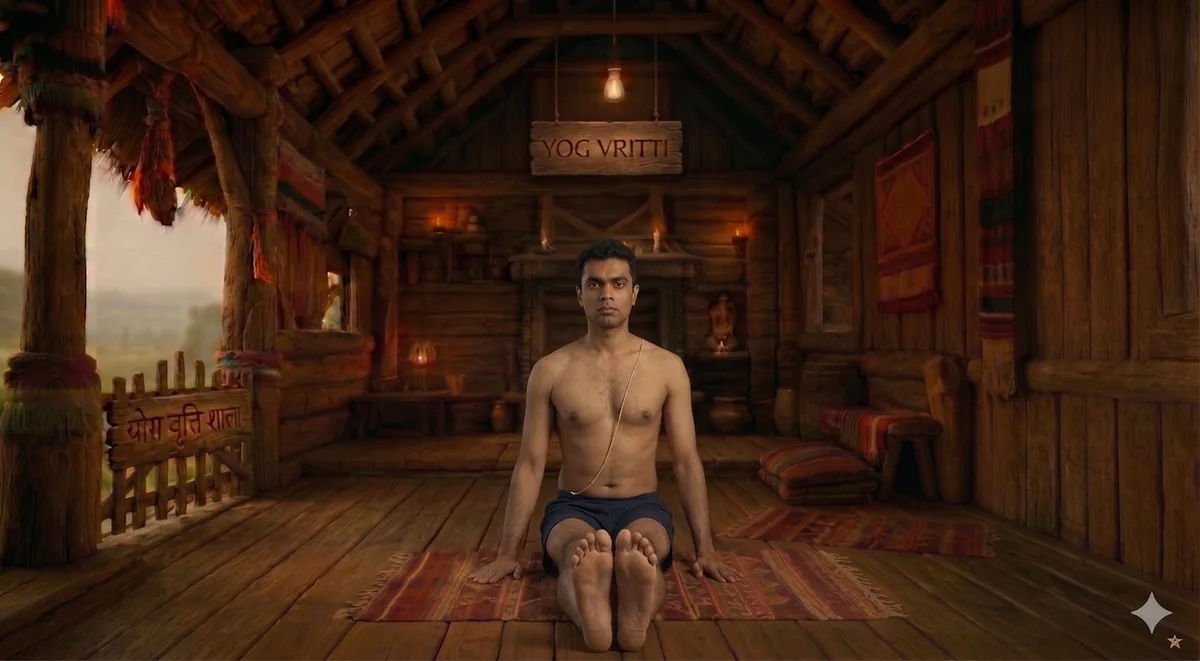
Staff Pose
दण्डासन
Dandasana, the Staff Pose, is a foundational seated asana that meticulously cultivates proper alignment and core strength from the ground up. It engages the entire posterior chain, gently lengthening the hamstrings and spine, while activating the quadriceps and deep core muscles to stabilize the trunk. This pose fundamentally establishes a stable base and an elongated axis, fostering profound awareness of posture and an unwavering sense of grounding. Through its precise engagement, Dandasana prepares the body and mind for more complex seated postures, instilling calm focus and structural integrity. It is an essential practice for developing the inner scaffolding of the body.
Staff Pose, also called Dandasana is a classical yoga posture whose Sanskrit roots break down as: Danda (Staff / Rod) · Asana (Pose). In this posture, the body grounds through the sit bones while the spine rises tall. The posture works to lengthen the hamstrings, strengthen the quadriceps and engage the core. Improves posture and spinal alignment. Stretches the hamstrings and calves. It is particularly valued for building full-body strength and improving overall posture. Suitable for beginners and regular practitioners alike, it is an excellent warm-up, particularly beneficial for beginners and seniors. A blanket and wall can be used to make the posture more accessible and support correct alignment. Practitioners with hamstring injury should approach with care or consult a qualified teacher.
Helps with
Muscles Worked
Hamstrings
[Biceps femoris, Semitendinosus, Semimembranosus]
The powerful muscles running along the back of your thighs (hamstrings) receive a sustained, intelligent lengthening in Dandasana as you press your heels away and straighten your knees.
This action encourages a release of chronic tension often held from prolonged sitting, allowing the hip joint to find a neutral position.
Anatomically, this stretch occurs across both the hip and knee joints, promoting greater flexibility in the posterior chain.
Energetically, this release helps to clear blockages in apana vayu, fostering a deeper sense of groundedness and ease in the lower body.
Quadriceps
[Rectus femoris, Vastus lateralis, Vastus medialis, Vastus intermedius]
The muscles on the front of your thighs (quadriceps) engage actively in Dandasana, working to straighten the knees and lift the kneecaps towards the hips.
This isometric contraction stabilizes the knee joint and prevents hyperextension, creating a firm and intelligent foundation through the legs.
From a yogic perspective, this activation brings a sense of alertness and clarity to the lower limbs, channeling upward energy and preventing lethargy in the legs.
It's a subtle yet profound action that stabilizes the base of the pose.
Core Abdominals
[Transversus abdominis, Rectus abdominis, Obliques]
The deep muscles of your abdomen (transversus abdominis, rectus abdominis, obliques) are subtly engaged in Dandasana to support the lumbar spine and maintain an upright posture.
This gentle, inward drawing action creates a firm yet soft abdominal wall, preventing the lower back from rounding or collapsing.
Anatomically, this engagement stabilizes the pelvis and spine, providing a strong foundation for the upper body to lift.
Yogically, this cultivation of the core stimulates Samana Vayu, enhancing internal balance and centralizing our energetic awareness.
Spinal Erectors
[Erector Spinae group - Spinalis, Longissimus, Iliocostalis]
The long muscles running along either side of your spine (erector spinae) work diligently in Dandasana to lift and lengthen the torso, counteracting the pull of gravity.
This isometric contraction helps to restore the natural curves of the spine, particularly in the lumbar and thoracic regions, promoting optimal spinal health.
This sustained effort cultivates a sense of lightness and upward ascension, fostering an expansive quality in the chest and a clear, focused mind.
It is through these muscles that we experience the 'staff' like quality of the pose.
Hip Flexors
[Psoas Major, Iliacus]
While not actively stretching, the deep muscles at the front of your hips (psoas major and iliacus) are encouraged to release their habitual gripping in Dandasana as the pelvis finds a neutral position.
By maintaining a truly upright spine and not leaning back, we allow these muscles to lengthen passively and soften.
This release helps to alleviate tension that can contribute to lower back pain and stiffness, promoting a more fluid and unhindered connection between the torso and legs.
Energetically, this encourages a sense of letting go in the pelvic region, allowing for greater freedom in the hips.
Gluteal Muscles
[Gluteus Maximus, Medius, Minimus]
The muscles of your buttocks (gluteal muscles) are gently active in Dandasana, helping to stabilize the hip joints and ensure an even distribution of weight onto your sit bones.
Rather than gripping, the emphasis is on maintaining a neutral pelvis, allowing these muscles to soften and broaden.
This subtle engagement prevents the hips from externally rotating excessively and encourages a sense of groundedness through the pelvic floor.
Yogically, this cultivates a feeling of stability and support, allowing the energy to root downwards effectively.
Joints Mobilized
Hip Joints
mobilizingThe ball-and-socket joints of your hips (acetabulofemoral joints) are positioned in a neutral, slightly flexed state in Dandasana, allowing for optimal alignment of the pelvis.
This pose encourages the femoral heads to seat deeply within the hip sockets, promoting stability and healthy joint articulation.
Regular practice helps to maintain mobility and prevent stiffness in the hips, which can impact the lower back.
Energetically, this pose helps to release stagnation in the hip region, fostering a sense of freedom and openness.
Knee Joints
stabilizingYour knee joints (tibiofemoral and patellofemoral) are actively extended in Dandasana, with the quadriceps engaged to protect and stabilize them.
The action of pressing the heels away and lifting the kneecaps ensures proper tracking of the kneecap (patella) and alignment of the tibia and femur.
This mindful engagement strengthens the supporting musculature around the knees, promoting stability and preventing hyperextension.
The clarity and straightness cultivated in the knees translate to a focused and unwavering lower body.
Spine
decompressingThe entire length of your spine, particularly the lumbar and thoracic vertebral joints, experiences gentle decompression and lengthening in Dandasana.
By actively lifting the torso from the pelvis and engaging the spinal erectors, space is created between the intervertebral discs, alleviating compression.
This sustained effort strengthens the postural muscles, improving spinal integrity and preventing slouching.
Yogically, this upward lengthening aligns the central energy channel (sushumna nadi), promoting mental clarity and a feeling of inner lightness.
Ankle Joints
stabilizingYour ankle joints (talocrural joints) are held in a neutral dorsiflexion in Dandasana, with the feet flexed and heels pressing away.
This engagement helps to lengthen the Achilles tendons and the muscles of the calves, promoting flexibility in the ankles.
This action also grounds the lower body, creating a strong connection to the earth through the heels and the balls of the feet.
This mindful awareness of the feet enhances overall balance and proprioception, anchoring the body and mind.
Organ & System Benefits
Abdominal Organs
In Dandasana, the upright and stable posture of the torso provides a neutral environment for the abdominal organs.
The gentle engagement of the core muscles offers a subtle, internal support without active compression or twisting.
This allows for optimal function of the digestive system, as there is no undue pressure to impede organ activity.
Energetically, this stable environment helps to balance Samana Vayu, promoting healthy digestion and assimilation, and fostering a sense of internal harmony.
Lungs
The elongated and uncompromised spine in Dandasana allows for the full and unimpeded movement of your diaphragm and the expansion of your rib cage, creating optimal space for your lungs.
This encourages deeper, more complete breaths, enhancing oxygen intake and carbon dioxide release.
The expansive chest cultivates a sense of openness and vitality, directly impacting your prana (life force) and calming the nervous system.
This posture inherently supports a more mindful and restorative breathing pattern.
Nervous System
The steady, grounded foundation and the upright, expansive posture of Dandasana send signals of safety and stability to your brain, gently activating the parasympathetic nervous system.
This shift helps to calm the "fight or flight" response, reducing feelings of anxiety and promoting a profound sense of inner peace.
As the breath becomes more regulated and the body finds stillness, the mind's fluctuations (chitta vritti) begin to subside, allowing for deeper relaxation and mental clarity.
Dandasana is a master teacher of proprioception, the body's awareness of its position in space, as it demands precise, subtle adjustments to maintain alignment.
The sustained engagement of numerous muscle groups and the connection to the earth through the sit bones heighten your internal body map.
This heightened awareness brings your mind fully into the present moment, fostering dharana (concentration) and deepening your connection to the intelligence of your physical form.
Mental & Emotional
Dandasana inherently cultivates unwavering focus and concentration (dharana) as you meticulously align each part of your body.
The subtle yet constant effort required to maintain spinal length, leg engagement, and a neutral pelvis keeps the mind tethered to the present moment and the sensations within the pose.
This practice of sustained attention strengthens mental discipline, gradually quieting the external chatter and preparing the mind for deeper states of meditation.
It teaches us to be fully present with what is.
Holding Dandasana with integrity, especially as the hamstrings lengthen, requires a profound cultivation of patience and inner steadiness (sthira).
It's a practice of meeting sensation without reacting, breathing through subtle discomfort to find moments of ease (sukham).
This embodied understanding of "sthira sukham asanam" teaches us to approach challenges in life with a calm and resilient mindset, fostering inner strength and a non-reactive presence.
Dandasana is a powerful anchor, fostering a deep sense of grounding and mental centering.
The firm connection of the sit bones to the earth provides a stable foundation, counteracting feelings of restlessness or being unmoored.
This physical stability translates directly into a more centered and balanced mental state, allowing scattered thoughts to settle and bringing a profound sense of inner calm.
It establishes the base from which all other actions can arise with clarity.
Because of Its Shape
seated
This fundamental seated shape provides a stable base directly connected to the earth, allowing the spine to lengthen upwards with less muscular effort than standing poses.
Anatomically, it encourages a neutral pelvis and optimal spinal alignment, which are crucial for overall posture and internal organ health.
Energetically, this shape cultivates apana vayu (downward-moving energy), fostering a profound sense of rootedness and inner calm, making it ideal for contemplative practices.
The deliberate action of lengthening the spine upwards from the tailbone to the crown of the head actively creates space between each vertebra.
This gentle, self-induced traction helps to decompress the intervertebral discs and strengthens the deep postural muscles, significantly improving overall spinal health and upright posture.
Yogically, this vertical alignment activates prana vayu, fostering mental clarity, alertness, and an expansive feeling in the chest and mind, connecting earth and sky.
Fascial Lines
In Dandasana, the intricate web of connective tissue known as fascia is gently elongated along the entire posterior chain, particularly the superficial back line.
As the hamstrings lengthen and the spine extends upwards, this fascial network, running from the soles of the feet up the back of the legs, pelvis, and spine, receives a sustained, intelligent stretch.
This release helps to unwind chronic tension patterns and adhesions within the fascial system, improving overall flexibility and allowing for a freer, more uninhibited flow of energy and movement throughout the entire body.
Breathing & Respiratory
Dandasana's upright and stable spinal alignment naturally creates optimal conditions for a full, expansive breath.
With the torso lifted and the rib cage unconstrained, the diaphragm has its full range of motion, inviting deeper inhalations and complete exhalations.
This pose is inherently conducive to a calm, even breath (sama vritti), which can be further enhanced with practices like Ujjayi pranayama.
The steady breath cultivated here calms the nervous system, deepens concentration, and supports the even distribution of prana throughout the body.
Anatomical Caution
Teachers should always prioritize spinal integrity over leg extension in Dandasana.
If students have very tight hamstrings, forcing the legs straight will invariably lead to rounding of the lower back, which can strain the lumbar spine.
Encourage them to sit on a folded blanket or block to elevate the hips, or even allow a soft bend in the knees, ensuring the spine remains long and neutral.
The pose is about establishing a strong, upright foundation, not achieving a particular shape at the expense of safety.