Benefits· लाभ
What Downward Dog One Leg Bent does for you
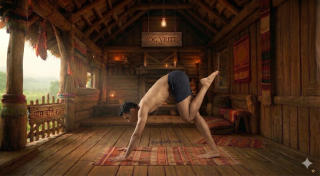
Downward-Facing Dog Variation One Leg Bent · अधो मुख श्वानासन भिन्नता एक पाद नमित
Downward Dog One Leg Bent is a foundational inversion that profoundly lengthens the entire posterior chain, particularly the hamstrings and calves, while simultaneously strengthening and opening the shoulders and core. This asymmetrical variation allows for a targeted, deep release in one leg, fostering greater flexibility and balance.
Muscles
- Hamstringsstretches
- Calvesstretches
- Shouldersstrengthens
- Corestabilises
Joints
- Hip Jointmobilises
- Knee Jointmobilises
- Shoulder Girdlemobilises
- Spinedecompressing
Inside the body
- Heart & Circulatory System
- Brain
- Abdominal Organs
- Breathing
Mind
Inverting the body physically shifts one's perspective, which in turn can inspire a fresh mental outlook on life's challenges.
Take care
Practitioners with existing shoulder injuries, particularly rotator cuff issues or impingement, must approach this pose with extreme caution, ensuring the shoulders are stable and not bearing excessive weight, to prevent further strain or exacerbation of symptoms.
Those with high blood pressure, glaucoma, or recent head injuries should also approach all inversions, including this variation, with utmost care, moderating the time spent in the pose and listening intently to their body's signals, or consult a qualified medical professional for guidance.
Muscles
Hamstrings
StretchesBiceps femoris, Semitendinosus, Semimembranosus
These powerful muscles at the back of the thigh of the straight leg receive a sustained and intelligent lengthening.
Read moreShow less
As you press through the heel and lift the sitting bone, the muscle fibers are gently elongated, releasing deep-seated tension often accumulated from prolonged sitting or athletic activity.
This mindful release helps to free the pelvis and lower back, allowing apana vayu—the downward-moving energy—to flow unhindered, promoting a sense of groundedness and ease.
Calves
StretchesGastrocnemius, Soleus
The muscles forming the bulk of the calf on the straight leg are actively stretched as the heel presses towards the mat, encouraging greater ankle dorsiflexion.
Read moreShow less
This gentle traction helps to release tightness in the Achilles tendon and the deeper calf muscles, which can often restrict movement and contribute to foot and knee issues.
Freeing these muscles allows for a more fluid gait and a sense of lightness in the lower limbs, enhancing the upward flow of prana.
Shoulders
StrengthensStabilisesDeltoids, Rotator Cuff (Supraspinatus, Infraspinatus, Teres minor, Subscapularis), Serratus Anterior
The muscles surrounding the shoulder joint and shoulder blade are actively engaged to press the floor away, creating space and stability in the upper body.
Read moreShow less
The deltoids and rotator cuff muscles work synergistically to externally rotate the upper arm bones (humerus) while the serratus anterior stabilizes the shoulder blades against the rib cage.
This intelligent engagement builds strength and resilience, opening the chest and allowing for a freer flow of energy through the heart center (anahata chakra).
Core
StabilisesTransversus Abdominis, Obliques, Rectus Abdominis
The deep abdominal muscles, particularly the transversus abdominis, are gently engaged to support the spine and stabilize the pelvis throughout the inversion.
Read moreShow less
This subtle activation prevents excessive arching or rounding of the lower back, protecting the lumbar spine and creating a strong foundation.
This inner support cultivates a sense of inner strength and integration, allowing the breath to deepen and the mind to settle into a state of focused awareness.
Joints
Hip Joint (straight leg)
MobilisesDecompressingThe hip joint of the straight leg is in deep flexion, allowing for a sustained stretch to the posterior capsule and surrounding musculature.
Read moreShow less
The inverted nature of the pose, combined with the active lengthening through the leg, creates a subtle traction through the joint, encouraging decompression.
This action releases stiffness and improves range of motion in the hip, fostering greater freedom and ease in all movements of the lower body.
Knee Joint (bent leg)
MobilisesStretchesThe knee joint of the bent leg is in a relaxed flexion, which reduces tension on the hamstrings and allows for a deeper focus on the stretch in the opposite leg.
Read moreShow less
This gentle bending helps to release any gripping or compensatory patterns around the knee, promoting a sense of ease and fluidity.
Over time, this nuanced approach helps to improve the overall health and mobility of both knee joints, preparing them for more complex movements.
Shoulder Girdle
MobilisesStabilisesThe entire shoulder girdle, comprising the glenohumeral (shoulder) joint and the scapulothoracic (shoulder blade) articulation, is actively engaged and stabilized.
Read moreShow less
By pressing firmly through the hands and drawing the shoulder blades down the back, space is created in the shoulder joint, counteracting the effects of rounded shoulders.
This intelligent action mobilizes the joint while building strength, promoting an open and expansive chest, which is vital for full, unobstructed breathing.
Spine
DecompressingStretchesThe inverted position, coupled with the active pressing through the hands and the lifting of the sitting bones, creates a gentle, sustained traction along the entire length of the vertebral column.
Read moreShow less
This subtle decompression helps to create space between the intervertebral discs, alleviating pressure and encouraging proper spinal alignment.
This release of spinal compression allows for improved nerve function and a feeling of lightness and openness along the central axis of the body.
Inside the body
Heart & Circulatory System
This gentle inversion positions the hips higher than the heart, facilitating venous return from the lower extremities and reducing the workload on the heart.
Read moreShow less
It encourages fresh, oxygenated blood to flow to the upper body and head, providing a mild circulatory boost without over-stimulation.
This subtle shift in blood flow rejuvenates the entire cardiovascular system, promoting a feeling of vitality and energetic balance.
Brain
The mild inversion increases blood flow to the brain, providing a gentle influx of oxygen and nutrients without the intensity of a full headstand.
Read moreShow less
This enhanced circulation can improve mental clarity, focus, and cognitive function, helping to alleviate mental fatigue.
From a yogic perspective, it helps to quiet the fluctuations of the mind (chitta vritti) by shifting perspective and energizing the higher centers, fostering a state of alert calm.
Abdominal Organs
In this inverted posture, the abdominal organs are gently drawn upwards and inwards due to the combined effects of gravity and subtle core engagement.
Read moreShow less
This provides a gentle internal massage, stimulating digestion and encouraging healthy elimination.
This subtle internal action helps to cleanse and revitalize the core, promoting a sense of inner lightness and energetic balance, which positively impacts overall well-being.
Breathing
This inverted shape naturally encourages a deeper, more elongated exhalation, as the diaphragm has more space to move upwards due to the gentle assistance of gravity.
Read moreShow less
While the active engagement of the core and the sustained stretch can initially make breathing feel somewhat restricted, with mindful practice, it invites a diaphragmatic breath that is both grounding and expansive.
This steady, rhythmic breath calms the nervous system, deepens self-awareness, and allows for greater release in the stretched muscles, enhancing the meditative quality and therapeutic benefits of the pose.
Fascia (connective tissue)
The entire superficial back line of fascia is intelligently lengthened in this pose, extending from the soles of the feet, through the calves and hamstrings of the straight leg, and up into the glutes and lower back.
Read moreShow less
The active extension of the straight leg combined with the grounding through the hands creates a continuous, intelligent pull through this intricate web of connective tissue.
This sustained release helps to unwind deep-seated myofascial tension patterns, improving overall flexibility and reducing chronic stiffness throughout the posterior chain.
It allows the body's energetic channels (nadis) to flow more freely, enhancing fluidity, ease of movement, and overall energetic vitality.
Mind and nervous system
- Nervous system
The sustained stretch and the inverted nature of this pose, when combined with conscious, steady breathing, gently activate the parasympathetic nervous system.
Read moreShow less
This shift helps to down-regulate the 'fight or flight' response, reducing overall stress and fostering a profound sense of calm.
The grounding sensation through the hands and the standing foot provides a stable anchor, allowing the mind to find stillness amidst the physical effort.
Balancing on three points (two hands, one foot) while maintaining the integrity of the spinal length significantly enhances proprioception, which is the body's unconscious awareness of its position in space.
Read moreShow less
This heightened sensory feedback helps to integrate physical and mental awareness, improving coordination and body schema.
The focused effort required brings the mind into the present moment, effectively quieting mental chatter and fostering a state of mindfulness.
This inversion facilitates an energetic shift, encouraging prana (life force) to flow from the lower body upwards towards the head, while simultaneously grounding apana (downward-moving energy) through the rooting limbs.
Read moreShow less
This rebalancing of vital energies can alleviate fatigue, clear mental fogginess, and cultivate a sense of renewed vitality.
It fosters a quiet alertness, preparing the mind for deeper meditative states.
- Mind & mood
Inverting the body physically shifts one's perspective, which in turn can inspire a fresh mental outlook on life's challenges.
Read moreShow less
This change in physical orientation encourages mental flexibility and a willingness to explore new solutions or simply to observe situations from a non-habitual viewpoint.
It helps to break ingrained thought patterns, cultivating a sense of openness and adaptability.
Maintaining the precise alignment and sustained effort required in this posture demands sustained attention to detail, breath, and bodily sensation.
Read moreShow less
This focused engagement cultivates dharana (concentration), drawing the mind away from external distractions and internal chatter.
The deep internal focus helps to quiet the fluctuations of the mind, fostering a profound sense of inner stillness and presence.
Working with the body's current limitations in this pose, rather than forcing a deeper stretch, cultivates patience, self-compassion, and non-judgment.
Read moreShow less
It teaches us to listen intently to the body's subtle signals and respond with intelligence and kindness, rather than striving for an external ideal.
This gentle yet persistent approach fosters a deeper connection to one's inner wisdom and promotes a sense of acceptance.
Because it is a inversion pose
Inversions gently reverse the usual pull of gravity on the body, allowing blood to flow more easily back to the heart from the lower extremities and encouraging fresh circulation to the head and upper body.
Read moreShow less
This provides a gentle flush to the entire system, reducing swelling in the legs and promoting a vital supply of oxygenated blood to the brain.
Energetically, it shifts apana vayu downwards and prana upwards, creating a balanced and harmonious flow.
By taking the weight off the feet and stacking the body in an inverted manner, these postures create a gentle, sustained traction on the spine, encouraging decompression of the intervertebral discs.
Read moreShow less
This action helps to alleviate back pain and stiffness, improving overall spinal health, flexibility, and nerve function.
This physical release allows for a freer flow of energy along the sushumna nadi, promoting deep vitality and ease.
Inversions are profoundly powerful for shifting energetic patterns within the body, consciously directing prana to the upper chakras while simultaneously grounding the lower body through active engagement.
Read moreShow less
This rebalancing of vital energies can effectively alleviate fatigue, calm an overactive mind, and cultivate a deep sense of inner peace and clarity.
It fosters a new and expanded perspective on oneself and the world.