Benefits· लाभ
What Walking the Dog Pose does for you
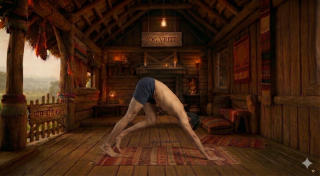
Downward-Facing Dog Variation Walking the Dog · अधो मुख श्वानासन भिन्नता पाद संचार
This dynamic variation of Downward-Facing Dog gently introduces the profound benefits of inversion while cultivating mindful movement. By alternately bending and straightening the knees, we meticulously lengthen the posterior chain — targeting the hamstrings and calves — and simultaneously awaken the shoulder girdle.
Muscles
- Hamstringsstretches
- Calvesstretches
- Shouldersstrengthens
- Spinal Erectorsstretches
Joints
- Ankle Jointmobilises
- Knee Jointmobilises
- Shoulder Jointstabilises
- Hip Jointmobilises
Inside the body
- Circulatory System
- Brain
- Lymphatic System
- Breathing
Mind
This pose offers a unique opportunity for mental release, as the physical act of "walking" can symbolically represent letting go of mental burdens or anxieties.
Take care
For those with significant shoulder injuries, it's crucial to approach this pose with great care, ensuring proper engagement of the arm and shoulder girdle muscles to protect the joint and prevent aggravation.
Pregnant practitioners, especially in later trimesters, should be mindful of blood pressure changes and modify the pose by keeping the head above the heart if dizziness or discomfort occurs. Always listen to the body's signals and prioritize stability over depth to prevent strain or discomfort, consulting a qualified teacher if unsure.
Muscles
Hamstrings
StretchesBiceps femoris, Semitendinosus, Semimembranosus
The powerful muscles running along the back of your thighs (hamstrings) receive a dynamic, oscillating stretch in this variation.
Read moreShow less
As one knee bends, the opposite leg's hamstrings are encouraged to release more deeply, facilitated by the gentle rocking motion.
This reciprocal inhibition allows for a gradual unwinding of fascial restrictions and chronic tightness, releasing stagnant apana vayu and promoting a sense of lightness and freedom in the lower limbs.
Regular practice progressively lengthens this posterior chain, directly reducing the pull on the lower back.
Calves
StretchesGastrocnemius, Soleus
The muscles at the back of your lower legs (gastrocnemius and soleus) are systematically stretched as you press each heel towards the mat.
Read moreShow less
This action targets the deep-seated tension often held in these muscles from walking, standing, and wearing restrictive footwear.
The dynamic engagement and release improve ankle dorsiflexion, enhancing mobility and circulation, and in a yogic sense, grounds your energetic connection through the feet, allowing prana to flow more smoothly to the earth.
Shoulders
StrengthensDeltoids, Rotator Cuff muscles
While primarily a leg stretch, the shoulders (deltoids and rotator cuff muscles) are actively engaged in maintaining the stability of the upper body and the integrity of the arm-to-torso connection.
Read moreShow less
This isometric engagement strengthens the muscles that stabilize the shoulder joint, fostering both resilience and openness in the upper back.
This creates a stable foundation from which the spine can lengthen, allowing prana to flow more freely into the upper chest and heart space, cultivating a sense of expansion.
Spinal Erectors
StretchesErector Spinae group
The long muscles running along either side of your spine (erector spinae group) are gently lengthened and supported in this inverted shape.
Read moreShow less
As you press through your hands and lift your sitting bones, these muscles are encouraged to release chronic compression, allowing the spinal column to decompress.
This gentle traction helps to alleviate stiffness in the back, fostering a sense of spaciousness and supporting the upward flow of udana vayu, promoting an upright posture and mental clarity.
Joints
Ankle Joint
MobilisesThe ankle joint (talocrural joint) experiences a gentle but effective mobilization as you alternate pressing each heel towards the floor.
Read moreShow less
This action encourages dorsiflexion, improving the range of motion often restricted by tight calves and daily activities.
Enhanced ankle mobility is crucial for stable walking and balancing, and in yoga, it allows for a stronger connection to the earth, feeling more grounded and secure in one's foundation, supporting the root chakra.
Knee Joint
MobilisesThe knee joint (tibiofemoral joint) is rhythmically flexed and extended, promoting the healthy circulation of synovial fluid within the joint capsule.
Read moreShow less
This gentle movement lubricates the joint surfaces without placing excessive weight or strain, making it an excellent warm-up for improving knee health and flexibility.
From a yogic perspective, this conscious articulation brings awareness to the subtle energy pathways around the knees, releasing stiffness that can impede the flow of prana to the lower legs.
Shoulder Joint
StabilisesIn Downward Dog, the shoulder joint (glenohumeral joint) bears weight, which, when properly aligned, helps to strengthen the stabilizing muscles around it.
Read moreShow less
The active pressing through the hands creates a gentle traction effect, helping to decompress the joint space and alleviate impingement.
This cultivation of stability and openness allows for a greater range of motion and a feeling of expansive ease in the upper body, symbolically opening the anahata (heart) chakra and promoting a sense of lightness.
Hip Joint
MobilisesThe hip joint (acetabulofemoral joint) is gently mobilized through the dynamic action of walking the dog, encouraging internal rotation and flexion.
Read moreShow less
As the spine lengthens, the hips are encouraged to lift and move away from the rib cage, creating a subtle decompression in the joint space.
This releases deeply held tension in the pelvic region, promoting greater freedom in the lower body and allowing the foundational apana vayu to flow unhindered, fostering a sense of release and grounding.
Inside the body
Circulatory System
In this mild inversion, the heart receives a gentle respite from its usual work of pumping blood against gravity to the lower extremities.
Read moreShow less
The reversal of gravitational pull facilitates venous return from the legs and feet, bringing oxygenated blood more easily to the brain and upper body.
This enhanced circulation nourishes all tissues, revitalizing the entire system and fostering a sense of energetic renewal, much like a subtle internal cleansing.
Brain
The mild inversion of Downward Dog, even in its dynamic form, encourages a refreshing flow of blood to the brain.
Read moreShow less
This increased cerebral circulation can enhance mental clarity, improve focus, and alleviate feelings of fatigue or sluggishness.
From a yogic perspective, this gentle inversion helps to quiet the restless mind (chitta vritti) and awaken higher states of awareness, preparing the practitioner for deeper states of meditation and inner peace.
Lymphatic System
The inversion aspect of this pose, combined with the dynamic movement, subtly stimulates the lymphatic system, which relies on muscle contraction and body movement to circulate lymph fluid.
Read moreShow less
This aids in the removal of metabolic waste products and toxins from the tissues, particularly in the lower body.
A well-functioning lymphatic system is vital for immunity and overall vitality, contributing to a feeling of inner cleanliness, lightness, and energetic purification.
Breathing
The inverted V-shape of Downward Dog naturally encourages a deeper and more expansive breath, particularly in the back and sides of the rib cage.
Read moreShow less
The slight compression of the abdomen against the diaphragm in the initial setup can facilitate a more complete exhalation, creating space for a fuller inhalation.
This deepened, rhythmic breathing calms the nervous system and enhances the flow of prana throughout the body, making it an ideal pose to integrate with Ujjayi pranayama to cultivate focus, inner warmth, and a meditative state.
Fascia (connective tissue)
The extensive web of connective tissue (fascia) that envelops muscles, bones, and organs is deeply influenced in Walking the Dog.
Read moreShow less
This pose effectively targets the entire superficial back line of fascia, from the soles of the feet up through the calves, hamstrings, and along the spine.
The dynamic movement encourages a gentle, sustained release throughout this posterior chain, helping to unwind adhesions and improve the elasticity of the connective tissues.
This release is akin to opening subtle energetic channels (nadis), allowing prana to flow more freely and dissolving long-held patterns of tension and rigidity within the body, fostering greater fluidity and ease.
Mind and nervous system
- Nervous system
As the rhythmic movement of walking the dog synchronizes with the breath, practitioners often feel a profound sense of calm washing over them, releasing accumulated tension.
Read moreShow less
This gentle, repetitive action engages the parasympathetic nervous system, signaling to the body that it is safe to relax and let go.
The mind becomes less agitated, finding a steady anchor in the present moment, a subtle form of pratyahara, drawing the senses inward.
The inversion itself, even a mild one, has a unique effect on the nervous system, shifting perspective and often alleviating anxiety.
Read moreShow less
By reversing the usual pull of gravity, the body's proprioceptors send different signals to the brain, helping to re-pattern ingrained stress responses.
This subtle neurological shift fosters a sense of groundedness and inner stability, allowing for a deeper integration of body and mind, cultivating equanimity.
The conscious engagement of the breath in this pose deepens the connection between the physical body and the subtle energy, or prana.
Read moreShow less
As the breath becomes more fluid and rhythmic, it directly influences the vagus nerve, promoting a state of relaxation and reducing sympathetic nervous system activation.
This cultivates a quiet internal space, allowing the practitioner to observe sensations without immediate reaction, fostering a sense of mindful presence and self-awareness.
- Mind & mood
This pose offers a unique opportunity for mental release, as the physical act of "walking" can symbolically represent letting go of mental burdens or anxieties.
Read moreShow less
The rhythmic nature of the movement, when coupled with focused breath, helps to quiet the incessant chatter of the mind (chitta vritti), drawing awareness inward.
This cultivates a sense of mental spaciousness and a gentle detachment from external distractions, leading to greater clarity.
The mild inversion inherent in Downward Dog, even with the dynamic variation, encourages a shift in perspective, both physically and psychologically.
Read moreShow less
By literally turning the world upside down, we are invited to view our challenges from a new angle, fostering creativity and problem-solving abilities.
This mental reorientation can be incredibly liberating, helping to break free from rigid thought patterns and encouraging a more adaptable mindset for daily life.
Practicing Walking the Dog requires a focused presence, drawing the mind into the sensations of the body and the rhythm of the breath, a preliminary step towards Dharana (concentration).
Read moreShow less
This sustained attention builds mental discipline and resilience, teaching the mind to stay anchored rather than wandering.
The resulting clarity and calm extend beyond the mat, enhancing one's ability to navigate daily life with greater equanimity and awareness, and a deeper sense of self.
Because it is a inversion pose
Inversions, even partial ones like Downward Dog, reverse the gravitational pull on the body, offering a unique set of physiological benefits.
Read moreShow less
This helps to decompress the spine, allowing the intervertebral discs to rehydrate and creating space between the vertebrae.
Energetically, inversions are believed to reverse the flow of apana vayu, subtly uplifting the energy and bringing a fresh perspective to both body and mind, promoting a sense of renewal.
The inverted shape encourages a gentle flushing of blood and lymphatic fluid from the lower extremities, relieving swelling and fatigue in the legs and feet.
Read moreShow less
This enhanced circulation nourishes the upper body and brain, promoting mental clarity and vitality.
From a yogic perspective, this re-energizing effect helps to awaken higher centers of consciousness and cultivate a sense of inner lightness and purification, bringing balance to the energetic body.
Psychologically, turning upside down can be a powerful tool for shifting perspective and overcoming fear, even in a gentle, accessible form like Walking the Dog.
Read moreShow less
It challenges our habitual ways of seeing the world, fostering adaptability and resilience.
This subtle act of courage helps to transcend mental limitations, encouraging a more open and adventurous approach to life's challenges, and cultivating inner strength.