6
Muscles
4
Joints
3
Organs
3
Mental
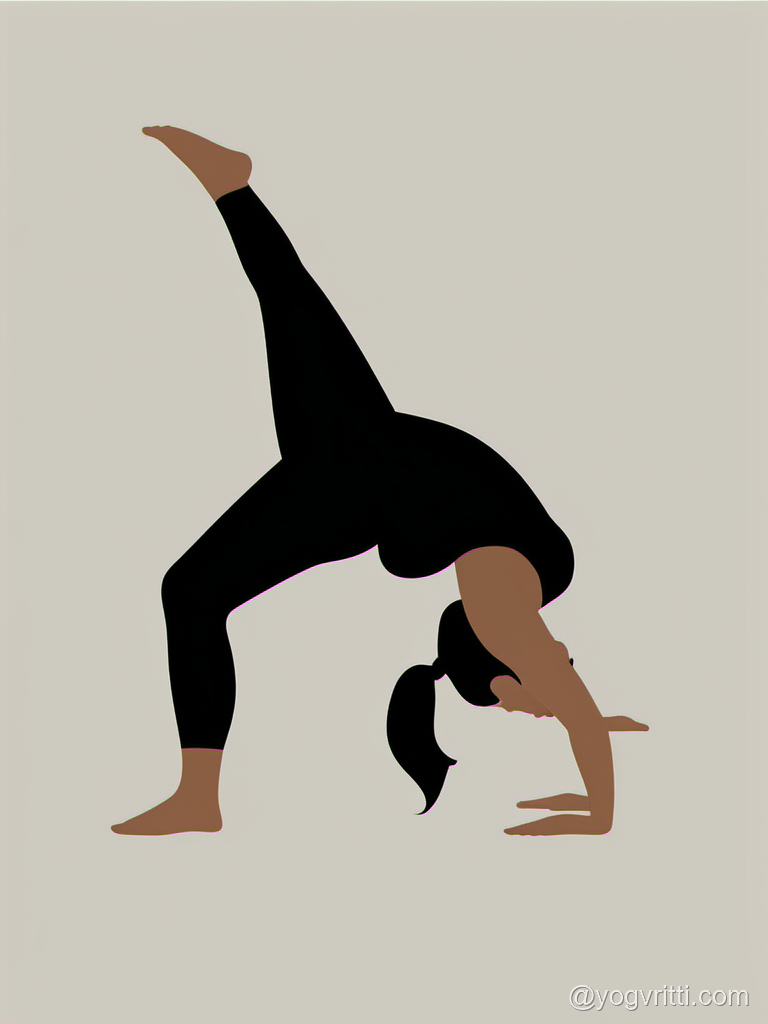
Eka Pada Urdhva Dhanurasana
एक पाद ऊर्ध्व धनुरासन
Eka Pada Urdhva Dhanurasana, or One-Legged Upward Bow Pose, is a profound and invigorating backbend that demands immense strength, flexibility, and mental focus. It dynamically lengthens the entire anterior chain – the front of the hips, abdomen, chest, and shoulders – while simultaneously strengthening the posterior chain, particularly the glutes, hamstrings, and spinal muscles. This expansive posture is deeply heart-opening, cultivating a powerful sense of courage and vitality, and is valued by teachers and students alike for its capacity to transform physical and mental limitations into profound liberation and inner strength. It's an advanced expression of opening, lifting, and balancing that truly awakens the spirit.
One-Legged Wheel Pose, also called Single Leg Upward Bow is a classical yoga posture. Its Sanskrit name Eka Pada Urdhva Dhanurasana translates word-for-word as: Eka (One) · Pada (Leg) · Urdhva (Upward) · Dhanu (Bow). In this posture, the body opens the chest and stretches the entire front body. The posture works to strengthen the quadriceps, engage the core and strengthen and extend the back. Opens the chest and shoulders. Improves spinal flexibility. Suitable for advanced practitioners with developed body awareness, it is a meaningful addition to any practice. Practitioners with shoulder injury and wrist injury should approach with care or consult a qualified teacher.
Muscles Worked
Quadriceps (thigh muscles)
[Quadriceps femoris]
The powerful muscles at the front of your thighs (quadriceps femoris) on the standing leg are intensely engaged to extend the knee and stabilize the entire lower body, providing a solid anchor.
On the lifted leg, the quadriceps lengthen as the hip flexes and the knee extends, creating a long, active line of energy.
This dual action builds both strength and flexibility, cultivating a feeling of grounded power that supports the upward lift of the spine, allowing the energy (prana) to ascend more freely.
Glutes (buttock muscles)
[Gluteus maximus, medius]
The large muscles of your buttocks (gluteus maximus and medius) are critically engaged, powerfully contracting to extend the hips and lift the pelvis away from the floor.
This strong activation is essential for supporting the lower back, preventing compression and allowing the spinal muscles to articulate the curve more safely and evenly.
Yogically, engaging the glutes helps to lift and lighten the pelvic floor, creating a sense of upward-moving energy (udana vayu) that supports the entire backbend and provides a feeling of inner buoyancy.
Spinal Erectors (back muscles)
[Erector spinae]
The long, deep muscles running along either side of your spine (erector spinae group) are intensely activated to extend the entire vertebral column, deepening the backbend from the sacrum to the cervical spine.
This conscious engagement helps to distribute the spinal curve evenly, protecting the delicate intervertebral discs by creating space rather than collapsing into one area.
This sustained effort builds profound resilience in the core of your being, fostering a sense of inner strength and unwavering resolve.
Psoas (hip flexors)
[Psoas major]
The deep hip flexor muscles, particularly the psoas major, which connects your lower spine to your inner thigh, are asked to lengthen significantly, especially on the standing leg side, as the pelvis lifts and the hips extend.
This deep release in the core of the body helps to free the lumbar spine and allows for greater expansion across the front of the abdomen and chest.
Releasing tension in this muscle can profoundly shift the body's energetic state, releasing deeply held patterns of fear and creating more space for vitality.
Abdominals (core muscles)
[Rectus abdominis, Transversus abdominis, Obliques]
The superficial abdominal muscles (rectus abdominis) are stretched significantly as the chest lifts and the spine extends, creating an expansive front body.
Simultaneously, the deeper core muscles (transversus abdominis and obliques) work powerfully to stabilize the pelvis and support the spinal curve from the inside.
This intelligent interplay of lengthening and deep engagement creates an inner corset of support, preventing overstretching and cultivating a strong sense of core awareness and inner stability, anchoring the expansive energy of the backbend.
Shoulder Girdle muscles (deltoids, rotator cuff, trapezius, serratus anterior)
[Deltoids, Supraspinatus, Infraspinatus, Teres minor, Subscapularis, Trapezius, Serratus Anterior]
The muscles around your shoulders (deltoids, rotator cuff, trapezius, serratus anterior) are powerfully engaged to lift and stabilize the arms overhead, creating a strong, broad foundation for the upper body.
Simultaneously, the chest muscles are stretched open, allowing the shoulders to move into greater extension and external rotation.
This active opening of the upper chest and shoulders promotes a profound sense of freedom and expansiveness, allowing for deeper, more invigorating breaths and fostering an open-hearted quality in the practitioner.
Joints Mobilized
Spine (vertebral column)
mobilizing | decompressingThe entire spinal column undergoes significant extension, particularly in the thoracic (mid-back) and lumbar (lower back) regions.
When practiced with proper alignment and strong engagement of the legs and glutes, this action helps to decompress the intervertebral discs, creating space between the vertebrae rather than compressing them.
This deep mobilization can alleviate chronic stiffness and improve spinal fluidity, fostering a sense of lightness and freedom in the torso and allowing prana to flow more freely up the central channel (sushumna nadi).
Shoulder joint (glenohumeral joint)
mobilizingThe shoulder joints (glenohumeral joints) are mobilized into deep extension and external rotation, a range of motion often restricted due to modern lifestyles.
This sustained opening increases the range of motion in the shoulders and across the chest, releasing stiffness and improving upper body posture.
Energetically, this profound opening in the upper body helps to free the heart space (anahata chakra), promoting feelings of compassion, receptivity, and an expansive sense of self.
Hip joint (acetabulofemoral joint)
mobilizingThe hip joints (acetabulofemoral joints) are deeply mobilized, with significant extension in the standing leg's hip and flexion in the lifted leg's hip.
This dynamic action stretches the deep hip flexors and strengthens the hip extensors, improving overall hip mobility and stability.
Releasing tension in the hips can have a profound therapeutic effect on the lower back and pelvis, helping to alleviate stiffness and creating a sense of groundedness and fluidity in movement, both physically and energetically.
Knee joint (tibiofemoral joint)
stabilizing | extendingThe knee joint (tibiofemoral joint) on the standing leg is powerfully engaged to extend and stabilize the leg, providing a strong and unwavering foundation for the entire pose.
On the lifted leg, the knee extends actively as the quadriceps engage, creating a long, energetic line from hip to toes.
This active engagement strengthens the muscles surrounding the knee, enhancing stability and resilience, and ensuring that energy flows upward and outward rather than collapsing into the joint.
Organ & System Benefits
Lungs
The deep backbend profoundly opens the entire front of the chest and rib cage, creating significant space for the lungs to expand more fully in all directions.
This increased thoracic capacity allows for deeper, more expansive inhalations, enhancing oxygen intake and vitalizing the entire system.
Yogically, this expansion directly impacts prana vayu, the upward-moving energy, invigorating the breath and creating a profound sense of lightness, clarity, and upliftment.
Heart
While not directly compressed, the heart space is profoundly opened and lifted in this expansive posture, creating a sense of liberation.
The broad chest expansion reduces any constrictive pressure around the heart, promoting a sense of ease and freedom in the cardiovascular system.
This open-hearted posture is believed to alleviate emotional tension and foster courage, allowing the practitioner to meet life's challenges with greater resilience, compassion, and a renewed sense of joy.
Abdominal Organs
The gentle yet profound stretch across the front of the abdomen provides a mild compression and release for the internal abdominal organs (stomach, intestines, liver, spleen).
This action can stimulate healthy digestion, improve circulation to these vital organs, and support their detoxification processes.
This internal massage, combined with deep breathing, aids in regulating apana vayu (downward-moving energy), promoting elimination and overall vitality within the core of the body.
Nervous System
The profound expansion across the front of the body, particularly the chest and heart center, can initially stimulate the sympathetic nervous system, leading to feelings of invigoration and heightened alertness.
However, when paired with conscious, deep, and steady breathing, this initial activation transitions into a balanced state of focused energy without agitation.
The challenge of the pose demands intense concentration, drawing the mind (chitta) away from external distractions and deeply into the present moment, fostering a profound sense of presence.
Holding this advanced backbend requires immense mental fortitude and unwavering breath, which helps to regulate the autonomic nervous system.
The sustained effort, combined with the expansive chest opening, can mitigate feelings of lethargy and sadness, replacing them with a sense of empowerment and vitality.
This conscious engagement with the pose helps to quiet the fluctuations of the mind (chitta vritti), cultivating mental clarity, emotional resilience, and a deeper connection to one's inner strength.
The deep stretch of the anterior fascial lines, particularly the psoas muscle which is intimately connected to the 'fight or flight' response, can lead to a release of stored tension and even emotional trauma.
As the body opens and lengthens with sustained awareness, the nervous system gradually shifts from a state of guardedness to one of surrender and trust.
This allows for a deeper sense of relaxation and integration post-pose, promoting a profound feeling of inner peace and physiological equilibrium.
Mental & Emotional
Eka Pada Urdhva Dhanurasana is a powerful embodiment of courage and vulnerability, challenging practitioners to move beyond perceived limitations and self-imposed boundaries.
The act of lifting one leg while maintaining a deep backbend demands unwavering focus and immense inner strength, directly confronting self-doubt and fear.
This cultivation of mental fortitude translates into a greater capacity to face life's challenges with resilience, an open heart, and a profound sense of self-belief.
The expansive nature of this backbend encourages a profound shift in perspective, literally and figuratively opening the practitioner to new possibilities and broader horizons.
By lifting the chest and heart so fully, one cultivates a powerful sense of optimism, enthusiasm, and joy, effectively counteracting feelings of despondency or stagnation.
This pose teaches us to embrace our innate power and to offer ourselves fully to the experience of life, fostering a profound sense of self-acceptance and inner luminosity.
The intense concentration and sustained effort required to maintain balance and intricate alignment in this advanced posture act as a potent form of meditation (dharana).
The mind becomes completely absorbed in the intricate details of the body's position, the rhythm of the breath, and the flow of energy, pulling attention away from external distractions.
This sustained, single-pointed focus leads to a profound quieting of the mental chatter, cultivating a deep sense of presence and inner stillness even amidst the significant physical challenge.
Because of Its Shape
backbend
Backbends profoundly open the entire front of the body, lengthening the abdominal muscles, hip flexors, and the vast network of fascia across the chest and shoulders.
This action directly counteracts the pervasive effects of prolonged sitting and habitual forward-bending postures common in modern life, helping to restore the natural, healthy curvature of the spine.
Energetically, backbends are deeply associated with activating the heart (Anahata) and solar plexus (Manipura) chakras, fostering courage, compassion, and a powerful sense of self-confidence.
The act of extending the spine against gravity, particularly in an advanced pose like this, powerfully strengthens the entire posterior chain, including the deep spinal erectors, glutes, and hamstrings.
This builds immense resilience and support for the spine, significantly improving posture and often reducing chronic back pain.
From a yogic perspective, backbends are considered highly invigorating and uplifting, combating lethargy and depression by stimulating the upward flow of prana and awakening a profound inner vitality and zest for life.
Deep backbends, especially those that lift the chest and heart so profoundly, create significant space and expansion in the entire thoracic cavity, directly impacting respiratory function.
This expansive opening allows for deeper, fuller breaths, dramatically increasing lung capacity and enhancing vital oxygen intake.
This improved breathing capacity not only revitalizes the physical body but also helps to calm and regulate the nervous system, clearing mental fog and promoting profound clarity and inner peace.
Fascial Lines
The entire superficial front line of fascia, from the tops of the feet, up the shins, through the quadriceps, across the abdominals, and into the chest and arms, is profoundly lengthened and released in this expansive pose.
Simultaneously, the deep front line, connecting the inner thighs, pelvic floor, and the psoas, also receives a significant and intricate opening.
This comprehensive release in the anterior fascial chains helps to unwind chronic tension patterns stored from habitual postures, physical stress, and emotional holding.
Yogically, this opening is felt as a powerful release of energetic blockages (granthis), allowing prana to flow more freely and expansively through the front of the body, invigorating and deepening one's sense of self.
Breathing & Respiratory
In Eka Pada Urdhva Dhanurasana, the deep backbend and expansive chest opening naturally invite a fuller, more expansive inhalation, which becomes the cornerstone of stability in this challenging pose.
The diaphragm has more space to descend, and the entire rib cage lifts and widens, allowing the lungs to fill to their maximum capacity.
This promotes a conscious, deep, and sustained breath (ujjayi pranayama is particularly beneficial here) that helps to regulate the nervous system, transforming potential agitation into focused energy and cultivating a profound sense of inner stillness and awareness even amidst intense physical effort.
Anatomical Caution
This is an advanced pose requiring significant preparation, so teachers must ensure students have a very stable and well-aligned Urdhva Dhanurasana (Upward Bow Pose) before attempting the single-leg variation.
Watch carefully for any compression or sharp pain in the lower back, neck, or wrists; these are clear signs the body is not ready, or the alignment is compromised.
Always prioritize spinal integrity and a pain-free, integrated experience over the depth of the backbend, guiding students with immense patience, keen observation, and mindful adjustments to prevent injury.