4
Muscles
5
Joints
2
Organs
2
Mental
Garudasana Arms
गरुडासन भुजा
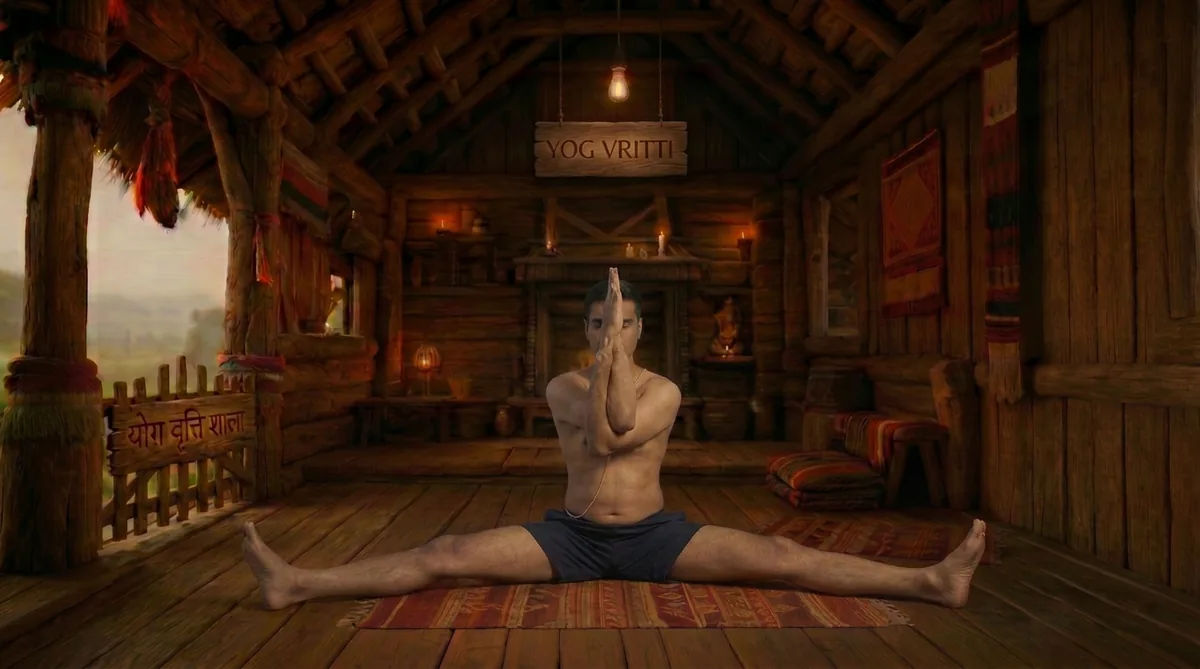
Garudasana Arms isolates the intricate upper body mechanics of Eagle Pose, making its profound shoulder and upper back benefits accessible without the demands of a standing balance. This variation is a therapeutic balm for those who spend extended periods at a desk, offering targeted relief from postural strain and promoting greater mobility in the often-neglected shoulder girdle. It's an invitation to cultivate spaciousness and release tension in the upper body, fostering a sense of lightness and freedom. Garudasana, or Eagle Pose, is a profound standing balance that intricately weaves together strength, flexibility, and deep concentration, engaging the body from the tips of the toes to the crown of the head. It's a masterful blend of compression and expansion, requiring the focused engagement of the deep core and leg muscles for stability, while simultaneously stretching the often-tight shoulders, upper back, and outer hips. This pose cultivates a powerful sense of groundedness and inner stillness, drawing the practitioner into a state of heightened awareness and mental clarity. For any yoga teacher, understanding its layered benefits reveals a path to not just physical prowess but also profound mental and energetic integration.
Eagle Arms Pose, also called Eagle Arm Variation is a classical yoga posture. Its Sanskrit name Garudasana Arms translates word-for-word as: Garuda (Eagle (Mythical Bird)) · Asana (Pose). In this posture, the body grounds through the sit bones while the spine rises tall. The posture works to open and strengthen the shoulders and open the upper back. Can do at desk. Stretches between shoulder blades. It is particularly valued for improving overall posture. Suitable for beginners and regular practitioners alike, it is an excellent warm-up, particularly beneficial for beginners and seniors.
Helps with
What This Variation Changes
The primary 'positional change' in Garudasana Arms is the complete removal of the lower body component and the standing balance challenge. This fundamentally shifts the energetic and physical focus from a full-body integration to an isolated, targeted release and stretch of the upper back and shoulder girdle. Without the need to stabilize the legs or engage the deep core for balance, practitioners can direct their entire awareness and breath into creating space and mobility in the upper body, deepening the stretch and release in a way that might be constrained in the full pose.
Muscles Worked
Shoulders
While the shoulders are certainly engaged in the full Eagle Pose, their role in Garudasana Arms shifts from contributing to overall structural stability to being the primary focus of release and mobilization.
Here, the anterior deltoids, pectoralis minor, and even parts of the rotator cuff are deeply lengthened as the arms interlace and the elbows lift, actively encouraging protraction and abduction of the scapulae.
This allows for a more isolated and potent stretch across the entire shoulder girdle, directly addressing stiffness and improving range of motion without the competing demands of leg strength or balance.
Rhomboids
Rhomboideus major et minor
The rhomboids, typically responsible for retracting and elevating the scapulae, experience a significant lengthening and release in Garudasana Arms.
As the forearms cross and the elbows lift, the shoulder blades are drawn away from the spine and protracted around the rib cage.
This action creates a deep, satisfying stretch between the shoulder blades, directly counteracting the chronic shortening these muscles often endure from prolonged forward-slumped postures, leading to profound relief in the upper back.
Upper Trapezius
Trapezius (superior fibers)
The upper trapezius, a muscle frequently held in tension due to stress and poor posture, finds an opportunity for release and gentle lengthening in this variation.
While its primary role is to elevate and upwardly rotate the scapula, the specific positioning of the arms encourages a softening and broadening across the top of the shoulders and base of the neck.
This focused release can alleviate tightness that contributes to neck stiffness and tension headaches, restoring a sense of ease and fluidity to the upper body.
Serratus Anterior
Serratus anterior
The serratus anterior, often dubbed the 'boxer's muscle,' is crucial for protracting the scapulae and stabilizing them against the rib cage.
In Garudasana Arms, this muscle is actively engaged to draw the shoulder blades broadly away from the spine, allowing the elbows to lift and the upper back to round gently.
Strengthening the serratus anterior in this context helps to improve scapular stability and counteract 'winged scapulae,' fostering a more integrated and powerful foundation for shoulder movement and overall upper body posture.
Joints Mobilized
Ankles
weight bearing and mobilizingThe ankle joint of the standing leg bears the entire body's weight, requiring intricate engagement of surrounding muscles to maintain micro-adjustments for balance.
This constant, subtle movement mobilizes the joint, improving its range of motion and strengthening the ligaments and tendons.
Over time, this practice enhances proprioception and stability, translating to more confident movement in daily life and a feeling of groundedness in one's being.
Knees
flexing and stabilizingBoth knees are in a state of deep flexion in Garudasana, with the standing knee stabilizing the entire posture and the wrapped knee often pressing into the back of the calf or shin.
This deep bend, when practiced mindfully, strengthens the muscles surrounding the knee joint, improving its resilience and flexibility.
From a yogic perspective, it teaches us to find comfort and steadiness even in positions of deep compression, cultivating patience and acceptance.
Hips
flexing, adducting, and externally rotating (standing leg); adducting and internally rotating (wrapped leg)The hips are in a complex position: the standing hip is flexed, abducted, and externally rotated, while the wrapped leg is strongly adducted and internally rotated.
This intricate arrangement profoundly stretches the outer hip and gluteal muscles of the wrapped leg, while strengthening the standing hip stabilizers.
This balanced action releases tension often stored in the hips, symbolically freeing emotional blockages and fostering a sense of openness and fluidity in the pelvic region.
Shoulders
flexing, adducting, and internally rotatingThe shoulder joints are deeply flexed, adducted, and internally rotated as the arms cross and wrap, creating a significant stretch across the posterior capsule of the shoulder.
This action helps to release stiffness and improve the range of motion in the shoulder girdle, counteracting the effects of prolonged forward posture.
This opening in the upper body allows for a greater sense of freedom in the chest, inviting deeper breaths and a more expansive energetic flow through the heart center.
Spine
stabilizing and gently lengtheningThe spine is encouraged to remain long and neutral in Garudasana, with the core muscles actively engaged to prevent slumping or excessive arching.
While there isn't a dramatic flexion or extension, the pose demands spinal stability and a subtle upward lift through the crown of the head.
This mindful alignment strengthens the postural muscles along the spine, promoting better posture and creating a clear channel for the upward flow of Prana Vayu, enhancing alertness and mental clarity.
Organ & System Benefits
Kidneys and Adrenal Glands
The gentle compression of the lower back area in Garudasana, particularly when the wrapped leg presses against the standing leg, can create a subtle internal massage for the kidneys and adrenal glands.
This mild stimulation is believed to improve circulation to these organs, supporting their function in fluid balance and stress response.
From a yogic perspective, this gentle compression can help to calm the nervous system, reducing feelings of anxiety and promoting a sense of inner peace by regulating energetic flow in the lower back.
Abdominal Organs
The deep engagement of the core and the slight compression of the lower abdomen in Garudasana provide a gentle internal toning and massage to the digestive organs.
This subtle compression and release can stimulate peristalsis, aiding in digestion and elimination.
Energetically, this action helps to stoke Agni, the digestive fire, promoting better assimilation of nutrients and a feeling of lightness and vitality in the abdominal region.
Nervous System
The intense focus required to maintain balance in Garudasana naturally draws the senses inward, initiating a process akin to Pratyahara, the fifth limb of yoga.
This intentional narrowing of attention quiets the incessant chatter of the mind (chitta vritti), shifting the nervous system from a sympathetic 'fight or flight' state towards a more parasympathetic 'rest and digest' response.
As the mind settles, a profound sense of calm and mental clarity emerges, reducing anxiety and promoting inner peace and a feeling of centeredness.
The intricate coordination demanded by the crossing of both arms and legs stimulates both hemispheres of the brain, enhancing neural pathways and improving overall brain-body communication.
This cross-lateral movement is particularly beneficial for integrating left-brain logical thinking with right-brain creativity and intuition.
From a yogic perspective, this fosters a more harmonious flow of prana throughout the nadis, leading to greater mental agility and a more balanced energetic state.
Mental & Emotional
Garudasana profoundly cultivates Dharana, or concentrated focus, as the mind must remain entirely present to maintain equilibrium.
The challenge of balancing on one leg while intricately wrapping the limbs demands unwavering attention, effectively training the mind to stay in the moment and quiet external distractions.
This sustained mental effort strengthens willpower and develops a profound inner stillness, translating into greater mental clarity and reduced anxiety off the mat.
The intricate wrapping of the limbs in Eagle Pose creates a feeling of containment and drawing inward, which can be profoundly grounding and calming for an overactive mind.
This physical encapsulation encourages a psychological turning inward, fostering introspection and self-awareness.
It teaches us to find stability and peace within our own contained space, offering a powerful antidote to mental fragmentation and a path towards inner quietude.
Because of Its Shape
balance
Balance poses like Garudasana demand profound concentration, drawing the mind into a singular point of focus, which is a powerful form of meditation in action.
This intense mental engagement strengthens the neural pathways responsible for proprioception and spatial awareness, improving coordination and reducing the risk of falls.
Yogically, cultivating balance on the mat translates to finding equilibrium in life, helping to navigate challenges with greater steadiness and grace.
Standing balance poses significantly strengthen the muscles of the feet, ankles, and legs, building a strong and stable foundation for the entire body.
The constant micro-adjustments required to maintain the pose engage deep stabilizing muscles that are often neglected in daily life.
This physical grounding helps to anchor the energetic body, fostering a deep connection to the earth and a sense of security (Muladhara Chakra).
Fascial Lines
Garudasana provides a unique and comprehensive stretch to several fascial lines, particularly the Spiral Line and the Superficial Back Arm Line.
The deep wrapping of the legs stretches the outer hip and IT band fascia, while the crossing of the arms provides a profound release across the upper back and posterior shoulder girdle.
This intricate unraveling of the fascial web releases chronic tension patterns, improving elasticity and range of motion, and energetically opens channels (nadis) for freer prana flow, promoting a sense of liberation and ease within the body's connective tissues.
Breathing & Respiratory
The deep compression of the chest and abdomen in Garudasana naturally encourages a more refined and controlled breath, often inviting a longer exhalation to release the inner constriction.
While initially challenging, this shape can teach the practitioner to breathe deeply and calmly even under physical constraint, promoting diaphragmatic breathing.
This mindful breathing (Pranayama) in a constricted space helps to regulate the nervous system, transforming potential tension into a profound sense of inner calm and resilience.
Anatomical Caution
While generally safer than the full pose, practitioners with existing shoulder impingement, rotator cuff injuries, or severe kyphosis should approach this variation with heightened awareness.
It's crucial to avoid forcing the arms into position if sharp pain arises, prioritizing a gentle stretch over deep compression.
Listen intently to the body's signals, modifying the depth of the arm wrap or the height of the elbows to honor individual shoulder limitations and prevent exacerbating any pre-existing conditions.