6
Muscles
5
Joints
2
Organs
2
Mental
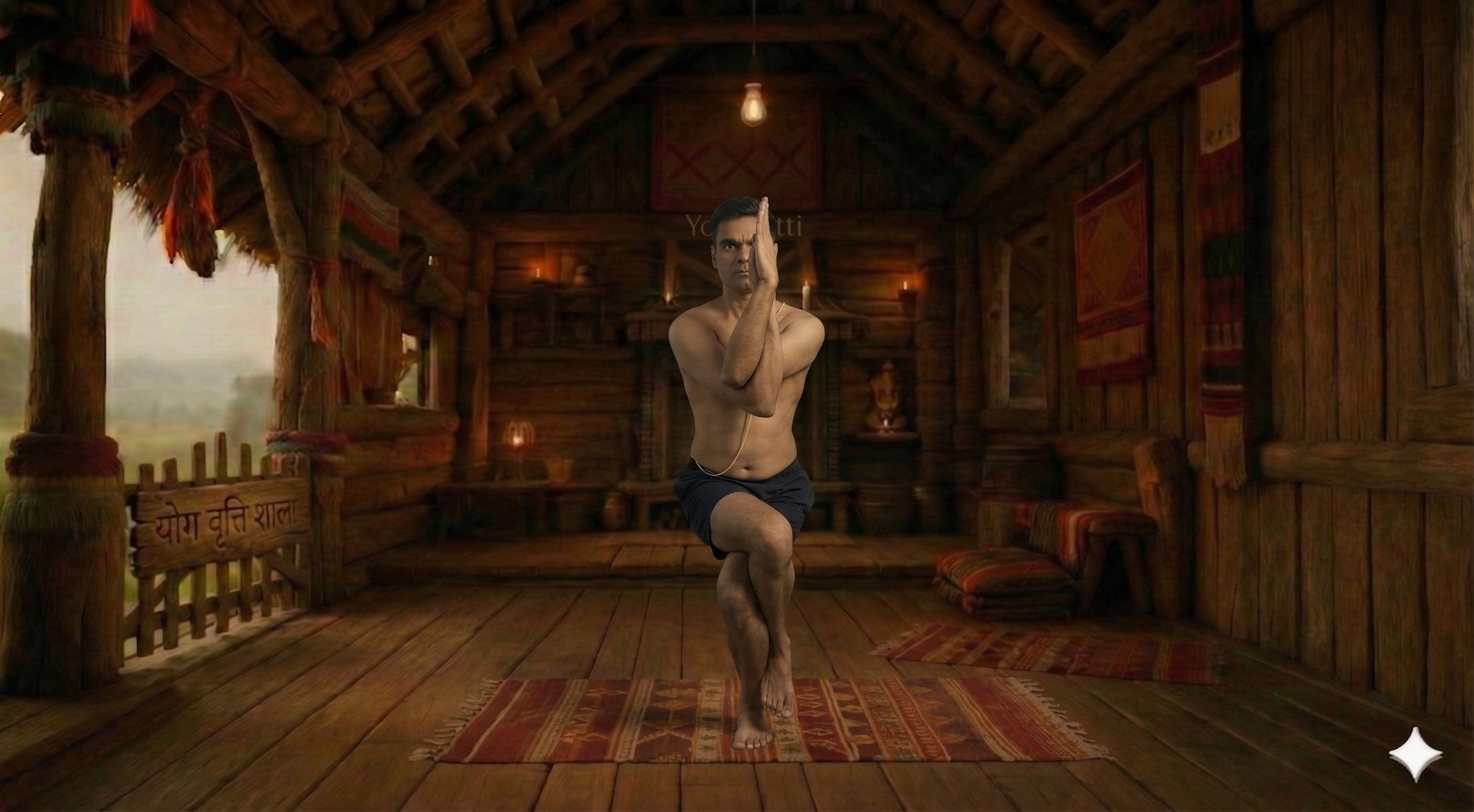
Eagle Pose
गरुड़ासन
Garudasana, or Eagle Pose, is a profound standing balance that intricately weaves together strength, flexibility, and deep concentration, engaging the body from the tips of the toes to the crown of the head. It's a masterful blend of compression and expansion, requiring the focused engagement of the deep core and leg muscles for stability, while simultaneously stretching the often-tight shoulders, upper back, and outer hips. This pose cultivates a powerful sense of groundedness and inner stillness, drawing the practitioner into a state of heightened awareness and mental clarity. For any yoga teacher, understanding its layered benefits reveals a path to not just physical prowess but also profound mental and energetic integration.
Eagle Pose, also called Eagle is a classical yoga posture whose Sanskrit roots break down as: Garuda (Eagle (Mythical Bird)) · Asana (Pose). From a standing position, the body roots firmly through the feet while the spine extends upward. The posture works to stabilise the ankles, stretch the calves and open and strengthen the shoulders. Strengthens ankles and calves. Stretches thighs, hips, shoulders, and upper back. It is particularly valued for developing greater flexibility and building full-body strength. Suitable for intermediate practitioners with foundational yoga experience, it is a meaningful addition to any practice, particularly beneficial for beginners and desk workers. Practitioners with knee injury and ankle injury should approach with care or consult a qualified teacher.
Helps with
Muscles Worked
Buttocks (standing leg)
Gluteus Medius and Minimus
The muscles on the side of your standing hip (gluteus medius and minimus) work tirelessly to keep your pelvis level and prevent it from tilting to the side.
This deep engagement is crucial for maintaining your equilibrium, creating a solid foundation for the entire pose.
From a yogic perspective, this active rooting through the hip cultivates a strong connection to Muladhara Chakra, fostering a sense of security and unwavering stability.
Inner thighs (wrapped leg)
Adductor Magnus, Longus, Brevis
As you intensely cross and squeeze your legs together, the powerful inner thigh muscles (adductors) of the wrapped leg engage deeply, drawing the knee towards the midline.
This isometric contraction strengthens these often-underused muscles, creating a sense of integration and compactness in the lower body.
Energetically, this drawing inward helps to centralize your energy, promoting a feeling of containment and self-possession.
Outer thighs and hips (standing leg)
Tensor Fasciae Latae (TFL) and Gluteus Maximus
The muscles on the outer aspect of your standing hip and thigh (tensor fasciae latae and gluteus maximus) are continually active, working in concert with the gluteus medius to stabilize the hip joint.
This constant micro-adjustment refines your balance, teaching the body subtle awareness and responsiveness.
This intelligent engagement helps to distribute the body's weight evenly, enhancing your ability to stay present and connected to your physical form.
Calves and shins (standing leg)
Gastrocnemius, Soleus, Tibialis Anterior
The muscles in your lower leg, both at the back (gastrocnemius and soleus) and front (tibialis anterior), are constantly firing to maintain the subtle adjustments needed for balance in the standing ankle.
This continuous, low-level muscular work strengthens the entire lower leg and improves proprioception.
Yogically, this active connection to the earth through the foot cultivates a deep sense of grounding, allowing you to feel rooted and steady amidst the pose's challenges.
Shoulders
Deltoids, Rotator Cuff, Rhomboids, Trapezius
With the arms wrapped, the muscles around the shoulders and upper back (deltoids, rotator cuff, rhomboids, and trapezius) experience a profound and sustained stretch, particularly across the posterior shoulder capsule.
Simultaneously, other muscles activate to draw the elbows up and away from the chest, lifting the sternum.
This dual action releases tension commonly held in the upper body from daily activities, opening the heart space and inviting a sense of freedom and lightness in the chest, which can lead to deeper breathing and emotional release.
Core muscles
Rectus Abdominis, Obliques, Transversus Abdominis
The deep abdominal muscles (transversus abdominis, obliques, and rectus abdominis) are subtly yet powerfully engaged throughout Garudasana to stabilize the spine and maintain an upright posture.
This internal support creates a strong central axis, preventing excessive rounding or arching of the back.
Energetically, this engagement helps to awaken Manipura Chakra, fostering a sense of inner strength, confidence, and personal power that radiates outwards.
Joints Mobilized
Ankles
weight bearing and mobilizingThe ankle joint of the standing leg bears the entire body's weight, requiring intricate engagement of surrounding muscles to maintain micro-adjustments for balance.
This constant, subtle movement mobilizes the joint, improving its range of motion and strengthening the ligaments and tendons.
Over time, this practice enhances proprioception and stability, translating to more confident movement in daily life and a feeling of groundedness in one's being.
Knees
flexing and stabilizingBoth knees are in a state of deep flexion in Garudasana, with the standing knee stabilizing the entire posture and the wrapped knee often pressing into the back of the calf or shin.
This deep bend, when practiced mindfully, strengthens the muscles surrounding the knee joint, improving its resilience and flexibility.
From a yogic perspective, it teaches us to find comfort and steadiness even in positions of deep compression, cultivating patience and acceptance.
Hips
flexing, adducting, and externally rotating (standing leg); adducting and internally rotating (wrapped leg)The hips are in a complex position: the standing hip is flexed, abducted, and externally rotated, while the wrapped leg is strongly adducted and internally rotated.
This intricate arrangement profoundly stretches the outer hip and gluteal muscles of the wrapped leg, while strengthening the standing hip stabilizers.
This balanced action releases tension often stored in the hips, symbolically freeing emotional blockages and fostering a sense of openness and fluidity in the pelvic region.
Shoulders
flexing, adducting, and internally rotatingThe shoulder joints are deeply flexed, adducted, and internally rotated as the arms cross and wrap, creating a significant stretch across the posterior capsule of the shoulder.
This action helps to release stiffness and improve the range of motion in the shoulder girdle, counteracting the effects of prolonged forward posture.
This opening in the upper body allows for a greater sense of freedom in the chest, inviting deeper breaths and a more expansive energetic flow through the heart center.
Spine
stabilizing and gently lengtheningThe spine is encouraged to remain long and neutral in Garudasana, with the core muscles actively engaged to prevent slumping or excessive arching.
While there isn't a dramatic flexion or extension, the pose demands spinal stability and a subtle upward lift through the crown of the head.
This mindful alignment strengthens the postural muscles along the spine, promoting better posture and creating a clear channel for the upward flow of Prana Vayu, enhancing alertness and mental clarity.
Organ & System Benefits
Kidneys and Adrenal Glands
The gentle compression of the lower back area in Garudasana, particularly when the wrapped leg presses against the standing leg, can create a subtle internal massage for the kidneys and adrenal glands.
This mild stimulation is believed to improve circulation to these organs, supporting their function in fluid balance and stress response.
From a yogic perspective, this gentle compression can help to calm the nervous system, reducing feelings of anxiety and promoting a sense of inner peace by regulating energetic flow in the lower back.
Abdominal Organs
The deep engagement of the core and the slight compression of the lower abdomen in Garudasana provide a gentle internal toning and massage to the digestive organs.
This subtle compression and release can stimulate peristalsis, aiding in digestion and elimination.
Energetically, this action helps to stoke Agni, the digestive fire, promoting better assimilation of nutrients and a feeling of lightness and vitality in the abdominal region.
Nervous System
The intense focus required to maintain balance in Garudasana naturally draws the senses inward, initiating a process akin to Pratyahara, the fifth limb of yoga.
This intentional narrowing of attention quiets the incessant chatter of the mind (chitta vritti), shifting the nervous system from a sympathetic 'fight or flight' state towards a more parasympathetic 'rest and digest' response.
As the mind settles, a profound sense of calm and mental clarity emerges, reducing anxiety and promoting inner peace and a feeling of centeredness.
The intricate coordination demanded by the crossing of both arms and legs stimulates both hemispheres of the brain, enhancing neural pathways and improving overall brain-body communication.
This cross-lateral movement is particularly beneficial for integrating left-brain logical thinking with right-brain creativity and intuition.
From a yogic perspective, this fosters a more harmonious flow of prana throughout the nadis, leading to greater mental agility and a more balanced energetic state.
Mental & Emotional
Garudasana profoundly cultivates Dharana, or concentrated focus, as the mind must remain entirely present to maintain equilibrium.
The challenge of balancing on one leg while intricately wrapping the limbs demands unwavering attention, effectively training the mind to stay in the moment and quiet external distractions.
This sustained mental effort strengthens willpower and develops a profound inner stillness, translating into greater mental clarity and reduced anxiety off the mat.
The intricate wrapping of the limbs in Eagle Pose creates a feeling of containment and drawing inward, which can be profoundly grounding and calming for an overactive mind.
This physical encapsulation encourages a psychological turning inward, fostering introspection and self-awareness.
It teaches us to find stability and peace within our own contained space, offering a powerful antidote to mental fragmentation and a path towards inner quietude.
Because of Its Shape
balance
Balance poses like Garudasana demand profound concentration, drawing the mind into a singular point of focus, which is a powerful form of meditation in action.
This intense mental engagement strengthens the neural pathways responsible for proprioception and spatial awareness, improving coordination and reducing the risk of falls.
Yogically, cultivating balance on the mat translates to finding equilibrium in life, helping to navigate challenges with greater steadiness and grace.
Standing balance poses significantly strengthen the muscles of the feet, ankles, and legs, building a strong and stable foundation for the entire body.
The constant micro-adjustments required to maintain the pose engage deep stabilizing muscles that are often neglected in daily life.
This physical grounding helps to anchor the energetic body, fostering a deep connection to the earth and a sense of security (Muladhara Chakra).
Fascial Lines
Garudasana provides a unique and comprehensive stretch to several fascial lines, particularly the Spiral Line and the Superficial Back Arm Line.
The deep wrapping of the legs stretches the outer hip and IT band fascia, while the crossing of the arms provides a profound release across the upper back and posterior shoulder girdle.
This intricate unraveling of the fascial web releases chronic tension patterns, improving elasticity and range of motion, and energetically opens channels (nadis) for freer prana flow, promoting a sense of liberation and ease within the body's connective tissues.
Breathing & Respiratory
The deep compression of the chest and abdomen in Garudasana naturally encourages a more refined and controlled breath, often inviting a longer exhalation to release the inner constriction.
While initially challenging, this shape can teach the practitioner to breathe deeply and calmly even under physical constraint, promoting diaphragmatic breathing.
This mindful breathing (Pranayama) in a constricted space helps to regulate the nervous system, transforming potential tension into a profound sense of inner calm and resilience.
Anatomical Caution
Teachers should guide students to be particularly mindful of their knees, especially the standing knee, ensuring it remains soft and slightly bent, never locked.
For those with shoulder or elbow issues, advise modifications for the arm wrap, perhaps holding opposite shoulders or simply crossing the forearms without twisting.
Always emphasize listening to the body and respecting individual limitations, especially regarding balance to prevent falls.