Benefits· लाभ
What Goraksha's Pose does for you
Gorakshasana · गोरक्षासन
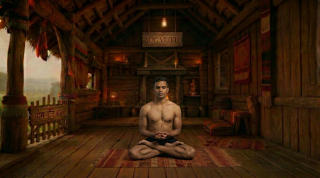
Gorakshasana, or Cowherd Pose, is a deeply grounding and inwardly focused posture that masterfully blends strength with profound flexibility. It meticulously tones the inner thighs and awakens the pelvic floor, creating a stable foundation while the spine extends with grace.
Muscles
- Inner Thigh Musclesstretches
- Pelvic Floor Musclesstrengthens
- Muscles of the Back of the Thighsstretches
- Front Thigh Musclesstabilises
- Buttock Musclesstabilises
Joints
- Hip Jointsmobilises
- Knee Jointsstabilises
- Ankle Jointsmobilises
- Sacroiliac Jointstabilises
Inside the body
- Pelvic Organs (Reproductive, Urinary, Lower Digestive)
- Abdominal Organs
- Breathing
Mind
Gorakshasana is a powerful practice for cultivating mental stillness and resilience, particularly beneficial for those grappling with anxiety.
Take care
Teachers must approach Gorakshasana with keen observation, particularly regarding the knees and hips, as these joints bear significant load and undergo deep flexion.
Students with pre-existing knee injuries (meniscus tears, ligament issues) or hip impingement should be guided with extreme care, using props like a blanket under the heels or a block for support to reduce strain. Always prioritize joint safety over depth, ensuring the pose brings therapeutic benefit rather than discomfort or harm.
Muscles
Inner Thigh Muscles
StretchesStrengthensAdductor group (adductor longus, brevis, magnus, gracilis, pectineus)
These muscles, running along the inside of your thighs from the pelvis to the knee, experience a deep, sustained lengthening in Gorakshasana as the knees widen.
Read moreShow less
Simultaneously, they engage subtly to draw the heels together, creating an isometric strengthening action that tones the inner thighs.
This dual action releases chronic tightness while building strength, allowing for a greater flow of 'prana' (life force) through the lower limbs, alleviating feelings of energetic congestion and promoting a sense of freedom in movement and stability.
Pelvic Floor Muscles
StrengthensLevator ani, coccygeus, perineal muscles
Nestled at the base of your pelvis, these muscles form a hammock-like structure that supports the internal organs and plays a crucial role in core stability.
Read moreShow less
In this pose, the deep squat encourages a gentle yet profound activation and lifting sensation (Mula Bandha), strengthening their tone and improving their responsiveness.
This engagement not only supports spinal integrity but also helps to contain and direct 'apana vayu' (downward-moving energy), fostering a feeling of energetic containment and inner power.
Muscles of the Back of the Thighs
StretchesHamstrings (biceps femoris, semitendinosus, semimembranosus)
The hamstrings, situated at the back of your thighs from the sitting bones to below the knee, undergo a significant stretch, particularly in their proximal attachments, as the hips flex deeply.
Read moreShow less
This action helps to release tension that often contributes to lower back stiffness and restricted forward bending.
As these muscles lengthen, a sense of release permeates the posterior chain, allowing for greater ease in the pelvis and a feeling of 'lightness' in the lower body, enhancing overall energetic flow and spinal freedom.
Front Thigh Muscles
StabilisesQuadriceps femoris (rectus femoris, vastus lateralis, medialis, intermedius)
These powerful muscles on the front of your thighs are crucial in Gorakshasana, working eccentrically to control the deep descent into the squat and then isometrically to hold the position.
Read moreShow less
They act as primary stabilizers for the knee joint, preventing collapse and maintaining integrity.
This continuous engagement builds muscular endurance and fosters a sense of grounded strength, allowing the practitioner to feel more secure and rooted in their physical form, supporting mental steadiness.
Buttock Muscles
StabilisesStrengthensGluteus maximus, medius, minimus, and deep external rotators
The gluteal muscles, particularly the deep external rotators, are highly active in Gorakshasana to achieve and maintain the wide knee position and stabilize the hip joints.
Read moreShow less
They work in concert with the adductors to create a balanced opening and support the pelvic bowl.
This activation strengthens the hips' ability to rotate and stabilize, releasing tension often held in the outer hips and promoting a feeling of energetic openness and freedom in the lower body, essential for 'apana' flow.
Spinal Erectors
StrengthensErector Spinae (iliocostalis, longissimus, spinalis)
Running along the length of your spine, these muscles are vital for maintaining the upright, extended torso in Gorakshasana, working against gravity to prevent rounding of the back.
Read moreShow less
Their sustained isometric contraction strengthens the postural muscles, improving spinal awareness and integrity.
This cultivation of an elongated spine not only enhances physical posture but also allows for a clearer upward flow of 'prana', fostering mental alertness and a sense of dignity and inner lift.
Joints
Hip Joints
MobilisesThe hip joints, where the thigh bone meets the pelvis, undergo profound flexion and external rotation in this pose.
Read moreShow less
This deep mobilization helps to increase the range of motion, releasing stiffness accumulated from prolonged sitting and habitual postures.
The increased circulation and synovial fluid exchange within the joint capsule foster a greater sense of freedom and ease in the entire pelvic region, allowing 'prana' to flow more freely through the hips and sacrum.
Knee Joints
StabilisesThe knee joints experience significant flexion and compression in Gorakshasana, bearing the body's weight in a deeply bent position.
Read moreShow less
While this strengthens the surrounding musculature, it also demands careful alignment to prevent undue strain on the ligaments and menisci.
When practiced with awareness, this weight-bearing strengthens the joint's supportive structures, promoting stability and resilience, which translates to a feeling of groundedness and trust in one's physical foundation.
Ankle Joints
MobilisesThe ankle joints are deeply flexed (dorsiflexion if heels are down, plantarflexion if heels are lifted to balance on balls of feet) and externally rotated in this posture, requiring significant flexibility in the talocrural and subtalar joints.
Read moreShow less
This sustained stretch helps to release tension in the calf muscles and improve ankle mobility, which is crucial for overall balance and gait.
Energetically, mobile ankles facilitate a stronger connection to the earth, enhancing the feeling of being rooted and steady.
Sacroiliac (SI) Joint
StabilisesThis joint, where the sacrum meets the ilium in the pelvis, is a critical junction for transferring forces between the spine and legs.
Read moreShow less
In Gorakshasana, the activation of the pelvic floor and deep hip external rotation helps to create a stable yet subtle engagement around the SI joint.
This stabilization can alleviate discomfort associated with SI joint dysfunction, fostering a sense of integrity and energetic coherence within the pelvic girdle, the seat of 'swadhisthana chakra'.
Inside the body
Pelvic Organs (Reproductive, Urinary, Lower Digestive)
The deep squat position of Gorakshasana creates a gentle compression and subsequent release for the organs housed within the pelvic bowl, including the reproductive, urinary, and lower digestive systems.
Read moreShow less
This action encourages increased blood flow upon release, flushing stagnant energy and promoting optimal function.
In yogic terms, this posture awakens and purifies the lower energetic centers, fostering vitality and a sense of cleanliness within the body's foundational systems.
Abdominal Organs
The upright torso and deep squat gently compress the lower abdominal organs, including parts of the intestines.
Read moreShow less
This mild internal massage can stimulate peristalsis, aiding in digestion and elimination.
The subtle pressure also encourages a toning effect on the abdominal wall, which supports the digestive fire ('agni') and contributes to a feeling of lightness and efficiency within the core, allowing for clearer energetic pathways.
Breathing
In Gorakshasana, the deep squat and upright torso naturally encourage a diaphragmatic, abdominal breath, promoting a sense of calm and stability.
Read moreShow less
The engagement of the core and pelvic floor helps to deepen the exhalation, which is inherently calming and helps to release tension.
This rhythmic, unforced breath supports the nervous system in settling, making it an ideal posture to integrate with 'Ujjayi pranayama' for sustained focus and inner quietude, amplifying the meditative quality of the pose.
Fascia (connective tissue)
The deep squat of Gorakshasana meticulously targets the fascial lines of the inner thighs (superficial back line and inner spiral line) and the connective tissues surrounding the pelvic floor.
Read moreShow less
As these intricate fascial webs are gently lengthened and toned, restrictions in movement are released, improving overall tissue hydration and elasticity.
This release of fascial tension is akin to opening energetic channels ('nadis') within the body, allowing 'prana' to flow more freely and dissolving long-held patterns of physical and emotional constriction.
Mind and nervous system
- Nervous system
This posture has a profound calming effect on the nervous system, inviting a sense of inner quietude and stability.
Read moreShow less
The deep squat, combined with the activation of the pelvic floor, helps to stimulate the parasympathetic nervous system, shifting the body from a state of 'fight or flight' towards 'rest and digest'.
This sustained stillness allows the 'chitta vritti' (fluctuations of the mind) to settle, fostering a deeper sense of peace and presence.
Gorakshasana cultivates a heightened state of proprioception and interoception, making the practitioner intensely aware of their body's position and internal sensations.
Read moreShow less
The challenge of balancing in this deep squat requires focused attention, which acts as a powerful form of 'dharana' (concentration).
This sustained focus on the physical form helps to draw the senses inward ('pratyahara'), reducing external distractions and enhancing mental clarity and self-awareness.
- Mind & mood
Gorakshasana is a powerful practice for cultivating mental stillness and resilience, particularly beneficial for those grappling with anxiety.
Read moreShow less
The grounded nature of the pose, rooting through the feet and activating the pelvic floor, creates a strong sense of stability that can translate directly into mental fortitude.
By consciously holding the pose and breathing deeply, practitioners learn to observe and navigate mental turbulence with greater equanimity, fostering a calm and centered mind.
This posture demands and develops profound body awareness, requiring a precise calibration of balance, strength, and flexibility.
Read moreShow less
As students refine their alignment and deepen into the pose, they develop a heightened sensitivity to subtle sensations and energetic shifts within their body.
This internal attunement not only enhances physical control but also strengthens the connection between mind and body, laying the groundwork for deeper meditative states and a more integrated self.
Because it is a standing pose
As a standing posture, Gorakshasana immediately draws our awareness to our connection with the earth, cultivating a profound sense of grounding.
Read moreShow less
The effort to root firmly through the feet while maintaining an upright spine creates a powerful energetic channel between the earth and the heavens.
This foundational stability helps to anchor the 'apana vayu', promoting a feeling of security and reducing mental dispersion, crucial for those feeling unmoored or anxious.
The deep external rotation and flexion of the hips in Gorakshasana make it an exceptional hip opener, releasing tension that often accumulates from modern sedentary lifestyles.
Read moreShow less
Anatomically, this targets the deep external rotators and adductors, improving overall hip mobility and circulation.
Energetically, open hips are believed to facilitate the flow of 'prana' through the pelvic region, releasing stored emotional tension and fostering a sense of freedom and receptivity.
Maintaining Gorakshasana requires exquisite balance, particularly if the heels are lifted, challenging the proprioceptors in the feet and ankles.
Read moreShow less
This constant micro-adjustment of the body to find equilibrium sharpens focus and concentration, strengthening the 'chitta' (mind-stuff) to remain steady amidst challenges.
The cultivation of physical balance directly translates to a more balanced and composed mental state, enhancing poise and inner resilience.