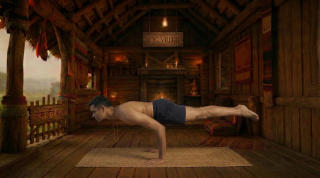
Benefits· लाभ
What Swan Pose does for you
Hamsasana · हंसासन
Hamsasana, the Swan Pose, is a profound arm balance that asks us to find lightness while rooting deeply through the hands. It engages the entire posterior chain and core, creating a sense of powerful integration and lift, defying gravity with grace.
Muscles
- Deep Abdominal Musclesstrengthens
- Tricepsstrengthens
- Deltoidsstrengthens
- Wrist Flexors and Extensorsstrengthens
- Spinal Extensorsstrengthens
Joints
- Wristsstabilises
- Shouldersstabilises
- Elbowsstabilises
- Spineextension
Inside the body
- Abdominal Organs (Digestive System)
- Lungs
- Breathing
Mind
Hamsasana is a powerful teacher of inner strength and unwavering determination, as it asks us to overcome the initial fear of lifting and balancing on our hands.
Take care
Teachers, please guide students with utmost care, especially those presenting with any wrist injuries, carpal tunnel syndrome, or recent abdominal surgeries, including hernias.
The intense weight-bearing on the wrists and the significant intra-abdominal pressure can exacerbate these conditions. Always encourage students to listen deeply to their own bodies and to modify or avoid the pose if they experience any sharp pain or discomfort, prioritizing their long-term well-being over performance.
Muscles
Deep Abdominal Muscles
StrengthensTransverse Abdominis, Rectus Abdominis, Obliques
These muscles, running across and along the front of your abdomen, are the bedrock of Hamsasana, initiating the lift of your torso and legs from the floor.
Read moreShow less
Their profound engagement creates a sturdy internal corset, providing essential stability for the entire spine and pelvis.
From a yogic perspective, this activation cultivates Samana Vayu, the balancing energy at the navel center, fostering digestive fire and inner equilibrium.
Consistent practice here builds not just physical strength but a deep sense of core integrity and self-possession.
Triceps
StrengthensTriceps Brachii
Located on the back of your upper arms, the triceps are powerfully engaged to straighten and hold your elbows firm, providing the essential support structure for your entire body weight.
Read moreShow less
This isometric contraction builds incredible endurance and power in the arms, crucial for all arm balances.
The sustained effort here channels your focus and determination, transforming mere physical exertion into a potent expression of inner will and resilience.
Over time, this strengthens the energetic pathways through the arms, allowing prana to flow more freely.
Deltoids
StrengthensDeltoid (Anterior and Medial heads)
The large muscles capping your shoulders, particularly the front and side portions, work intensely to stabilize the shoulder joint, preventing any collapse or strain as you bear weight.
Read moreShow less
They hold the upper arm bone securely in the shoulder socket, creating a broad and open chest even in this compact shape.
This engagement helps to lift the chest and collarbones, preventing the shoulders from rounding forward, which in turn supports a more expansive breath and an open heart space, fostering a sense of courage.
Regular strengthening here creates a robust and mobile shoulder girdle.
Wrist Flexors and Extensors
StrengthensFlexor Carpi Radialis, Flexor Carpi Ulnaris, Extensor Carpi Radialis, Extensor Carpi Ulnaris
The network of muscles in your forearms that control the movement and stability of your wrists are profoundly activated as you press your palms into the earth.
Read moreShow less
These muscles work synergistically to create a strong, stable base, protecting the delicate wrist joints from excessive pressure.
This foundational engagement builds resilience in the hands and forearms, allowing prana to flow through the arm lines, ultimately enhancing your ability to root and ground yourself in all aspects of practice and life.
Over time, you'll feel a significant increase in grip strength and wrist stability.
Spinal Extensors
StrengthensErector Spinae Group
These deep muscles running along either side of your spine are crucial for lifting your chest and legs away from the floor, creating a gentle yet powerful spinal extension.
Read moreShow less
They work in harmony with the core to maintain a long, integrated posterior chain, counteracting the pull of gravity.
This action cultivates a sense of lightness and lift in the spine, awakening the energy along the central channel and fostering vitality.
Strengthening these muscles provides invaluable support for a healthy, upright posture both on and off the mat.
Gluteal Muscles
StrengthensGluteus Maximus, Gluteus Medius
The powerful muscles of your buttocks are engaged to lift and extend your legs, contributing significantly to the overall lightness and lift of the lower body in Hamsasana.
Read moreShow less
This activation stabilizes the pelvis and integrates the strength from the core down through the legs, creating a cohesive and powerful posterior chain.
Energetically, this engagement helps to lift Apana Vayu, the downward-moving energy, contributing to a feeling of buoyancy and energetic uplift.
Regular work here enhances hip stability and power.
Joints
Wrists
StabilisesThe wrist joints (radiocarpal and intercarpal) bear the full weight of the body, demanding significant strength and precise alignment from the surrounding muscles and ligaments.
Read moreShow less
This intense weight-bearing, when approached mindfully, progressively strengthens the connective tissues and small bones of the wrist, building resilience and stability.
From a yogic perspective, grounding through the palms connects us to the earth, allowing a clear channel for energy flow through the hands, enhancing our ability to give and receive.
Over time, this practice fortifies the wrist architecture, preparing them for more advanced arm balances.
Shoulders
StabilisesThe complex shoulder joint (glenohumeral and scapulothoracic) is actively stabilized by the surrounding rotator cuff muscles and deltoids to prevent compression or collapse.
Read moreShow less
The action of pressing down through the hands helps to lift and broaden the shoulder blades on the back, creating space and preventing the shoulders from hiking up towards the ears.
This mindful stabilization cultivates a sense of integrated strength and spaciousness around the heart, allowing for a steady breath and a calm mind.
Regular practice improves overall shoulder health, mobility, and strength.
Elbows
StabilisesThe elbow joints (humeroulnar and humeroradial) are held in a specific, often slightly bent but firm, position, requiring significant isometric strength from the triceps and biceps.
Read moreShow less
This strong, stable alignment prevents hyperextension or wobbling, creating a solid foundation for the pose.
The unwavering firmness in the elbows reflects a mental steadiness, embodying the yogic principle of Sthira (steadiness) in action.
Developing this stability protects the joint and allows for a more direct transmission of energy through the arms.
Spine
ExtensionThe vertebral joints of the spine are engaged in a gentle, sustained extension as the chest and legs lift away from the floor.
Read moreShow less
This active engagement of the spinal extensors helps to lengthen and decompress the spine, creating space between the vertebrae rather than compressing them.
This subtle spinal awakening stimulates the central energy channel (Sushumna Nadi), fostering a feeling of lightness and energetic uplift.
Regular practice enhances spinal flexibility and strength, promoting a healthy, vital back.
Inside the body
Abdominal Organs (Digestive System)
In Hamsasana, the gentle yet sustained compression of the abdomen against the forearms provides a subtle internal massage to the digestive organs, including the stomach, intestines, and liver.
Read moreShow less
This internal pressure stimulates blood circulation to these vital organs, aiding in detoxification and improving digestive function.
From a yogic perspective, this action kindles Agni, the digestive fire, promoting efficient assimilation and elimination, and fostering a sense of inner vitality and energetic balance in the core.
Lungs
While the abdomen is engaged, the posture encourages a more subtle, yet controlled, breath primarily into the upper chest and back, challenging deep diaphragmatic breathing.
Read moreShow less
This forces a conscious awareness of the breath, leading to more refined control and efficiency in respiration.
The deliberate attention to breath in this challenging posture helps to calm the nervous system, even amidst exertion, and cultivates a deeper connection to Prana, the life force, throughout the body.
It teaches us to breathe effectively even when challenged.
Breathing
In Hamsasana, the deep engagement of the abdominal muscles creates a natural compression in the belly, which initially makes deep diaphragmatic breathing challenging.
Read moreShow less
This encourages a more refined and conscious breath, often shifting towards a fuller engagement of the intercostal muscles and upper chest to maintain oxygenation.
The necessity for controlled, steady breathing in this demanding posture teaches the practitioner to manage energy efficiently and to find calm even amidst exertion.
Over time, this practice refines the ability to engage Ujjayi breath, supporting the lift and sustaining the pose with grace and inner quietude.
Fascia (connective tissue)
In Hamsasana, the entire fascial web is engaged and strengthened, particularly the Superficial Front Line (from the tops of the feet, along the shins, up the front of the thighs, and through the abdominal wall) and the Superficial Back Line (from the soles of the feet, up the calves, hamstrings, glutes, and spinal extensors).
Read moreShow less
The Arm Lines, both superficial and deep, are also intensely activated from the fingertips through the shoulders.
This integrated engagement of fascial lines creates a sense of full-body connectivity and resilience, helping to release held patterns of tension and allowing prana to flow more freely through the body's energetic channels, fostering a feeling of structural integrity and fluidity.
Mind and nervous system
- Nervous system
Hamsasana demands profound concentration and single-pointed focus, which naturally draws the mind away from external distractions and into the present moment.
Read moreShow less
This intense mental engagement helps to quiet the fluctuations of the mind (Chitta Vritti Nirodha), fostering a sense of inner calm and mental clarity, even while the body is exerting significant effort.
The challenge of balancing on the hands also sharpens proprioception, enhancing the body's awareness of its position in space, leading to greater coordination and control.
The sustained isometric contractions throughout the body, particularly in the core and arms, activate the sympathetic nervous system initially to generate power, but the stillness required for balance then invites a calming, parasympathetic response.
Read moreShow less
This dynamic interplay teaches the nervous system to remain steady and composed under pressure, building resilience and equanimity.
It’s a powerful practice for developing the capacity to find inner stillness amidst physical exertion, translating to greater composure in daily life.
- Mind & mood
Hamsasana is a powerful teacher of inner strength and unwavering determination, as it asks us to overcome the initial fear of lifting and balancing on our hands.
Read moreShow less
The mental resolve required to sustain the pose translates directly into an increased sense of self-confidence and courage in facing life's challenges.
It cultivates Dharana, the sustained concentration, as the mind must remain fully present and focused to maintain the balance and integrity of the posture, sharpening the intellect and fostering mental discipline.
The act of lifting the entire body off the ground, even for a few moments, can be incredibly empowering, shifting one's perspective from feeling heavy or stuck to experiencing lightness and possibility.
Read moreShow less
This physical elevation can lead to a corresponding mental uplift, breaking through limiting beliefs and fostering a sense of achievement and self-mastery.
It teaches us that with focused effort and a calm mind, we are capable of far more than we imagine, inspiring a deeper trust in our own capabilities.
Because it is a arm balance pose
Arm balances fundamentally build immense strength throughout the entire upper body, including the shoulders, arms, wrists, and core, creating a robust and integrated support system.
Read moreShow less
The anatomical mechanism involves isometric contractions across multiple muscle groups, fostering endurance and power in a coordinated fashion.
From a yogic perspective, these poses cultivate a profound sense of self-reliance and inner strength, teaching us to lift ourselves up and find lightness amidst gravity's pull, embodying the spirit of effort and grace.
The nature of arm balances demands intense mental focus and concentration, drawing the practitioner's awareness deeply inward, away from external distractions.
Read moreShow less
This sustained attention helps to quiet the restless mind (Chitta Vritti) and cultivate Dharana, single-pointed concentration.
The challenge of balancing fosters a sense of mental discipline and resilience, teaching us to remain calm and steady even in physically demanding situations, translating to greater mental fortitude in daily life.