4
Muscles
3
Joints
2
Organs
2
Mental
Hanumanasana (Splits Pose)
हनुमानासन
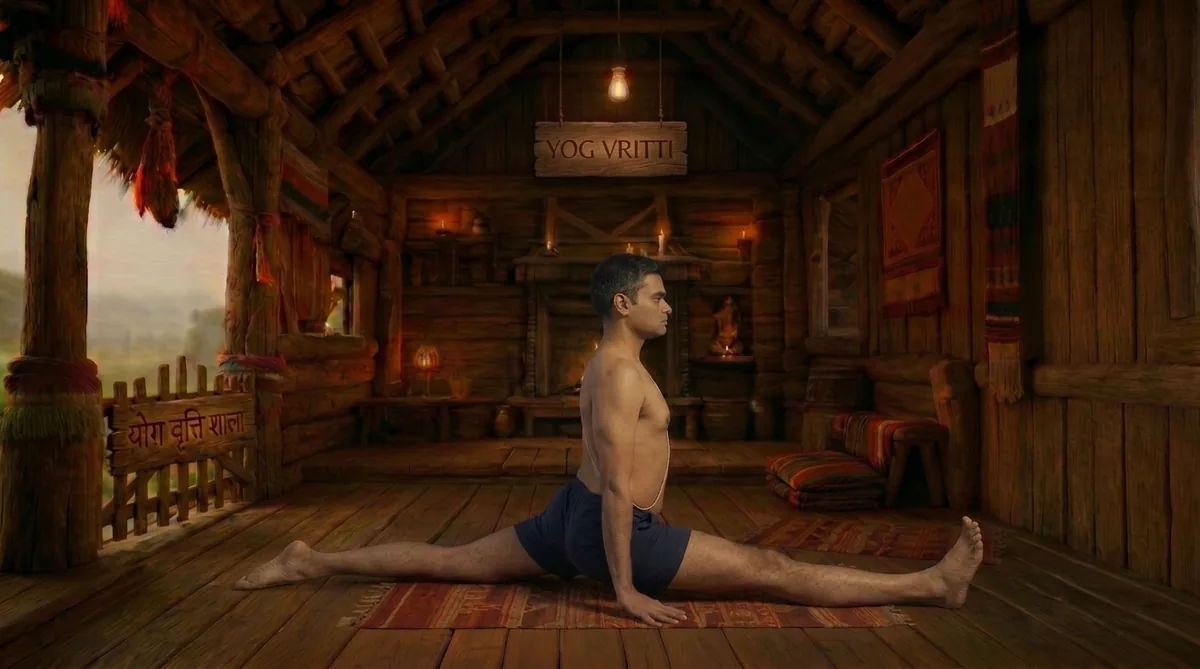
Hanumanasana, or Splits Pose, is a profound hip opener that demands both significant flexibility and unwavering mental fortitude. It meticulously lengthens the entire posterior chain of the front leg and the entire anterior chain of the back leg, creating a deep sensation of release through the pelvis and groin. Energetically, this advanced asana cultivates a powerful sense of grounding and courage, challenging practitioners to surrender to sensation while maintaining inner stability. It's a journey into patience and determination, revealing hidden strengths and fostering a liberating sense of openness in the lower body.
Monkey God Pose, also called Splits Pose is a classical yoga posture. Its Sanskrit name Hanumanasana (Splits Pose) translates word-for-word as: Hanuman (Monkey God Hanuman) · Asana (Pose). Beginning from a kneeling position, the practitioner aligns the body with precision and intentional breath. The posture works to lengthen the hamstrings, stretch the hip flexors and strengthen the quadriceps. Stimulates abdominal organs. Releases emotional blockages. Suitable for advanced practitioners with developed body awareness, it is a meaningful addition to any practice, particularly beneficial for athletes. A block and blanket can be used to make the posture more accessible and support correct alignment. Practitioners with hip injury and hamstring injury should approach with care or consult a qualified teacher.
Muscles Worked
Hamstrings
[Biceps femoris, Semitendinosus, Semimembranosus]
The long muscles running along the back of your front thigh (hamstrings) receive an extremely deep, sustained release here, not a forced stretch but a patient unwinding.
As you hold the pose and breathe, the nervous system gradually allows these muscles to let go of years of accumulated tension, often stored from sitting and stress.
In yogic understanding, this releases apana vayu—the downward-moving energy—allowing a feeling of groundedness and ease in the lower body.
Regular, mindful practice progressively lengthens this posterior chain, directly reducing the pull on the lower back and improving pelvic mobility.
Hip Flexors
[Iliopsoas, Rectus femoris]
On the back leg, the powerful hip flexor complex (iliopsoas and rectus femoris) undergoes a profound lengthening, often revealing deep-seated tightness from prolonged sitting or athletic activity.
This stretch opens the entire front of the hip and pelvis, creating space in an area often contracted and guarded.
Yogically, releasing these muscles can unlock emotional tension held deep within the core, allowing for a sense of expansion and freedom in the pelvic bowl.
This improved flexibility in the hip flexors directly enhances walking gait and reduces compensatory strain in the lumbar spine.
Adductors (Groin Muscles)
[Adductor longus, brevis, magnus, Gracilis, Pectineus]
The inner thigh muscles (adductors) of both legs are intensely lengthened in Hanumanasana, especially as the hips descend towards the floor.
This challenging stretch targets a region often tight and resistant, improving lateral hip mobility and circulation to the inner thighs.
From a yogic perspective, opening the adductors can release inhibition and foster a sense of openness and vulnerability, connecting to the Muladhara and Svadhisthana chakras.
Consistent practice here enhances hip joint health and improves overall lower body flexibility for a wide range of movements.
Quadriceps
[Rectus femoris, Vastus lateralis, Vastus medialis, Vastus intermedius]
While the rectus femoris on the back leg lengthens as a hip flexor, the quadriceps of the front leg primarily work to stabilize and protect the extended knee.
They engage subtly to lift the kneecap (patella), preventing hyperextension and distributing the stretch safely across the joint.
This intelligent engagement cultivates muscular awareness and discernment, teaching the practitioner to find a balance between effort (sthira) and ease (sukham) even in an extreme stretch.
Developing this controlled strength around the knee is vital for joint longevity and injury prevention in advanced poses.
Joints Mobilized
Hip Joints
mobilizingThe two hip joints (coxofemoral joints) are simultaneously taken to their extreme end ranges: one in deep flexion and the other in profound extension.
This bilateral action significantly mobilizes the hip capsules, increasing the range of motion in multiple planes.
This deep opening can release synovial fluid, nourishing the joint cartilage and improving overall hip health.
Yogically, this liberation of the hips can lead to a feeling of emotional release and greater freedom in movement, as the hips are often considered a storage site for emotional tension.
Knee Joints
stabilizingBoth knee joints (tibiofemoral joints) are in an extended or near-extended position, requiring careful stabilization to prevent hyperextension and strain.
The emphasis is on maintaining active engagement of the surrounding musculature, particularly the quadriceps, to protect the ligaments and menisci.
This mindful engagement fosters proprioceptive awareness, teaching the practitioner to discern the subtle limits of their joint mobility.
Long-term, this careful stabilization strengthens the supportive structures around the knees, enhancing their resilience and reducing vulnerability to injury in dynamic movements.
Sacroiliac (SI) Joint
stabilizingThe deep asymmetrical hip opening in Hanumanasana places unique demands on the sacroiliac (SI) joint, the junction between the sacrum and the ilium.
Maintaining pelvic alignment and drawing the outer hips towards the midline is crucial to stabilize this joint and prevent undue shearing forces.
This mindful action cultivates a subtle awareness of the pelvic girdle's integrity, an essential foundation for all lower body movements.
Over time, practicing with this awareness can improve SI joint stability and reduce instances of lower back discomfort stemming from pelvic imbalance.
Organ & System Benefits
Pelvic Organs
The intense stretch in the groin and the deep positioning of the pelvis in Hanumanasana can create a subtle yet significant increase in blood flow to the pelvic organs, including the reproductive and urinary systems.
This enhanced circulation acts as a gentle internal massage, invigorating these vital areas and promoting their healthy function.
Yogically, this stimulation is believed to awaken the lower chakras (Muladhara and Svadhisthana), fostering vitality, creativity, and a strong sense of self.
It can contribute to overall pelvic health and a feeling of grounded energetic presence.
Abdominal Organs
While not a primary focus, the gentle compression and release in the lower abdomen, particularly if the torso remains upright, can mildly stimulate the abdominal organs.
This subtle internal movement encourages better circulation and aids in the digestive process.
In yogic terms, this gentle internal action can help to stoke Agni (digestive fire) and support the healthy flow of prana through the manipura chakra.
Over time, this can contribute to improved digestive efficiency and a feeling of lightness in the core.
Nervous System
The sheer intensity of Hanumanasana immediately challenges the stretch reflex, requiring a conscious override of the body's natural protective mechanisms.
As the practitioner learns to breathe deeply and surrender, the parasympathetic nervous system is gradually engaged, allowing the muscles to release tension at a profound level.
This intentional down-regulation of the 'fight or flight' response cultivates a deep sense of calm amidst intensity, teaching the nervous system to find ease even in challenging situations.
The sustained hold educates the proprioceptors, enhancing body awareness and reducing chronic tension patterns.
The deep hip opening in Hanumanasana is often associated with releasing stored emotional tension, as the hip flexors and adductors can hold significant psychological stress.
As these muscles lengthen, a wave of sensation, sometimes accompanied by emotional release, can wash over the practitioner.
This cathartic experience, guided by conscious breath, helps to clear 'chitta vritti' (fluctuations of the mind) related to fear or resistance.
It fosters a sense of psychological freedom and promotes a more resilient emotional landscape, allowing for greater peace and inner space.
Mental & Emotional
Hanumanasana is a master class in perseverance and unwavering determination, demanding immense mental strength to remain present and breathe through intense sensation.
The journey into the pose cultivates a powerful sense of inner resolve, teaching the mind to stay focused and calm even when the body feels challenged.
This mental discipline translates into daily life, building resilience and the capacity to face difficulties with greater equanimity and patience, embodying the yogic principle of tapas (discipline).
The act of gradually unfolding into Hanumanasana fosters a profound sense of self-trust and patience, as forced entry can lead to injury.
It requires a mindful approach, learning to listen to the body's subtle cues and respecting its current limitations.
This cultivation of self-awareness and non-harming (ahimsa) extends beyond the mat, promoting a compassionate relationship with oneself and others.
Over time, achieving even a partial expression of the pose can build immense confidence and a belief in one's capacity for growth and transformation.
Because of Its Shape
hip opener
As a profound hip opener, Hanumanasana targets the entire pelvic girdle, lengthening the anterior and posterior muscle chains around the hips simultaneously.
This action significantly increases the range of motion in the hip joints, enhancing flexibility and reducing stiffness that often accumulates from sedentary lifestyles.
Yogically, opening the hips is believed to release deeply held emotional and energetic blockages, particularly those associated with fear, control, and past traumas, leading to a sense of liberation and energetic flow through the lower body.
The deep stretch across the groin and inner thighs specifically addresses tightness in the adductor muscles, which are often overlooked in daily movement.
By creating space in this region, the pose improves circulation to the pelvis and legs, supporting lymphatic drainage and reducing feelings of heaviness or stagnation.
This enhanced openness in the inner thighs is crucial for healthy pelvic alignment and can alleviate pressure on the lower back, fostering a more balanced and fluid movement quality throughout the entire body.
Fascial Lines
Hanumanasana provides a comprehensive release for several fascial lines, most notably the superficial back line (posterior thigh, calves) and the superficial front line (hip flexors, anterior thigh) on opposing legs.
Additionally, the deep front line (psoas, inner thigh) and parts of the lateral line are significantly lengthened as the body descends into the split.
This deep, sustained stretch helps to unwind chronic fascial restrictions, improving the elasticity and glide between tissues.
Yogically, this release of the 'body's web' allows for a freer flow of prana, dissolving energetic blockages and promoting a feeling of integrated lightness and mobility throughout the entire kinetic chain.
Breathing & Respiratory
The intensity of Hanumanasana naturally challenges the breath, often leading to shallow or held breathing initially.
However, sustained practice cultivates the ability to maintain a deep, steady Ujjayi breath, which is paramount for allowing the body to release.
The focus on a long, slow exhalation is particularly effective in signaling the nervous system to relax and soften into the stretch.
This mindful breathing transforms the pose from a mere physical feat into a profound pranayama practice, deepening interoception and cultivating a calm, resilient mind even in the face of strong sensation.
Anatomical Caution
Teachers, approach Hanumanasana with utmost care and discernment, prioritizing safety over depth.
Watch vigilantly for any signs of hamstring or groin strain, as these areas are highly vulnerable to tears if forced.
Always ensure students are adequately warmed up and advise against pushing into sharp pain; a dull, sustained stretch is the goal.
Protect the knees, especially the front knee from hyperextension and the back knee from pressure, by using appropriate padding and encouraging active quadriceps engagement.