5
Muscles
4
Joints
3
Organs
3
Mental
Kapotasana
कपोतासन
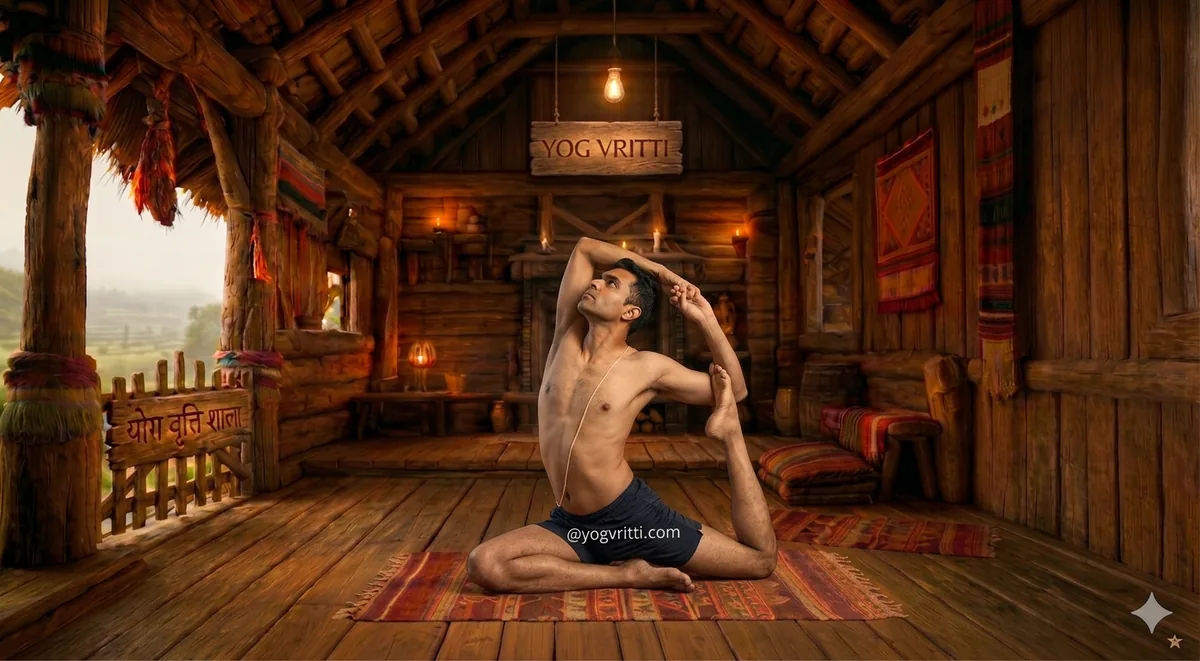
Kapotasana is a deeply transformative kneeling backbend that profoundly extends the entire anterior chain of the body, from the quadriceps and hip flexors through the abdomen and chest. It demands significant flexibility in the spine, hips, and shoulders, while simultaneously building strength in the spinal extensors and core. Energetically, it is a powerful heart opener, cultivating courage, vulnerability, and a profound sense of inner liberation. For a dedicated practitioner, Kapotasana is not merely a physical feat but a journey into emotional release and expanded consciousness.
King Pigeon Pose, also called Kapotasana is a classical yoga posture. Its Sanskrit name Kapotasana translates word-for-word as: Kapota (Pigeon / Dove) · Asana (Pose). Beginning from a kneeling position, the practitioner aligns the body with precision and intentional breath. The posture works to strengthen the quadriceps, engage the core and stretch the hip flexors. Stretches hip flexors and shoulders. Opens the chest and heart. Suitable for advanced practitioners with developed body awareness, it is a meaningful addition to any practice, particularly beneficial for athletes. A block and wall can be used to make the posture more accessible and support correct alignment. Practitioners with neck pain and migraine should approach with care or consult a qualified teacher.
Muscles Worked
Quadriceps
[Rectus Femoris, Vastus Lateralis, Vastus Medialis, Vastus Intermedius]
The muscles along the front of your thighs (quadriceps) undergo a profound, sustained stretch in Kapotasana, particularly the rectus femoris which crosses both the hip and knee joints.
This deep lengthening helps to release chronic tightness often accumulated from daily activities like sitting, directly impacting pelvic alignment and lumbar spine health.
From a yogic perspective, this release in the front of the thighs can liberate pent-up energy, allowing for a feeling of lightness and freedom in the lower body.
Hip Flexors
[Psoas Major, Iliacus]
The deep muscles connecting your spine to your inner thighs (psoas and iliacus) are intensely lengthened as the hips move into deep extension.
This action creates crucial space in the lumbar spine, alleviating compression and fostering greater spinal mobility.
Energetically, the psoas is often considered a reservoir of emotional tension, and its release can trigger a profound letting go of stored stress and fear, promoting a sense of grounded openness and emotional freedom.
Abdominals
[Rectus Abdominis, Obliques, Transversus Abdominis]
While the superficial abdominal muscles (rectus abdominis) are significantly lengthened, the deeper core muscles (transversus abdominis and obliques) engage subtly to support and protect the lumbar spine.
This intelligent interplay of lengthening and stabilizing creates an expansive yet secure foundation for the backbend, allowing the front body to open without strain.
This active engagement of the core ensures the energetic lift is balanced with foundational support, allowing prana to flow freely through the abdominal region without causing vulnerability.
Spinal Extensors
[Erector Spinae, Multifidus]
The intrinsic muscles running along either side of your spine (erector spinae and multifidus) are actively engaged to create and sustain the deep arch of Kapotasana.
They work synergistically to lift and lengthen the vertebral column, rather than simply compressing the lower back.
This intelligent activation builds strength and resilience in the posterior chain, cultivating a sense of uprightness and inner power that translates into a more confident and poised bearing, both on and off the mat.
Shoulder Girdle Muscles
[Deltoids, Rotator Cuff, Pectoralis Major/Minor]
To grasp the feet, the shoulder joints undergo significant external rotation and extension, requiring both flexibility and strength.
Muscles like the pectorals and anterior deltoids are stretched, while the smaller rotator cuff muscles engage to stabilize the joint and prevent impingement.
This profound opening releases chronic tension held in the upper back and chest, allowing for a broader, more expansive breath and an energetic opening of the Anahata Chakra, fostering feelings of courage and vulnerability.
Joints Mobilized
Spine (Vertebral Column)
mobilizing | decompressingKapotasana deeply mobilizes the entire vertebral column into extension, with a particular emphasis on the thoracic and lumbar regions.
The intervertebral discs are gently compressed posteriorly and decompressed anteriorly, encouraging nutrient flow and enhancing spinal flexibility.
This sustained arching helps to counteract the effects of prolonged sitting and forward flexion, restoring natural spinal curves and allowing for an unhindered flow of energy (sushumna nadi) through the central channel.
Hip Joints (Acetabulofemoral)
mobilizing (extension) | stabilizingThe hip joints are deeply extended in Kapotasana, demanding significant flexibility in the hip flexors and surrounding connective tissues.
This action helps to improve the range of motion in the hips, which is crucial not only for advanced asanas but also for healthy everyday movement and longevity.
As the hips open and release, a profound sense of lightness and freedom can be felt, allowing for greater fluidity in the lower body and a more grounded, yet expansive, connection to the earth.
Knee Joints (Tibiofemoral)
flexion | weight bearingThe knees are in deep flexion in Kapotasana, and the anterior aspect of the knee may bear some weight, especially if quadriceps flexibility is limited.
While the primary action is a stretch for the quads, it is paramount to protect the kneecaps by ensuring the stretch is felt in the muscle belly, not the joint itself.
Healthy knee flexion in this pose supports the overall lengthening of the front body, contributing to an integrated and harmonious extension throughout the lower limbs.
Shoulder Joints (Glenohumeral)
rotating (external) | mobilizing (extension)The shoulder joints are actively externally rotated and extended as the hands reach back to grasp the feet, creating a broad opening across the chest.
This action significantly improves the range of motion in the shoulder girdle, effectively countering the prevalent rounded-shoulder posture.
The physical opening in the shoulders contributes to a broader rib cage, allowing for deeper breathing and an energetic expansion of the Anahata Chakra, fostering compassion, self-acceptance, and emotional spaciousness.
Organ & System Benefits
Abdominal Organs (Digestive System)
The deep backbend in Kapotasana creates a gentle yet profound compression on the posterior abdominal organs, while simultaneously stretching the anterior abdominal wall.
This 'wringing' action can stimulate circulation to the digestive organs, aiding in peristalsis and enhancing detoxification processes.
Energetically, this area is associated with Manipura Chakra, so invigorating it can boost metabolism, cultivate inner fire, and strengthen one's sense of personal power and vitality.
Lungs (Respiratory System)
The expansive chest opening in Kapotasana creates significantly more space for the lungs to fully inflate, particularly in the upper lobes which are often underused.
This increased lung capacity encourages deeper, fuller breaths, enhancing oxygen intake and vital energy (prana) throughout the body.
The sensation of spaciousness felt in the rib cage directly translates to a feeling of liberation and an expansion of the inner self, promoting calm, clarity, and an unburdened spirit.
Heart (Cardiovascular System)
While not directly compressed or stretched, the heart space is profoundly opened and lifted in Kapotasana, creating an energetic and physical expansion in the chest cavity.
This opening can improve circulation to the chest area and, more importantly, energetically activates the Anahata Chakra, the seat of unconditional love and compassion.
This fosters feelings of courage, emotional openness, and vulnerability, releasing guardedness and allowing for a more expansive and loving connection with oneself and others.
Nervous System
The intensity of Kapotasana initially engages the sympathetic nervous system as the body works to achieve and sustain the deep backbend.
However, with sustained holding and conscious, rhythmic breathing, the parasympathetic nervous system gradually takes over, promoting a profound sense of release and calm.
This dynamic interplay teaches practitioners to find stillness within intensity, cultivating resilience and a deep inner peace that transcends physical challenge.
The deep backbend and expansive chest opening can indirectly stimulate the vagus nerve, a key component of the parasympathetic nervous system responsible for the 'rest and digest' response.
This stimulation helps to calm the 'fight or flight' response, significantly reducing stress and anxiety levels.
As the breath deepens and the heart opens, a profound sense of safety and well-being can emerge, soothing the mind and body and promoting a state of quietude (chitta vritti nirodhah).
The extreme range of motion and intricate alignment required in Kapotasana demand heightened proprioceptive awareness, challenging the nervous system to precisely map the body's position in space.
This intense focus on subtle adjustments and internal sensations cultivates deep mindfulness (pratyahara), drawing attention inward and sharpening the connection between mind and body.
This refined awareness helps to quiet the fluctuations of the mind, leading to a more meditative and present state of being.
Mental & Emotional
Kapotasana is a profound heart opener that physically exposes the front of the body, symbolically revealing the heart and inviting vulnerability.
This act requires immense courage to surrender to the depth of the pose and can bring up deep-seated emotions.
Embracing this vulnerability allows for emotional release and cultivates a fearless spirit, helping practitioners confront fears and open to life's experiences with greater acceptance and an open heart.
The advanced nature of Kapotasana often presents significant mental challenges before physical ones, demanding immense patience, perseverance, and a willingness to stay with discomfort.
Successfully navigating these mental hurdles builds immense self-confidence and mental fortitude, teaching the practitioner that sustained effort and focused intention can overcome seemingly impossible obstacles.
This mental resilience translates into greater determination and grit in all aspects of life.
The intensity and precision required in Kapotasana necessitate a profound introspection and connection to inner sensations, compelling practitioners to listen deeply to their bodies.
This heightened self-awareness (svadhyaya) extends beyond the mat, fostering a deeper understanding of one's physical and emotional landscape, including habitual patterns and unconscious holding.
This leads to greater self-acceptance, wisdom, and a more integrated sense of self.
Because of Its Shape
backbend
Backbends deeply extend the spine, directly counteracting the pervasive forward flexion of modern life and creating crucial space between the vertebrae.
This action vitalizes the nervous system, gently stimulates the adrenal glands, and channels prana upwards, invigorating the body and mind with fresh energy.
Energetically, backbends are powerfully associated with opening the heart (Anahata Chakra), fostering courage, compassion, and a profound sense of emotional liberation.
As a kneeling pose, Kapotasana grounds the lower body, providing a stable and rooted foundation from which to extend and lift the upper body.
This position brings heightened awareness to the ankles, knees, and hips, encouraging proper alignment and muscular engagement in the lower limbs.
From a yogic perspective, kneeling can symbolize humility and surrender, allowing the practitioner to connect deeply with the earth's energy (prithvi tattva) and find stability before venturing into the expansive backbend.
Kapotasana is a profound chest opener, stretching the pectoral muscles, anterior deltoids, and intercostals, thereby broadening the collarbones and lifting the sternum.
This physical expansion directly impacts lung capacity, encouraging deeper, more complete breathing and significantly increasing oxygen intake.
Energetically, opening the chest releases emotional blockages and sadness, cultivating a sense of joy, fearlessness, and an expansive capacity for unconditional love.
Fascial Lines
The entire superficial anterior fascial line, which connects from the tops of the feet, up the shins, through the quadriceps, hip flexors, abdominal wall, and into the chest and shoulders, undergoes a profound and sustained lengthening in Kapotasana.
This deep, interconnected stretch helps to release adhesions and restrictions within this continuous web of connective tissue, improving overall flexibility and fluidity of movement.
From a yogic perspective, releasing these fascial restrictions is akin to unblocking energetic pathways (nadis), allowing prana to flow more freely and liberating the body from ingrained physical and emotional holding patterns.
Breathing & Respiratory
Kapotasana is a challenging pose that initially restricts the breath, especially in the lower abdomen, but ultimately invites a deep, expansive breath into the chest and upper lungs.
The profound chest opening naturally encourages a fuller inhalation, lifting the diaphragm and expanding the rib cage to its maximum capacity.
This makes it an excellent pose for cultivating Ujjayi breath, as the sustained effort and internal heat can deepen the resonance and control of the breath, transforming it into a powerful tool for focus and endurance.
The pose teaches us to breathe fully and consciously even under duress, linking breath to the cultivation of inner strength and calm.
Anatomical Caution
Teachers must approach Kapotasana with extreme care and discernment, especially for students with any history of knee, lower back, or neck sensitivities or injuries.
Ensure the student has developed sufficient flexibility in the hip flexors and quadriceps, and strength in the spinal extensors, before attempting the full expression, as forcing the pose can lead to serious injury.
Always prioritize spinal length and protection over the depth of the arch, and provide ample support with props like blankets under the knees and blocks for the hands to gradually build the necessary strength, opening, and confidence.