4
Muscles
3
Joints
2
Organs
3
Mental
Heron Pose
क्रौञ्चासन
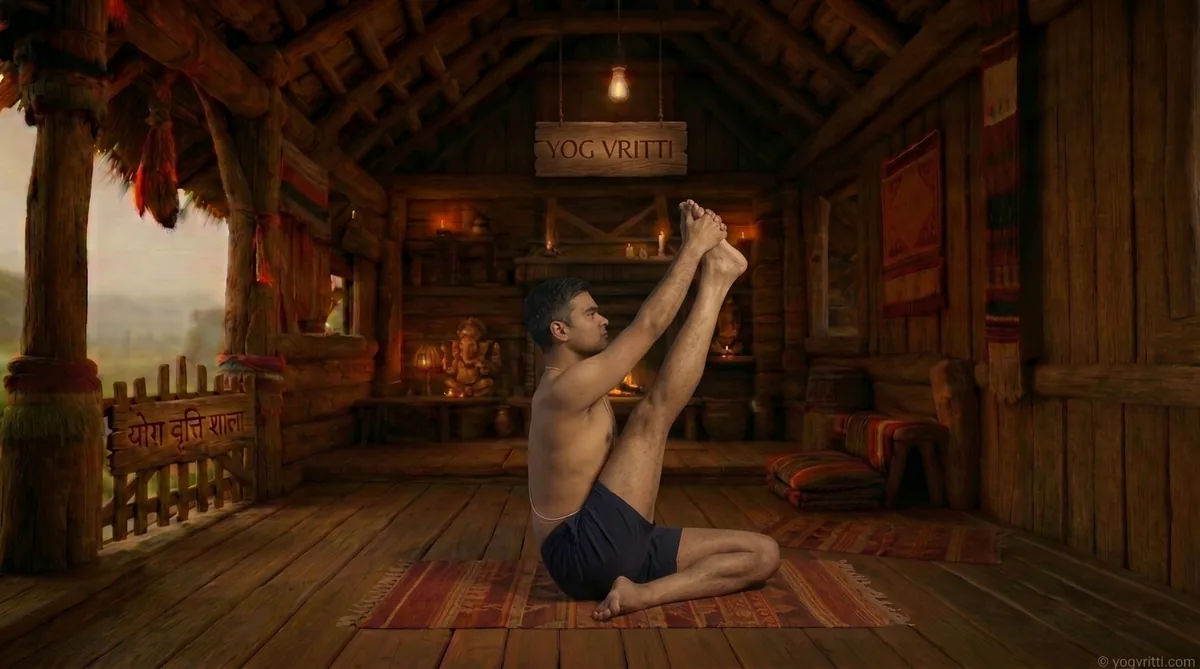
Krounchasana, or Heron Pose, is a profound seated practice that invites deep introspection and structural integration. It meticulously lengthens the entire posterior chain of the extended leg while simultaneously opening the hip flexors and hamstrings of the lifted leg. This pose cultivates unwavering stability through core engagement, grounding the practitioner while expanding their range of motion in the hips and knees. It's a journey into sustained focus and self-awareness, offering therapeutic benefits for both physical posture and mental tranquility, making it invaluable for deeper self-exploration.
Heron Pose, also called Krounchasana is a classical yoga posture whose Sanskrit roots break down as: Krouncha (Heron) · Asana (Pose). In this posture, the body grounds through the sit bones while the spine rises tall. The posture works to lengthen the hamstrings, strengthen the quadriceps and stretch the hip flexors. Improves balance and concentration. Strengthens the core and leg muscles. It is particularly valued for developing greater flexibility and building full-body strength. Suitable for intermediate practitioners with foundational yoga experience, it is a meaningful addition to any practice, particularly beneficial for desk workers and athletes. A strap and blanket can be used to make the posture more accessible and support correct alignment. Practitioners with knee injury and back pain should approach with care or consult a qualified teacher.
Helps with
Muscles Worked
Hamstrings
[Biceps femoris, Semitendinosus, Semimembranosus]
These powerful muscles running along the back of your thigh receive a profound, sustained lengthening in the extended leg.
As you patiently breathe into the pose, the nervous system allows these tissues to release chronic tightness, often accumulated from prolonged sitting and habitual postures.
This release fosters a deep sense of grounding and freedom in the lower body, aligning with the downward flow of apana vayu, which helps to eliminate stagnant energy.
Regular practice progressively lengthens this posterior chain, directly reducing the pull on the lower back and improving overall spinal health.
Quadriceps
[Rectus femoris, Vastus lateralis, medialis, intermedius]
In the extended leg, the quadriceps are actively engaged to maintain full knee extension and stability, creating a strong and unwavering foundation from the hip to the foot.
This isometric activation builds strength in the anterior thigh, which is crucial for protecting the knee joint.
Simultaneously, in the lifted leg, the rectus femoris, a two-joint muscle, experiences lengthening as the hip flexes deeply.
This dual action cultivates balanced strength and flexibility, embodying the yogic principle of sthira (steadiness) and sukha (ease).
Hip Flexors
[Psoas major, Iliacus]
The primary hip flexors, particularly the psoas major and iliacus, located deep within the pelvis and anterior spine, are gently yet significantly lengthened in the lifted leg.
As the knee is drawn towards the chest, these often-tight muscles are encouraged to release, creating more space in the front of the hip joint.
This release can alleviate chronic tension that contributes to lower back pain and energetically frees the second chakra (Svadhisthana), fostering creativity and emotional flow.
Core muscles
[Transverse abdominis, Obliques, Rectus abdominis]
The deep core musculature, including the transverse abdominis and multifidi, along with the obliques, are actively engaged to stabilize the pelvis and maintain an upright, lengthened spine.
This internal support prevents slumping and protects the lower back, allowing for a deeper and safer stretch in the legs.
Developing this inner strength cultivates a profound sense of centeredness and resilience, both physically and energetically, enabling the practitioner to hold the pose with greater ease and integrity.
Joints Mobilized
Hip Joints
mobilizingBoth hip joints (coxal joints) undergo significant work here; one is deeply flexed and often slightly abducted and externally rotated, while the other is extended.
This asymmetrical action mobilizes the ball-and-socket joint, enhancing its range of motion and creating space within the joint capsule.
Regular mobilization helps to maintain synovial fluid health and can alleviate stiffness, allowing for freer movement and an unburdened energetic flow through the pelvic bowl, releasing stored tension.
Knee Joints
mobilizingThe knee of the extended leg is meticulously straightened and stabilized, requiring active engagement of the quadriceps to protect the joint from hyperextension.
Conversely, the knee of the lifted leg is deeply flexed, demanding careful attention to alignment to prevent undue strain on the ligaments.
This pose enhances both the flexibility of the knee in flexion and its stability in extension, promoting longevity and ease in walking, climbing, and other daily movements, while cultivating an acute awareness of joint boundaries.
Sacroiliac (SI) Joints
stabilizingGrounding firmly through both sit bones helps to stabilize the sacroiliac joints, where the sacrum meets the iliac bones, preventing unnecessary shear forces.
While the deep hip flexion can create a slight torque, conscious engagement of the core and inner thighs helps to maintain a neutral pelvic position.
This mindful stabilization prevents strain and cultivates a sense of rootedness, supporting the integrity of the entire spinal column and fostering a feeling of secure foundation.
Organ & System Benefits
Abdominal Organs
As the lifted leg draws close to the torso, the abdominal organs receive a gentle, internal compression, akin to a soft internal massage.
This mild pressure can stimulate peristalsis, the muscular contractions that move food through the digestive tract, aiding in healthy elimination and alleviating digestive sluggishness.
From a yogic perspective, this action can help to stoke Agni, the digestive fire, promoting better assimilation of nutrients and releasing stagnant energy in the Manipura Chakra, the seat of vitality.
Kidneys and Adrenal Glands
Located in the posterior abdomen, the kidneys and adrenal glands experience a subtle compression and release with the movement of the leg and the action of the breath.
This gentle massage can enhance blood circulation to these vital organs, supporting their function in detoxification and hormone regulation.
Energetically, it can help to calm the nervous system by influencing the adrenal glands, which are central to the body's stress response, promoting a sense of inner peace and resilience.
Nervous System
This pose inherently encourages a deep sense of calm and focused awareness, drawing the practitioner inward with precision.
The sustained hold and the demand for balance naturally quiet the 'chitta vritti' — the fluctuations of the mind — by channeling attention to the physical sensations and the rhythmic breath.
This mindful engagement shifts the nervous system towards a parasympathetic state, promoting profound relaxation and reducing the physiological markers of stress, such as heart rate and muscle tension.
The deep stretching of the hamstrings and hip flexors, particularly when held with patience and a sense of surrender, signals safety to the nervous system, allowing for a release of deeply held tension.
This release can directly impact the vagus nerve, promoting a sense of ease and reducing anxiety by down-regulating the sympathetic 'fight or flight' response.
The result is a profound feeling of groundedness and inner peace, fostering a state of pratyahara, the withdrawal of the senses from external distractions.
Mental & Emotional
Krounchasana demands profound concentration and mental stillness, akin to the focused gaze of a heron patiently observing its prey.
The intricate balance required to lift and hold the leg without collapsing encourages 'dharana'—one-pointed focus—as the mind must remain acutely present to maintain stability and alignment.
This cultivation of unwavering attention spills over into daily life, enhancing mental clarity, improving decision-making, and reducing susceptibility to distractions.
Holding this pose for an extended period teaches immense patience and self-acceptance, as progress in flexibility and balance unfolds gradually, not instantaneously.
It challenges the ego to release the need for instant gratification, fostering resilience and a deeper connection to the body's innate wisdom and its present capabilities.
This introspective journey allows the practitioner to observe mental patterns without judgment, cultivating a more compassionate and understanding relationship with themselves.
The seated, grounding nature of Heron Pose encourages introspection and a sense of inner stability, even amidst physical effort and challenge.
By drawing the limbs inward and stabilizing the core, the pose symbolically and physically creates a contained space for deep self-reflection and quiet contemplation.
This inner stillness can lead to greater self-awareness and emotional equilibrium, helping to alleviate anxiety and fostering a profound sense of inner peace and mental fortitude.
Because of Its Shape
seated
Seated poses are fundamentally grounding and introspective, connecting us deeply to the earth element and our inner core.
This stable base allows for a sustained focus on the internal landscape, cultivating stillness and concentration, which are essential prerequisites for deeper yogic practices like pranayama and meditation.
Energetically, it helps to consolidate apana vayu, providing a solid foundation for upward-moving prana and a sense of inner stability.
Heron Pose is a potent hip opener, targeting both the deep external rotators and the hip flexors in a unique asymmetrical manner.
By creating space and releasing tension in the hips, we address a common area where emotional stress and physical tightness accumulate, leading to stiffness and energetic blockages.
This opening can liberate stagnant energy, promoting emotional release and a greater sense of freedom and fluidity in the body's energetic channels, particularly around the second chakra.
While maintaining a long spine is key in Iyengar practice, there is an inherent element of forward flexion in the torso over the extended leg, which is characteristic of forward bends.
This action encourages introspection and exerts a calming effect on the nervous system, drawing the senses inward in a practice of pratyahara.
This quieting quality helps to soothe the mind, reduce agitation, and foster a state conducive to meditation and profound inner reflection.
Fascial Lines
The intricate web of connective tissue, or fascia, that encases every muscle, organ, and bone, receives a profound release throughout the posterior chain in Krounchasana.
Specifically, the superficial back line, running from the soles of the feet up the hamstrings and spine, is lengthened with immense precision in the extended leg, unraveling years of accumulated tension.
Simultaneously, the deep front line, encompassing the hip flexors, is gently encouraged to soften and extend in the lifted leg, improving fluidity.
This mindful engagement helps to unravel chronic fascial restrictions, improving overall tissue hydration and mobility, and allowing for a freer flow of prana throughout the body's energetic pathways.
Breathing & Respiratory
In Krounchasana, the deep engagement of the core and the compression in the abdomen from the lifted leg naturally encourage a more refined and diaphragmatic breath, rather than shallow chest breathing.
While the pose can initially feel restrictive, it invites a conscious lengthening of both the inhalation and exhalation, making the breath more subtle, controlled, and deeply internal.
This mindful manipulation of 'prana' through 'pranayama' principles helps to calm the nervous system and deepen concentration, transforming the physical challenge into a profound meditative experience.
The sustained hold allows for a slower, rhythmic breath, fostering inner stillness and mental clarity.
Anatomical Caution
Teachers must guide students with utmost care in Krounchasana, particularly regarding the knees and hamstrings, as these areas are vulnerable.
Any sharp or pinching pain in the knee, especially the deeply flexed one, indicates overstretching or misalignment, requiring immediate modification or release to prevent injury.
For individuals with existing hamstring injuries or sacroiliac joint instability, a strap should be used generously, and the focus should remain on maintaining a long, stable spine rather than forcing the leg high.
Prioritize stability and comfort over depth, ensuring the pose serves as a therapeutic experience rather than a source of strain.