5
Muscles
5
Joints
2
Organs
3
Mental
Kukkutasana
कुक्कुटासन
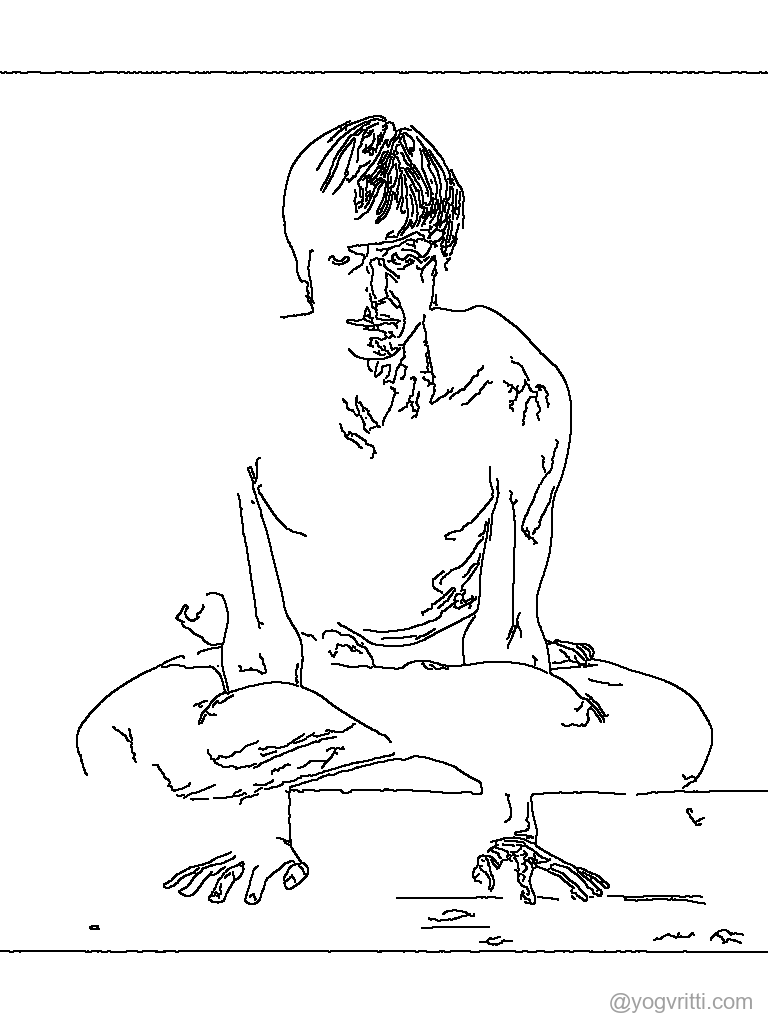
Kukkutasana, the challenging Rooster Pose, demands not only profound hip flexibility to achieve Padmasana but also immense upper body and core strength to lift the entire body weight. This advanced arm balance cultivates a powerful synergy between physical effort and mental focus, drawing awareness inward to the solar plexus. It strengthens the entire girdle of the shoulders and arms, stabilizes the core, and brings a profound sense of lightness and determination, embodying the yogic principle of tapas or intense discipline.
Rooster Pose, also called Cockerel Pose is a classical yoga posture. Its Sanskrit name Kukkutasana translates word-for-word as: Kukkuta (Rooster / Cockerel) · Asana (Pose). In this posture, the body grounds through the sit bones while the spine rises tall. The posture works to open and strengthen the shoulders, engage the core and strengthen the wrists. Strengthens core deeply. Improves wrist strength. It is particularly valued for building full-body strength. Suitable for advanced practitioners with developed body awareness, it is a meaningful addition to any practice. Practitioners with wrist injury and shoulder injury should approach with care or consult a qualified teacher.
Helps with
Muscles Worked
Shoulders
Deltoids, Rotator Cuff
The large cap muscles of the shoulders (deltoids) and the deeper stabilizing muscles (rotator cuff) are intensely engaged to bear and lift the body's weight.
This isometric contraction builds powerful endurance in the shoulder girdle, creating stability crucial for all arm balances.
Energetically, this strength allows for a sense of uplift and freedom in the upper chest, opening the anahata chakra.
Triceps
Triceps Brachii
Located on the back of the upper arm, the triceps are the primary muscles responsible for straightening the elbows, which is essential to push the floor away and lift the torso.
Their sustained contraction creates a sensation of immense power flowing down the arms, directly translating into the ability to defy gravity.
This action cultivates a focused outward energy, driving the lift with precision and control.
Core
Transversus Abdominis, Obliques, Rectus Abdominis
The deep abdominal muscles (transversus abdominis) and the outer layers (obliques, rectus abdominis) work synergistically to stabilize the spine and pelvis, creating a solid foundation for the lift.
This engagement prevents sagging and ensures the energy from the arms can transfer efficiently to the torso.
From a yogic perspective, this ignites Manipura Chakra, building inner fire and self-discipline.
Wrists and Forearms
Flexor and Extensor Carpi muscles
The muscles of the forearms (flexor and extensor carpi groups) are powerfully engaged to stabilize the wrist joints and grip the floor, providing a secure base.
This sustained isometric contraction builds remarkable strength and resilience in these often-overlooked areas, crucial for preventing injury in all weight-bearing arm poses.
It fosters a keen awareness of the connection to the earth, grounding the practitioner even while lifting.
Hip Flexors
Iliopsoas, Rectus Femoris
While Padmasana focuses on external rotation, the hip flexors (iliopsoas and rectus femoris) are subtly engaged to keep the lotus legs lifted and compact against the torso.
This engagement helps maintain the integrity of the leg position, preventing them from drooping and adding unnecessary weight.
This activation contributes to the overall feeling of lightness and integration in the lower body, supporting the upward flow of prana.
Joints Mobilized
Shoulder Girdle
stabilizingThe shoulder joint (glenohumeral) and the movement of the shoulder blade on the rib cage (scapulothoracic) are intensely stabilized to bear the entire body's weight.
This demands active engagement from surrounding muscles, preventing passive hanging and fostering true strength and integrity in the joint.
Over time, this practice builds robust resilience, creating a feeling of unwavering support and confidence in the upper body.
Elbows
weight bearingThe elbow joints (humeroulnar and humeroradial) are held in full extension to create a strong lever for lifting the body.
This sustained weight-bearing strengthens the joint capsule and surrounding ligaments, enhancing their stability and load-bearing capacity.
The precise alignment required cultivates a deep awareness of the arm lines, channeling a sense of focused power through the limbs.
Wrists
weight bearingThe wrist joints (radiocarpal and intercarpal) bear significant weight in Kukkutasana, requiring strong engagement of forearm muscles for stabilization.
This action builds density in the bones and resilience in the ligaments, preparing the wrists for more demanding arm balances.
The direct contact with the floor through the palms deepens the connection to the earth, enhancing stability and inner calm.
Hips
mobilizingTo achieve the Padmasana foundation, the hip joints (acetabulofemoral) undergo profound external rotation and flexion.
While the pose itself doesn't actively mobilize them further *during* the lift, the preparatory work for lotus is critical, and the pose maintains this deep opening.
This sustained stretch in the hip capsule, combined with the lift, can release deep-seated tension, freeing the flow of apana vayu and creating a sense of openness and surrender in the pelvis.
Knees
stabilizingIn Padmasana, the knee joints (tibiofemoral and patellofemoral) are held in deep flexion and slight internal rotation relative to the hip's external rotation.
While not actively weight-bearing in the same way as the arms, their integrity is paramount, requiring careful attention to avoid torque.
The stable yet deeply flexed position, when achieved correctly, can bring a sense of containment and focus to the lower body, grounding the energy for the lift.
Organ & System Benefits
Abdominal Organs
The sustained lift and contraction of the core in Kukkutasana create a gentle, yet firm, compression on the abdominal organs.
This internal massage can stimulate peristalsis and improve circulation to the digestive system, aiding in detoxification and efficient nutrient absorption.
Energetically, this compression helps to consolidate prana in the navel center, stoking the digestive fire (agni) and promoting vitality.
Pelvic Floor
The muscles of the pelvic floor are naturally engaged as part of the core stabilization required to lift the body in Kukkutasana.
This subtle activation of Mula Bandha (root lock) supports the upward flow of energy (udana vayu) and provides a feeling of inner strength and containment.
Conscious engagement here not only stabilizes the pelvis but also helps to draw the mind inward, fostering concentration and inner quietude.
Nervous System
The immense concentration required to thread the arms, lift, and balance the body in Kukkutasana immediately shifts the nervous system from a scattered state to one of acute focus.
This intense single-pointed awareness (dharana) overrides the usual mental chatter, drawing the mind into the present moment.
The challenge of the pose demands full engagement, calming sympathetic nervous system overdrive by redirecting mental energy into precise physical action.
Holding this demanding balance requires a profound stillness of breath and mind, which actively stimulates the parasympathetic nervous system.
As the body learns to stabilize, the initial surge of effort gives way to a controlled, steady state, promoting a sense of calm strength and inner composure.
This sustained effort, followed by a moment of balance, teaches the practitioner to find equanimity amidst challenge, integrating body and mind.
Mental & Emotional
Kukkutasana is a powerful teacher of determination and courage, as the practitioner must overcome both physical limitation and mental apprehension to achieve the lift.
The process of patiently working towards this advanced pose cultivates immense inner resilience and a belief in one's own capabilities.
This translates into a feeling of empowerment and the mental fortitude to face challenges both on and off the mat.
The pose demands deep introspection and a quietening of the senses (pratyahara) to maintain balance and focus.
With the body elevated and the gaze often directed inward, the mind becomes less distracted by external stimuli, fostering a state of profound concentration (dharana).
This practice strengthens the ability to sustain attention, leading to greater clarity of thought and a sense of inner peace.
Achieving Kukkutasana, even for a moment, instills a profound sense of accomplishment and humility, recognizing the years of preparatory work involved.
It teaches the importance of patience, perseverance, and the acceptance of where one is in the journey, rather than striving for an outcome.
This cultivates a balanced perspective, appreciating both effort and grace in equal measure.
Because of Its Shape
balance
Kukkutasana is a quintessential arm balance, demanding the entire upper body to lift and suspend the lower body against gravity.
This physical challenge meticulously strengthens the arms, shoulders, and core, developing a profound sense of proprioception—the body's awareness in space.
Energetically, arm balances cultivate a feeling of lightness and mastery, channeling prana upwards and fostering a sense of fearlessness and playful agility.
While the lift is the primary action, the foundation of Padmasana means the pose benefits from and reinforces deep hip opening.
This deep external rotation in the hips, held in a suspended state, allows for a unique release of tension in the pelvic region.
From a yogic perspective, this deep hip opening, combined with core engagement, helps to release stored emotional blockages, allowing for a freer flow of apana vayu and a sense of emotional liberation.
The act of lifting the entire body weight off the ground creates an intense core engagement that stabilizes the spine and pelvis.
This deep activation of the abdominal muscles not only builds physical strength but also ignites the inner fire (agni) at the navel center (Manipura Chakra).
This cultivation of inner strength translates into increased willpower, self-confidence, and a powerful sense of personal agency.
Fascial Lines
The intricate web of connective tissue (fascia) throughout the body is profoundly engaged in Kukkutasana, particularly the deep front arm line and the superficial back line.
As the arms thread through the legs and lift, the fascial connections from the hands, through the forearms, triceps, and into the shoulder girdle are intensely strengthened and integrated.
Simultaneously, the fascial sheath encasing the deep hip rotators and adductors in Padmasana experiences a sustained stretch, helping to release long-held patterns of tension.
This dual action of strengthening and releasing creates a sense of unified integrity throughout the body, allowing for a more fluid and integrated movement of prana.
Breathing & Respiratory
Due to the intense core engagement and the compressed position of the lower abdomen and chest, Kukkutasana naturally encourages a more subtle, controlled, and diaphragmatic breath.
The body is challenged to maintain a steady rhythm despite the physical exertion, leading to a refinement of the respiratory muscles.
This restriction makes Ujjayi breath particularly beneficial, as its audible quality helps to regulate the inhale and exhale, fostering concentration and drawing the mind inward.
The sustained, even breath becomes a direct link to the nervous system, helping to maintain composure and stability in a challenging pose.
Anatomical Caution
This advanced pose places significant stress on the wrists, shoulders, and especially the knees due to the deep hip external rotation required for Padmasana.
Teachers must ensure students have well-established flexibility in the hips and strong, stable wrists and shoulders *before* attempting Kukkutasana.
Any sharp pain in the knees or wrists indicates the pose should be immediately modified or avoided, prioritizing joint health over achievement.