6
Muscles
4
Joints
3
Organs
2
Mental
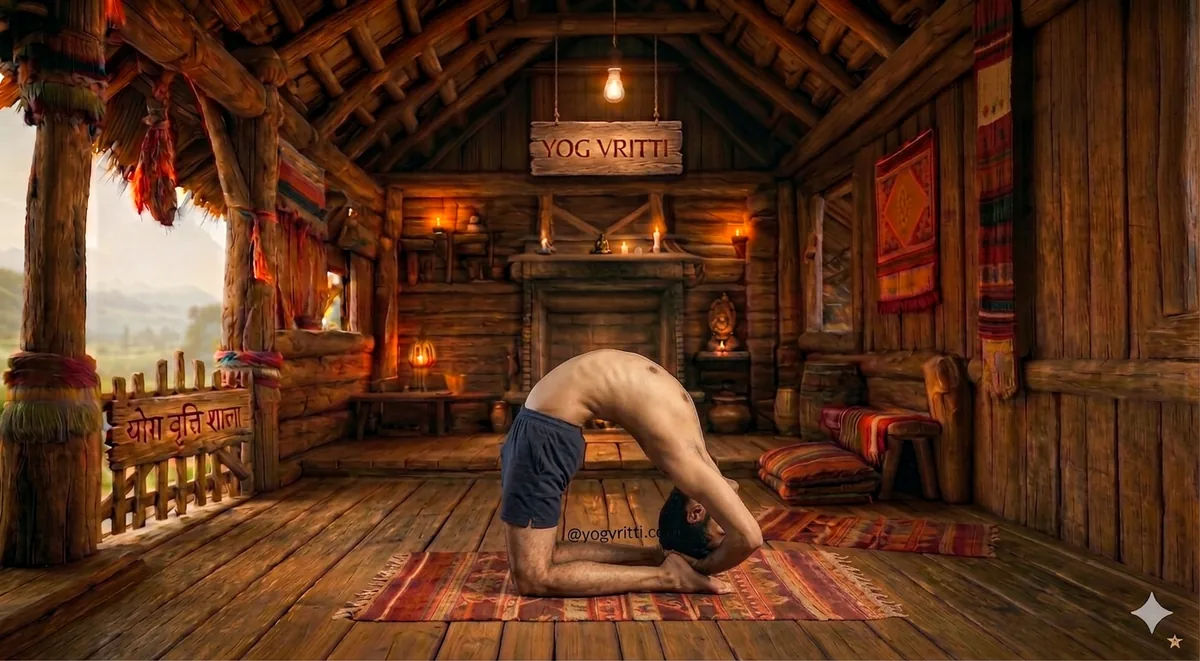
Laghu Vajrasana
लघु वज्रासन
Laghu Vajrasana, or Little Thunderbolt Pose, is a profound intermediate backbend that meticulously lengthens the entire front body while strengthening the posterior chain. It deeply opens the chest and hip flexors, invigorating the spine and expanding the breath, which in turn energizes the entire system. This pose cultivates courage and an open heart, inviting practitioners to explore their edge with stability and grace, fostering a deep connection to their inner strength and expansive prana.
Little Thunderbolt Pose, also called Laghu Vajrasana is a classical yoga posture. Its Sanskrit name Laghu Vajrasana translates word-for-word as: Laghu (Small / Little) · Vajra (Thunderbolt) · Asana (Pose). Beginning from a kneeling position, the practitioner aligns the body with precision and intentional breath. The posture works to strengthen the quadriceps, engage the core and stretch the hip flexors. Strengthens back muscles. Opens the chest and shoulders. Suitable for intermediate practitioners with foundational yoga experience, it is a meaningful addition to any practice, particularly beneficial for athletes. A block and wall can be used to make the posture more accessible and support correct alignment. Practitioners with neck pain and knee injury should approach with care or consult a qualified teacher.
Muscles Worked
Thigh front muscles
[Quadriceps: Rectus Femoris, Vastus Lateralis, Vastus Medialis, Vastus Intermedius]
The large muscles on the front of your thighs are experiencing a significant, sustained stretch as the knees deeply flex and the hips extend.
Rectus Femoris, being biarticular, is particularly challenged, lengthening over both the hip and knee joints.
This deep release in the quadriceps helps to unwind tension that can pull on the kneecap and restrict hip extension, allowing for greater freedom in the pelvis and lower back.
Energetically, releasing these powerful muscles can free up stagnant energy in the lower limbs, promoting a feeling of lightness and openness.
Deep hip flexors
[Iliopsoas: Psoas Major, Iliacus]
These deep muscles connect your lower spine and pelvis to your thigh bone, and they are lengthening profoundly in this backbend.
A tight iliopsoas can compress the lumbar spine and restrict pelvic tilt, making deep backbends challenging and potentially uncomfortable.
By gently but persistently lengthening these muscles, we create more space in the lumbar spine and anterior hip, allowing prana to flow more freely through the core.
This release often corresponds with a softening of deeply held emotional tension, as the hips are considered a storage area for stress.
Abdominal muscles
[Rectus Abdominis, Obliques, Transversus Abdominis]
While the front body is opening, the abdominal muscles are actively lengthening and eccentrically contracting to support the spine and prevent excessive compression.
These muscles help to create a protective dome over the internal organs and maintain integrity in the core as the spine extends.
This intelligent engagement helps to lift and expand the front of the body rather than just collapsing into the lower back.
In yogic terms, this activation of the core supports Manipura Chakra, strengthening willpower and inner fire without rigidity.
Spinal extensors
[Erector Spinae, Multifidus]
The muscles running along either side of your spine are actively contracting to lift and extend the vertebral column, segment by segment.
This action builds strength and endurance in the muscles responsible for maintaining upright posture and spinal health, particularly in the thoracic and lumbar regions.
Rather than a passive hang, the conscious engagement of these muscles creates an intelligent arch, decompressing the spinal discs.
This strengthening supports the central energy channel (Sushumna Nadi), allowing vitality to ascend and promoting mental clarity.
Chest muscles
[Pectoralis Major, Pectoralis Minor, Intercostals]
As the chest lifts and opens towards the ceiling, the muscles across the front of the chest and between the ribs are significantly lengthened.
This release counteracts the common postural patterns of rounded shoulders and collapsed chests, which restrict breath and perpetuate tension.
By creating space in the thoracic cavity, the lungs have more room to expand, inviting deeper, more expansive breaths.
Energetically, this opening cultivates Anahata Chakra, fostering feelings of compassion, openness, and emotional courage.
Buttock muscles
[Gluteus Maximus]
The largest muscle of the buttocks is actively engaging to assist in hip extension and stabilize the pelvis in this deep backbend.
Conscious engagement of the gluteus maximus helps to protect the sacroiliac joint and prevent the hips from dumping into excessive anterior tilt, which can strain the lower back.
This activation provides a stable foundation for the backbend, allowing for a more sustained and supported opening of the front body.
In terms of energetic stability, engaging the glutes helps to ground the pelvis, connecting to Muladhara Chakra and fostering a sense of security.
Joints Mobilized
Knees
weight bearingThe knee joints are undergoing deep flexion and are bearing a significant portion of the body's weight, requiring careful alignment and stability.
It's crucial to ensure the knees are aligned with the hips and ankles to distribute pressure evenly across the tibiofemoral and patellofemoral joints.
This deep flexion, when approached mindfully, can improve the range of motion in the knees and strengthen the surrounding musculature, enhancing joint vitality.
For the practitioner, this can lead to greater ease in seated poses and a more grounded feeling in the lower body over time.
Hips
mobilizingThe hip joints (acetabulofemoral) are moving into deep extension and a degree of external rotation, which is a key component of this backbend.
This action helps to mobilize the hip capsule and lengthen the anterior ligaments and muscles, which are often tight from prolonged sitting.
By systematically opening the hips in this way, we can alleviate stiffness and improve overall pelvic mobility, directly impacting the health of the lower back.
The release in the hips can also bring a sense of freedom and lightness, as this area is often where emotional tension is stored.
Spine
mobilizingThe entire vertebral column is articulating into extension, particularly in the thoracic and lumbar regions.
This mindful extension helps to decompress the intervertebral discs and increase mobility throughout the spinal segments, counteracting the effects of gravity and sedentary lifestyles.
When done with intelligence, the spine becomes more supple and resilient, improving nerve function and the flow of cerebrospinal fluid.
Practitioners often report a feeling of invigorated energy and increased mental alertness as the central nervous system is stimulated.
Shoulders
mobilizingIf the hands reach back to the feet, the shoulder joints (glenohumeral) move into extension and external rotation, which profoundly opens the shoulder girdle.
This action helps to release tension in the rotator cuff muscles and improve the overall mobility of the shoulder blades on the rib cage.
A more mobile shoulder girdle supports a broader chest opening and better respiratory capacity.
For the yogi, releasing tension in the shoulders can alleviate the burden of responsibility and foster a sense of lightness in the upper body.
Organ & System Benefits
Abdominal Organs (Digestive System)
The gentle compression and subsequent stretch of the abdominal organs, including the stomach, liver, and intestines, provide a subtle internal massage.
This action can stimulate peristalsis and improve circulation to the digestive tract, aiding in nutrient absorption and waste elimination.
In yogic philosophy, this internal massage stokes Agni, our digestive fire, leading to a more efficient metabolism and a feeling of internal purity.
Regular practice can help alleviate sluggish digestion and enhance overall gut health.
Lungs (Respiratory System)
As the chest profoundly opens and expands, the lungs gain increased space within the thoracic cavity for expansion, particularly in the upper lobes.
This encourages deeper, fuller inhalations, maximizing oxygen intake and improving respiratory efficiency.
The expansion alleviates any restriction around the diaphragm, allowing it to move more freely.
For the practitioner, this heightened breath capacity directly translates into increased vitality, mental clarity, and a profound sense of inner spaciousness, helping to clear mental fog.
Heart (Cardiovascular System)
While not a full inversion, the lift of the chest above the hips creates a gentle shift in blood flow, reducing the gravitational pull on the heart and improving circulation to the upper body.
The opening around the heart space, both physically and energetically, reduces tension in the chest wall and diaphragm, which can otherwise constrict the heart.
This subtle de-stressing of the cardiovascular system is profoundly calming and revitalizing.
Energetically, this opening cultivates an expansion of the heart chakra, promoting feelings of love, compassion, and emotional resilience.
Nervous System
Laghu Vajrasana, being an invigorating backbend, initially stimulates the sympathetic nervous system as the body works to extend and balance.
However, as the practitioner settles into the pose and deepens their breath, the sustained opening and mindful engagement shift towards a parasympathetic response.
This creates a unique balance of alertness and calm, helping to regulate the nervous system and reduce anxiety.
The deep stretches, particularly in the anterior fascial lines, also release stored tension from the 'fight or flight' response, promoting a profound sense of ease and integration.
The unique demands of this pose, requiring deep proprioceptive awareness to articulate the spine and balance the body, heighten the mind-body connection.
The intense sensation in the front body and the need for core engagement draw the practitioner's awareness deeply inward, cultivating interoception.
This focused attention helps to quiet the fluctuations of the mind (chitta vritti), fostering a sense of presence and mental clarity.
Over time, this practice enhances one's ability to remain calm and focused amidst physical and mental challenge.
Mental & Emotional
This deep backbend demands a significant degree of courage and vulnerability, as it exposes the front of the body and challenges our comfort zone.
Overcoming the initial apprehension and staying present in the intensity of the pose builds mental fortitude and self-trust.
It allows practitioners to confront their fears and limitations, fostering a sense of empowerment and inner strength that transcends the mat.
This experience cultivates an open-hearted approach to life's challenges, encouraging resilience and a willingness to embrace new perspectives.
Laghu Vajrasana is a powerful emotional release, particularly due to the deep opening in the chest and hip flexors, areas often associated with storing emotional tension and trauma.
As the physical body opens, there is often a corresponding release of emotional blockages, leading to feelings of lightness and freedom.
The sustained effort and focused breath act as a form of active meditation (dharana), allowing the mind to detach from external distractions (pratyahara) and process internal experiences.
This can result in greater emotional clarity and a renewed sense of optimism.
Because of Its Shape
backbend
Backbends are inherently invigorating and rejuvenating for the entire spine and nervous system.
They counteract the effects of gravity and prolonged sitting, which tend to round the spine and compress the front of the body.
Anatomically, backbends extend the vertebral column, strengthening the spinal extensors and decompressing the anterior discs.
Energetically, this shape awakens the central energy channel (Sushumna Nadi), stimulating the chakras and cultivating a sense of vitality, confidence, and courage to face the world with an open heart.
Fascial Lines
Laghu Vajrasana profoundly targets and lengthens the entire Anterior Superficial Fascial Line, running from the tops of the feet, up the shins, quadriceps, hip flexors, abdominal muscles, chest, and front of the neck.
This continuous fascial chain often becomes tight and shortened from modern lifestyles, restricting movement and creating postural imbalances.
By patiently opening this entire line, we release deep-seated restrictions, improving overall flexibility and creating more space for internal organs and energetic flow (prana).
This comprehensive release helps to unwind years of accumulated tension, promoting a feeling of integration and ease throughout the body.
Breathing & Respiratory
The deep backbend and expansive chest opening in Laghu Vajrasana naturally encourage a fuller, more expansive inhalation.
The elevated sternum and expanded rib cage provide ample space for the lungs to fill completely, drawing in more prana with each breath.
While the inhalation feels expansive and uplifting, the exhalation can be used to deepen the pose slightly, grounding the hips and lengthening the spine further.
This pose is an excellent preparation for Ujjayi Pranayama, as it intrinsically cultivates a deep, audible, and controlled breath, enhancing focus and internal heat (tapas).
Anatomical Caution
Teachers, please guide students with utmost care, especially concerning the knees, lower back, and neck.
Ensure students have sufficient knee flexibility and suggest padding under the knees if needed, as the deep flexion can be intense.
Protect the lower back by emphasizing core engagement and a lift through the front body to avoid compression.
Guide students to keep the neck long and not just drop the head back, only extending the cervical spine if the rest of the spine is open.