4
Muscles
2
Joints
2
Organs
2
Mental
Marjaryasana
मार्जरीआसन
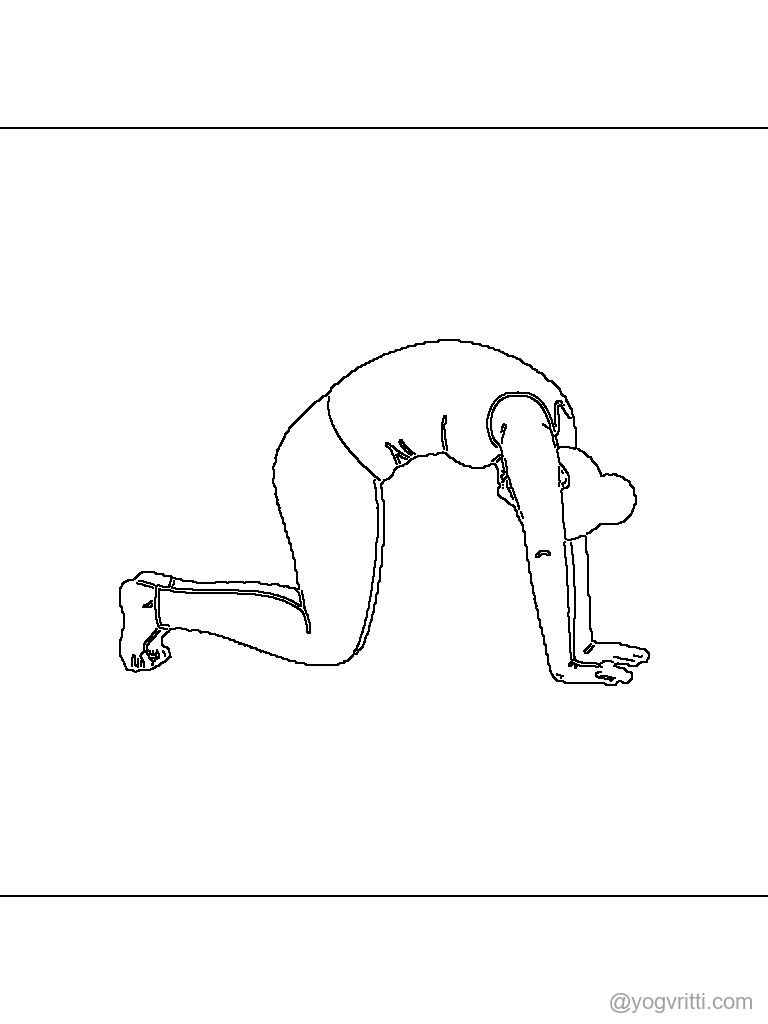
Marjaryasana, or Cat Pose, is a gentle yet profound spinal flexion that rounds the entire back, from the tailbone to the crown. It offers a deep, intelligent lengthening to the often-tight muscles along the posterior spine, while simultaneously engaging the deep core musculature. Energetically, it's a deeply internalizing and calming posture, encouraging introspection and the release of stagnant energy. For any yoga teacher or student, mastering this fundamental movement cultivates spinal suppleness, reduces tension, and prepares the body and mind for deeper practices, fostering a profound sense of ease and awareness.
Cat Pose, also called Cat-Cow Cat is a classical yoga posture. Its Sanskrit name Marjaryasana translates word-for-word as: Marjara (Cat) · Asana (Pose). Beginning from a kneeling position, the practitioner aligns the body with precision and intentional breath. The posture works to engage the core, release the neck and open and strengthen the shoulders. Improves spinal flexibility. Massages abdominal organs. It is particularly valued for alleviating back discomfort and quieting an anxious mind. Suitable for beginners and regular practitioners alike, it is an excellent warm-up, particularly beneficial for beginners and seniors. A blanket can be used to make the posture more accessible and support correct alignment.
Helps with
Muscles Worked
Spine Extensors
[Erector Spinae, Multifidus]
These long muscles run along either side of your spinal column, from the sacrum all the way up to the skull, responsible for keeping your spine upright.
In Marjaryasana, as you round your back, these muscles undergo a gentle, eccentric lengthening, releasing chronic tension that often accumulates from prolonged sitting or standing.
This intelligent unwinding creates space between the vertebrae and allows vital prana to flow more freely along the central channel of the spine, alleviating stiffness and promoting a sense of spaciousness.
Abdominal Muscles
[Rectus Abdominis, Transversus Abdominis, Obliques]
The muscles forming the front wall of your torso are actively engaged here, drawing your navel in towards your spine and lifting it upwards.
This concentric contraction, particularly of the deep Transversus Abdominis, not only helps to flex the trunk but also provides essential support to the internal organs and the lower back.
This conscious engagement cultivates an awareness of Uddiyana Bandha (the abdominal lock), directing energy inward and upward, supporting digestion and core stability.
Neck Extensors (Posterior Neck)
[Semispinalis, Splenius Capitis/Cervicis]
These muscles are located at the back of your neck and upper shoulders, responsible for extending and rotating the head.
As you tuck your chin towards your chest in Marjaryasana, these muscles receive a gentle, sustained release, counteracting the tension built from looking forward or up for extended periods.
This action creates space at the base of the skull and cervical spine, which can calm the nervous system and help release energetic blockages (Vayu) in the throat and neck region.
Serratus Anterior
[Serratus Anterior]
Found on the sides of your rib cage, underneath your shoulder blades, this muscle is crucial for stabilizing and moving the scapulae (shoulder blades).
In this pose, it actively contracts to protract the shoulder blades, meaning they slide away from the spine, enhancing the rounding of the upper back.
Strengthening this often-underused muscle improves shoulder girdle stability and allows for greater mobility in the thoracic spine, symbolically opening the energetic heart space even in a forward-folding posture.
Joints Mobilized
Spinal Column (Vertebral Joints)
mobilizingThe entire length of your spine, composed of individual vertebrae separated by intervertebral discs, undergoes a complete and gentle flexion.
This slow, deliberate rounding mobilizes each segment, encouraging the discs to hydrate and gently decompress.
With regular practice, this action lubricates the spinal joints, promotes healthy nerve function, and cultivates a profound sense of suppleness and ease throughout the central axis of the body, awakening the subtle energy flow within the Sushumna Nadi.
Shoulder Girdle (Scapulothoracic and Glenohumeral Joints)
mobilizingThe shoulder blades (scapulae) move away from each other and slide along the rib cage (protraction), while the arm bones (humeri) remain stable in their sockets (glenohumeral joints).
This action releases stiffness around the shoulder blades and improves upper back mobility, often a source of tension.
Creating this stable yet spacious foundation in the shoulders allows for unimpeded flow of prana to the arms and hands, enhancing stability in the upper body and promoting a sense of groundedness through the arms.
Organ & System Benefits
Digestive Organs (Intestines, Stomach)
As the abdominal wall draws inward and upward, the internal organs of digestion, including the stomach and intestines, receive a gentle, internal massage.
This rhythmic compression and release stimulate peristalsis, the natural wave-like contractions that move food through the digestive tract.
This action aids in detoxification, helps release stagnant energy (Apana Vayu), and can alleviate issues like bloating and constipation, promoting a healthier digestive fire (Agni).
Lungs
In Marjaryasana, the rounding of the spine and drawing in of the abdomen gently compresses the lungs, particularly encouraging a complete exhalation.
This physical action aids the diaphragm in rising fully, expelling stale air and metabolic waste products from the deepest recesses of the lungs.
By emphasizing a full exhale, we create more space for fresh, oxygen-rich air and vital prana in the subsequent inhalation, fostering a sense of inner cleansing and renewal within the respiratory system.
Nervous System
The deep rounding of the spine and the gentle tucking of the chin in Marjaryasana naturally encourage a longer, slower exhalation, which is a key activator of the parasympathetic nervous system.
This immediately shifts the body out of a 'fight or flight' (sympathetic) state into a 'rest and digest' (parasympathetic) response.
The practitioner experiences a profound sense of calm, quiet, and centeredness, effectively reducing anxiety and promoting inner peace.
The slow, deliberate articulation of the spine, segment by segment, combined with synchronized breath, brings a heightened awareness to the subtle sensations within the body.
This enhanced interoception (awareness of internal states) and proprioception (awareness of body position) helps to quiet the 'chitta vritti' (mind-fluctuations), grounding the practitioner in the present moment.
This focused internal attention fosters a deeper connection to one's physical and energetic self, calming an overactive mind.
Mental & Emotional
The inward-folding, rounded shape of Marjaryasana naturally encourages a sense of introspection and gentle surrender, akin to a fetal position.
This physical posture helps to withdraw the senses from external distractions (Pratyahara), inviting a gentle turning inward and a release of external concerns.
It cultivates a feeling of safety and inner calm, allowing the mind to quiet and find a deeper connection to one's inner landscape.
The deliberate coordination of breath and movement (vinyasa) inherent in Marjaryasana demands focused attention, drawing the mind away from habitual thought patterns and external chatter.
This practice cultivates Dharana (concentration) as the awareness is anchored to the present moment, to the sensation of each spinal vertebra articulating and the breath flowing.
This focused presence brings mental clarity and a profound sense of stillness, reducing mental agitation.
Because of Its Shape
forward bend
This pose is a complete spinal flexion, gently rounding the entire length of the back from the sacrum to the atlas.
This action intelligently stretches the posterior spinal ligaments and the deep muscles of the back, creating space between the vertebrae and decompressing the intervertebral discs.
Yogically, this releases accumulated tension (Vata imbalance) along the spine, promoting fluidity and ease, allowing Prana to flow unimpeded along the central energy channel (Sushumna Nadi).
The inward and downward-focused nature of this forward bend is inherently calming and grounding for the entire being.
Physiologically, it encourages a longer exhalation, which directly stimulates the parasympathetic nervous system, shifting the body into a state of 'rest and digest.' This shape cultivates a sense of safety and introspection, helping to quiet the mind, release stress, and bring balance to an overactive mental state, fostering emotional equilibrium.
Fascial Lines
The superficial back line (SBL) of fascia, a continuous web of connective tissue running from the soles of the feet, up the back of the legs, along the spine, and over the skull, receives a gentle yet comprehensive lengthening in Marjaryasana.
As the spine rounds and the head tucks, this fascial chain is subtly stretched, helping to unwind chronic tension patterns held along the entire posterior aspect of the body.
This release helps to open energetic channels (Nadis) and allows for greater fluidity and unimpeded energetic flow throughout the entire fascial matrix.
Breathing & Respiratory
Marjaryasana is the natural exhale phase of the Cat-Cow sequence, specifically designed to promote a deep, complete exhalation.
As the abdomen draws in and the spine rounds, the diaphragm lifts efficiently, aiding in the expulsion of stale air and toxins from the lungs.
This emphasis on exhalation helps to release both physical and energetic tension (Apana Vayu), creating space for a fuller, more expansive inhalation in the subsequent Bitilasana (Cow Pose) and cultivating a profound sense of calm and cleansing within the respiratory system.
Anatomical Caution
For individuals experiencing acute or severe neck pain, or those with recent cervical spine injuries, it's crucial to advise them to keep the head more in line with the spine rather than tucking the chin excessively.
This prevents overstretching delicate neck structures.
Additionally, if there is any discomfort or sharp pain in the knees, ensure adequate padding with a folded blanket or towel underneath them to protect the joints.