3
Muscles
2
Joints
2
Organs
2
Mental
Neck Rolls
गर्दन घुमाना
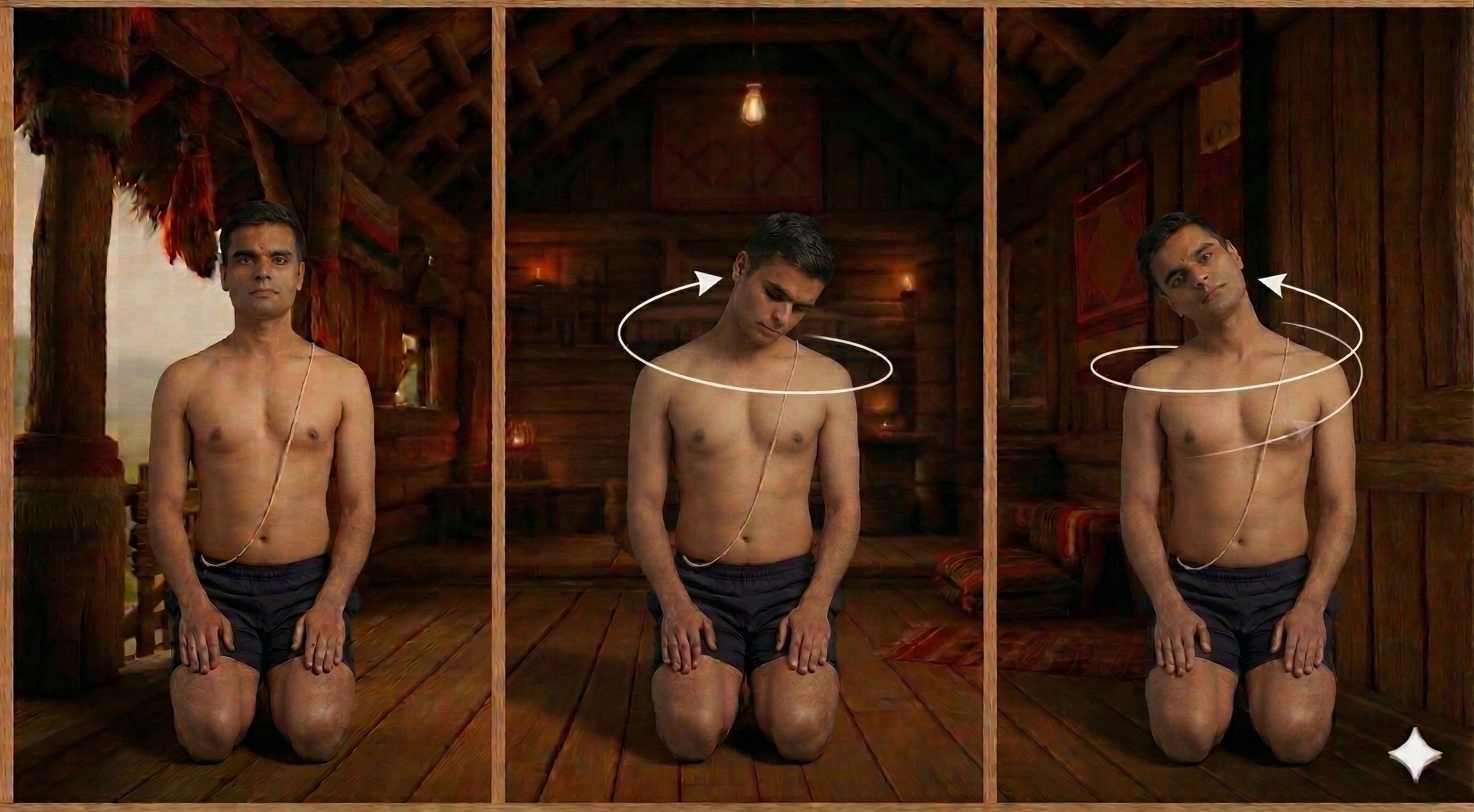
Neck Rolls are a foundational practice, a gentle yet profound invitation to release the accumulated weight of the day from the cervical spine and its surrounding musculature. This mindful, semi-circular movement delicately mobilizes the small joints of the neck and lengthens key muscle chains like the trapezius and scalenes, which often hold chronic tension. Energetically, it's a grounding and centering practice, drawing awareness inward to the subtle sensations, fostering a sense of ease and fluidity that extends from the physical body into the mental landscape. For any teacher or student, mastering this simple movement unlocks deeper awareness and prepares the entire upper body for more complex asanas.
Neck Rolls, also called Neck Circles is a classical yoga posture in the Iyengar tradition. In this posture, the body roots firmly through the feet while the spine extends upward. The posture works to release the neck, open and strengthen the shoulders and open the upper back. Improves cervical spine mobility. Relieves tension headaches. It is particularly valued for developing greater flexibility. Suitable for beginners and regular practitioners alike, it is an excellent warm-up, particularly beneficial for beginners and seniors. A blanket can be used to make the posture more accessible and support correct alignment. Practitioners with neck pain and spinal injury should approach with care or consult a qualified teacher.
Helps with
Muscles Worked
Sternocleidomastoid (SCM)
[Sternocleidomastoid]
These prominent muscles run diagonally from behind your ears down to your collarbones and sternum, forming the 'V' at the front of your neck.
As you gently roll your head from side to side, one SCM lengthens while the other subtly contracts, allowing for controlled movement and release.
This action helps to unwind tension often held from forward head posture or stress, inviting a sense of freedom and openness in the throat and chest, facilitating the flow of Udana Vayu – the upward-moving energy.
Upper Trapezius
[Trapezius (upper fibers)]
The upper trapezius muscles are the large, triangular muscles that extend from the base of your skull, across your shoulders, and down your upper back.
In Neck Rolls, as your head moves, these fibers are gently elongated and softened, releasing the 'hunch' or stiffness often felt in the shoulders and neck.
This sustained, gentle stretch helps to melt away the physical manifestation of stress and responsibility, allowing a feeling of lightness and ease to settle into the shoulders and upper back.
Scalenes
[Scalene muscles]
Deeply situated in the sides of your neck, the scalenes run from the cervical vertebrae down to your first two ribs.
They are often silently tight, contributing to neck pain, shoulder tension, and even restricted breathing.
The slow, deliberate motion of Neck Rolls provides a subtle, sustained stretch to these crucial muscles, helping to decompress the neck and improve local circulation.
Releasing the scalenes can profoundly ease chronic tension headaches and allow for more expansive, unhindered breathing, connecting us more deeply to our vital life force, prana.
Joints Mobilized
Cervical Spine
mobilizingThe cervical spine comprises seven small vertebrae in your neck, forming a delicate yet crucial structure supporting your head.
In Neck Rolls, the small facet joints between each vertebra are gently articulated, promoting synovial fluid production, which acts as a natural lubricant.
This movement enhances the range of motion and nutrient supply to the intervertebral discs, helping to alleviate stiffness and improve overall spinal health.
Over time, consistent practice fosters a sense of fluidity and resilience in the neck, translating to greater ease in all head movements and a less 'stuck' feeling in the upper body.
Atlanto-occipital Joint
mobilizingThis is the joint where the base of your skull (occiput) meets the very first cervical vertebra (atlas), allowing for the 'yes' nodding motion of your head.
Neck Rolls include a subtle articulation of this joint as the head tilts and rotates, gently freeing up any stiffness at this crucial junction.
Mobilizing this joint improves the subtle connection between the head and the spine, enhancing proprioception and balance, and contributing to a feeling of mental clarity and reduced tension at the very top of the neck.
Organ & System Benefits
Thyroid Gland
Located at the base of your neck, the thyroid gland is gently stimulated by the subtle stretching and compression of the neck muscles during Neck Rolls.
This gentle movement encourages healthy circulation to the area, which can support the gland's function in regulating metabolism and energy levels.
While not a direct 'stretch' in the traditional sense, the increased awareness and release of tension in the surrounding tissues can promote a more balanced energetic environment for this vital endocrine gland.
Cerebrospinal Fluid (CSF) Circulation
Though not an organ, the circulation of cerebrospinal fluid, which bathes the brain and spinal cord, is subtly enhanced by the rhythmic movement of the neck.
The gentle undulations and mobilizations help to pump this vital fluid, aiding in nutrient delivery and waste removal from the central nervous system.
This subtle internal 'cleansing' contributes to a feeling of mental freshness and clarity, reducing brain fog and fostering a more vibrant state of awareness.
Nervous System
The slow, deliberate pace of Neck Rolls, synchronized with the breath, acts as a direct pathway to calming the nervous system.
As you move with intention, the sensory input from the cervical spine and neck muscles sends signals to the brain that promote relaxation, activating the parasympathetic 'rest and digest' response.
This mindful movement helps to quiet the 'chitta vritti' – the fluctuations of the mind – bringing a profound sense of inner peace and reducing the physiological symptoms of stress and anxiety.
Specific nerve pathways in the neck, particularly those associated with the vagus nerve, are gently stimulated through this rhythmic mobilization.
The vagus nerve plays a crucial role in regulating heart rate, digestion, and mood.
By consciously engaging in this gentle movement, practitioners can directly influence their physiological state, shifting from a state of hyper-alertness to one of serene groundedness, fostering an internal environment conducive to healing and deep relaxation.
Mental & Emotional
Neck Rolls cultivate a profound sense of present moment awareness, drawing the practitioner's focus inward to the subtle sensations within the neck and shoulders.
This intentional introspection acts as a form of Pratyahara, withdrawing the senses from external distractions and anchoring the mind in the body.
By consciously releasing physical tension, we simultaneously release mental rigidity, fostering a more fluid and adaptable mindset.
This practice offers a tangible experience of letting go, transforming deeply held physical tension into mental spaciousness.
The act of patiently unwinding the neck muscles translates into unwinding mental knots, reducing the grip of obsessive thoughts or anxieties.
It serves as a potent reminder that by addressing the physical body with kindness and awareness, we can directly influence and soothe the state of our mind, bringing about a profound sense of inner calm and clarity.
Because of Its Shape
standing
Practicing Neck Rolls in a standing position immediately connects the practitioner to the earth, establishing a strong foundation through the feet in Tadasana.
This grounding allows for a stable base from which the delicate movements of the neck can be explored without fear of imbalance.
The stability of the standing posture enhances proprioception throughout the entire body, creating a holistic awareness from the soles of the feet to the crown of the head, allowing for deeper release in the upper body.
The upright nature of the standing pose encourages proper postural alignment, aligning the spine and head against gravity.
This provides a clear reference point for the neck's movement, making it easier to identify areas of restriction or imbalance.
Energetically, standing postures cultivate a sense of strength, dignity, and unwavering presence, allowing the subtle energies of the neck to flow freely while remaining rooted and centered in one's being.
Fascial Lines
The entire fascial web of the neck and upper back, particularly the superficial cervical fascia and the deep cervical fascia, receives a gentle, sustained stretch and release during Neck Rolls.
This intricate network of connective tissue, which encases muscles, nerves, and vessels, often becomes stiff and dehydrated, restricting movement.
By slowly mobilizing the neck, we encourage hydration and elasticity within these fascial layers, releasing 'glued' patterns that often contribute to chronic stiffness and limited range of motion.
This fascial release allows prana to flow more freely, creating a sense of openness and fluidity throughout the entire upper body.
Breathing & Respiratory
The slow, deliberate movement of Neck Rolls naturally encourages a deeper, more conscious breath, especially into the sides and back of the neck and upper chest.
As tension in the scalenes and upper trapezius releases, the diaphragm gains more freedom to move, allowing for fuller inhalations and longer, more complete exhalations.
This practice pairs beautifully with Ujjayi breath, where the gentle constriction in the throat amplifies the sound and sensation of the breath, deepening the meditative quality and enhancing the release of tension, bringing the mind into a state of focused tranquility.
Anatomical Caution
Teachers, always emphasize slow, mindful movement.
Encourage students to listen intently to their bodies and never push into any sharp pain or discomfort.
Individuals with acute neck injuries, severe cervical spondylosis, or conditions like vertigo should proceed with extreme caution or avoid this movement altogether, consulting a healthcare professional first.
The goal is gentle mobilization, not forceful stretching.