5
Muscles
3
Joints
2
Organs
2
Mental
Parivrtta Ardha Chandrasana
परिवृत्त अर्ध चंद्रासन
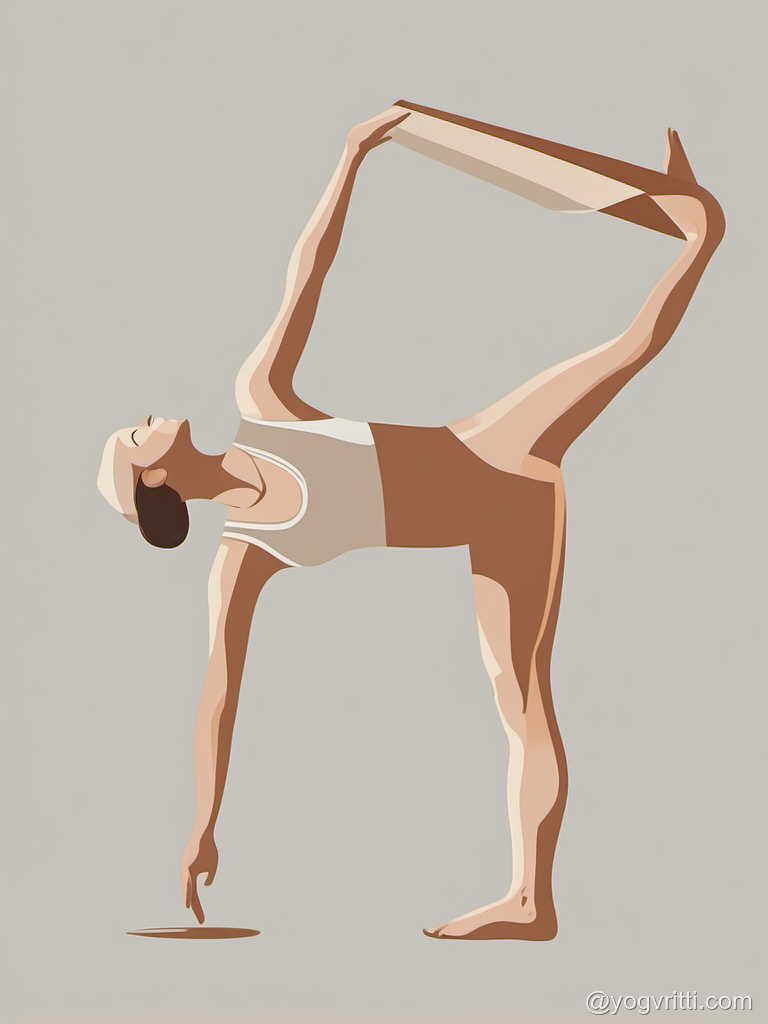
Parivrtta Ardha Chandrasana is a profound standing twist that masterfully integrates strength, balance, and spinal mobility. It powerfully engages the deep muscles of the legs and core, creating a stable foundation while allowing the upper body to revolve and lengthen. This pose is a dynamic exploration of grounding through the standing leg and expansive opening through the spine, cultivating both physical resilience and mental acuity. It is cherished in Iyengar yoga for its capacity to purify the internal systems and refine one's inner equilibrium, offering a pathway to greater awareness and vitality.
Revolved Half Moon Pose, also called Twisted Half Moon is a classical yoga posture. Its Sanskrit name Parivrtta Ardha Chandrasana translates word-for-word as: Parivrtta (Revolved) · Ardha (Half) · Chandra (Moon) · Asana (Pose). From a standing position, the body roots firmly through the feet while the spine extends upward. The posture works to lengthen the hamstrings, activate the glutes and strengthen the quadriceps. Strengthens the legs and core. Increases spinal flexibility. It is particularly valued for building full-body strength and developing greater flexibility. Suitable for intermediate practitioners with foundational yoga experience, it is a meaningful addition to any practice. A block and wall can be used to make the posture more accessible and support correct alignment. Practitioners with low blood pressure and migraine should approach with care or consult a qualified teacher.
Helps with
Muscles Worked
Hamstrings (standing leg)
Biceps femoris, Semitendinosus, Semimembranosus
The muscles running along the back of your standing thigh (hamstrings) are eccentrically lengthened with control as the hip flexes and the pelvis tilts, creating a stable yet responsive foundation.
This intelligent engagement prevents hyperextension of the knee while cultivating a deep, sustained opening along the posterior chain.
In yogic terms, this helps release 'apana vayu' – the downward-moving energy – fostering a profound sense of groundedness and ease in the lower body, directly influencing pelvic stability.
Gluteus Medius and Minimus (standing leg)
Gluteus Medius, Gluteus Minimus
These smaller, deeper muscles on the outer side of the standing hip (gluteus medius and minimus) are crucial for stabilizing the pelvis and preventing it from collapsing inwards or outwards.
Their isometric contraction works tirelessly to maintain a level hip line, providing a steady anchor for the entire pose.
This deep hip stability cultivates a sense of unwavering inner support, allowing the practitioner to find their center of gravity and root deeply into the earth.
Quadriceps (standing leg)
Rectus femoris, Vastus lateralis, Vastus medialis, Vastus intermedius
The powerful muscles on the front of the standing thigh (quadriceps) are strongly engaged to extend and straighten the knee without locking it, lifting the kneecap with intelligent action.
This isometric strength brings heat and vitality to the leg, channeling 'prana' downwards and creating a feeling of unwavering strength and resolve from the ground up.
This active engagement protects the knee joint and provides the necessary power for balance.
Obliques and Transversus Abdominis
External Oblique, Internal Oblique, Transversus Abdominis
The side abdominal muscles (obliques) and the deepest core muscle (transversus abdominis) are the primary movers in initiating and deepening the spinal twist.
Their precise, integrated engagement creates a wringing action in the waist, drawing the navel towards the spine and lengthening the torso.
This intelligent activation stimulates the internal organs, purifies energetic channels, and provides robust support for the spine during rotation, enhancing both strength and flexibility.
Erector Spinae
Iliocostalis, Longissimus, Spinalis
The deep muscles running along either side of the spine (erector spinae) work to lengthen the vertebral column axially, creating space between each vertebra even as the spine rotates.
This dual action of extension and rotation promotes spinal health, invigorates the central nervous system, and cultivates a sense of uprightness and dignity.
Energetically, this creates space for 'sushumna nadi' – the central energy channel – to remain clear and vibrant.
Joints Mobilized
Spine (Vertebral Column)
rotatingThe entire length of the spine, from the sacrum to the atlas, undergoes a significant rotation, particularly in the thoracic and lumbar regions, while maintaining axial length.
This careful, intelligent rotation mobilizes the vertebral joints, enhancing synovial fluid circulation and nerve function, which translates to a feeling of greater freedom and less stiffness.
Regular practice progressively increases spinal mobility, allowing prana to flow more freely through the 'chakras' along the central axis.
Hip Joint (standing leg)
weight bearingThe ball-and-socket joint connecting the thigh bone to the pelvis (acetabulofemoral joint) bears the entire body weight, demanding profound muscular engagement from the surrounding gluteal and thigh muscles.
This deep stabilization prevents undue stress on the joint and cultivates a feeling of inner strength and grounding.
The integrity of this joint is paramount for safely extending the lifted leg and creating a stable base for the upper body's twist.
Shoulder Girdle
mobilizingThe complex of joints around the shoulder (glenohumeral, scapulothoracic, acromioclavicular) are actively engaged; the top arm reaches dynamically towards the sky, requiring the shoulder blade to lift and rotate upwards (scapular upward rotation), while the lower arm pressing into the block provides stabilization for its respective shoulder.
This expansive action opens the chest and creates space for the breath, instilling a feeling of lightness and confidence.
It also helps to release tension often held in the upper back and neck.
Organ & System Benefits
Digestive Organs
The deep twist in Parivrtta Ardha Chandrasana creates a gentle compression and release cycle on the abdominal organs like the stomach, liver, and intestines.
This 'wringing out' action enhances blood flow, aiding in detoxification and promoting efficient digestion and elimination.
From a yogic perspective, it helps to balance 'Samana Vayu,' the energy responsible for assimilation, leading to improved gut health and a clearer, more vibrant energetic state.
Kidneys
Located on either side of the spine, just below the rib cage, the kidneys receive a gentle, internal massage from the twisting action.
This subtle stimulation is believed to invigorate these vital organs, which are crucial for filtering blood and maintaining fluid balance in the body.
Energetically, the kidneys are associated with vitality and fear; this pose can help release emotional tension often held in this region, promoting a sense of inner calm and resilience.
Nervous System
The intricate balance required in Parivrtta Ardha Chandrasana demands acute concentration, drawing the mind away from external distractions and deeply into the present moment.
This intense focus activates the parasympathetic nervous system, shifting the body from a state of 'fight or flight' towards 'rest and digest.' The practitioner experiences a profound sense of inner calm and mental clarity, effectively quieting the 'chitta vritti' or fluctuations of the mind.
The deep spinal twist, combined with axial elongation, creates subtle space between the vertebrae, gently stimulating the spinal nerves as they exit the spinal cord.
This enhanced nerve signal transmission improves overall nervous system function, bringing a feeling of alertness and revitalization.
Simultaneously, the sustained effort and mindful breath release tension held along the spine, contributing to a more harmonious energetic flow throughout the body.
Mental & Emotional
The precarious balance and intricate alignment of Parivrtta Ardha Chandrasana demand unwavering attention, drawing the practitioner into a state of 'dharana' or sustained concentration.
This intense mental engagement allows the mind to settle, fostering a profound sense of presence and quietude, making it an excellent practice for cultivating inner stillness amidst physical challenge.
It teaches the mind to focus and remain steady, an essential step towards 'dhyana' or meditation.
Successfully maintaining this complex pose requires persistence, patience, and the ability to find stability amidst dynamic movement and subtle shifts.
Each small adjustment cultivates mental resilience and an acceptance of the present moment, teaching the practitioner to navigate challenges with grace and intelligence.
This translates beyond the mat, empowering students to face life's twists and turns with greater equanimity, confidence, and inner strength.
Because of Its Shape
twist
Twisting postures create a 'wringing out' action on the internal organs and the deep muscles surrounding the spine.
This compression and subsequent release enhance circulation, bringing fresh, oxygenated blood to tissues and organs, thereby promoting detoxification and cellular rejuvenation.
Energetically, twists purify the 'nadis' or energy channels, allowing prana to flow more freely, leading to a feeling of lightness and profound revitalization throughout the entire system.
Balancing poses demand intense engagement of the core stabilizers, proprioceptors, and the visual and vestibular systems to maintain equilibrium.
This enhances neuromuscular coordination, refines spatial awareness, and strengthens the intrinsic muscles of the feet and ankles.
On a deeper level, balancing cultivates mental steadiness and a profound connection to one's inner core, fostering equanimity, self-trust, and a sense of centeredness amidst life's inherent instability.
Standing poses build foundational strength and stability in the legs and core, acting as the bedrock for all other asanas.
They strengthen the bones, muscles, and connective tissues of the lower body, significantly improving posture and alignment from the ground up.
Energetically, standing poses ground the practitioner, connecting them to the earth's energy (Apana Vayu), fostering a sense of rootedness, confidence, and an unwavering, stable presence.
Fascial Lines
The intricate web of connective tissue (fascia) that envelops muscles, bones, and organs is profoundly addressed in the spiral dynamics of this pose.
The superficial and deep spiral lines of fascia, running from the foot up the standing leg, across the pelvis, through the torso, and into the opposite shoulder, are actively lengthened and strengthened.
This intelligent engagement helps to release chronic fascial restrictions, improving overall mobility, and creating a more fluid, integrated body, allowing 'prana' to move without impedance.
Breathing & Respiratory
The deep twist in Parivrtta Ardha Chandrasana, while initially creating a sense of restriction, naturally encourages a more mindful and diaphragmatic respiration.
The compression of the abdomen on one side and the expansion on the other guides the breath into the lateral and posterior aspects of the rib cage, promoting fuller lung capacity.
This expansive breath, particularly beneficial for 'nadi shodhana' (alternate nostril breathing), helps to balance the energetic channels, calm the mind, and deepen the yogic experience of the pose.
Anatomical Caution
Practitioners with any history of lower back pain or sacroiliac joint instability must approach this pose with utmost care, ensuring the twist originates from the upper and mid-spine rather than torquing the delicate lumbar region.
Those with high blood pressure or neck issues should keep their gaze down or straight ahead, avoiding turning the head upwards, to prevent unnecessary strain.
Always prioritize stability and axial length in the spine over the depth of the twist.