5
Muscles
4
Joints
2
Organs
2
Mental
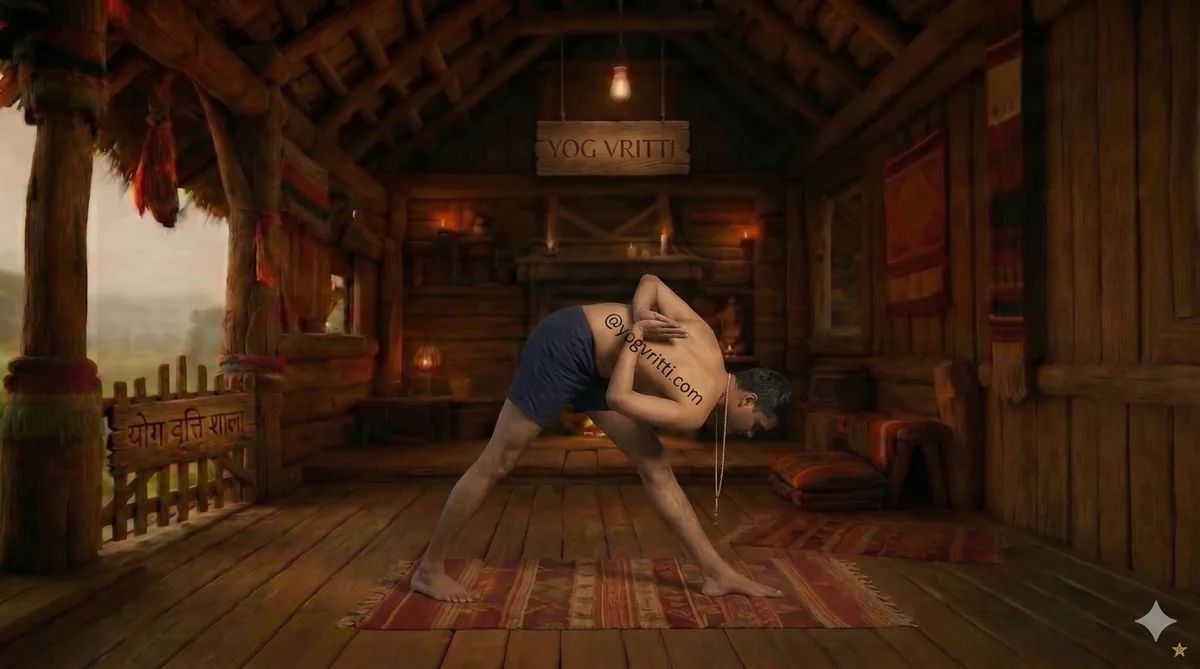
Intense Side Stretch Pose
पार्श्वोत्तनासन
Parsvottanasana, the Intense Side Stretch, meticulously lengthens the entire posterior chain of the body—from the hamstrings and glutes to the deep muscles of the spine. While simultaneously strengthening the core and stabilizing the hips, it creates a profound sense of grounding and introspection. This forward bend cultivates flexibility and stability, drawing awareness inward to calm the mind and stimulate the abdominal organs, making it invaluable for posture correction, digestion, and quieting anxiety.
Intense Side Stretch Pose, also called Pyramid Pose is a classical yoga posture whose Sanskrit roots break down as: Parsva (Side) · Uttana (Intense Stretch) · Asana (Pose). From a standing position, the body roots firmly through the feet while the spine extends upward. The posture works to lengthen the hamstrings, stretch the hip flexors and open and strengthen the shoulders. Strengthens legs and core muscles. Improves digestion. It is particularly valued for developing greater flexibility and building full-body strength. Suitable for intermediate practitioners with foundational yoga experience, it is an excellent warm-up, particularly beneficial for beginners and desk workers. A block and wall can be used to make the posture more accessible and support correct alignment. Practitioners with spinal injury and hypertension should approach with care or consult a qualified teacher.
Helps with
Muscles Worked
Hamstrings
[Biceps femoris, Semitendinosus, Semimembranosus]
The large muscles at the back of your thighs (hamstrings) are meticulously lengthened here, particularly in the front leg, fostering a deep release.
This isn't a passive slump but an active reaching from the inner heel, which engages the quadriceps to protect the knee and deepen the stretch.
Energetically, this sustained lengthening helps to release stored apana vayu, bringing a profound sense of grounding and stability to the lower body, settling the mind.
Over time, this practice improves the elasticity of the entire posterior chain, alleviating chronic tension in the lower back and pelvis.
Hip Flexors
[Psoas major, Iliacus]
The deep hip flexors, particularly the psoas and iliacus, play a dual role here, stabilizing the pelvis while allowing the deep hip flexion of the front leg.
For the back leg, if the pelvis is squared and the leg is strong, the psoas of that leg experiences a subtle yet significant lengthening, preventing the lower back from rounding prematurely.
This engagement cultivates a sense of intelligent support from the core, connecting the lower body to the trunk.
Yogically, a released psoas allows for deeper breathing and a greater sense of ease and fluidity in movement, releasing stored tension often associated with fear and emotional holding.
Back Muscles
[Erector Spinae, Multifidus]
The long muscles running along either side of your spine (erector spinae) and the deeper, smaller stabilizing muscles (multifidus) are meticulously engaged and lengthened in this pose.
As you fold forward, these muscles are asked to release and lengthen, particularly in the lumbar and thoracic regions, while also working eccentrically to control the descent.
This dual action decompresses the spinal discs and cultivates a sense of spaciousness along the entire vertebral column.
Energetically, this targeted spinal lengthening helps to awaken the dormant energy at the base of the spine, fostering clarity and an upright awareness.
Shoulder Girdle Muscles
[Deltoids, Rotator Cuff, Pectoralis Minor]
The muscles of the shoulder girdle, including the deltoids, pectoralis minor, and rotator cuff muscles, are actively engaged, either stretching into the reverse prayer position or stabilizing the arm bones if holding elbows.
This action gently opens the chest and mobilizes the shoulder joints, improving their range of motion and strength.
From a yogic perspective, opening the chest allows for freer flow of prana into the heart center, fostering a sense of courage and emotional openness.
It counteracts the common postural slump caused by prolonged sitting, inviting a more expansive and upright presence.
Core Muscles
[Transversus Abdominis, Obliques, Rectus Abdominis]
The deep abdominal muscles (transversus abdominis, obliques) and the front abdominal wall (rectus abdominis) are actively engaged to support the spine and stabilize the pelvis as you fold forward.
This engagement prevents undue strain on the lower back and creates a strong foundation for the deep stretch.
This intelligent activation helps to draw the visceral organs inward and upward, supporting digestion and fostering a sense of inner strength and containment.
Yogically, a strong core cultivates Tapas, inner fire, which purifies and strengthens the energetic center.
Joints Mobilized
Hip Joints
mobilizingThe hip joint of the front leg undergoes significant flexion, while the back leg's hip moves into extension and often a subtle internal rotation to square the pelvis.
This dynamic engagement mobilizes the joint capsule, enhancing the range of motion and nourishing the cartilage through synovial fluid distribution.
From a yogic perspective, healthy hip mobility releases energetic blockages in the root and sacral chakras, promoting fluidity and emotional release.
Consistent practice helps maintain hip integrity, preventing stiffness and improving overall gait and posture.
Sacroiliac (SI) Joint
stabilizingThe sacroiliac joint, where the spine meets the pelvis, requires careful stabilization in Parsvottanasana, especially as the pelvis squares forward.
By engaging the inner thighs and drawing the hip points evenly, we create a firm foundation that protects this often-vulnerable joint.
This conscious stabilization prevents shearing forces and promotes a harmonious connection between the lower body and the spine.
Yogically, a stable SI joint provides a strong base for upward energy flow, grounding the practitioner while allowing the spine to lengthen freely.
Spine
mobilizingThe entire vertebral column is mobilized in a controlled forward flexion, with an emphasis on lengthening rather than rounding.
The intervertebral discs are gently decompressed as space is created between the vertebrae, improving spinal fluid circulation and nerve health.
This intelligent lengthening cultivates an awareness of each segment of the spine, allowing for a more upright and elegant posture over time.
Energetically, a supple spine is key to the unimpeded flow of prana, fostering vitality and mental clarity.
Knee Joints
stabilizingBoth knee joints are actively engaged: the front knee is fully extended but not locked, with the quadriceps engaged to lift the kneecap and protect the joint.
The back knee is also extended, with the entire leg firm and strong.
This muscular engagement stabilizes the knee ligaments and strengthens the surrounding musculature, preventing hyperextension and promoting joint health.
Yogically, strong and stable knees represent a grounded foundation, allowing the practitioner to stand firm and resilient, both physically and mentally.
Organ & System Benefits
Abdominal Organs (Digestive System)
In this deep forward bend, the abdominal organs receive a gentle, sustained compression against the thighs, which is particularly beneficial for the digestive system.
This internal massage stimulates peristalsis and encourages healthy circulation to the digestive tract, aiding in the elimination of toxins.
From a yogic perspective, this action stokes Agni, the digestive fire, promoting efficient assimilation of nutrients and clearing sluggishness.
It brings a subtle purification to the navel center, fostering inner vitality.
Heart and Lungs
While a forward bend might feel restrictive for the lungs initially, the gentle compression of the chest against the legs and the release of the head downwards can have a calming effect on the heart and respiratory system.
The slight inversion of the head below the heart reduces cardiac load and encourages a slower, deeper breath.
This action helps to quiet the mind and settle the nervous system, allowing for a more profound sense of inner peace.
It brings a gentle energetic introspection, turning awareness away from external distractions.
Nervous System
As you fold forward and release the head towards the leg, a profound sense of calm often washes over the practitioner.
This action stimulates the vagus nerve, initiating a parasympathetic nervous system response that lowers heart rate and blood pressure.
The sustained stretch and quiet focus act as a form of pratyahara, drawing the senses inward and reducing external stimulation.
This allows the mind to settle, making it an excellent pose for alleviating anxiety and mental agitation.
The deep, consistent stretch of the posterior body, particularly the hamstrings and spine, sends continuous proprioceptive feedback to the brain, enhancing body awareness.
This heightened sensory input helps to quiet the 'chitta vritti' or mental fluctuations, bringing the practitioner into a more present and embodied state.
By consciously engaging and releasing, we teach the nervous system to let go of stored tension, both physical and emotional, fostering a feeling of profound ease and integration.
Mental & Emotional
The act of folding forward and bringing the head closer to the leg naturally promotes introspection and self-reflection.
This physical posture encourages a mental turning inward, allowing the practitioner to quiet the external chatter and connect with their inner landscape.
It cultivates a sense of humility and surrender, shifting perspective from outward striving to inner observation.
Parsvottanasana demands a focused, steady attention to alignment and breath, which develops concentration (dharana) and mental discipline.
Holding the pose with awareness, even through discomfort, builds mental fortitude and patience, teaching the mind to remain calm amidst challenge.
This practice helps to cultivate a stable and unwavering mind, preparing it for deeper meditative states.
Because of Its Shape
forward bend
Forward bends inherently bring the head below the heart, creating a gentle inversion that calms the nervous system and encourages introspection.
This shape allows gravity to assist in lengthening the spine and releasing tension in the back body, promoting a sense of surrender and ease.
Energetically, forward bends are grounding poses, drawing prana downwards and inwards, which can be deeply soothing for an overactive mind.
The sustained compression of the abdominal region in a forward bend stimulates the internal organs, particularly those involved in digestion and elimination.
This internal massage enhances blood flow and can aid in detoxification, revitalizing the body's core systems.
From a yogic perspective, this action helps to stoke Agni (digestive fire) and balance Apana Vayu, promoting a healthy and harmonious internal environment.
The act of folding forward cultivates humility and a release of ego, encouraging practitioners to let go of external appearances and focus on internal sensation.
This shape creates a protective, introspective space, fostering a sense of security and containment.
It allows the mind to detach from external stimuli, facilitating a deeper connection to the self and promoting mental quietude.
Fascial Lines
In Parsvottanasana, the entire Superficial Back Line of fascia, which runs from the soles of the feet up the back of the legs, across the sacrum, and along the spine to the scalp, receives a profound and integrated stretch.
This interconnected web of connective tissue, when released, can dramatically improve overall flexibility and posture.
By consciously lengthening this fascial chain, we release chronic tension patterns held deep within the body, opening energetic channels and allowing for a freer flow of prana, leading to a feeling of lightness and spaciousness throughout the body.
Breathing & Respiratory
The deep forward fold of Parsvottanasana naturally compresses the abdomen and slightly restricts the chest, which encourages a lengthening of the exhalation.
This position promotes a diaphragmatic breath, drawing awareness to the subtle movements of the belly against the thighs, which further calms the nervous system.
Integrating Ujjayi breath here deepens the internal heat and focus, allowing the body to release more effectively into the stretch.
The sustained exhalation helps to release accumulated stress and tension, creating space for fresh, vital prana on the inhalation.
Anatomical Caution
Teachers must guide students to protect their knees by engaging the quadriceps and lifting the kneecaps, preventing hyperextension.
For those with hamstring tears or significant lower back issues, encourage a micro-bend in the front knee or a less intense fold, prioritizing spinal length over depth.
Always ensure the pelvis remains stable and avoid forcing the stretch, especially for those with sacroiliac joint instability, to prevent undue strain.